One of the best approaches for promoting long-term health, enhancing energy and decreasing the danger of numerous lifestyle diseases is to maintain a well balanced diet. Every meal is a chance to feed the body with nutrients that will energize the body for the day, build up its immune system and foster healthy growth and repair. However, many individuals tend to concentrate on a specific food or diet fad rather than the important building blocks of a well-rounded diet that can contribute to overall wellbeing. There is no such thing as a perfect diet or a diet without specific foods or an entire food group. Instead, it is a diet consisting of a diversity of nutritious foods in proper proportions and it is a lifestyle of healthy eating habits that can be adopted for life. By knowing the role of carbs, proteins, healthy fats, vitamins and minerals, as well as the importance of water, they have the ability to make informed choices about their food that can help them stay healthy throughout their lives.
By understanding the essential foods in a balanced diet, individuals can start to develop their own healthy, well-balanced meals, rather than depending on convenience foods that are often very processed. Emphasizing balanced nutrition is a better approach than limiting the choices of foods a person can eat that might be difficult to keep up. Balanced nutrition helps maintain a healthy weight, produces energy, prevents disease, and contributes to wellbeing, as it can be enjoyed in a wide variety of foods. Making small changes over a long period of time will have more long-term health benefits than trying to make big changes and then never keeping up with them.

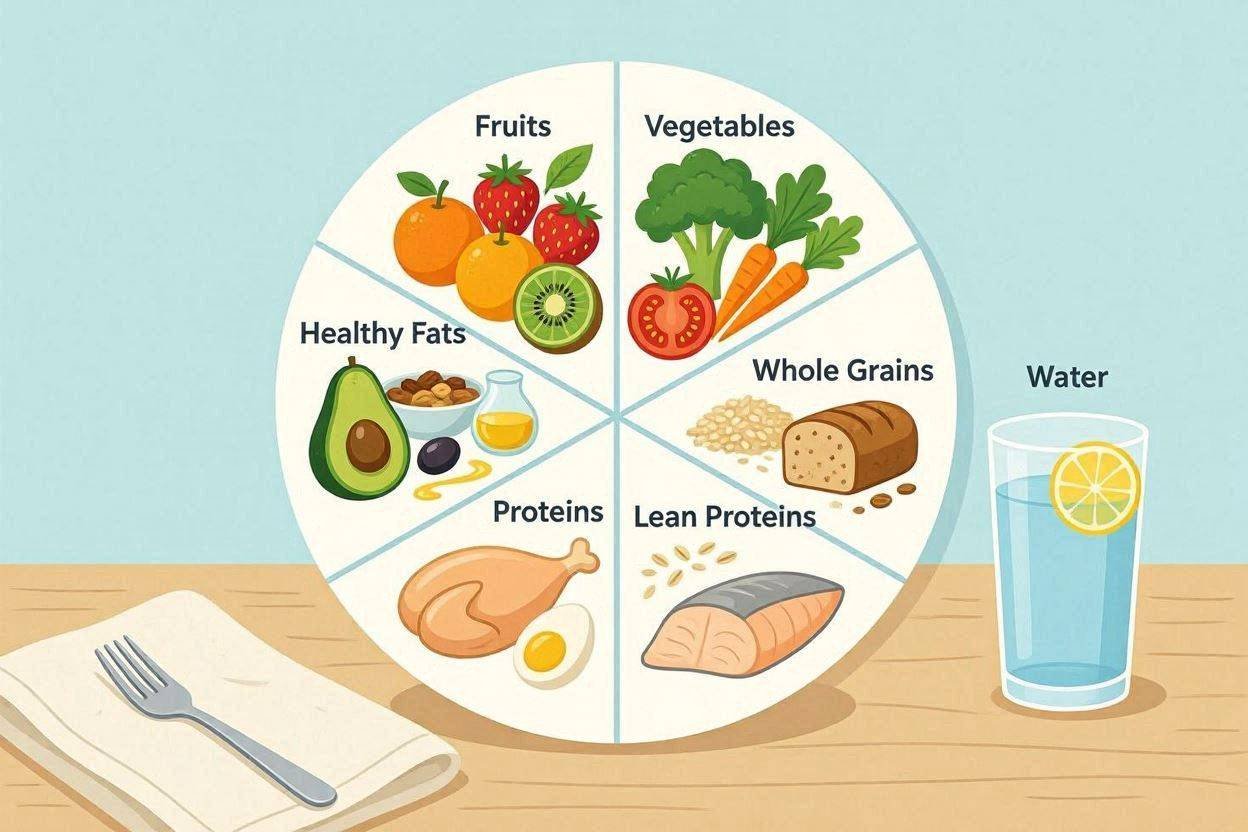
Illustrative examples of balanced diet, such as fruits, vegetables, whole grains, lean proteins, healthy fats and water.
What is the importance of a Balanced Diet?
A well-balanced diet provides the body with the nutrients needed to accomplish thousands of biological processes each day. All organs need a good diet to work well including the brain and heart, muscles and bones, and the digestive tract. Healthy nutrition also aids in concentration, physical performance, healthy aging and immune function and recovery from illness and physical activity. On the other hand, poor nutrition can cause fatigue, lack of nutrition, weight gain and in the long-term, risk of chronic diseases. Eating balanced meals regularly can help to keep blood sugar levels stable, reduce cholesterol levels and keep energy up all day. Instead of a single-minded approach to calorie counting, people need to pay attention to the quality of the nutrients they are eating and the diversity of foods they eat.
Carbohydrates: The Body’s Primary Energy Source
Carbohydrates are the energy of choice for the body and a significant component of a well-balanced diet. After eaten, carbohydrates are converted to glucose that provides the energy to nourish organs, muscles, and the brain. Fruits, vegetables, beans, legumes and whole grains like oats, brown rice, whole-wheat bread, millet, sorghum, maize and quinoa are the healthiest carbohydrate options. All these foods have dietary fiber, vitamins and minerals which are often missing from refined carbohydrates. Whole-food carbohydrate sources provide energy more slowly and sustain people’s satisfaction and energy levels for longer, while sugary drinks, sweets and highly refined baked goods can lead to an immediate blood sugar surge. The addition of complex carbohydrates at every meal helps to improve productivity levels and decreases unnecessary snacking.
Protein: Supporting Growth and Repair
Protein is essential for tissue growth and repair, muscle development, hormone production, and a healthy immune system. Protein is essential for healthy ageing as well as childhood growth. Fish, poultry, lean meat, eggs, milk, yogurt, beans, lentils, chickpeas, soy products, nuts and seeds are excellent sources of protein. People who eat a vegetarian diet can get good nutrition by combining protein sources throughout the day. Eating protein at each meal will help keep you feeling satisfied and help maintain your muscles and stabilize your blood sugar. Often, people get too much protein with processed meats, which is a bad long-term habit to have. Alternatives should be lean and less processed.
Healthy Fat: For overall health.
Fats have a bad reputation, but healthy fats play a vital role in a healthy eating plan. They are involved in absorbing fat-soluble vitamins, shielding the internal organs, aiding brain development, and hormone production. Avocados, oily fish, groundnuts, almonds, walnuts, seeds and olive oil are examples of unsaturated fats that have health benefits, provided used in moderation. Meanwhile the limited consumption of trans fats and highly processed fried foods is good for the heart and wellbeing. People should not avoid fats altogether, but rather select healthier options and be mindful of their serving sizes. Healthy fats can also enhance the taste and fullness of food, which can help to maintain a healthy diet in the long term.
Vitamins and Minerals
Vitamins and minerals are required in lower amounts than carbohydrate, proteins and fats, but they are of tremendous significance. They nourish bones, boost immunity, control metabolism, aid nerve communication, and play a role in numerous metabolic processes in the body. Fruit, vegetables, whole grains, dairy, seafood, legumes and nuts have a wide spectrum of micronutrients like vitamins A, C, D, E, K, B vitamins, calcium, iron, magnesium, potassium, and zinc. Consuming a diverse range of food over the course of the week will automatically improve food consumption through the intake of different vitamins and minerals from the various foods. Eating a variety of foods instead of only a few foods will decrease the risk of nutritional deficiencies and promote health.
Water
Water is a key nutrient that is often neglected as part of a balanced diet. All cells require proper hydration for nourishment, temperature control, elimination of waste products, joint lubrication and digestion. Any dehydration, even slight, can lower concentration, physical performance and energy. While fruits, vegetables, soups and other foods that contain high amounts of water are good sources for daily water consumption, drinking water throughout the day is still the best way to stay hydrated. Drink water before you get thirsty and carry a reusable water bottle to help keep your water intake consistent. Drinking water can also help to cut down on empty calories and promote health.

A balanced diet consists of whole grains, vegetables, protein, fruit and water, represented as a balanced meal.
To design nutritionally balanced meal plans.
Eating healthy meals is easier when you have foods from a variety of food groups on your plate. Half of the plate should be filled with vegetables and fruits, which contain fiber, vitamins and antioxidants. The top 1/4 of the plate can be made up of whole grains or other complex carbohydrates like whole-wheat pasta, sweet potatoes or brown rice and the bottom 1/4 can be filled with lean protein such as fish, beans, chicken, eggs, or tofu. Small amounts of healthy fats (avocado, nuts, seeds or olive oil) also enhance the nutritional profile. Making a plan for meals helps minimize the time people spend eating food that isn’t healthy and allows them to save money when shopping. Eating at home gives you more control over what you put in the food, how much and how you prepare it.
Promoting Healthy Weight Management
Having a balanced diet is also an important factor in reaching a healthy body weight without dieting. Eat foods that are high in nutrients and also have a high fiber and protein content to help keep you full without going overboard. Healthy eating habits such as eating slowly, listening to your body for hunger and fullness cues, and paying attention to portion sizes also help maintain a healthy weight. Don’t skip meals; regular meals help keep energy balanced and cravings for highly processed snacks at bay. A healthy diet and exercising regularly helps to build habits that support health over time but not weight loss for short-term.
Eating healthy foods to help ward off illness.
A healthy lifestyle is a big part of reducing your risk for chronic diseases such as heart disease, type 2 diabetes, some cancers and high blood pressure. Fruits, vegetables, whole grains, legumes, nuts and lean proteins contain antioxidants, dietary fibre and healthy fats to promote normal body functions and help with long term health. Restricting foods that have too much salt, sugar and highly processed grains minimizes health risks. While no food is a magic bullet, eating a balanced diet at all times will give the body the necessary nutrients for proper functioning and a healthy life.
Making healthy eating habits a lifelong habit.
It is important to build healthy eating habits that last a lifetime, and this does not have to be a perfect diet. Changing things little by little, like adding vegetables to all meals, swapping out refined grains for whole grains, increasing water intake, and cooking more at home, will eventually become permanent habits. It provides flexibility, too, so that people can eat their favorite foods every now and then without feeling guilty or giving up healthy eating lifestyle. Eating together, dining out for new healthy recipes, and shopping with a list may also be helpful in making healthy eating choices. Good nutrition should be easy to come by and not be a burden or restriction to daily life.
Conclusion
Knowing the essential elements of a balanced diet is vital to making choices that help to maintain your overall health, energy and wellbeing for the long haul. Carbohydrates give energy, proteins help to build and repair body tissues, healthy fats are used to sustain many body processes, vitamins and minerals are used to control many body processes, and water helps keep all body systems functioning. Together with a balanced and nutritious diet, these nutrients are associated with a healthy weight, enhanced immunity, boosted energy and lowered risk of disease. Instead of chasing quick fads and fashions in dieting, making sound, sustainable choices for eating can have long-term positive impacts that will lead to a healthier, more active lifestyle for years to come.