Introduction
One of the easiest and most effective methods of getting your waste down in your home is by home composting! Fruit peels, vegetable scraps, coffee grounds, leaves, and grass clippings are some of the organic materials left behind in the kitchen and yard each day which may end up in a landfill. Rather than throwing these valuable resources away, homeowners have the ability to use them for nutritious, natural compost that will enrich soil, stimulate plant growth, and benefit the whole garden. Composting benefits the sustainable lifestyle as well as helps in reducing waste management, greenhouse gas emissions from waste decomposition in Landfills and also generates a good environment friendly alternative to synthetic fertilizers. Here are a few tips for composting regardless of the size of your yard or garden.For a big yard or small urban garden, composting can be as easy as you want it to be. By knowing how compost is made, gardeners can take nutrients from a food source and help plants grow, and can save money on their gardens. To learn about the composting process in detail, check out the guide provided by the Food and Agriculture Organization (FAO) that offers insights into organic waste management and composting.
Process of Composting
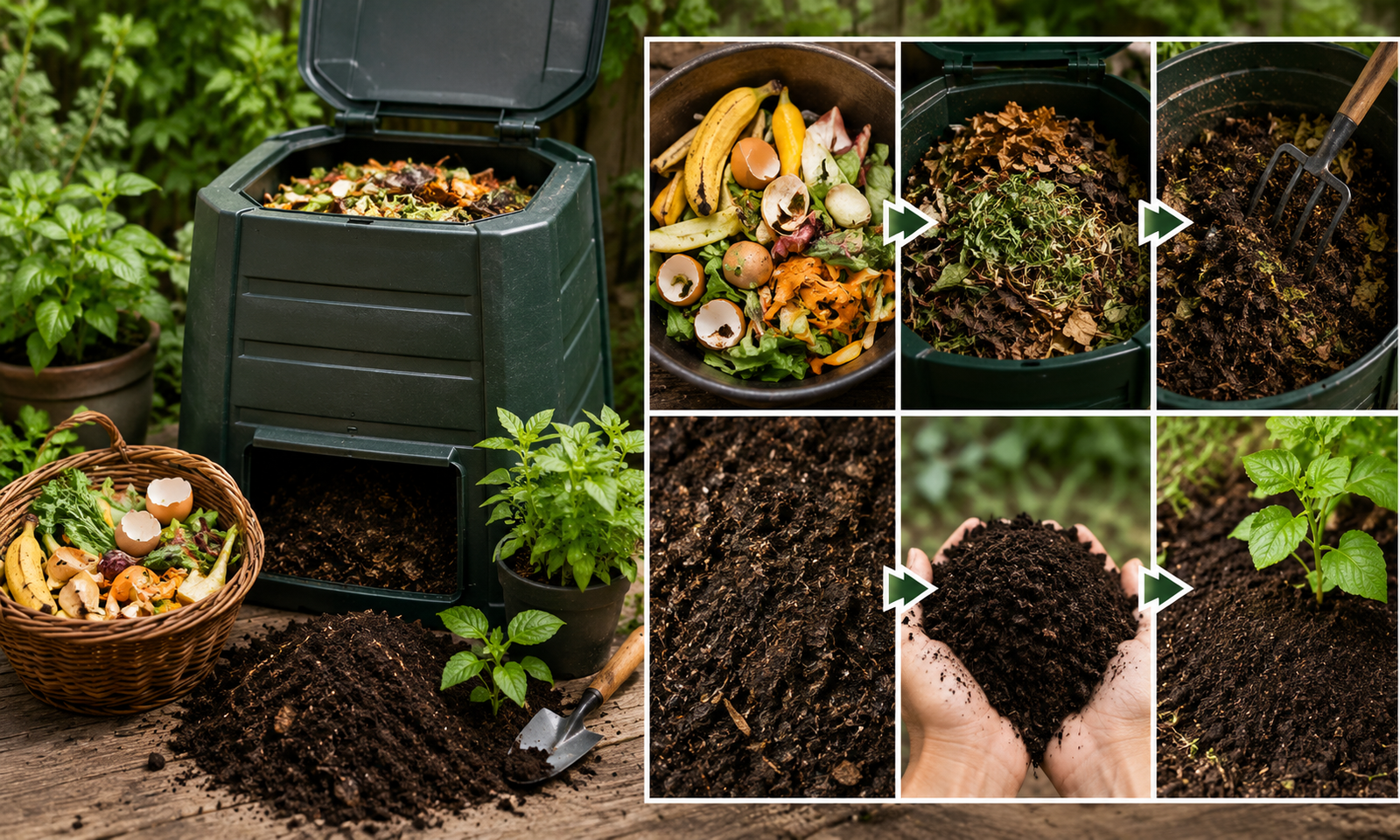
It is a natural, biological activity whereby microorganisms like bacteria, fungus and beneficial insect groups digest the biomass and transform it to a dark crumbly material called compost. They need four elements to work well – carbon, nitrogen, oxygen and moisture. There are carbon-rich materials that can be classified as “brown materials” that microbes use as a source of energy; and nitrogen rich “green materials” for growth and reproduction. Suitable Oxygen results in the growth of aerobic microorganisms which do not lead to unhealthy smells from anaerobic digestion. Although moisture is sufficient to sustain microbial activity there is not enough to cause standing water that limits aeration. As the breakdown continues, temperatures within the compost pile have risen considerably and weed seeds and harmful microbes have been further reduced while the organic matter has broken down even further. As time goes on, the available nutrient levels begin to be depleted and in the end a compost pile develops into a mature compost product containing humus and beneficial microorganisms. The knowledge of the interaction of these biological processes can help the gardener to better handle the compost pile and achieve quicker decomposition and better quality composts for vegetables, flowers, shrubs and lawns.
Use the appropriate materials in compost piles.
Probably one of the most crucial aspects to consider when composting organically is the selection of appropriate organic materials. A well-balanced mix of carbon and nitrogen are ingredients needed in compost piles. Small twigs, sawdust from untreated wood, dried leaves or shredded newspaper, cardboard and straw are all brown materials. They have a structure and help ventilate the materials and they contain carbon which feeds the microbial activity. Some greens are vegetable scraps, fruit peels, fresh grass clippings, coffee grounds, tea leaves, eggshells, fresh weeds (no seeds) and plant trimmings. Nitrogen is provided by these ingredients and these stimulate the growth of microbes and decompose them efficiently. Not all material should be placed in domestic compost heaps; meat, dairy products, oily foods, pet waste, chemically treated wood, diseased plants, and glossy printed paper can all cause pest infestations, bad smells and dangerous pathogens to be introduced or brought into the compost heap. Bulkier material if it is broken down into smaller pieces, will have more surface area for microorganisms to decompose, thereby accelerating it. The right ratio of brown to green materials will discourage too much moisture and odor, too fast decomposition and will result in nutrient rich compost to enhance soil structure and fertility.
Home Composting Methods
There are several methods of composting that can be adapted to meet the needs of homeowners, of various sizes, who have different climate, budget and gardening objectives. For larger gardens, traditional compost piles are the best options as they are perfect for any large amounts of organic waste matter and offer sufficient flow of air. Compost bins offer a more aesthetically pleasing look and help to keep materials free of heavy rainfall and animals. Tumbling composters make mixing easy by requiring the user to turn the container periodically, which helps to increase aeration and speed up the decomposition process. Vermicomposting is an application of composting worms (such as red wigglers) to transform kitchen waste into worm castings rich in nutrients. In residential, apartment and locations with limited outdoor space, this method is also very effective as the worm bins can be housed indoors providing the right environmental conditions are applied. Bokashi composting uses helpful microorganisms to help foods go through an initial stage of fermentation in the absence of oxygen in a sealed container before they’re added to soil and allowed to decompose normally. Every method has its merits, but all require that the appropriate proportions, moisture and air flow are maintained. Choosing the right system lets homeowners recycle organic material on a regular basis, and generate top-shelf compost that will enable increased garden productivity and waste reduction all year round.
The first step into a good producing compost pile is to pick a good spot.The first step to a good producing compost pile is choosing the right spot: A place that drains well is in partial shade to prevent too much drying out or raining in. Layer top with coarse material like small branches or straw to promote good ventilation under the pile. Build layers of brown and green material alternately, misting every layer slightly until it is around one metre tall. The soil mix should feel like a wrung out sponge, wet but not wet. Short, two to three-week turns give added oxygen, distribute water, and turn materials that haven’t been broken down into the reach of active microbes, quickening decomposition process. Keeping an eye on the internal temperatures gives extra clues to the activity of microbes, since compost heaps are generally warm or even hot just after they’re built. If the mounds are too dry, water and substitute with green materials. If they begin to become damp or off-tasting, add more brown material to them and turn them over to get well oxygenated. Through regular observation and maintenance, optimal decomposition is achieved and finished compost in several months can be produced, depending on the weather conditions, material and management.
Common Composting Mistakes and how to avoid them
Common management errors that hinder microbial activity are causes of serious issues for many beginning composters. The most common problem is an overabundance of a green (igneous) material with not enough brown (sedimentary). This results in wet and compacted piles which cause bad odor because of oxygen shortage. On the other hand, if the dry, brown, material is more than 85% of the pile, there is not sufficient nitrogen for microbial decomposition to take place and the pile will likely decompose very slowly. Another common error is letting the pile of compost sit in a lumpy form, and does not get stirred. Too much water also decreases air movement and too little water significantly reduces microbial activity. If these items can’t be tossed in the trash, their presence can foster the attraction of rodents, flies and other pests and cause sanitation issues. For some gardeners, this month marks the end of the gardening season and their disappointment with the lack of activity in the compost, which is normal in cooler climates. However, with patience, proper material selection, consistent maintenance of moisture levels and maintaining the proper aeration, composting problems can be avoided and high quality compost able to promote the healthy growth of plants and their advantages for long-term soil improvement can be produced.
Composting: Soil Health and Soil Quality
Compost Benefits: Functioning in the long-term, finished compost adds many benefits to soil and plant. But the fertility of soil can be improved by compost, which also promotes the sustenance of moisture, and saves the labor of watering during dry spells. This means that plant roots can sink in more easily, attributable to better soil structure, as does drainage, especially in clay soils, and water retention, particularly in sandy soils. Plants absorb essential nutrients slowly from compost, reducing the amount of nutrients leached from the soil, which is contrary to much fertilizer. Composting adds beneficial microorganisms to the soil which can help create good soil biology by decomposing organic matter, mineralizing nutrients and providing suppression of some soil-borne diseases. Compost soils support beneficial organisms, in addition to the earthworms, that also promote better aeration and nutrient availability. Composts can also enhance soil pH buffering, and soil resistance to erosion with regular use. Soils become healthier, plants grow stronger, and are more resistant to pests, diseases and environmental stressors. Homeowners can apply compost to garden beds, flower borders, vegetable gardens and lawns to create an eco-friendly base for garden productivity and decrease reliance on manufactured fertilizers.
An important aspect of mature composting is knowing when compost is ready to use on plant life. Completed compost is dark brown or black in color, smells good and has little to no recognizable material from the original organic material. Young compost can lose nitrogen to the soil after application, making nitrogen plantations unavailable temporarily, and thus influencing plant growth. Compost can be used as a mulch and applied to the garden prior to planting of vegetables or around trees, shrubs, and flowers to increase fertility and structure of soil or used as a surface mulch to conserve water and prevent weeds. When mixed with garden earth and large or coarse sand and other drainage components it is also a good mixing component with garden earth in homemade potting mixes. The thin layer of screened compost shallowed across the established lawn surface can help promote better root growth and health in the grass. As time goes on, regular composting will help to increase long term fertility and lessen chemical fertilizer requirements. The plants get their nutrients from compost gradually and naturally, which avoids the high supply and demand of nutrients typical of synthetic fertilizers.
Benefits of home composting
In addition to enriching the garden, the practice of “home composting” adds extremely valuable benefits to environmental conservation: by reducing the proportion of organic waste volume disposed of in municipal landfills, a large volume of waste material gets away. In a landfill, organic waste can be buried where it breaks down without adequate oxygen, generating a different greenhouse gas, methane, which has much greater warming properties than carbon dioxide. Composting provides aerobic decomposition conditions, which greatly reduce methane emissions, and helps to recycle these organic nutrients back into the soil instead of sending them off with Humanet.Composting can results in organic materials decaying in an aerobic way, significantly reducing the volume of methane emissions and recycling valuable nutrients into the soil rather than lost with Humanet. Home composting also reduces the need for man-made fertilizers that often consume a lot of energy when they are produced and transported. Kitchen and garden waste: If this is composted, the nutrients can be used again and again and again, and the cycle can continue indefinitely – this is a circular economy. In communities that promote the adoption of composting, there are lower waste management fees and residents learn to be environmentally responsible. With the threats of climate change and soil degradation growing more significant around the world, composting is now a practical and inexpensive way for homeowners to help conserve the natural resources, while improving the health of their garden and making it more sustainable.
Conclusion
Making compost at home can be one of the most beneficial resources you have for a healthy garden and productive landscape, from kitchen scraps to yard waste. Knowing how to compost and the types of organic materials to utilize will help anyone in successful production of nutrient-rich compost year round, provided they choose the proper composting method and ensure proper moisture and aeration. Preventing common errors, for example in material balance, excess moisture and inappropriate use of waste ensures that decomposition happens efficiently and the resulting compost is of a good quality. This organic fertilizers are found to enhance soil structure, water holding capacity, beneficial soil microbe activity, and result in plant growth without much reliance on synthetic chemicals. In addition to offering gardening benefits, composting helps to decrease household waste, greenhouse gas emissions and helps to lead people to an environmentally conscious lifestyle. From seasoned gardeners to novices, home composting is a worthwhile garden practice for healthier soils, healthier plants, and a better and more sustainable environment for the next generation to enjoy.