Fats are often misunderstood and many people think consuming fat is always bad for you, or that it will make them gain weight. Fat, however, is one of the three macronutrients essential to the body’s proper functioning, as you will see. Dietary fat, which, together with carbohydrates and proteins, supplies the body with energy, nourishes cells, protects the organs and is responsible for the absorption of fat-soluble vitamins. People can make better food selections if they know the difference between healthy and unhealthy fats, which can help them maintain a healthy heart and body. Rather than cutting back on fat altogether, nutrition experts suggest selecting healthier fat sources and reducing the intake of those that aren’t quite so nutritious. The right kind of fat in a balanced diet helps maintain healthy energy levels, brain function, hormone production and overall health.
It will be helpful to become familiar with the difference between healthy and unhealthy fats to help establish better eating habits. Healthline’s website offers useful information about healthy fats vs. unhealthy fats: difference between healthy and unhealthy fats. People are better served by eliminating foods that are low in beneficial fat and choosing foods that are naturally high in healthy fats such as nuts and seeds, avocados, olive oil, and oily fish, and limiting high-fat foods, particularly trans fat and foods high in saturated fat. This healthy balance helps keep the heart healthy and promotes healthy, lifelong eating patterns.

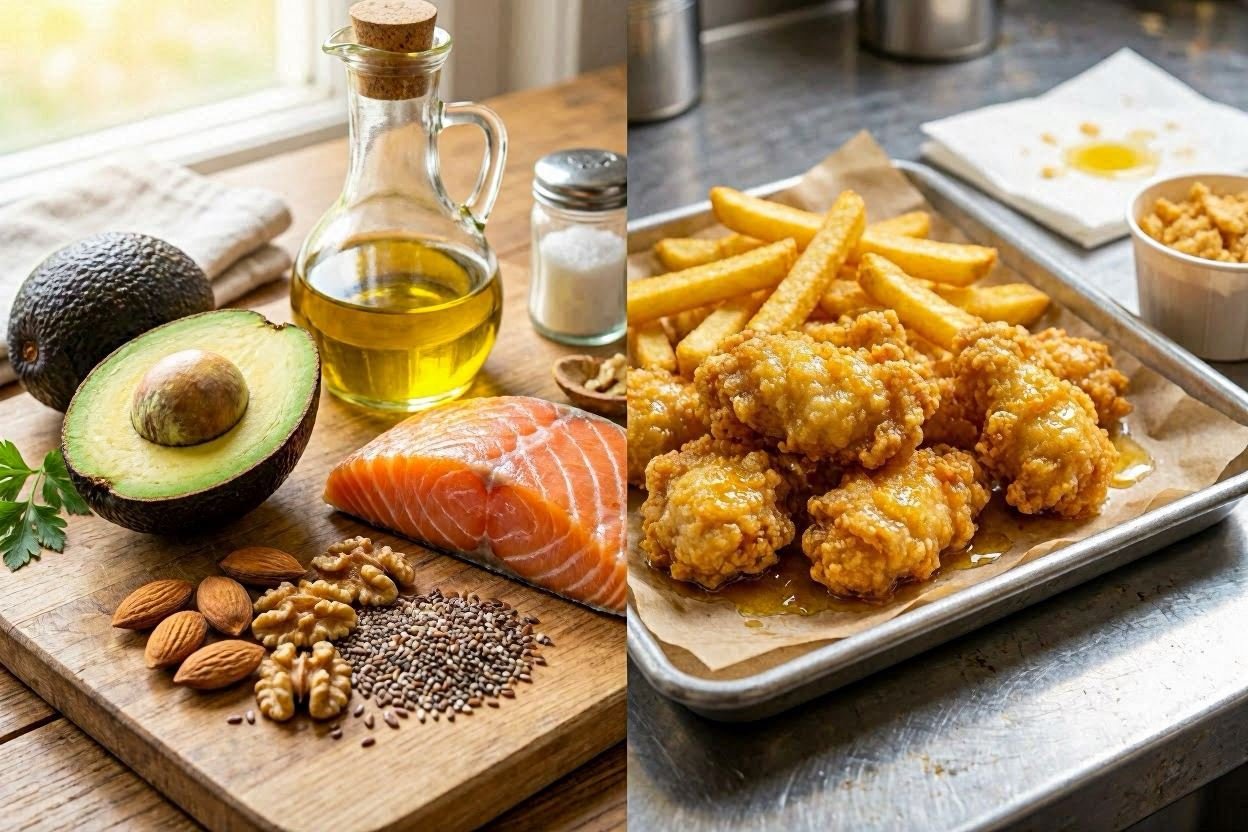
Healthy and unhealthy fats illustrated by avocados, nuts, seeds, olive oil, fish, and processed fried foods.
Why the Body Needs Fat
Fat has a number of important and little-known roles. It is a dense source of energy, which gives more energy per gram than carbohydrates or proteins. Fat also aids in the absorption of fat-soluble vitamins (A, D, E, and K) that are essential for maintaining vision, bone health, immunity and blood clotting. Further, fat cushions internal organs and provides insulation for the body against fluctuations in temperature, healthy skin, and helps to produce hormones that regulate many biological processes. Balanced fat consumption is a crucial component of a healthy diet, as it helps to ensure that nutrients like vitamins and minerals are absorbed properly, otherwise many of them cannot be absorbed efficiently.
The difference between healthy and unhealthy fats.
Fats are not all created equal. Fats, especially unsaturated fats, are linked to heart health and better balance of cholesterol. These consist of monounsaturated fats and polyunsaturated fats, which are naturally present in food items like avocados, olive oil, nuts, seeds and fatty fish. Unhealthy fats are typically industrial trans fats, and too many of certain saturated fats found in highly processed foods, deep fried foods, commercial baked goods, and some processed meats. Saturated fat is okay in small amounts as part of a healthy diet, but trans fat has been a consistent association with worse cardiovascular health outcomes and should be reduced. It is important for people to realize these differences so that they can make a healthier choice without cutting out all dietary fats.
Healthy Fats For Heart Health
Monounsaturated Fats
Monounsaturated fats are one of the healthiest fats to include in your diet as they aid in maintaining healthy cholesterol levels and proper functioning of the heart. Avocados, olives, olive oil, almonds, peanuts, hazelnuts and cashews are all sources of monounsaturated fats. These foods are also rich in antioxidants, fibre and various vitamins and minerals which help you achieve overall well-being. Simple changes like substituting butter with olive oil, adding sliced avocado to sandwiches or eating a handful of unsalted nuts as a snack are all easy ways to boost monounsaturated fats while helping to maintain a healthy heart over time.
Polyunsaturated Fats
Polyunsaturated fats consist of omega-3 and omega-6 fatty acids, which are both critical for the human body but cannot be synthesized in the body. Salmon, sardines, mackerel, trout, flaxseeds, chia seeds and walnuts are all good sources of omega-3 fatty acids, which benefit the brain, heart and normal inflammatory response. Sunflower seeds, soya oil, corn oil, and certain nuts are also high in omega-6 fatty acids which are important for healthy growth and development when eaten as part of a well-balanced diet. Having a variety of these foods during the week will help you get some of the nutrients you need and will aid in general wellbeing.
Healthy fats are available in various foods.
There are fats found in several common foods that are beneficial and promote a healthy diet. The avocado is an excellent choice for salads, sandwiches or breakfast meals; it has a high content of monounsaturated fats and potassium. Dried beans and peas are an excellent protein source, as well as being rich in fats, fiber and vitamin E. Oily fish provide excellent protein and omega-3 fat, while olive oil is a healthy cooking oil for salads, roasting vegetables and light sautéing, and is good for the heart. These foods are an easy, regular way to follow a balanced diet, without the need for complex meal planning.
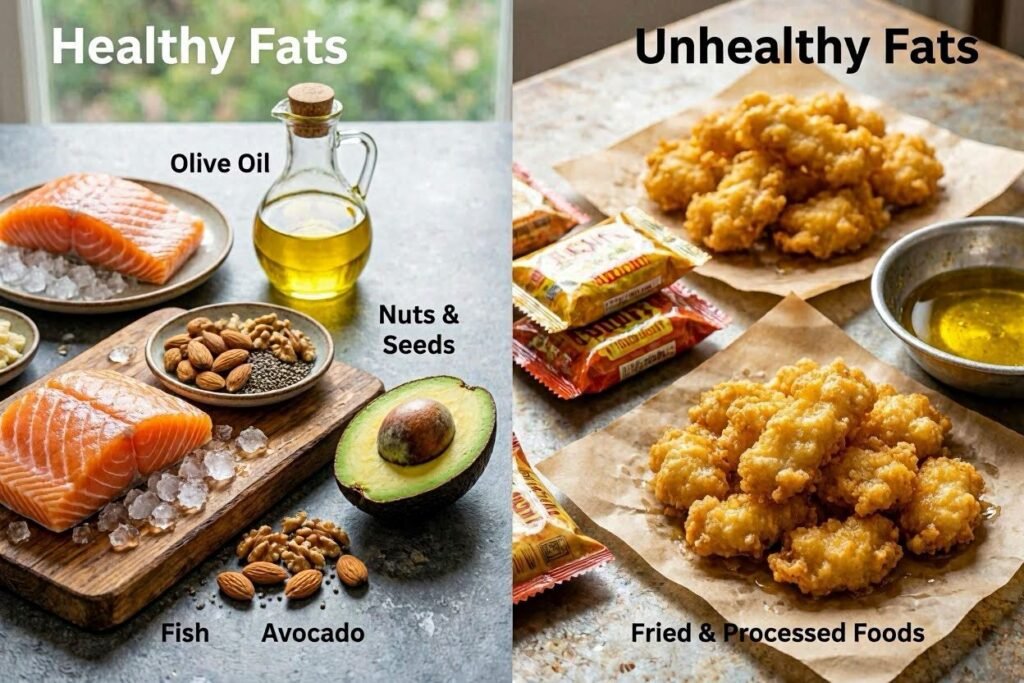
A comparison of healthy and unhealthy fats: Fish, olive oil, nuts and seeds, avocado, and fried processed foods.
There are many myths surrounding dietary fat.
The most prevalent misconception is that fat is a cause of weight gain. The truth is that all calories, exercise, and food choices affect body weight, rather than any one food. Healthy fats can also help to make people feel full after eating, which means that they don’t snack as much. Another falsehood is that all saturated fat is bad. Recent nutrition recommendations focus on “whole” food patterns and not on eliminating any one particular food. While emphasizing mostly unsaturated fats and restricting highly processed fats offers more health benefits than only one type of fat is the emphasis. Others think low-fat products are always nutritious, but many fat reduced foods are loaded with added sugars or refined starches that could decrease the overall nutritional value of the food.
Guidelines for fat balance in daily meals.
It’s not as difficult as it seems to create a balanced meal with healthy fats. Oatmeal with walnuts and chia seeds may be a breakfast option, and grilled chicken, avocado, and mixed vegetables with olive oil may be a lunch option. Baked salmon with brown rice and steamed vegetables might be on the menu for dinner. Healthy fats can also be had from unsalted mixed nuts, natural peanut butter with apple slices, or yogurt with flaxseeds throughout the day as snacks. Instead of eating high quantities of one fat product, choosing different types of foods will provide a diversity of nutrients and help maintain good health.
Eating Smarter – Making the right choices
It is not necessary to make radical changes to lifestyle to improve the quality of fat. Eating more meals at home, reading labels, making healthier food choices such as grilled instead of fried food, using olive oil instead of butter (when possible), and incorporating fish at least once or twice a week are healthy habits that can be implemented in a practical manner. Healthy fats found in whole foods are frequently also high in fibre, antioxidants, vitamins and minerals, which are not found in highly processed foods. Small steps taken over the long term typically enable more health benefit than a restrictive diet that will be hard to sustain.
Conclusion
By recognizing the difference between good and bad fat, people can make better decisions about what they eat, which benefits their heart health, brain function, energy production and wellbeing. Avocados, nuts, seeds, olive oil and oily fish are sources of healthy fats that are critical to the body every day and reducing trans fats and eating less of heavily processed foods will help improve long-term health. Nowadays, people should not fear dietary fat, they should encourage it and look for good quality sources to be part of a balanced diet, with fruits, vegetables, whole grains and lean protein. This will help people to create delicious meals, while also promoting their overall health and wellbeing by making informed food choices.