Nepal has no shortage of famous trails, and that’s exactly the problem for a lot of trekkers trying to plan a trip. Everest Base Camp gets all the attention, but Manaslu, Langtang and Kanchenjunga are right there too, each pulling you in a different direction depending on how much time you have and how much altitude you’re willing to deal with. A short trip changes what’s realistic. So does your fitness level, your tolerance for cold nights in a teahouse, and whether you want crowds or quiet trails.
This piece isn’t about crowning a winner. It’s a straightforward look at how a 12 Days Everest Base Camp Trek compares with the Manaslu Circuit, the Langtang Valley route, and the longer Kanchenjunga Circuit — in terms of route character and difficulty, not just distance on a map. In short: the 12-day EBC trip is compact and altitude-heavy, Langtang is the shorter, more accessible option, Manaslu mixes a high pass with remote mountain villages, and Kanchenjunga is the long, isolated Himalayan trek for people who’ve done a few of these already.
12-Day Everest Base Camp Trek: The Classic High-Altitude Journey
Route and Trek Experience
Most 12-day itineraries start with the flight into Lukla, then follow the well-worn path up the Khumbu Valley — Phakding, Namche Bazaar, Tengboche, Dingboche, Lobuche, and finally Everest Base Camp itself before heading back down. It’s the same skeleton every EBC trek uses, just compressed. That compression is the whole story of this itinerary: you’re gaining elevation fast, with fewer rest days built in than the classic two-week version, and less room to slow down if your body needs it.
The 12 Days Everest Base Camp Trek route takes you through some genuinely striking terrain — pine forests give way to rhododendron slopes, then to the stark, rocky highlands above Dingboche where trees stop growing altogether. Namche Bazaar is worth lingering in even if your schedule doesn’t love it; it’s the unofficial capital of the Khumbu and a good place to see how Sherpa trading culture shaped this whole region. Tengboche monastery, the suspension bridges strung across the gorges below Namche, the long views toward Ama Dablam and eventually Everest itself — this is the trail people picture when they think “Himalayas.”
Worth saying clearly: exact routing shifts from one operator to the next. Flight schedules into Lukla, how acclimatization days are placed, and whether you route through Gorak Shep or straight to Kala Patthar all affect the day-by-day plan. Nobody’s 12-day itinerary is identical.
12 Days Everest Base Camp Trek Difficulty
12 Days Everest Base Camp Trek difficulty sits in the moderate-to-challenging range, and altitude does most of the damage — not technical climbing, since there’s none of that on this route. You’re walking long days, often five to seven hours, on trails that go steeply up and then steeply back down, sometimes in the same afternoon. The air gets noticeably thinner past Namche, and cold mornings at higher elevations catch a lot of first-timers off guard. You don’t need mountaineering experience, but general hiking fitness and a bit of patience with acclimatization make a real difference in how the trip actually feels.
Manaslu Circuit Trek: Remote Villages and a High Mountain Pass
Manaslu Circuit Trek Route
The Manaslu Circuit starts lower and quieter than most people expect. You follow the Budhi Gandaki river through a subtropical valley, past waterfalls and terraced farmland, before the trail climbs through Namrung and into pine forest country. By the time you reach Samagaon, the landscape has shifted completely — this is Tibetan-influenced territory now, with mani walls, prayer flags, and views of Manaslu itself dominating the skyline. From Samdo the trail pushes higher still, toward the crossing at Larkya La, before dropping down on the other side into the Annapurna region.
The Manaslu Circuit Trek route is a restricted area, which means you need a licensed guide and special permits, and that requirement alone keeps the trail far less crowded than Everest. Mount Manaslu, the eighth-highest peak in the world, is a near-constant presence once you’re past Samagaon, and the villages along the way still feel genuinely lived-in rather than built around trekking tourism. That’s really the appeal here — a sense of mountain wilderness that’s harder to find on the busier routes.
Manaslu Circuit Trek Difficulty
Manaslu Circuit Trek difficulty comes less from any single brutal day and more from the accumulation of long walking days, steady elevation gain, and the Larkya La crossing itself, which sits above 5,100 meters. It’s not an easier or harder trek than EBC in any universal sense — they’re just different kinds of hard. Snow conditions on the pass, weather windows, and how your body handles altitude will shape the experience more than fitness alone. Anyone considering this route should be doing regular cardio and long-hike training beforehand, and should go in expecting several consecutive demanding days rather than one big peak effort.
Langtang Valley Trek: A Shorter Route With Serious Mountain Character

Langtang Valley Trek Route
Langtang starts with a long, winding drive from Kathmandu to Syabrubesi, and from there the trail heads up through forest and past Tamang villages toward the Langtang Valley proper. The scenery opens up gradually — dense forest first, then wider alpine meadows as you approach Langtang village and continue on to Kyanjin Gompa, with Langtang Lirung rising above the whole valley.
The Langtang Valley Trek route sits inside Langtang National Park, and that protected status shows in the landscape — thick rhododendron and oak forest lower down, glacial views and yak pastures higher up. What makes this trek work so well for people with limited time is that you get real high-mountain scenery without needing the two or three weeks that Manaslu or Kanchenjunga demand. The Tamang communities along the trail add another layer too, with a cultural texture that’s distinct from the Sherpa areas around Everest.
Langtang Valley Trek Difficulty
Langtang Valley Trek difficulty is generally moderate, though it would be misleading to call it easy — altitude around Kyanjin still matters, and the trail has plenty of stone steps and uneven sections that add up over a full day. Daily ascents are steady rather than extreme, but a shorter itinerary means less built-in acclimatization time, so pacing matters. Compared with EBC, Manaslu, and Kanchenjunga, Langtang is shorter and less remote, which is really the main thing separating it from the other three rather than any dramatic difference in terrain difficulty.
Kanchenjunga Circuit Trek: The Remote Eastern Himalaya
Kanchenjunga Circuit Trek Route
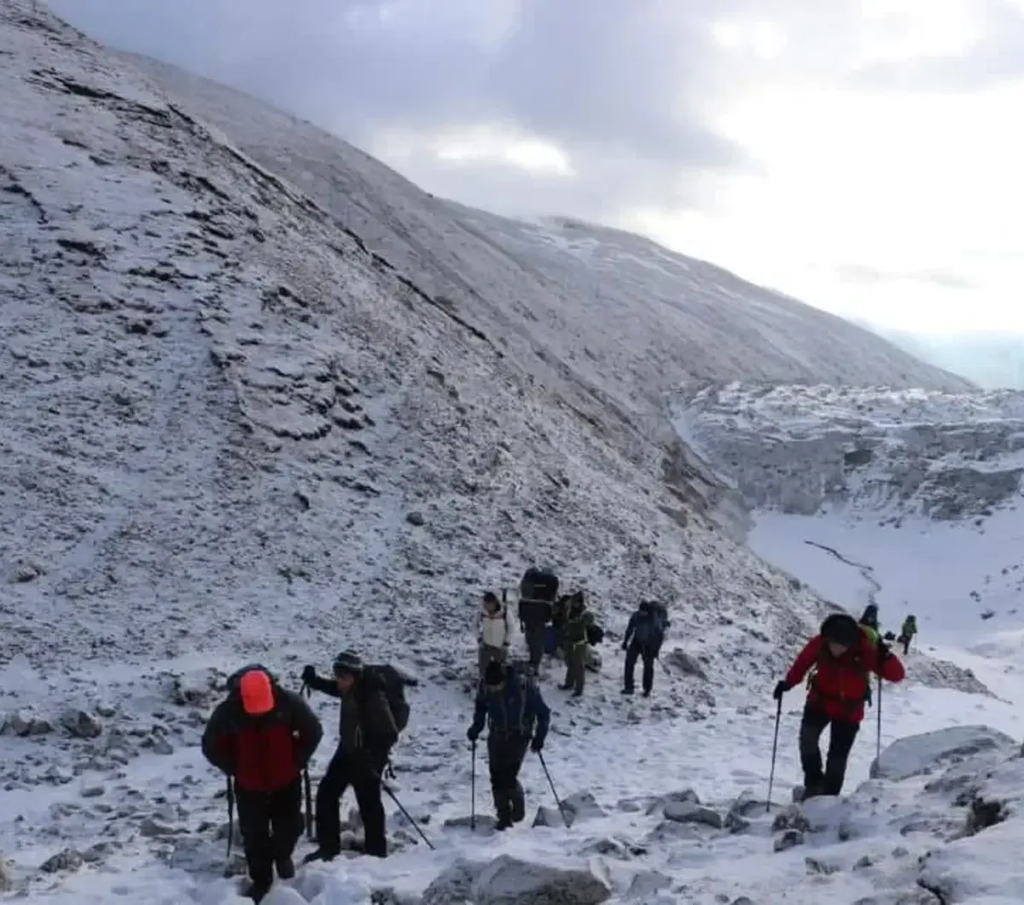
Kanchenjunga sits in far eastern Nepal, and getting there is part of the commitment — this isn’t a trail you tack onto a short holiday. Depending on the itinerary chosen, trekkers head toward either the North or South Base Camp area, or sometimes both, passing through remote mountain settlements, dense forest, and cardamom-growing valleys on the lower stretches before the terrain opens into high alpine country near the base camps.
The Kanchenjunga Circuit Trek route runs through the Kanchenjunga Conservation Area, and the scale of it is honestly hard to describe until you’re standing in it — huge glacial valleys, high passes, and views of Kanchenjunga itself, the third-highest mountain on earth. Infrastructure is minimal compared with the Everest or Annapurna regions, and villages along the way are small and spread far apart. This is a trek that requires considerably more planning and time than a compact EBC or Langtang trip, both in terms of logistics and physical commitment.
Kanchenjunga Circuit Trek Difficulty
Kanchenjunga Circuit Trek difficulty is shaped by length as much as elevation — this is typically a three-week-plus undertaking with many consecutive walking days, limited facilities, and long stretches between villages where support options are thin. Endurance matters here more than raw fitness on any single day, since fatigue tends to build over the course of the trek rather than hit all at once. Because the region is so remote, careful acclimatization and solid guide and logistics planning aren’t optional extras — they’re part of what makes the trek safe to attempt at all.
How the Four Treks Compare at a Glance
| Trek | Main Character | Difficulty Focus | Best For |
| 12-Day EBC | Classic Everest experience | Altitude + long days | First major Himalayan trek |
| Manaslu Circuit | Remote circuit | Larkya La + endurance | Experienced trekkers seeking quieter trails |
| Langtang Valley | Shorter Himalayan valley trek | Ascents + altitude | Limited-time trekkers |
| Kanchenjunga Circuit | Remote eastern Himalaya | Duration + remoteness + altitude | Experienced trekkers wanting isolation |
Looking at it side by side, the real dividing lines are time and remoteness more than raw difficulty. EBC and Langtang both work on shorter schedules, while Manaslu and Kanchenjunga ask for more days and more trekking experience going in. Which one counts as “best” really comes down to what you’re optimizing for — a bucket-list peak, quiet trails, or simply how many vacation days you actually have.
Preparation, Permits, Accommodation and Cost Considerations
Whichever route you pick, the basics of preparation don’t change much: build up walking endurance beforehand, break in your boots long before you fly to Nepal, pack proper layers for cold nights, and give your body time to adjust to altitude rather than rushing the schedule. Permit requirements differ by region — Manaslu and Kanchenjunga both require restricted-area permits and a licensed guide, while EBC and Langtang have their own park and conservation fees — and these rules do shift from time to time, so it’s worth confirming current requirements close to your departure date rather than relying on older information.
Accommodation on all four routes is mostly teahouse-style, though the rooms get simpler and the menus shorter the further you get from Lukla or Kathmandu. Costs vary with trip length, whether you hire a guide and porter, permit fees, transport, and the season you’re traveling in — trekking in peak season generally costs more than shoulder-season trips. Talking to an established operator, such as Action Nepal Treks, can help sort out these logistics ahead of time, particularly for the restricted-area treks where permits and guides are mandatory rather than optional.
Which Nepal Trek Should You Choose?
If you want the classic Everest experience without committing three weeks to it, the 12-day EBC trek delivers that in a tighter package. If you’ve trekked before and want something quieter with a serious pass crossing, the Manaslu Circuit is worth the extra planning. Langtang makes sense when your calendar is the limiting factor but you still want real Himalayan scenery. And if isolation and a genuine sense of remoteness matter more to you than convenience, Kanchenjunga is where that lives. In the end, the right choice comes down to matching the trek to your fitness, your available days, how you handle altitude, and how comfortable you are being far from the nearest road.
Final Takeaway
Nepal doesn’t really have one “best” trek — it has several very good ones built for different people. Time, difficulty, remoteness and scenery pull in different directions depending on the route, and the smartest approach is picking the trek that matches your actual priorities rather than chasing whichever trail gets talked about most.
FAQs
Is the 12-day Everest Base Camp Trek difficult?
It’s moderate to challenging, mostly because of altitude rather than technical terrain. Expect long walking days and thinner air above Namche Bazaar, with acclimatization playing a bigger role than raw fitness.
What is the usual 12 Days Everest Base Camp Trek route?
Most itineraries run from Lukla through Namche Bazaar, Tengboche, Dingboche and Lobuche to Everest Base Camp, then back down. Exact day splits vary by operator and flight schedules.
Is Manaslu Circuit Trek harder than Everest Base Camp?
It depends on the person and the conditions. Manaslu involves a high pass crossing at Larkya La and more remote logistics, while EBC has its own altitude challenges — neither is universally harder.
What makes the Manaslu Circuit Trek route special?
Its remoteness and cultural range stand out, moving from subtropical valleys to Tibetan-influenced villages, with Larkya La as the trek’s high point, literally and otherwise.
How difficult is the Langtang Valley Trek?
Generally moderate, with steady daily ascents and some altitude exposure near Kyanjin, but shorter and less demanding overall than Manaslu or Kanchenjunga.
What is the Langtang Valley Trek route like?
It starts at Syabrubesi and follows forested trails through Tamang villages up to Langtang village and Kyanjin, with alpine views of Langtang Lirung along the way.
Is Kanchenjunga Circuit Trek suitable for beginners?
Not really recommended for a first trek. Its length, remoteness and limited facilities make prior high-altitude trekking experience genuinely useful.
What makes the Kanchenjunga Circuit Trek route different?
Its location in remote eastern Nepal, minimal infrastructure, and passage through high valleys near the base camp areas set it apart from the more developed Everest and Annapurna regions.