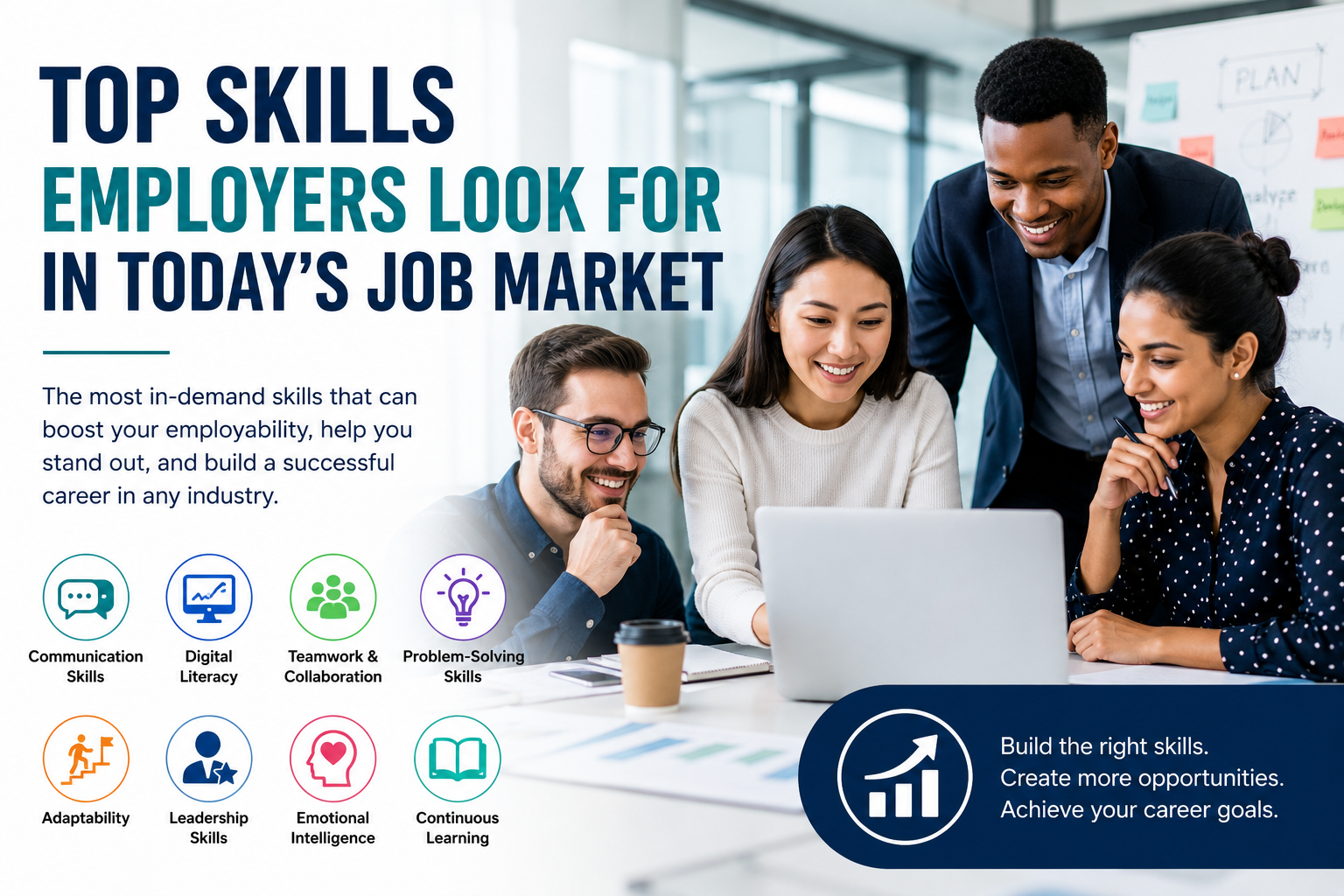
Over decades, the work market has changed considerably. The way companies recruit and hire talent as well as retain employees has been completely changed by technological progress, the telecommuting workforce, globalisation and evolving business goals. Academic skills and work experience are still important, but it is the skills that candidates bring to their workplaces that are increasingly important. Employers expect people today to be able to adjust to change, communicate well with people, work with others, and use technology to enhance performance. Top skills employers want, such as communication, teamwork, problem-solving, adaptability and digital literacy have become important across nearly all industries. These skills are vital for businesses to compete in today’s world, where innovation and efficiency are key drivers of success.
If you are a recent graduate, career changer, or an established employee looking to move up the ranks, knowing what employers are looking for can give you a leg up in building your professional profile. Through the development of appropriate technical and soft skills abilities, job seekers can enhance their employability and set themselves up for future career advancement.
Why Skills Are Now More Important Than Qualifications Alone
Traditionally, a lot of employers focused on the educational qualifications and number of years in experience when hiring candidates. The traditional priorities remain but organisations have realised that skills are also very likely to dictate the effectiveness of the employee in the real world.
The business world is rapidly changing. New technologies are being introduced all the time, customer expectations are shifting and industries are continually changing. Therefore, employers are looking for individuals who are adaptable, willing to learn and can contribute to the team right away.
Employers Appreciate Candidates That Can:
- Learn new systems in a short period of time
- Collaborate with a variety of teams effectively
- Work effectively and independently to resolve workplace problems
- Effectively and professionally present ideas
- Resolve and adjust to shifting duties
- Utilize technology efficiently
These skills are essential for anyone to be able to participate in the objectives of an organization, irrespective of the industry or job function.
1. Digital Literacy: An Important Skill in the Contemporary Workplace
Digital literacy is one of the most sought-after skills by employers in today’s society. With technology increasingly being a part of everyday business activities, staff needs to know how to effectively and responsibly use digital tools.
Digital literacy is more than just being computer literate. It is the identification, analysis, development and dissemination of information through the use of digital technologies. Staff members will be expected to use software applications, communicate online and interpret digital data and remain vigilant about cyber issues.
Technology is used by almost all industries. From the healthcare sector to marketers leveraging digital analytics platforms, educators engaging in online learning, and financial professionals relying on specialized software that performs vital functions, the use of these records has become integral to many aspects of daily life.
These records have become a part of daily life for many sectors, including healthcare applications, marketers leveraging digital analytics platforms, educators conducting online learning, and financial professionals relying on specialized software that performs critical functions.
What Digital Literacy includes
There are a number of critical skills in modern digital literacy:
- Application of productivity software in an effective manner
- Using digital communication channels
- Knowledge of online security measures
- Organization and management of digital information
- Acquiring skills in new software technologies
- Working together using cloud applications
How Job Seekers Can Enhance Digital Literacy
This skill can be developed without being technically inclined. People can develop their skills by:
- Taking online courses in the field of technology
- Learning basic workplace software
- Collaborating using digital resources
- Getting information about new technologies
- Improving cybersecurity awareness
Employers view digital competence as a key component that supports productivity and innovation.
2. Communication Skills: The Foundation of Success in the Workplace
The skill of communicating is still one of the most desirable talents in the workplace. Whatever type of job they have, staff members spend a major part of their working day exchanging information with peers, superiors, customers and shareholders.
Good communication leads to collaboration, less misunderstandings and better achieving of the organization’s goals. Clear communication is one key to getting leadership roles and promotions.
The Types of Communication Valued by Employers
Verbal Communication
Verbal communication involves conveying ideas clearly in meetings, presentations, interviews and daily conversations.
Written Communication
These are the ways that staff members commonly communicate:
- Emails
- Reports
- Proposals
- Project documentation
- Instant messaging platforms
Professional, concise and easy-to-understand messages can be achieved by strong writing skills.
Active Listening
Communication is more than just talking. Employers like people who:
- Listen attentively
- Ask thoughtful questions
- Understand different viewpoints
- Take constructive criticism
Ways to improve communication skills
- Practice public speaking
- Enhance business writing techniques
- Take part actively in team discussions
- Accept feedback on performance from supervisors
- Form the practice of listening to others
3. Problem-Solving Skills: Turning Challenges into Opportunities
All organizations have challenges. Employers require people who can solve problems well, whether it is to deal with customers’ complaints, to improve efficiency in the way the operation works, or to solve technical problems.
Problem-solving includes a set of tasks that entail recognizing the problem, gathering information, considering alternatives, and taking action. People who excel in this area can be valuable contributors, and serve to help organizations solve problems and attain goals.
The characteristics of Strong Problem Solvers
Problem-solving abilities are often displayed by:
- Critical thinking
- Analytical reasoning
- Creativity
- Sound judgment
- Decision-making ability
Advantages of Strong Problem-Solving Skills
People who are effective problem solvers can:
- Improve productivity
- Reduce operational costs
- Increase customer satisfaction
- Minimize workplace disruptions
- Support innovation initiatives
Problem-solving is a much in-demand competency because of the outcomes that directly lead to organizational success.
4. Teamwork and Collaboration: Driving Collective Success
Cooperation is a key aspect of today’s work environment. Projects are often multidisciplinary, geographically dispersed and made up of people striving for common goals. The capacity to work as a group member has become a key part in the interconnectedness of organizations.
Characteristics of Effective Team Members
Employers value individuals who:
- Respect different perspectives
- Support team goals
- Share knowledge openly
- Communicate respectfully
- Take responsibility for their duties
Teamwork is important for effective working relationships and as part of a positive company culture.
The Importance of Teamwork in Various Industries
Life in the workplace requires frequent collaboration between workers in healthcare, education, industry, information and communications, finance or retail. Teamwork helps to bring together various abilities and knowledge to achieve greater results in organizations.
5. Adaptability: Thriving in a Constantly Changing Workplace
Flexibility in adapting to change is one of the most crucial traits of successful business people. Organizations are continually dealing with change driven by technology, market conditions, regulations and customer expectations. Employees who are flexible in challenging new situations tend to do better in times of transition.
Signs of Adaptability
Adaptable professionals typically:
- Embrace change willingly
- Quickly acquire new abilities
- Be cheerful in difficult times
- Adjust priorities when necessary
- Work effectively in challenging situations
Practices to Cultivate Adaptability
People can increase their ability to adapt by:
- Pursuing continuous learning
- Being open-minded to suggestions
- Trying out new situations
- Fostering a growth mindset
- Gaining new knowledge on a regular basis
Flexible employees are an asset to the employers as they can help their organization navigate change smoothly.
6. Critical Thinking: Making Better Decisions
Critical thinking is the ability to evaluate and assess information objectively, make informed decisions based on evidence and not assumptions. Today, with all this information at our fingertips, this is a much sought-after skill. Employers want someone who can think carefully about a situation, determine risks and suggest appropriate solutions.
Critical Thinking Helps Employees:
- Analyze complex information
- Evaluate multiple viewpoints
- Identify potential problems
- Make informed decisions
- Enhance strategic planning efforts
The critical thinkers are valuable professionals who can make a difference in organizational development.
7. Leadership Skills outside Management Positions
The “the boss” concept is now obsolete for leaders and managers. Employers have come to appreciate employees that exhibit leadership skills at every level of an organization. Leadership is characterised by initiative, accountability, motivating others and being a positive contributor to a work environment.
Examples of Workplace Leadership
Employees display leadership when they:
- Join in worthwhile projects
- Mentor colleagues
- Suggest process improvements
- Respond to consequences
- Challenge teams to reach their goals
High potential employees may have more chances for promotion and professional development due to strong leadership potential.
8. Organizational Skills and Time Management
In this busy era, time management is a critical skill to have. Employers value people who are able to multitask and deliver quality and timely work. They allocate resources, prioritize tasks, and execute tasks effectively, which is aided by using their organizational skills.
Essential Time Management Techniques
Successful professionals often:
- Make daily ‘list of things to do’
- Set realistic deadlines
- Prioritize high-impact activities
- Use productivity tools
- Minimize unnecessary distractions
Accurate time management helps to contribute to better productivity and less stress at work.
9. Emotional Intelligence: Developing Strong and Successful Professional Relationships
Emotional intelligence refers to the ability to identify, understand and manage emotions while relating and interacting effectively with others. Emotional Intelligence is becoming more valued in organizations because of its ability to aid in collaborating, leadership, customer service, and conflict resolution.
Components of Emotional Intelligence
Key elements include:
- Self-awareness
- Self-regulation
- Empathy
- Social awareness
- Relationship management
Those who have good emotional intelligence make better, more positive interactions and more positive professional relationships in the workplace.
10. Continuous Learning: Staying Competitive in a Dynamic Job Market
Lifelong learning is a must in the modern workforce. Technologies change, industries evolve and new opportunities continually appear. Employers like candidates who are dedicated to their continuous education and professional development. A sense of curiosity, initiative and adaptability is shown through continuous learning.
Ways You Can Pursue Continuous Learning
Professionals can further develop their skills by:
- Taking online courses
- Taking part in conferences and seminars
- Earning certifications
- Reading industry publications
- Membership in professional organizations
People who value learning and are committed to it stay competitive and relevant throughout their careers.
How These Skills Are Used in Various Industries
These skills are valued so highly by employers because they are applicable to any job. The communication, digital literacy, teamwork, problem solving and adaptability skills apply to almost every career.
1. Healthcare
The healthcare professionals are dependent on:
- Communication skills
- Digital record management
- Team collaboration
- Critical thinking
2. Finance
Financial professionals use:
- Analytical reasoning
- Problem-solving
- Technology platforms
- Organizational skills
3. Education
Educators benefit from:
- Communication abilities
- Adaptability
- Leadership skills
- Digital literacy
4. Technology
Technology professionals require:
- Continuous learning
- Team collaboration
- Critical thinking
- Advanced digital competencies
5. Retail and Customer Service
Employees at retail stores rely on:
- Communication
- Emotional intelligence
- Adaptability
- Relationship-building skills
These skills can be applicable to a wide variety of industries, developing them can lead to increased career opportunities and greater professional flexibility.
Conclusion
It is not enough just to have technical skills for success in today’s job market. Employers are increasingly looking for candidates who have a balanced mix of communication skills, digital literacy, problem solving skills, team working, adaptability, emotional intelligence and leadership skills.
These skills allow workers to be productive in a variety of work settings and continue to be useful in changing workplace circumstances. Continuous skill development and learning can equip job seekers with valuable skills, boost their job prospects, and pave the way for their future success in the workforce.
Frequently Asked Questions (FAQS)
Which is the most important skill that employers seek the most?
Regardless of industry, communication skills are always in the top ten skills due to their effect on the team, leadership, customer service and productivity within the workplace.
Why is it that digital literacy is of importance in every industry?
Digital literacy enables employees to be effective with technology, engage in online collaboration, handle information properly and stay up-to-date with new technologies that help modern businesses function.
How can I improve my adaptability?
Adaptability can be developed by becoming a life-long learner, accepting feedback, offering to do new tasks and remaining positive about change.
Which one is more important, soft or technical skills?
A combination of both is most desirable to most employers. Technical skills assist employees to complete specific tasks, and soft skills enable them to work effectively with others and adjust to challenges in the workplace.
What are some ways that job seekers can showcase these skills in interviews?
Candidates can draw on these competencies by giving examples of their communication, teamwork, leadership, and problem-solving skills in past work, learning, volunteering, or personal projects.