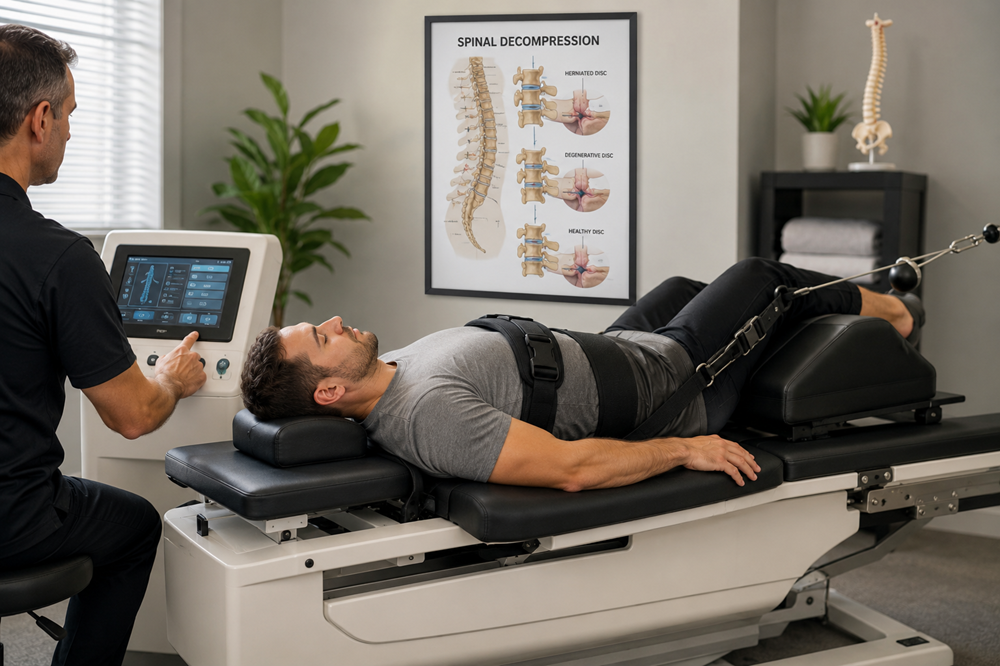
Disc-related pain can narrow daily life quickly. Sitting may cause burning, walking may trigger pain that travels down one leg, and sleep can become broken. A bulging or herniated disc may press a spinal nerve, creating pain, tingling, numbness, or weakness. Rest has a place, but too much stillness can stiffen joints and weaken support muscles. Spinal decompression therapy offers a measured way to reduce disc pressure and support steadier recovery.
A Conservative Care Option
Lower back pain deserves careful assessment because disc symptoms can mimic muscle strain, hip trouble, or joint irritation. Clinical guidance from Roach Spine & Disc Center can help patients connect symptoms with likely sources before care begins. In that setting, decompression uses measured traction to ease pressure near injured discs and irritated nerves.
What Disc Pressure Does
Spinal discs sit between vertebrae, where they absorb load and permit controlled motion. Each disc contains a gel-like center inside a tougher outer ring. When pressure rises, inner material may push outward. That shift can crowd a nerve root. Symptoms may then travel into the buttock, thigh, calf, or foot.
How Decompression Works
Spinal decompression therapy uses a motorized table to gently lengthen selected spinal segments. The stretch is controlled, timed, and adjusted to the patient’s tolerance. Lower pressure inside the disc may help retract bulging tissue. Nutrient-rich fluid can also move through damaged areas more efficiently. That exchange supports repair in tissue with limited blood supply.
Why Nerves Calm Down
Nerve roots are sensitive to both pressure and chemical irritation. A crowded nerve may fire pain signals during small position changes. Decompression can reduce the mechanical load around that structure. Less compression may lower inflammation and sensitivity. As irritation settles, walking, sitting, and bending often feel more manageable.
Better Motion Matters
Pain changes movement before a person notices it. Steps shorten, hips tighten, and the lower back may stay guarded. Those habits can increase stiffness and reduce muscle endurance. Decompression may create enough relief for safer motion. Once movement improves, guided exercise can rebuild spinal support and restore better mechanics.
Who May Benefit
This care may suit people with bulging discs, herniated discs, sciatica, or age-related disc thinning. It is less appropriate when pain comes from fracture, infection, tumor, or severe instability. A clinician should review imaging, reflexes, strength, sensation, and symptom behavior first. Careful screening protects patients from the wrong treatment path.
Treatment Is Gradual
Meaningful change usually takes more than one session. Many plans include repeated visits over several weeks. During care, the table alternates between a gentle pull and a release. Patients remain clothed and should feel controlled tension, not sharp pain. Progress is judged through function, sleep, walking tolerance, and reduced nerve symptoms.
Exercise Still Counts
Decompression is strongest when paired with active rehabilitation. Core, hip, and leg strengthening reduces excess load on spinal discs. Walking, swimming, or cycling can improve circulation without heavy compression. Stretching may relax tight tissues that limit motion. Exercise choices should match the diagnosis, pain stage, and physical capacity.
What To Avoid
Disc irritation can worsen with poor lifting, deep forward bending, or sudden twisting. Heavy loads held away from the body add extra strain. Aggressive toe touches and straight-leg sit-ups may also increase symptoms. Patients should not force movements that cause sharp radiating pain. Better progress comes from controlled pacing and clinical feedback.
Expected Results
Results depend on age, disc health, symptom duration, and daily habits. Some patients notice early relief, while others improve gradually. Lasting gains often come from combining decompression with strength training, posture changes, and smarter movement. The aim is better function, not temporary numbing. Less pain should allow more confident participation in routine activities.
When To Seek Care
A medical exam is important when pain travels below the knee or causes weakness. Night pain, fever, trauma, cancer history, or unexplained weight loss also needs prompt review. Sudden bladder or bowel disorders require urgent care. These signs may point to conditions that require different treatment before decompression is considered.
Conclusion
Spinal decompression therapy can reduce disc-related pain by lowering pressure, easing nerve irritation, and helping movement feel safer. It works best after a clear diagnosis and with a plan that includes activity, strength, and practical body mechanics. No single treatment fixes every spine problem. With careful guidance, many patients can move from guarded routines toward steadier comfort and stronger function.


Users interested in iptv hollanda often look for a more comfortable viewing routine.