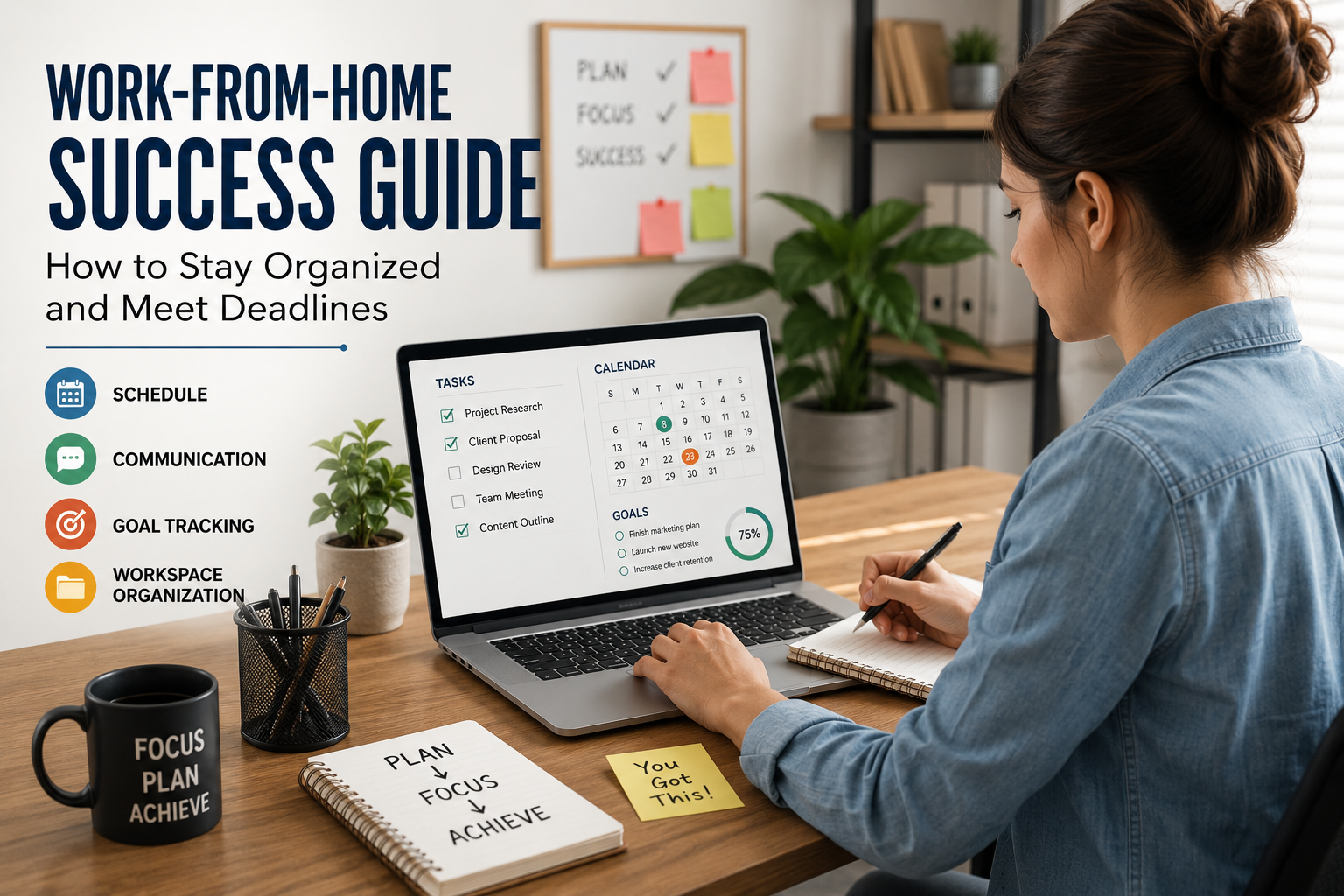
The advancement of work-from-home jobs have changed how people do their work. What began as a temporary solution in the workplace has become a permanent one for businesses and employees across various industries. Staff have flexibility, no commuting to work, and can have a more tailored office space. But along with the benefits of working from home, come its challenges. If employees aren’t organized, they may suffer from missed deadlines, an inability to communicate well, distractions, and even a drop in productivity.
Working remotely requires establishing systems to ensure consistency and accountability. When staff learn how to plan their schedules, communicate with others effectively, keep their goals in mind, and create a successful workspace, they’re likely to do very well. Meanwhile, knowing how to get past those common problems like getting stuck in a rut and procrastination is vital if you want to have consistent performance. Remote employees can leverage practical strategies and develop productive habits to stay focused, efficient, and reliable in remote setting.
Why Organization Matters in Remote Work
In managing remote tasks effectively, the significant distinction is the degree of personal responsibility for the activities of a typical working day. However, in a traditional office setting, workers typically work in a structured environment with a clear boss have frequent direct supervision and relationships, which keep them in line with workplace expectations. For remote workers, it’s likely that they have to build many of these by themself.
The key to effective remote work is organization. With tasks defined by priorities and plans laid out, employees can concentrate on purposeful work instead of continually responding to demands and unforeseen obstacles. Another advantage of good organization is that it will help minimize stress as workers will be aware of what needs to be done and when deadlines are closing in. They are not overwhelmed by a multitude of duties they must handle, and proceed with tasks with confidence following a carefully considered plan. A well-organized system creates a feeling of control that enhances productivity, job satisfaction and helps the employees to keep professionalism levels high in remote working.
Creating a Reliable Daily Schedule
A good schedule aids remote employees in developing consistency and focus during the day. As opposed to the office, which usually establishes work hours, remote work can be set up in such a way that employees should establish their own. Having a set morning routine and going to work at the same time every day helps develop a professional attitude and provides a sense of the day starting.
There should be set aside time in the daily schedule for specific duties. Complex, important or demanding tasks may be best done when one is at his or her peak for concentration, and routine administrative tasks may be undertaken when concentration is at a lower level.
There should be breaks planned in the schedule to reduce mental fatigue and help to focus in the longer term. Employees that plan their days regularly are less likely to feel rushed or miss deadlines because they have scheduled enough time to complete the important tasks. A well-defined schedule can also help create a balance between work and personal life, which is crucial for preventing burnout, a common issue for remote workers.
Effectively Managing Remote Tasks: Smart Planning
A proactive approach to planning and prioritizing is essential to success with remote work. Rather than being reactive to tasks, workers can be proactive in having a system in place to prioritize tasks by urgency and importance. Daily and Weekly plans are used to keep employees informed about current projects and make sure the deadlines are attainable.
Structured planning techniques can be very useful for professionals who want to enhance their way of working with remote tasks in an effective and productive way. Small tasks help with the management of big projects and enable the workers to measure the progress more accurately. Planning is also carried out at the start of every week, which helps to identify potential problems early.
Therefore, if employees periodically evaluate their priorities and make changes to their planning as necessary, they can better adapt to having to deal with fluctuating workloads without compromising quality or efficiency.
Enhancing Communication among Distributed or Remote Teams
Communication is a key part of the success of remote employees. There is a potential for misunderstandings if communication practices are not strong or consistent, because the team members are not in the same place. The effective remote employee is concerned with communicating and provides updates, asks questions, and seeks clarification when needed.
The first step in good communication is to be responsive and professional. Responses to messages should be received promptly by team members and status updates on the projects should be given when relevant. The lack of physical distance is addressed through video meetings, instant messaging and collaborative project management tools. Frequent supervisor and peer feedback ensures shared goals and helps identify potential problems at an early stage.
Clearly, good communication also contributes to trust among team members, particularly when leading remotely where managers can’t physically see the results. When employees are transparent and are telling the truth, their working relationship may be more effective and beneficial for team objectives.
Best Practices for Virtual Meetings
Virtual meetings can be a powerful tool to improve productivity, or it can be a huge time suck. A meeting should be focused, have a clear agenda, and have an intention of what will occur. Pre-reading material benefits participants by having them review information beforehand and maintaining a focus and efficiency in the discussions.
When remote workers are part of a meeting, they should be ready to provide valuable information and pose pertinent questions. On discussions, make notes to make sure important action items are not missed. Summarizing and sharing responsibilities during meetings help make it clear to all involved. Virtual meetings can be used as effective work sessions, not just a chore, to boost team collaboration without wasting time on unnecessary disruption to individual productivity.
Measure Goals and Track Progress
Goal tracking offers direction and accountability in the distance workplace. When there is no obvious work activity, there must be an accurate way for workers to measure themselves and confirm that the goals that are important are being achieved. Having clear goals assists workers to focus on productive results, and not just to work for the sake of it.
The first step to effective goal tracking is to set up measurable goals. Goals can be about finishing tasks, making targets, keeping to customer service levels, or boosting efficiency. The progress can then be tracked via project management tools, performance dashboards or individual productivity systems.
Reassessment at regular intervals enables those working to discover what they have accomplished, to revisit any issues and to modify priorities if needed. People who are regularly checking on progress are more likely to remain motivated since they will be able to see the impact of their work on larger goals.
Creating an Effective Home Office
Productivity, concentration and job performance are directly affected by the physical work environment. The dedicated workspace provides a psychological separation between work and private life, and helps to focus better during working hours.
A well-structured, ergonomic, and clutter-free work environment can help minimize distractions and enhance productivity. Good lighting, ergonomic furniture, and solid technology add to a successful experience. A well-organized workplace can also eliminate lost time looking for parts or documents. Not all people get a dedicated workspace, but a dedicated space in the house can be very beneficial.
The purpose of this project is to create an environment that enables focused and professional work, and promotes regular working patterns. An ergonomically designed work environment can enhance productivity and keep workers motivated throughout the day.
Breaking the Isolation to Work Remotely
Working from home is a great deal of freedom and flexibility, but it can also be isolating. Without in-person contact every day, there may be less interaction with others—neither socially or professionally. This isolation can have a negative impact on motivation, collaboration, and well-being over time.
Isolation can only be overcome by one’s own will. Actively engage in team meetings, virtual socializing, and group projects, as much as possible, for remote workers. Catching up with colleagues regularly helps keep up the professional connection and also allows for informal communication. Emotional well-being is also maintained outside of work through social relationships, such as family, friends and community participation.
For some professionals, it’s important to sometimes have access to coworking spaces or public places where it’s suitable. Creating strong relationships at work and beyond supports the retention, motivation and connection of remote workers.
Prevent Procrastination & Stay Focused
One of the major problems many people face when working remotely is the inability to follow through. In the absence of the explicit guidance of an employee, distractions at home, priorities, and lack of structure can make it difficult to stay on task. However, procrastination can also be controlled if you make deliberate practices and habits in being productive.
A great way to do this is to divide up a large job into smaller tasks that are more manageable. Small jobs may seem easier to accomplish and less daunting. Defining milestones and setting clear deadlines also adds accountability and momentum. Some people working remotely find it helpful to use methods for time management that involve working for periods of time followed by periods of rest.
Turning off irrelevant notifications and keeping the desk clutter-free helps to focus. Consistency is important, as for most people productivity is a habit and not a spur of the moment effort. Establishing habits to take action will help eliminate procrastination and keep them moving towards their objectives.
Conclusion
Arriving at a successful work-from-home arrangement isn’t as easy as using a laptop and being able to get online. Good organizational habits, communication, goal tracking and an organized workspace are required for long-term productivity. Those who work remotely and set up a schedule and take charge of their work are more likely to get things done on time and produce quality work.
Issues of isolation and procrastination are common, but can be tackled by taking deliberate steps and following healthy working practices. Through planning, collaboration, accountability, and ongoing improvement, professionals can establish a sustainable remote working schedule that will be beneficial to both their personal health and their professional success. These skills will be more valuable to those who are better equipped to succeed in flexible, increasingly digital work environments as remote work continues to shift.