Introduction
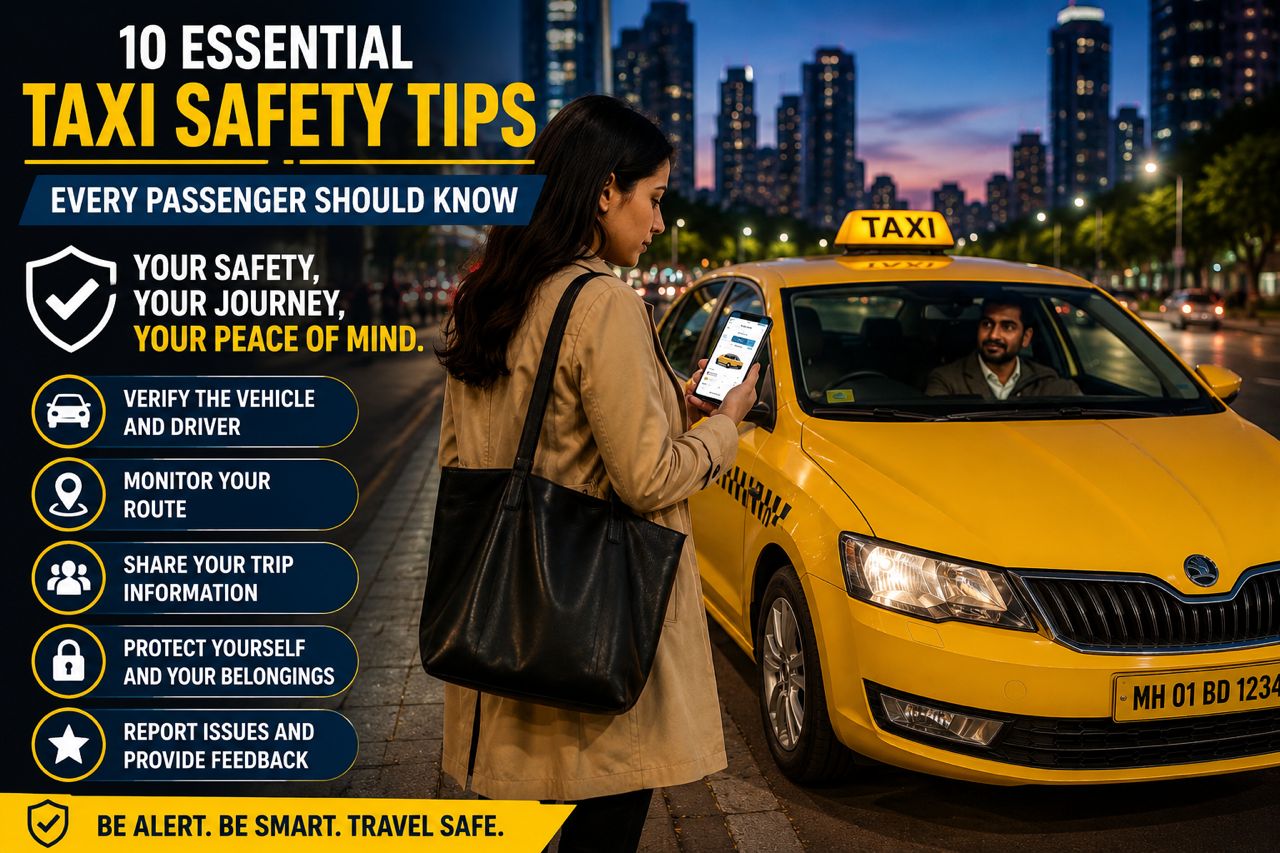
Taxis and ride sharing has grown to become the top choice for travel in urban and rural centers around the world. For going to work, to the airport, out to a business meeting, or back home from a night out, passengers use these transport services daily. Although the taxi services have enhanced convenience, access and efficiency we must also not forget the importance that personal taxi safety tips play in each trip. That which is basic may be also what is best when it comes to safety measures and they do much to reduce risk and contribute to a smooth secure travel experience.
Reliable transport companies today are putting into practice what they can do for passenger safety which includes the use of tech, background checking of drivers, vehicle checks and customer support. At TheQTaxi we see ourselves as advocates of safe and reliable transport which is why we put our passengers in the hands of professional drivers and we also provide easy booking options. Before you book your next ride do check out what TheQTaxi has to offer at theqtaxi.com we have modern transport solutions that are very much focused on passenger comfort and safety. Also to that which service you end up using personal awareness is still your best tool for a safe trip.
Why Passenger Safety Matters
Passenger safety is not just about accident prevention. We also look at issues of personal info protection, that the right driver and car is assigned, we pay attention to what route is being taken and we do what we can to reduce chance of theft, fraud or other security issues. While the great majority of taxi rides go without a hitch, we do well to develop good safety practices which in turn better enable us to react should the unexpected happen.
Many people think that transport companies are the only ones at fault in terms of safety. While it is true that companies do play a large role which they fulfill via vehicle maintenance, driver training, and customer support, passengers also have a responsibility to be alert. Actions like checking in on your ride, sharing your trip info with family, and being aware of your surroundings may not seem like a big deal but they do make a large impact. These actions require very little effort from the passenger but in return they add an extra layer of safety which in turn makes the travel experience safer for all.
1. Verify the Vehicle before Entering
Check out the License Plate and Vehicle Details.
Among the top safety measures is the practice of verifying that the drop off vehicle is the same as what is put forth in the booking on the app or via the dispatch service. Before you open the door or get in the car check the license plate, make, model and color of the vehicle against what is shown in your booking confirmation. Criminals at times will play the role of the real driver which is why you should be aware and do this check in high traffic areas like airports, train stations, shopping centers, and entertainment districts.
Passengers should not jump into a ride with a driver that knows their name or destination. Instead we recommend that you check all of that info out first. It only takes a few moments to look at the vehicle’s details which in return will prevent you from getting in the wrong car and also greatly reduce personal security issues. Should anything not match up, get out if you have to and report it to the customer support team via the official platform. It is better to trust your eyes and do a proper check then to take on unnecessary risk.
2. Confirm the Driver’s Identity
Request the Driver to Confirm Your Booking.
Driver check off is of equal importance to that of the vehicle check. Before you hit the road see that the driver is the one presented in the app or by the taxi company. At pick up time identify the driver’s name and look at the photo if it is provided. Instead of questioning if the person is your driver, have the driver confirm that he is the one associated with your ride booking. This easy step prevents ride hijacking.
Professional drivers place value on verification which is what most of their passengers do also. Should a driver’s appearance greatly differ from that which is in the profile picture or should any details put you off do not get in the car. Report that out to the transport company right away. Your safety is what we should put first before issues of inconvience or delay. A good service will stand behind passengers that are into security and go by the advised identification steps.
3. Monitor Your Route during the Journey
Use GPS Tracking for Added Awareness
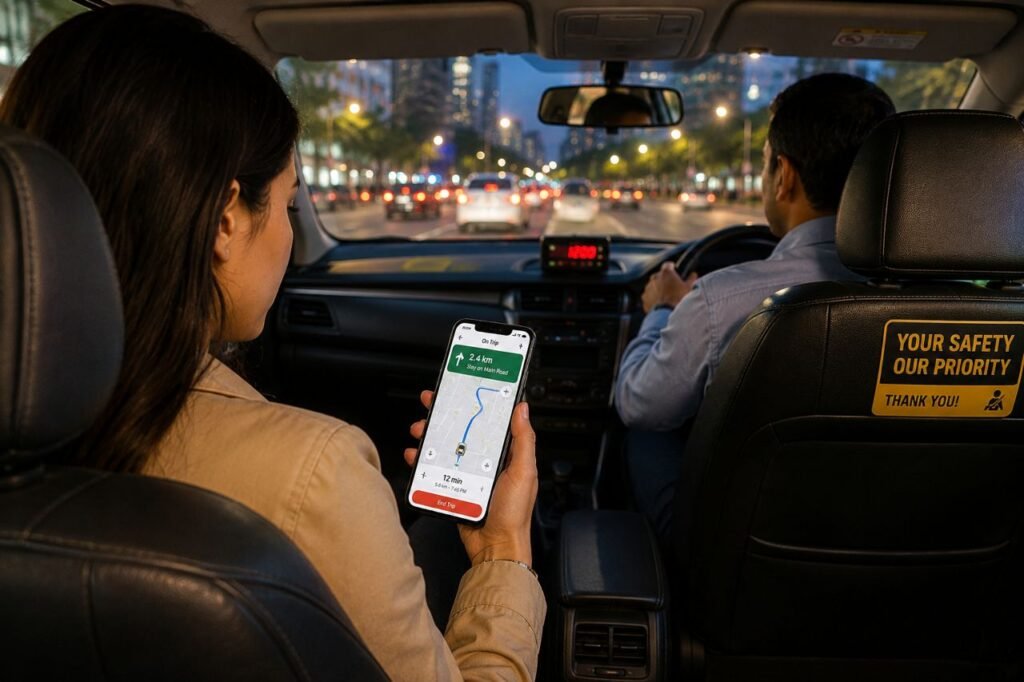
Modern technology in smart phones has made route tracking a piece of cake. As a passenger you should put to use a navigator app during your ride. This is not to say that you should be a road pirate question every turn the driver takes, but do use the tool for what it is which is to alert you to the big picture of your route and how we are doing to get to our destination. Also by the use of this feature you may spot large scale detours and bring up issues before they snowball into bigger problems.
If at any point the driver deviates from the set route put on your calm and ask for an explanation. That which may be traffic issues, closed roads, accidents, or work sites most professionals will be happy to go into alternative routes. Also do note that if the reason is not what you are looking for or if the route strays greatly from what was planned do get in touch with a friend, family member, or customer care. At all times to keep aware of where you are going which in turn makes the passenger confident and informed instead of in the dark.
4. Share Your Trip Information
Let Someone Know Where You Are
One of the basic at the same time very useful safety steps is to share trip info with a trusted person. Many ride hailing apps also include features which allow passengers to send out in real time ride details to family members or friends. What is put out includes driver info, car ID, present location, and estimated arrival time. By using these features you add an extra layer of accountability and peace of mind knowing that someone is aware of your travel plans.
When ride sharing technology isn’t an option passengers may still input their destination, expected time of arrival, and transport company into a shared platform before they leave. This is very useful for late night travel, long distance trips, or when traveling to unknown areas. Having a person aware of your travel plans is a peace of mind issue and also a safety issue should the unexpected happen. Safety experts do in fact stress the importance of travel communication because informated contacts may be able to react fast in case of issue.
5. Choose Safe Seating Positions
Sit in the back when able to.
Where you sit in a taxi may also change your level of comfort and safety. Also reports from the transportation safety field tell that it is a good idea to sit in the rear passenger side whenever you can. That position provides more room for you, better view of the environment outside the taxi, and also a safe way in and out of the vehicle away from traffic. Also it creates a professional distance between passenger and driver.
In many cases the rear seat also provides what is needed for when passengers must exit quickly or to which they may wish to discreetly speak with emergency contacts. Though in the main it is safe to sit elsewhere, in the rear we see a practical choice which is often made. Also, passengers traveling alone may profit greatly from this which in turn maximizes personal security and at the same time maintains a respectful and comfortable environment for the duration of the trip.
6. Protect Your Personal Information
Be Careful During Conversations
In many cases of taxi rides there is light conversation between passengers and drivers. Although at times that may improve the trip experience what passengers should also be aware of is that they should not share in which it is that very private information they have, this includes home security issues, financial info, which are the details of your travel, passwords, work place security or personal ID numbers. What we see also is a lot of times people may not even know that they are leaving themselves open to issues out there with which that which of no harm was intended.
Also in that regard passengers should be careful when it comes to talking about private issues within the vehicle. What may pass for casual chat may in fact give out private info to third parties. Proper privacy does not mean being unsociable; it is just a matter of what you choose to share. By practicing good info security we do better at protecting ourselves which in turn reduces identity theft, fraud and other which may be avoided.
7. Stay Alert and Avoid Distractions
Keep Awareness of Your Surroundings
Pass travelers tend to spend their train and plane time on email, social media, movies, or music. While that is the norm, in some cases what may be a distraction from the environment. By staying alert passengers may notice changes in the route, unusual driver actions, traffic issues, or environmental problems which may need to be addressed.
Awareness especially during late night travel and in foreign places is important. Passengers should frequently take note of their environment and have an idea of which area they are in. This is not to say that travelers should be on edge the whole time; instead that they do well to pay enough attention to notice anything out of place. Balanced awareness which at the same time increases safety and security also allows travelers to go about their journey with ease yet still be ready to react if required.
8. Trust Your Instincts
Act Quickly if Something Feels Wrong
Human judgment usually is a barometer for that which is amiss before large scale issues present themselves. If a situation does not feel right for any reason passengers should pay attention to that. Warning signs may include aggression, deviation from what is expected of the travel route, request for unnecessary personal info, impaired driving, or actions that which in turn make you feel uncomfortable. Dismissing these gut feelings increases risk needlessly.
Passengers need to be aware of what they have at their disposal before getting in a vehicle. This may include use of emergency services, in app emergency features, calling a trusted friend or family member, or asking the driver to take a safe public stop. Most transport companies provide support which is put in place for passengers that feel unsafe. By using these resources which are at your disposal confidence is built which in turn allows for better and faster decisions in the moment of need.
9. Secure Your Belongings
Keep Valuables Close and Organized
Lost items are a primary issue in the world of taxi travel. Phones, wallets, passports, handbags, laptops, and shopping bags are put out of sight by passengers who at the time of arrival are forgotten. To reduce your chance of that, keep the essentials organized and do a quick go over before you leave the vehicle. Also develop the habit of checking seats, floors and storage areas which will in turn prevent large scale losses.
Passengers also will do well to not display expensive items during travel. Valuables put on display may draw out unwanted attention in some environments. It is better to keep hold of your belongings and have them within reach at all times which in turn will add to your security and convenience. By and large it is much easier to prevent issues before they arise rather than try to get back what may be lost at the end of the trip.
10. Report Problems and Provide Feedback
Help Improve Transportation Safety
Passenger input is at the core of what we do in terms of upholding high transportation standards. If you have had unsafe driving experiences, saw inappropriate behavior, had an issue with your vehicle, or saw poor service quality report it through the proper channels. We use passenger reports to identify issues, improve our training, enforce standards, and remove drivers that do not meet our expectations.
Providing open feedback also benefits future passengers who encourage accountability and growth. We see positive reviews as a way to bring attention to great service and at the same time constructive reports which put out issues into the open. Also when we put forward our input into these systems we are building a better environment for all which in turn promotes safer travel for everyone. Each report we put out there adds to the body of info that in the end supports better service and also improves passenger safety.
Conclusion
Taxi and ride hailing services present great transport options which see millions of people on the go each day. Although for the most part trips go off without a hitch passengers should not take personal safety for granted. We see in which we do better at accident free travel by which we do things like check out the cars and drivers we get, report our route, share trip info, secure personal data, be aware of what is going on around us at all times, and trust our instincts.
Safety issues are best addressed when transportation companies and passengers team up. In this guide we put forth measures which if adopted by travelers will see them to greatly reduce risk factors while at the same time enjoy what taxi and ride sharing services have to offer. We are asking to develop certain habits which are easy to adopt but which in turn will see to great personal security, confidence and peace of mind for each trip.
Get more well researched information on Taxi Safety Tips here.