Introduction
While the world’s most famous mountains and highest launch sites may look great in the photos, it’s not always the case that they are the best places to fly. A good destination has weather conditions, routes, and ground that are appropriate for the pilot, safe launch and landing locations, infrastructure for the pilot to use, local knowledge, and rules that the visiting pilot will understand before landing. When planning a trip, travelers can also check out the expert guidance that can be provided, including a Wolf paragliding service, as well as details about the flying conditions. This is important for a first tandem flight, a training course or for independent flying. Travelers shouldn’t just select a location because it’s on a list of famous flying spots but should check the conditions of the location and compare them to their experience, expectations, schedule, and equipment. If you see a destination that ranks well in a number of practical categories, then that’s a more positive than if you see a destination that looks great but is less reliable or less supported. This assessment can be much more precise with local knowledge.
Factors that Make a Paragliding Destination Great
A good paragliding spot doesn’t just have to be adventurous; it also has to be predictable. It’s important to have some exciting scenery, but scenery certainly doesn’t mean a good site for flying. The wind should be of suitable strength, direction, and there should be dependable launch conditions, adequate airspace, safe landing spots and terrain that is commensurate with the pilots’ experience. Day conditions can make an otherwise popular destination impractical, due to strong winds, rain, cloud, turbulence and seasonal conditions. Therefore, it is important for travelers to find out the site as a flying site in order to research it instead of just a tourist attraction. The following is useful to explore: a number of launch points, normal flying season, emergency arrangements, and experience needed for the flight. Note that tandem passengers should also check for existing operators and procedures to ensure safety. The highest quality destinations make these things easy to check via local clubs, instructors, operators and official aviation and tourism organizations. Actual site observations should be taken into account when making forecasts.
Weather and Flying Conditions
Weather is also an important consideration when selecting a paragliding destination as even an attractive destination can turn out to be unappealing if there are changes in weather. When making travel plans, it is important to know the typical wind direction and intensity, thermal activity, cloud patterns, precipitation, visibility and flying habits for the season. Moderate and controllable conditions are much more useful than extreme conditions especially for the novice and tandem passengers. A general weather app should not be relied upon solely because the weather conditions on a mountain or along coastal areas can vary significantly from that of adjacent towns. Local teachers, clubs and operators can describe the effects of valley winds, sea breezes, thermals and fronts on a specific site, as well as the turbulence that occurs in the afternoon. Remember to have flexibility in your travel plan rather than to have only one day of travel planned. If there are several days that you can potentially soar over a destination, but only one or two sites that can support them, you might consider it to be a better choice than a spectacular site with a narrow, and not always predictable, flying window. Site observations should be taken into account when forecasting the trends.
Altitude, Terrain, and Airflow
There can be a difference in paragliding flight type, higher altitude equals better altitude but not necessarily. Ridge orientation, terrain shape, terrain change, vegetation, obstacles and airflow can be as significant as the altitude. Ridges can cause lift to hold a pilot in the air, valleys can funnel the wind and make conditions more complex. They should thus be aware of the ground they travel and whether it is suitable for them based on their qualification and experience or just by virtue of its dramatic elevation. For new players, the slopes may be forgiving, the winds aren’t too tough, the runs are easy to navigate and landing spots are easy to spot. For experienced pilots, destinations with more vertical relief, good thermals, ridge systems and longer flights are preferred. Tandem passengers should inquire of operators with respect to the normal launching altitude, the duration of the flight and the weather conditions. Knowing how altitude affects the local airflow allows for better comparisons between destinations, and helps prevent travellers from misinterpreting altitude with flying quality. The best elevation is one that can be provided by the appropriate terrain.
Scenery and Overall Flying Experience
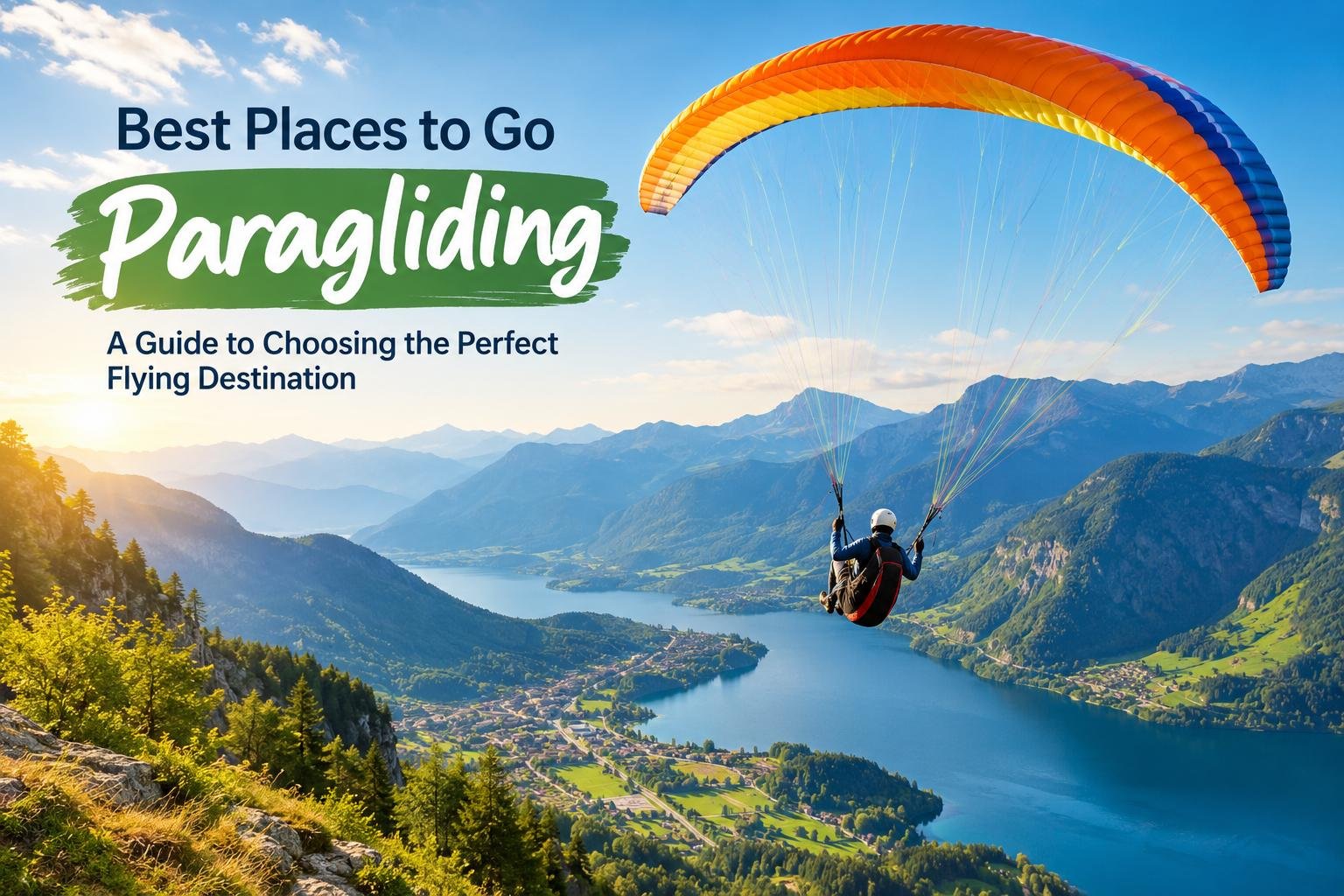
Beauty is a key attraction of paragliding, especially for people who wish to soar and make it an integral part of their entire holiday. Excellent views from the air can be achieved over mountains, coastlines, lakes, forests, valleys, deserts and historic landscapes. But scenery should be considered along with the actual flying environment. A stunning coastal location can have strong sea breezes to contend with, whereas a narrow mountain valley could provide impressive views, but not many landing sites. When planning a trip, travelers should take into account what they will see on the most common launching and flying routes—and not just from weird and wonderful vantage points. Also it’s a good idea to think about seeing if there are any other activities available at the destination like hiking, sightseeing, photography or cultural events. This flexibility comes into play when flying is not possible due to weather. The perfect scenic site is not only the one that has the best scenery but the one that complements the scenery with good flying conditions, accessibility and other holiday activities. This is a way to maintain the connection of scenery with the flying experience.

The Launch Sites and Landing Areas are on Display.
Close attention should be given to launch and landing areas as they have a direct impact on the actual safety of the flight. The space available for equipment preparation and wing inflation is adequate as is the terrain and wind conditions appropriate for the site based on normal conditions. Surfaces, slopes, tree, cables, buildings, roads and other obstacles around the launch should be considered. Landing areas should be subject to the same level of investigation. Although a field may seem to be expansive on a map, it might actually be complicated by fences, power lines, varying terrain, crops, water, traffic flow, and changing wind direction. Visitors should be aware if there is a primary and secondary landing site, and how pilots get back from the landing area. Having multiple launch sites in one destination can be a big advantage as local pilots may have more options to choose a site that adapts to the wind conditions on the day and the skill of the participant. It is therefore worthwhile to ask questions of the operators for clarification of the normal procedure for launching and landing. Hazard maps of a site, combined with a local briefing, may be able to reveal hazards that are not captured by photographs.
Accessibility and Local Infrastructure
A location can be more or less accessible, which can make it more or less suitable for a paragliding trip, especially for those who are bringing their own equipment or planning more than one day to fly. Entrance can be by airport, road, bus, cable car or local mountain lift (shuttle). If they are to stay overnight, people should find out the time to the launch and if it is dependent on seasonality of transport. There’s also a local infrastructure component. They might offer equipment hire, qualified teachers, tandem services, repair services, weather data, accommodation, food and medical emergency services. While a remote location can offer an extraordinary flying environment, it can be more demanding in preparation and/or the need for back-up arrangements. Information on how to get to the launch and what to expect when landing and how to get back after landing should be provided to the travelers. Accessibility helps to minimize logistical pressures and may make it easier to capitalize on an opportune flight when it arises out of nowhere. Reliable transportation can also greatly simplify scheduling, which is often affected by weather.
Demonstrate the Ability to Check the Equipment and Prepare for the Activity.
The preparation of the equipment should be considered as part of the trip to the destination, particularly when the pilot is bringing his or her own wing, harness, reserve parachute and the like. It can never be a bad idea to have a professional inspection before traveling, particularly if the unit is new, has been stored for an extended period or has been subjected to heavy use or an uncertain level of maintenance. During a casual visual inspection the following is not always apparent, but can be identified by a Gleitschirm check: Wear, line condition, fabric condition and other equipment problems may be identified. The travelers should make the arrangements well in advance so that repairs or replacement can be made in time when needed, instead of finding the problem shortly before travelling. Proper care of the reserve equipment is also important, since it is an integral component of a pilot’s safety system. Pilots should be familiar with the maintenance, packing and installation of their reserve, and should adhere to the manufacturers and qualified professional recommendations. While careful preparation of equipment does not eliminate the risks associated with paragliding, it does minimize inadvertent equipment-related issues and enhance the confidence of paragliders when flying in an unknown environment. Preparation early will give time to correct problems without interfering with travel plans.
Local Rules and Airspace Restrictions
Before any international or unfamiliar paragliding trip it is advisable to check local aviation regulations and airspace restrictions. Some differences in requirements may exist between countries and individual sites, and may include pilot qualifications, insurance, registration, club membership, site fees, tandem operations, radio usage, and areas to launch or land. In the vicinity of airports, military installations, urban centers, protected areas and other regulated areas, airspace is of particular importance. It’s important for travellers to never assume that the rules that govern their home country apply to their destination. For independent pilots, it is better to check the requirements from local clubs and instructors, site managers, aviation authorities or other official sources. There may also be site-specific requirements to register, pay a fee, get permission or attend a briefing with the locals. The information provided in an old forum post or an article about a travel should not be considered definitive due to the possibility of changes in regulations or arrangement. To ensure that travel to a destination is responsible, the rules and regulations must be adhered to, and not just seen as a byproduct. Before departure review the rules to ensure that unwanted issues are avoided at the site.
Select a Destination for Your Experience Level
The right destination is influenced greatly by the experience level of the pilot and type of trip being planned. Experienced XC pilots require different conditions than beginners and tandem passengers have other priorities than independent flight students. As a general rule, new pilots should also look for qualified instruction, forgiving launch/landing areas, manageable weather, easy access for emergency help and operators that have good safety procedures. Advanced and intermediate pilots might take into consideration ridge systems, cross country potential, airspace, elevation, and several flying locations. Pilots must be honest in their own evaluation of their skills and not travel to a place just because that location is well-known to well-trained pilots. However, the hard ground could be a great place for an expert pilot, but not for a novice without proper training and information from locals. Assigning the level of difficulty to a destination to the traveller’s capability is one of the best ways to enhance safety, enjoyment, and to select services that are suitable for the traveller. All decisions about destinations should be based on an honest appraisal of ability.
Various Tandem Paragliding Options
The quality of a paragliding tandem operator may be as crucial as the destination for the travelers who want to experience paragliding without being independent pilots. Qualified pilots, clear booking procedures, properly maintained equipment, the right insurance coverage, a clear cancellation procedure due to the weather and professional communication should be looked for. The question of what to do when the conditions aren’t suitable is reasonable and whether the operator will have another date, another launch site, or a refund as per its policy. In simple terms the pilot should tell the passenger what he/she will be responsible for during take-off, flight and landing. Travelers can also verify what is included in the cost, including transportation to the launch, photographs or video and the length of time the flight should last. Local knowledge is often a great asset as an experienced operator will know the local wind conditions, take-off and landing procedures, etc. The competent service will do what is necessary to keep passengers safe, rather than forcing them to board planes when the weather or terrain is not conducive to their safety. A good sign of a professional operator is their good communication.
Prepare Parachutes and Safety Items.
It is important that parachutes are considered as a part of paragliding safety gear, and their condition is not overlooked when travelling. A reserve requires appropriate care and proper packaging and installation to ensure it is able to perform its intended function should it be required. If the pilot is not certain about the state of the reserve or how it is packed, he/she should ask for help from a qualified person instead of assuming it is in good condition or packed correctly. When travelers need to have expert reserve packing and installation ahead of their flight, some services that involve Retter packen can be applicable. Routine preparation should also include inspection of the harness connections, condition of the helmet, lines, wing fabric, carabiners, radios (if required) and other equipment as outlined by the manufacturer and/or local operator. It is important for travelers to keep in mind that no inspection of the destination, operator or equipment can give travelers zero risk. Safety is achieved through a mix of good equipment, good weather decisions, the correct skill set and local knowledge, plus an understanding of the skills and the environment. It is better to leave it to the professionals rather than packing it up by yourself or if you’re simply not sure about it.
Conclusion
Selecting the ideal paragliding location isn’t about selecting one that’s right for everyone; it’s about discovering a location that’s right for you. The reliability of weather, elevation, topography, terrain, scenic opportunities, launch and landing sites, accessibility of the site, regulations, equipment support and local knowledge must all be taken into consideration. Weather conditions may not be as reliable at a world-class location as they are at a quieter one, but this won’t make up for the lack of infrastructure. Likewise, a challenging area in the mountains could be perfect for an advanced pilot, but not for a first tandem pilot. Travelers must check on the current regulations, operator’s qualifications, equipment preparation, cancellation procedures, and sufficient time for weather conditions. By comparing destinations in this way, the research process will be more useful and will aid travellers in selecting the best destinations to see memorable views and experience responsible, practical and enjoyable paragliding opportunities. When traveling, it is important to compare and contrast so that you can travel with confidence and not just guess.
Get more well researched information about Best places to go paragliding here.