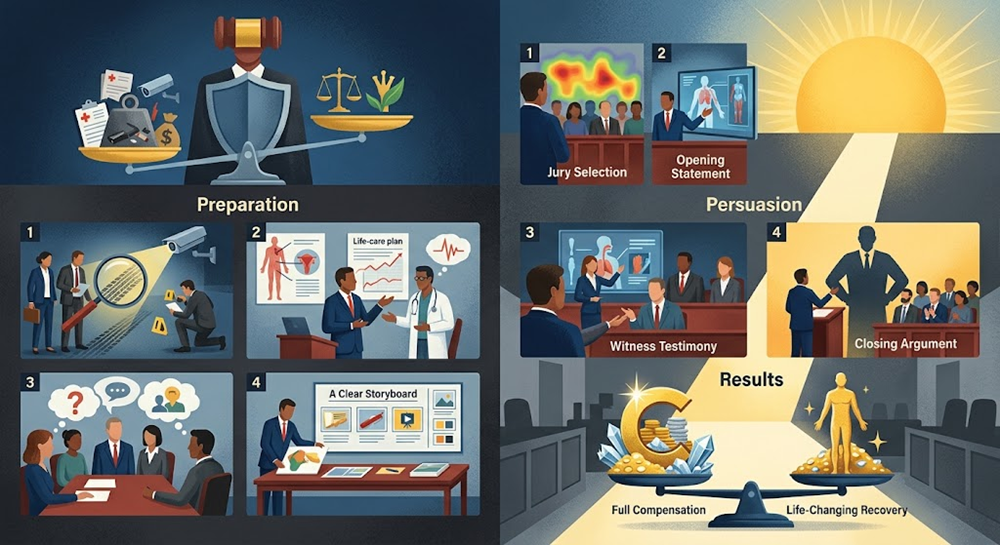
When an injury claim goes to trial, the outcome depends on evidence, preparation, and clear communication. A lawyer must show how the incident happened, connect it to the injury, and document its effect on daily life. Courtroom experience helps counsel anticipate disputes and present evidence jurors can follow. That value becomes clearer when you consider the work that begins long before testimony.
Trial preparation begins with evidence
A trial lawyer builds the case well before jury selection. Counsel gathers medical records, incident reports, photographs, witness accounts, and employment documents. Each item must support a relevant point, and counsel must address inconsistencies before the other side raises them.
People researching legal matters should first check whether a page answers their question. For example, a discussion of sales terms does not explain trial strategy or injury claims. For information about a specific attorney, readers can review Brian White and Associates alongside independent sources. They should then confirm the attorney’s trial experience, role in the case, and communication practices directly.
A lawyer must also identify what the evidence cannot prove. A medical record might document treatment without explaining how the injury occurred. A witness might describe a collision but know little about the client’s diagnosis. Addressing those limits early helps counsel present an accurate account without overstating the claim.
Experience sharpens case decisions
Trial experience matters because courtroom decisions happen under pressure. Lawyers must respond to objections, adjust questions, and decide whether evidence supports an argument. Familiarity with trial procedure helps counsel avoid mistakes that distract jurors or weaken the record.
Experience also helps counsel decide which facts need attention. A lawyer who has handled contested injury cases can assess whether expert testimony is needed, which witnesses deserve emphasis, and which arguments create unnecessary risk. That judgment keeps the presentation focused on the facts jurors must decide.
Every case has a distinct set of evidence. Prior trial work does not guarantee a result, but it gives counsel practical knowledge of how disputes unfold. Clients should ask who will handle depositions, hearings, and trial instead of assuming the lawyer they first meet will lead every stage.
A clear story helps jurors assess proof
Jurors hear testimony from people with different roles and levels of knowledge. The lawyer must organize that information into a logical account: what happened, what injuries followed, and what losses the evidence supports. A clear sequence helps jurors compare testimony with documents.
The account must remain consistent with the record. If a witness changes a detail, counsel should address the difference and explain why it matters. Avoiding a weak point can damage credibility when opposing counsel raises it first.
Plain language also matters. Counsel should explain medical terminology through records and testimony rather than rely on dramatic descriptions. When the lawyer connects a diagnosis to treatment and everyday limits, jurors can assess the claim without guessing what a technical term means.
Damages require detailed proof
A damages presentation requires more than a list of expenses. Records can establish medical charges and treatment dates, while testimony can describe missed work, ongoing symptoms, or changes to routine. The lawyer must connect each claimed loss to the incident and provide evidence of its amount or effect.
Future losses require careful support. Medical or vocational testimony can explain the basis for projected care or reduced earning capacity. Counsel should prepare those witnesses to explain the basis for their opinions and to address uncertainty.
The client’s testimony matters, too. Rehearsal should help the client answer accurately and calmly, not memorize a script. A credible account acknowledges what the client remembers, what remains unclear, and how the injury affects ordinary activities.
Cross-examination tests the case
Opposing counsel will test the client’s account, medical conclusions, and damage calculations. Preparation helps the client listen to each question, answer only what was asked, and avoid guessing. The lawyer should also prepare witnesses to discuss difficult topics, including prior injuries or gaps in treatment.
An experienced trial lawyer anticipates likely challenges and checks whether the evidence can withstand them. That work includes reviewing statements for inconsistencies and preparing focused questions for opposing witnesses. Effective cross-examination uses the record to expose a conflict or clarify a disputed fact, rather than relying on confrontation.
Conclusion
Before hiring trial counsel, a client should ask who will present the case, what evidence supports liability and damages, and which issues the other side is likely to challenge. The answers should be specific and consistent with the available records. A client can also ask about the lawyer’s courtroom role in prior contested cases and how the team prepares witnesses. These questions help assess readiness without treating any past result as a promise.