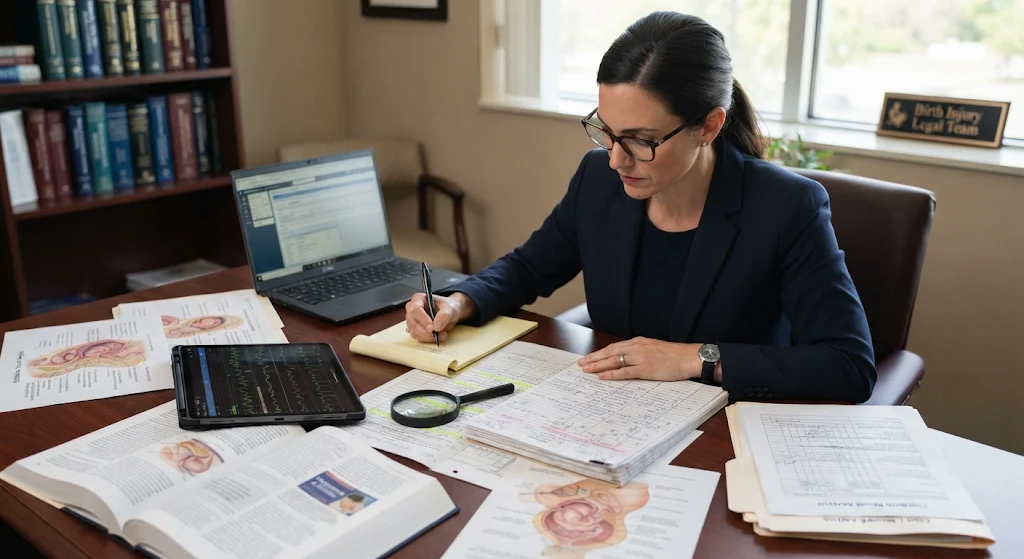
After a child is born with a birth injury, their family may have to deal with difficult medical decisions, ongoing care requirements, and unanswered questions regarding the delivery process. Before a legal claim is filed, a careful investigation tests whether the injury connects to a preventable medical error and whether the evidence supports a case. The review starts with records, timelines, communications, and the child’s current and expected care needs.
By examining these details, attorneys can identify potential negligence, evaluate the strength of the evidence, and determine what additional medical opinions may be necessary. This groundwork helps families understand their legal options and pursue a claim supported by documented facts and a clearer picture of future needs.
Review the Pregnancy and Prenatal Record
The investigation begins before delivery. You should expect a review of prenatal visits, screening results, maternal conditions, medications, and prior concerns that could affect labor or the baby’s health. These records establish the baseline and show what clinicians knew before delivery. A lawyer also looks at the correlation between prenatal results and postpartum outcomes. A missing referral, overlooked warning sign, or change in treatment can matter when the timeline is reconstructed. Notes from prenatal consultations can also clarify whether a later problem was unavoidable.
Reconstruct the Labor Timeline
The most comprehensive description of the delivery room events can be found in the labor and delivery records. The review typically compares fetal monitoring, contraction patterns, medications, vital signs, examination notes, delivery decisions, and the timing of interventions. The goal is to identify when a concern appeared, what staff did next, and whether another response was medically appropriate. A birth injury lawyers group describes the type of family-facing research used in injury analysis, while the legal review still depends on the records and facts from prenatal records through post-birth treatment notes.
Compare Decisions with Medical Standards
A case requires more than an unfortunate outcome. The investigation examines whether the care departed from the applicable medical standard and whether that departure caused the injury.
This review focuses on decisions made under pressure. Examples include delaying a delivery, failing to respond to abnormal fetal monitoring, mishandling medication, or overlooking signs that the baby needed urgent intervention. The analysis also considers what information was available to the treating team at the time.
Trace the Child’s Diagnosis and Treatment
The investigation follows the child after birth rather than stopping with the delivery record. Neonatal records, imaging, specialist evaluations, therapy notes, and later diagnoses help establish what injury occurred and when it became apparent.
Medical records also show whether symptoms fit the suspected mechanism of injury. A lawyer compares early findings with later evaluations to separate complications caused by the birth event from conditions that existed independently. Changes in treatment can reveal how doctors interpreted the child’s condition over time.
Identify Who Made Each Decision
Responsibility depends on specific actions and roles, so the investigation maps who examined the mother, who reviewed monitoring, who ordered medication, who made delivery decisions, and who performed the delivery.
Communication records can matter too. Handoffs, escalation requests, telephone notes, and documented instructions can show whether critical information reached the person responsible for acting on it. The record can also show whether multiple clinicians received different information before a disputed decision.
Test the Cause of the Injury
A lawyer must connect the alleged error to an actual injury. The review therefore asks what happened immediately after the disputed decision, whether the child showed signs of distress, and whether later findings support a causal connection.
Experts can help analyze medical questions that require specialized knowledge. Their opinions are tied to the available records, the timing of events, and the medical explanation for the child’s condition. A case becomes harder to support when the records point to another cause or do not establish a clear sequence.
Preserve Evidence Before Filing
Early organization prevents gaps from becoming harder to fix. You should keep copies of:
- medical records,
- bills,
- therapy records,
- written communications, and
- notes about what clinicians told the family.
A timeline should record major symptoms, diagnoses, procedures, and changes in care.
A lawyer also checks whether relevant records are complete and whether additional documents should be requested. Filing decisions depend on the strength of the evidence, the applicable state rules, and the connection between the medical conduct and the injury. Personal notes should distinguish direct observations from statements remembered later.
Conclusion
A birth injury investigation is a fact-by-fact review of what clinicians knew, what they did, what happened next, and what the child’s records show afterward. The most useful next step is to gather the complete medical file and preserve a clear timeline before memories fade or records become difficult to obtain. That groundwork gives a lawyer the information needed to assess whether filing a case is justified.