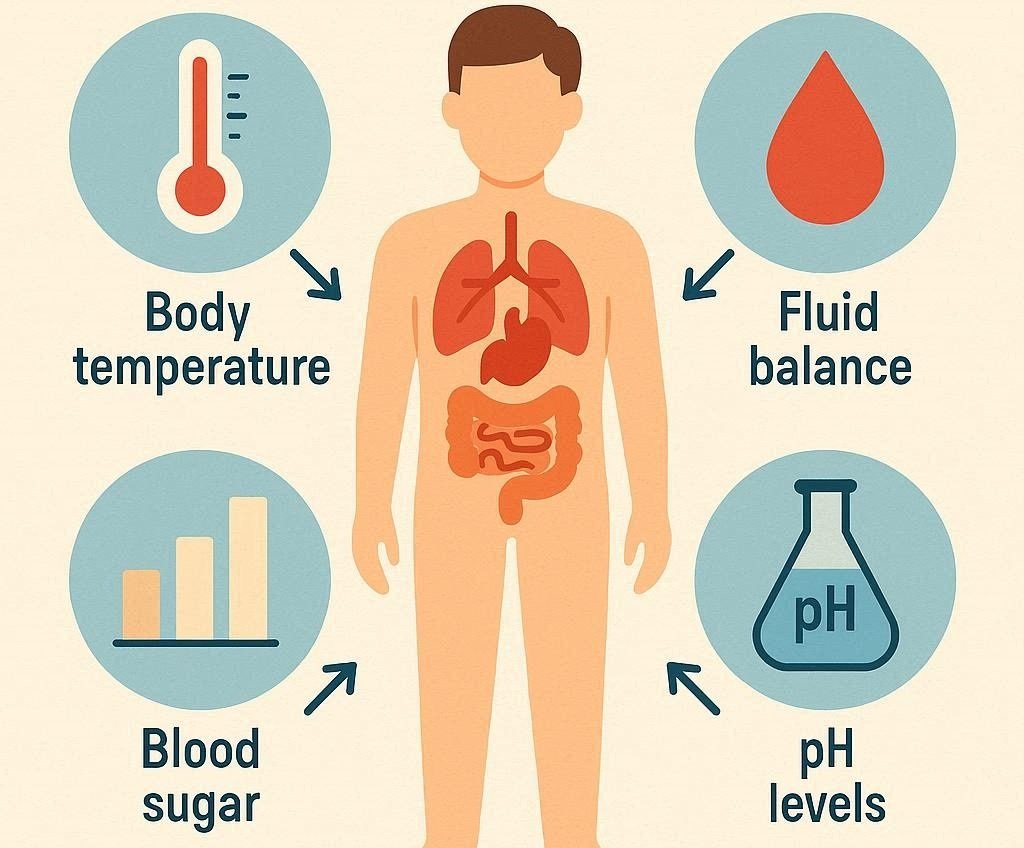
Human body is subjected to varying conditions. Temperatures increase and decrease, food, and water consumption day to day, physical activity changes the energy needs and the external environment can fluctuate very quickly. Regardless of all these regular changes, the body is astonishingly able to maintain a stable internal environment that enables the proper functioning of cells, tissues and organs. This is called homeostasis, which is one of the basic notions in human physiology.
Fundamentally, homeostasis can be described as the capacity of the body to keep the internal conditions within a very thin and healthy range, despite the external environmental changes. It can be body temperature, blood sugar levels, water and electrolytes, blood pressure, the body needs a complex system of checks and responses to maintain equilibrium. In the absence of this internal system of balance, the normal functioning of the body would soon be upset resulting in illness or even complications which could be fatal.
Learning about homeostasis is crucial since it is the regulatory mechanism that underlies almost all physiological processes. It describes the way the body reacts to stress and adjusts to the changing environment and how it sustains the environment required to survive. The article presents the concept in an understandable and easy manner subdividing its main parts, feedback, and real life examples to enable the readers to develop a solid conceptual framework of how the body maintains itself in balance.
What Is Homeostasis?
Homeostasis refers to the mechanism in which the body ensures a stable internal environment in response to external and internal changes. Its name has Greek origins signifying same and steady and this means that it is in the middle of maintaining physiological conditions in a stable state.
In order to perform effectively, the cells of the body need very special conditions. As an example, enzymes are most effective at a specific temperature range, cells need fluid balance conditions and organs need stable oxygen and glucose. The slightest variation out of these ranges can disrupt normal functioning.
That is why the body constantly controls the internal conditions like temperature, pH, blood sugar, fluid balance, and blood pressure. Regulatory systems come into effect whenever any of these variables is beyond its optimum.
As an illustration, when the body temperature is excessively high, it starts to cool down by the sweating process. When the blood sugar level is too low, hormones cause the release of stored glucose.
It is this continual adaptation that constitutes homeostasis.
The importance of Homeostasis to Survive
Homeostasis is essential to the proper functioning of every organ system in the body. Key roles in the maintenance of internal balance are played by the nervous system, endocrine system, cardiovascular system, respiratory system and kidneys.
Without homeostasis, the body could not ensure conditions that were conducive to life. Cells would find it difficult to carry out simple functions like metabolism, waste disposal and communication.
An example is that the pH of blood should be within a very tight range. When it is either too acidic or too alkaline, the enzyme can cease its effective work, and the organ systems can be impaired.
Likewise, the body is highly sensitive in maintaining water balance since dehydration or excess fluids may influence blood pressure, the functioning of the kidneys, and the health of cells.
This renders homeostasis to be one of the most essential concepts in physiology.
To provide some background information, the given source can be naturally put down here: homeostasis.
The Principal Elements of Homeostasis
In order to learn more about the operation of homeostasis, it is beneficial to serve it into its main parts, namely, the sensor, the control center, and the effector.
The sensor or the receptor is the sense that detects the changes in the internal environment. It is constantly checking the variables of temperature, glucose levels and blood pressure. Once there is some change, the sensor transmits the information to the control center.
This information is relayed to the control center and compared to the normal range or ideal set point of the body. The location of this center is usually in the brain or in the endocrine glands. One such example is the hypothalamus in the brain which is important in the regulation of temperature.
After the control center detects the deviation, it transmits signals to the effector which is the body part that performs the corrective measure. The effectors can be muscles, glands, organs, or tissues.
Indicatively, sweat glands can be considered as effectors in case of an increase in body temperature.
Such a sequential action enables the maintenance of homeostasis to work effectively
Negative Feedback Mechanisms
Negative feedback mechanisms are one of the most crucial ways in which the body maintains homeostasis. This is the most widespread control system of physiology
The mechanism of negative feedback is to reverse a change to restore a variable to normal levels. To put it simply, it neutralizes the disturbance.
The obvious one is body temperature control. When the temperature of the body goes beyond normal, sensors recognize this and provide signals to the hypothalamus. The hypothalamus causes the sweat glands to be stimulated and blood vessels to be dilated closer to the skin surface, permitting heat to dissipate. When the body cools, temperature slowly gets back to normal
When the temperature is too low, the body reacts by shivering and narrowing of blood vessels to produce and retain heat.
Negative feedback helps to maintain the body at constant level and forms the core of homeostasis.
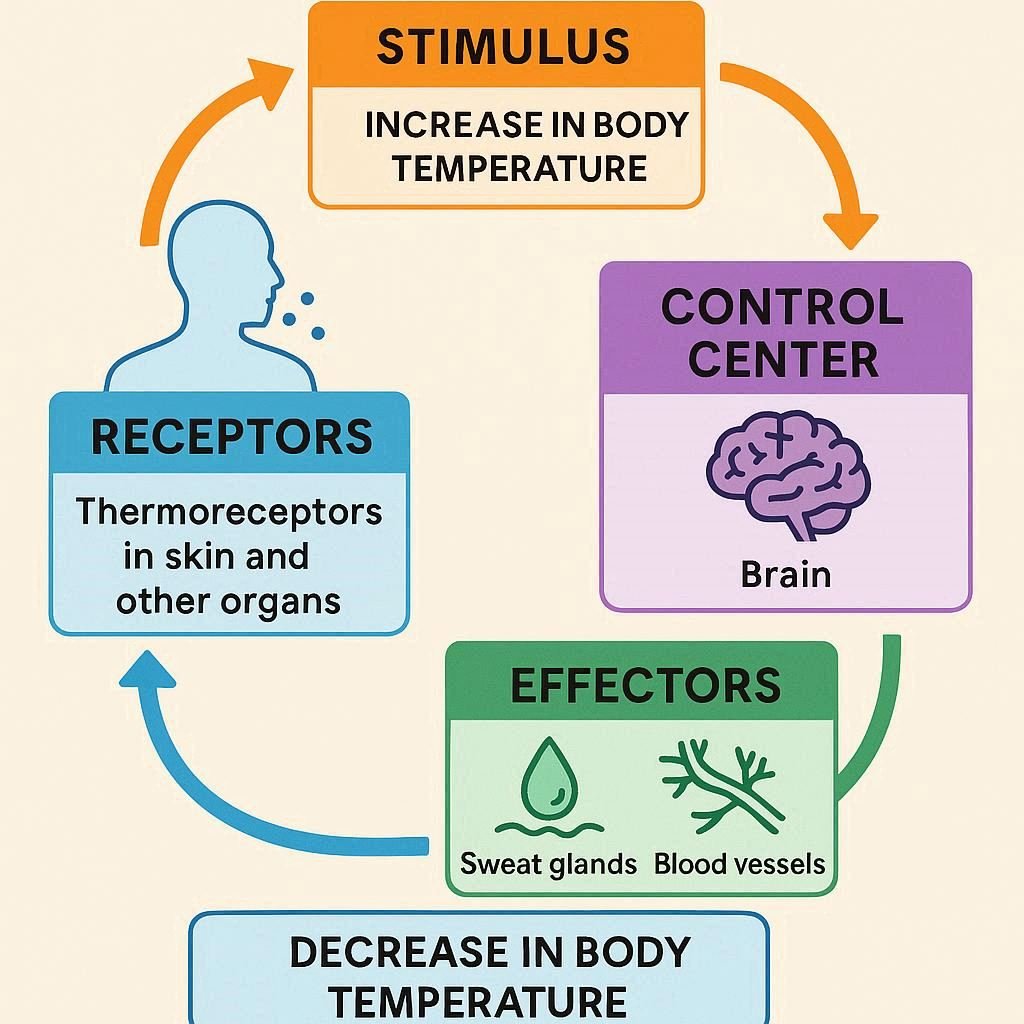
”homeostasis negative feedback mechanism that controls body temperature”.
Positive Feedback Mechanisms
Although negative feedback is more prevalent, there are also positive feedback processes that are significant in homeostasis, albeit in a different manner.
Positive feedback does not reverse a response, but magnifies it. It drives the process even more towards the same direction until one attains a certain result.
One typical case is that of childbirth. In the process of labor, oxytocin is released, a hormone that enhances contractions, through stimulation by uterine contractions. The more powerful contractions are, the greater the release of oxytocin, and the process continues until delivery.
Another example is blood clotting. When a blood vessel is torn, platelets come to the point of injury and release chemicals that lure other platelets which quickly form a clot.
Even though positive feedback temporarily drives the body out of balance, it contributes to homeostasis as a whole because it helps to resolve certain circumstances.
Ordinary Uses of Homeostasis in daily life
Homeostasis is a continuous process that is performed by the body and we may not even notice it.
An example is the blood glucose regulation. Blood sugar increases after eating. Insulin secreted by the pancreas assists the cells to take in glucose and decreases the blood sugar levels to normal.
In case of a decrease in blood sugar levels, the glucagon released by the pancreas triggers liver to discharge stored glucose.
The other example is water balance. When excessive water loss occurs as a result of sweating, the brain activates the feeling of thirst and the kidneys hoard more water by generating a more concentrated urine
The rate of breathing also varies to check the level of oxygen and carbon dioxide.
These daily illustrations demonstrate how homeostasis occurs in a constant manner
Homeostasis and Disease
Disruption in homeostasis can lead to illness.
An example is diabetes whereby the body fails to regulate blood sugar. Hypertension is the inability to control blood pressure. Fever is a transient change in body temperature.
The most common diseases can be seen as a breakdown of homeostatic regulation.
This is the reason why homeostasis can be understood in explaining health and illness
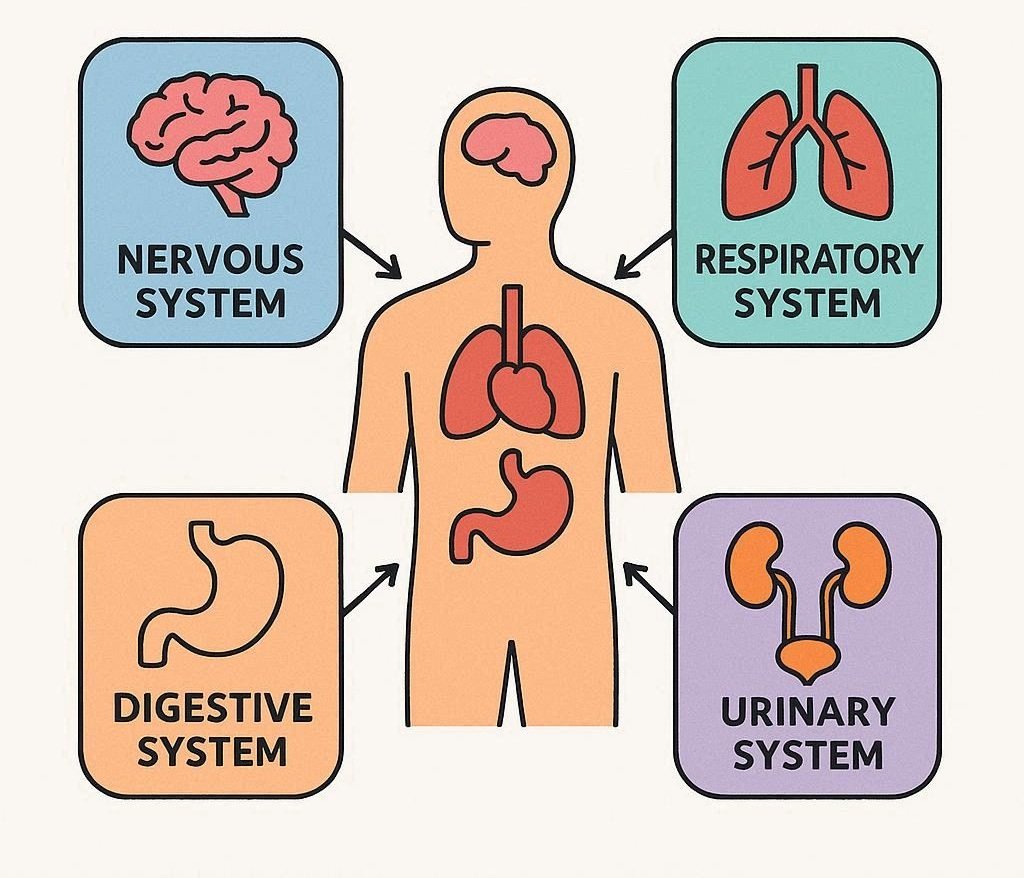
“homeostasis is the internal balance by body systems”.
Conclusion
One of the most significant concepts of human physiology is homeostasis which is the internal balancing mechanism of the body. The body maintains a constant check up and balance of internal conditions by sensors, control centers and effectors that ensure that the body remains stable despite external changes.
Knowing the negative and positive feedback processes, readers can appreciate more how the body maintains temperature, blood sugar, water balance, and other important processes.