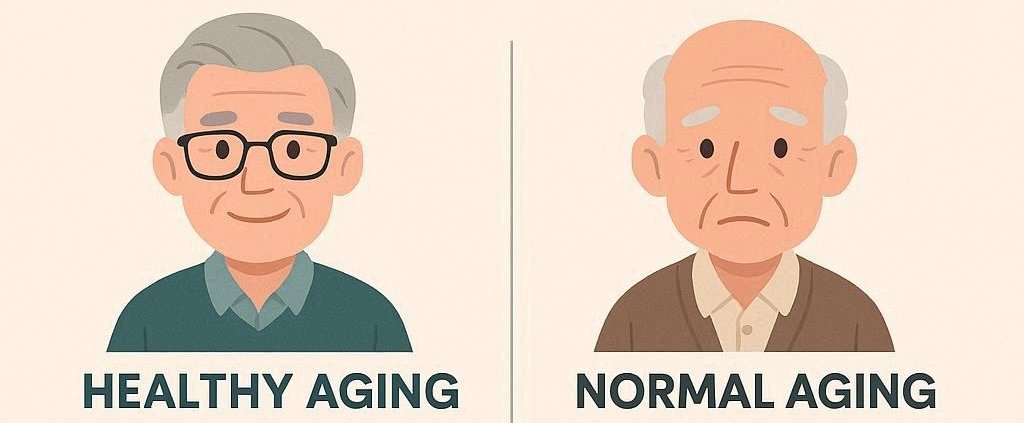
The aging process is one of the few that all human beings share but the manner in which different individuals age can differ drastically. Many people tend to think that aging is linked to frailty, sickness, loss of autonomy and energy. It should be noted, however, that not all of the later life decline is the inevitable result of age per se. The distinction between normal aging and healthy aging is huge because normal aging is the biological changes that happen naturally with age, whereas healthy aging is concerned with physical, mental and emotional sustainability through the deliberate practices of lifestyle and preventive measures. This distinction is crucial to understand as it makes individuals be aware of what changes are normal and what changes can be avoided to a significant extent.
Normal aging encompasses progressive biological alterations like decreased metabolism, mild joint rigidity, decreased skin pliability, slight muscle atrophy, and slight modifications in memory or response time. These alterations occur due to the fact that cells, tissues and organs naturally decline in efficiency as time goes by. Nonetheless, extreme health deterioration like uncontrolled chronic illness, immobility, obesity-related issues, and significant impairments in functioning are usually closely associated with avoidable lifestyle elements as opposed to aging per se. At this point, the principle of healthy aging comes into play. Instead of merely accepting loss, healthy aging is centered on behaviours and practices that promote resilience, independence, strength, and long-term quality of life.
This article is aimed at assisting the reader to draw a clear line between inevitable biological aging and avoidable health decline due to inappropriate lifestyle decisions as well as present evidence-based measures to help one live healthily into the late years of life.
Understanding Normal Aging
Normal aging is the natural physiological transformations, which happen to the body and mind in old age. The changes are gradual and are believed to be normal within the life course. As an example, it is not uncommon to find that muscle mass decreases marginally with age particularly after 30 years unless one engages in physical exercise. The bone density can also decrease with age thus leaving the bones weaker in old age. The skin can lose its elasticity, causing wrinkles and thinning and vision and hearing can become less acute.
Besides the physical alterations, there are also mild cognitive changes which are normal changes in aging. Some elders can sometimes lose track of names, misplace personal items or take more time to process new information. They are typically not severe memory impairment or neurodegenerative diseases. Normal aging does not necessarily imply disease, disability and dependence. Instead, it shows the natural biological development of the body.
The levels of energy can also change due to the slowdown of metabolism. The process of healing following exercise or disease can take a longer time than in the youthful days. These are normal changes that do not necessarily have to be equated with poor health. This knowledge assists individuals to differentiate between natural aging and avoidable deterioration.
The Real meaning of Healthy Aging
Healthy aging does not imply not undergoing any age-related changes. Rather, it involves maximising physical, mental, and emotional health in order to ensure that one can remain a functioning person and lead a high quality of life well into old age.
Healthy aging targets the maintenance of strength, mobility, cognitive sharpness and emotional balance. Daily habits like diet, exercise, sleep, stress management, and preventive healthcare have a strong impact on it. Although no one is able to prevent the biological process of aging it has been demonstrated that much of the more severe drops which are usually identified with aging can be delayed, minimized or avoided.
The National Institute on Aging points out that healthy aging consists of actions that help a person be able to keep doing the things that are most important. This involves maintaining mobility, social interactions, mental acuity, and independence.
This implies that aging is not completely passive but can be an active process that is influenced by decisions.
Avoidable Health Deterioration and inappropriate lifestyle decisions
Among the most common myths regarding the aging process, the idea that health deterioration is unavoidable and severe is noteworthy. The fact is that most of the problems usually attributed to age are closely associated with behaviours that can be avoided
As an example, although a certain degree of muscle weakness is a normal condition, chronic immobility can tend to increase frailty to an undesirable extent. Equally, a decreasing metabolism is a natural age-associated process, but poor diet and sedentary lifestyles are usually closely connected with obesity, diabetes type 2, and cardiovascular problems.
Poor sleep, stress, smoking, heavy drinking, and lack of exercise can boost the aging process and predispose the body to diseases. Hypertension, increased cholesterol, and insulin resistance tend to accumulate over time due to the lifestyle habits and not age.
This is the reason why sustainable daily habits are such an important subject in healthy aging. Numerous types of deteriorations that individuals believe are a normal aging process are avoidable.
Functional Independence and Physical Activity
Regular physical activity is one of the best-evidence-based approaches to healthy aging. Exercise is beneficial to maintain muscle mass, bone density, joints flexibility, cardiovascular fitness, and balance
The importance of strength training is especially that the loss of muscle gains an accelerated pace with age unless it is actively controlled. Resistance exercises aid in the maintenance of functional strength that assists in day to day activities like walking, climbing stairs, carrying things and balance.
Aerobic exercise like walking, swimming, cycling or a brisk movement helps in the health and circulation of the heart. Flexibility and balance exercises will be beneficial towards minimizing the risk of falls.
Individuals who are physically active later in life stand a greater chance of being independent and mobile.

” exercise and active lifestyle in older adults can help them to age healthily“.
Nutrition: a Pillar of Healthy Aging
Food is a key factor in healthy ageing. With aging, the body needs quality nutrients to uphold tissues, boost immunity, and cognitive wellbeing.
Protein has been shown to be particularly significant in muscle maintenance. Calcium and vitamin D are beneficial to the strength of bones, and fruit and vegetables contain antioxidants that help decrease oxidative stress linked to aging in cells.
Healthy fats, lean proteins, hydration, and whole grains are all long-term health contributors. In contrast, processed foods, high levels of sugar, and bad fats could increase the risk of diseases.
A balanced diet has a direct impact on lifespan and health-span.
Mental and emotional well-being
Healthy aging is physical but not only. Mental and emotional well-being are also crucial.
It is not a given part of aging that you forget on occasion, and it is not inevitable that you should experience severe cognitive loss as you age. Brain health is maintained by mental stimulation by reading, learning, puzzles, talking and remaining curious.
The emotional well being is also important. Chronic stress can hasten biological aging by promoting more inflammation and insomnia.
Emotional support and social interaction are closely correlated with positive health outcomes in the long-term.
Prevention of Health and Early diagnosis
One of the significant components of healthy aging is routine medical checkups.
Blood pressure, blood sugar, cholesterol, vision, hearing, and bone density screenings are used to identify risks at an early stage.
Early diagnosis can be treated better and be used to maintain independence.
Long-term Vitality and Quality of Life
The end result of healthy aging is not just to live longer but to live better. Being strong, independent, mentally and emotionally stable leads to improved quality of life.
Aging is not about passive aging, but healthy aging.
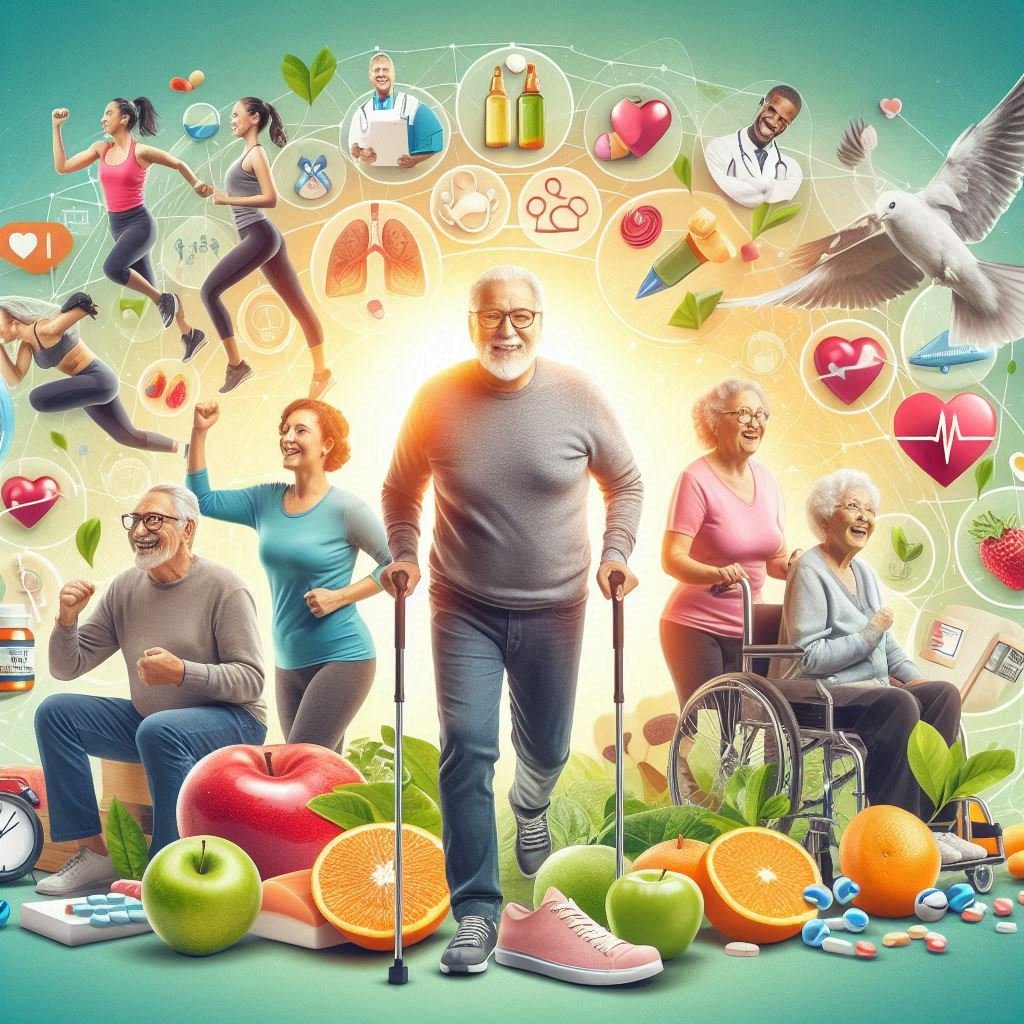
“healthy aging, with social connection and vitality in later life“.
Conclusion
Normal aging and healthy aging is differentiated by the level of what is biologically inevitable and what can be avoided through lifestyle.
Although certain physical and cognitive changes are normal, a drastic deterioration is not a given. Evidence-based approaches, including routine physical activity, a healthy diet, stress management, social interaction, and preventive medical care, can help people be independent, functional, and healthy well into old age.