Introduction
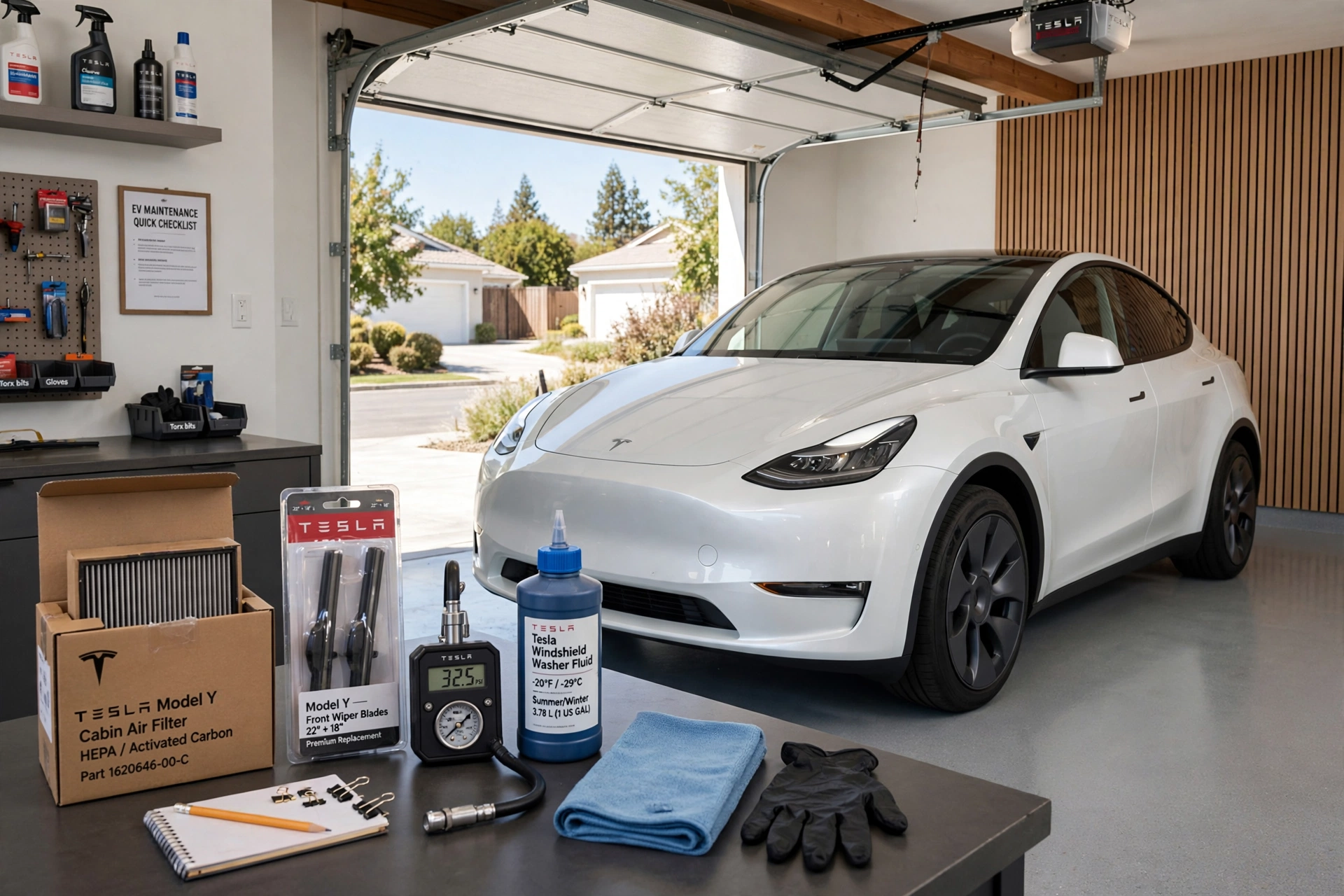
Tesla Maintenance Guide shows that Tesla needs less than most gas cars, but isn’t maintenance free. You skip oil changes and spark plugs, but still need tires, brakes, cabin filters, wipers, washer fluid and software updates.That said there are still important components which do require your attention which include tires, brakes, cabin filters, wiper blades, washer fluid, and some of the cooling and climate control systems. By being aware of these differences Tesla ownership may be made easier and issues related to frequent service center visits may be reduced. An EV does away with many engine related services, but at the same time there are still routine tasks for wear and tear items.
Why Tesla Needs Less Maintenance
Electric Powertrain Advantages
Tesla’s electric motor has a much simpler design when compared to a gas engine. We do not have a typical engine which means we don’t see oil circulation, spark plugs, fuel injectors, or an exhaust system. Also, we see that owners of Teslas avoid many of the maintenance issues which are very common in gas cars. Also there is no traditional tune up that you have to do at certain mileages.
This isn’t to say that all parts of a Tesla require no care at all. The car as a whole still sees normal wear from use, weather, road terrain and the passage of time. Tires wear out, brakes may need looking at, cabin filters which do get dirty, and wiper blades also have a useful life. What we can say is that Tesla does require very little maintenance which is different from zero maintenance.
What Tesla Owners Can Skip
No Oil Changes or Spark Plugs
Tesla owners see a large difference in maintenance which is the removal of the routine engine oil changes. There is no traditional gasoline engine in which case we don’t have to change out the engine oil and oil filter. Also there is no need for spark plugs which we don’t have in electric motors that produce power via fuel combustion.
Owners also may go without many of the standard engine tune ups and gasoline related services. We see a reduction in the number of scheduled maintenance visits and also in the number of consumable engine components which require to be replaced. At the same time owners should pay attention to the vehicle warning systems and follow the maintenance put forth by Tesla for your specific model.
No Traditional Engine Servicing
Tesla doesn’t perform the same kind of routine engine maintenance which is typical for conventional cars. We don’t have an exhaust system which moves combustion byproducts, no fuel system which is made of gasoline and thus requires different care, and no traditional transmission which requires a specific maintenance schedule. These differences are what makes EVs in the long run cheaper and simpler to maintain.
However we see that Tesla’s still have mechanical elements which include suspension pieces, steering systems, brakes, wheels and tires. These parts which go into a Tesla are put to the same stress as what goes into a gas powered car. Thus it is a mistake to think reduced powertrain maintenance means total vehicle maintenance has gone down.
What Tesla Still Needs
Tires
Tires are a primary focus in the maintenance of any Tesla. In the case of electric cars which produce great acceleration, tire wear is a factor of driving style, road conditions, alignment, wheel setup, and tire type. We recommend that owners pay attention to tire pressure and tread wear and to follow Tesla’s advice on tire rotation. Also uneven wear may be a sign of an alignment issue which in turn will require attention.
Proper tire pressure is a key issue as it does to performance, efficiency, range, and tire life which is why we recommend you use what is put forth by the car manufacturer for your make and model instead of a generic number. Also it is important to check tires over for damage, irregular wear, and anything foreign that may have worked its way into the tread.
Brakes
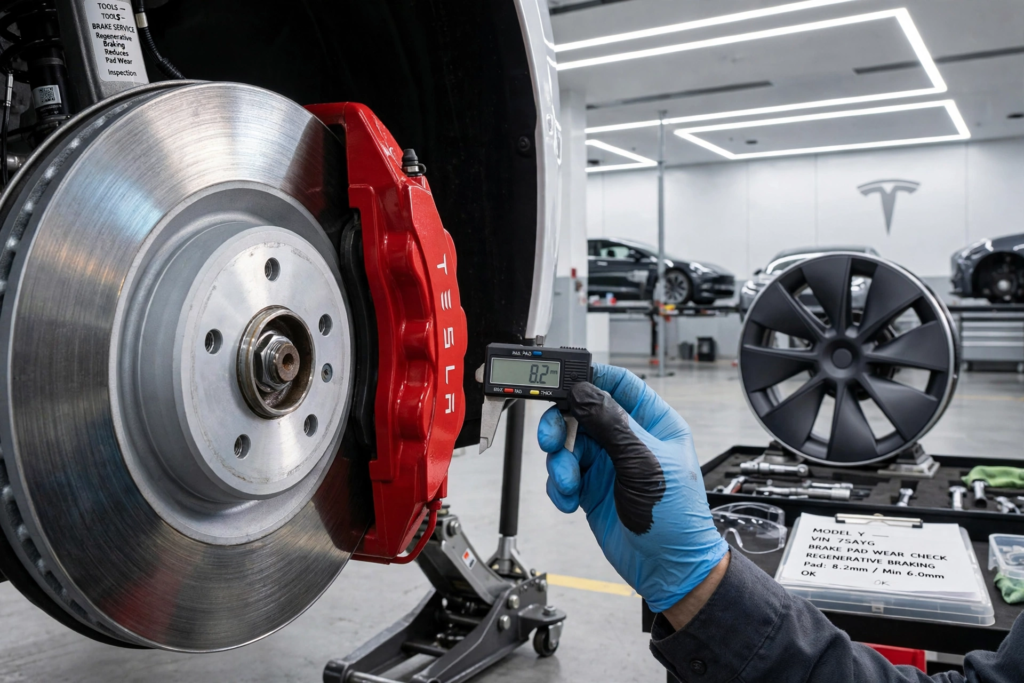
Tesla’s regenerative brake system is to put out less work for the traditional friction breaks. As the driver takes off the accelerator or uses regenerative brakes the motors go into a generator mode which in turn slows the car and at the same time recovers energy. Also because the brake pads may be used less so frequently they tend to last longer than in some gas powered vehicles.
However the brakes do require attention. In some cases of infrequent use brake components may see some corrosion which is more common in areas that use salt on the roads. Tesla reports that brake related maintenance is recommended in certain conditions which include regular brake fluid checkups and brake caliper service when it is due. Also take note of any changes in braking performance which should be brought to the attention of a professional.
Cabin Filters and Climate Control
Cabin Air Filters
Tesla cars are equipped with cabin air filters which do in large part what they sound like they would, that is to say, they filter out dust and other particles from the passenger area. Over time these filters do get dirty and at that point they require to be replaced. The exact maintenance interval for filter change out varies by model and year so it is best for owners to check Tesla’s recommendations in this regard instead of assuming all Tesla models follow the same schedule.
A dirty air filter may reduce air flow and produce unwanted smells. In dusty or polluted environments which are driven in frequently owners may see these issues present themselves sooner. While at low cost and easy to perform during maintenance, changing the filter is a job that EV ownership still includes.
Cooling Systems
Tesla still uses thermal management systems for the most important components which includes the battery. Also it has been seen that in normal operation the battery coolant does not require to be replaced. Tesla recommends that owners bring their car in for professional check ups which also includes the coolant and to not try opening the battery coolant reservoir yourself.
Air conditioning in your car may also see some wear and tear which is normal. For high voltage and complex thermal issues it is best for owners to follow Tesla’s service advice and leave specialist work to qualified technicians.
Other Maintenance Items
Wipers and Washer Fluid
Windshield wipers are a common wear item which still must be replaced in Teslas. Sun, rain, dirt, and use over time will wear out the blades. Poor performance of wipers can reduce visibility, so it is up to the owner to replace them as soon as they start to leave streaks or fail to clean the windscreen properly.
Washer fluid should also be checked and refilled as required. As for the care of the windscreen, it is a must for Tesla owners. We all know cars depend on cameras and sensors for many of their functions. Thus keeping the windscreen and camera areas free of dirt and debris is a routine maintenance issue which also plays a key role in the proper function of vehicle systems.
Software Updates
Software updates are a key aspect of Tesla ownership. In contrast to most other cars which require a visit to the shop for updates, Tesla is able to do that via the air. We may see improved performance, issue fixes, and changes to vehicle systems through these updates which are delivered right to your car.
Software updates are a complement to physical maintenance, they do put out some issues which cause you to come in for service. Also Tesla has Remote Diag and Mobile Service for certain issues which allow some repair or maintenance to be done without bringing the car into a traditional shop.
How frequently does your Tesla require service?
No Required Annual Service
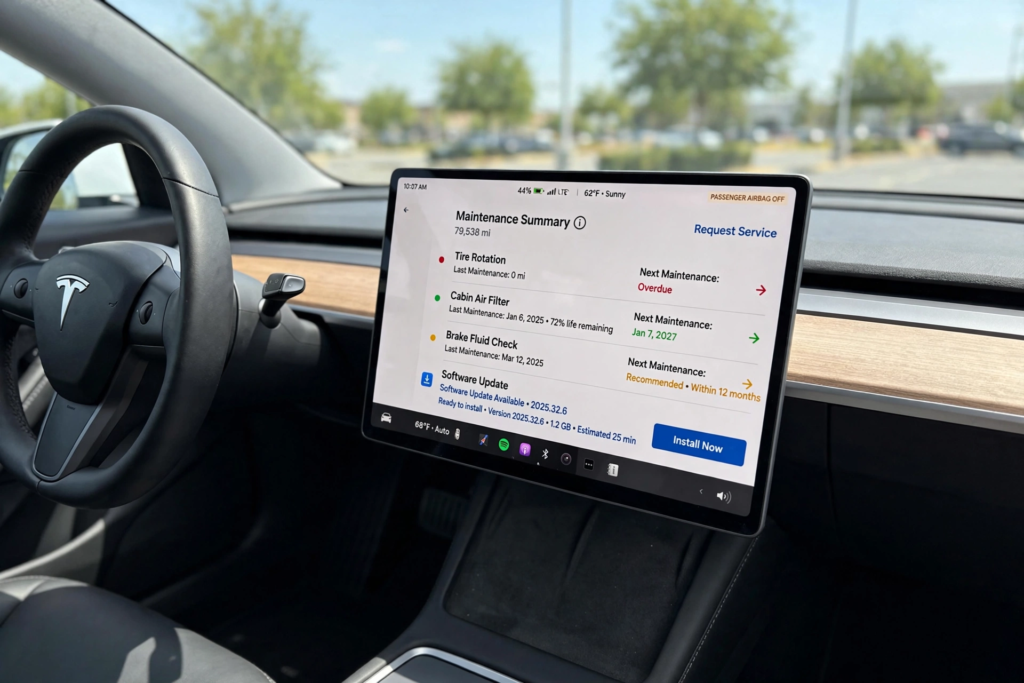
Tesla reports that their vehicles do not require annual maintenance or regular fluid changes. What we do have is that maintenance is based on the type of model you have, mileage, driving conditions, and the state of individual components. Also, in the vehicle’s touchscreen there is a Maintenance Summary which will inform you of what maintenance tasks are recommended or are past due.
This shows that owners should not go in for a yearly service just because a new year is upon us. Instead they should pay attention to the condition of their vehicle which in turn will tell you what it is they really need in terms of care. Tire rotations, cabin filter change, brake checks and the like may still be required at varying intervals.
Driving Conditions Matter
Maintenance of Tesla vehicles is a variable issue based on how and which conditions they are run in. Frequent long distance travel, aggressive acceleration, hard braking, towing, rough road terrain, dusty settings, and extreme weather will see more wear and tear on components. Thus a Tesla that is driven gently in average conditions will require less maintenance than one that is put to more use.
Owners also should perform regular check ups in addition to the recommended intervals put out by Tesla. Also do not dismiss warning signs like unusual sounds, vibration, or different brake performance which all should get looked at. Also pay attention to changes in the climate control system which may be an issue in your electric car.
Conclusion
Tesla’s maintenance needs are much less so compared to the traditional gasoline car maintenance, it isn’t a large issue. You can ignore regular oil changes, spark plug replacements, cleaning out the fuel system, and that routine tune ups. Rather the focus is on tires, brakes, cabin filters, wipers, washer fluid, software updates and also condition based inspections.
For Tesla buyers out there, this may help break down some of the barriers to EV ownership. You don’t have to treat a Tesla as you would a car which runs on gasoline but do still pay attention to which parts wear out over time. Per the car’s Maintenance Summaries check your tires and brakes, replace filters and wipers as needed, also use professional technicians for the complex systems which will in turn keep your Tesla running reliably without you having to go in for service every other visit.