Introduction
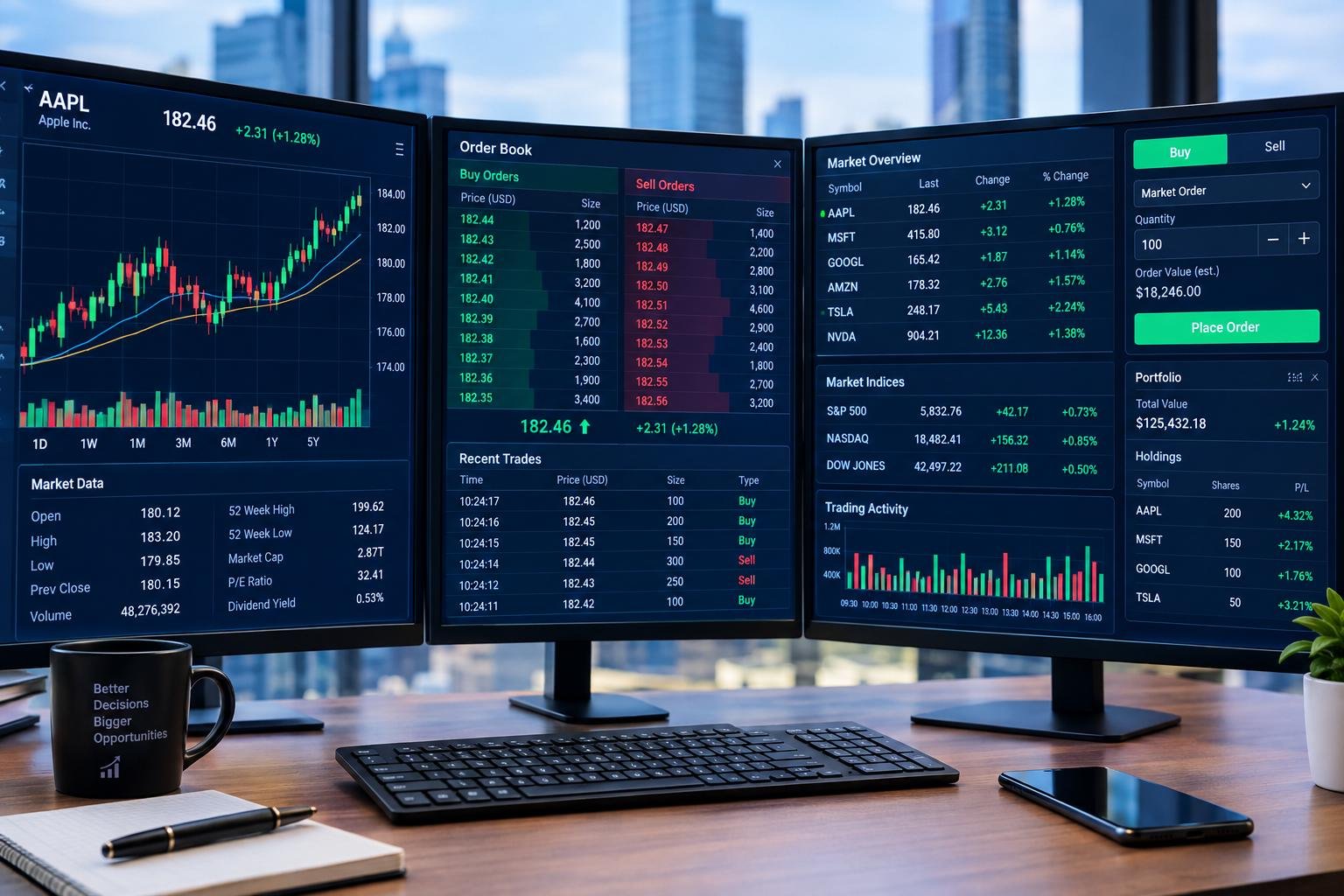
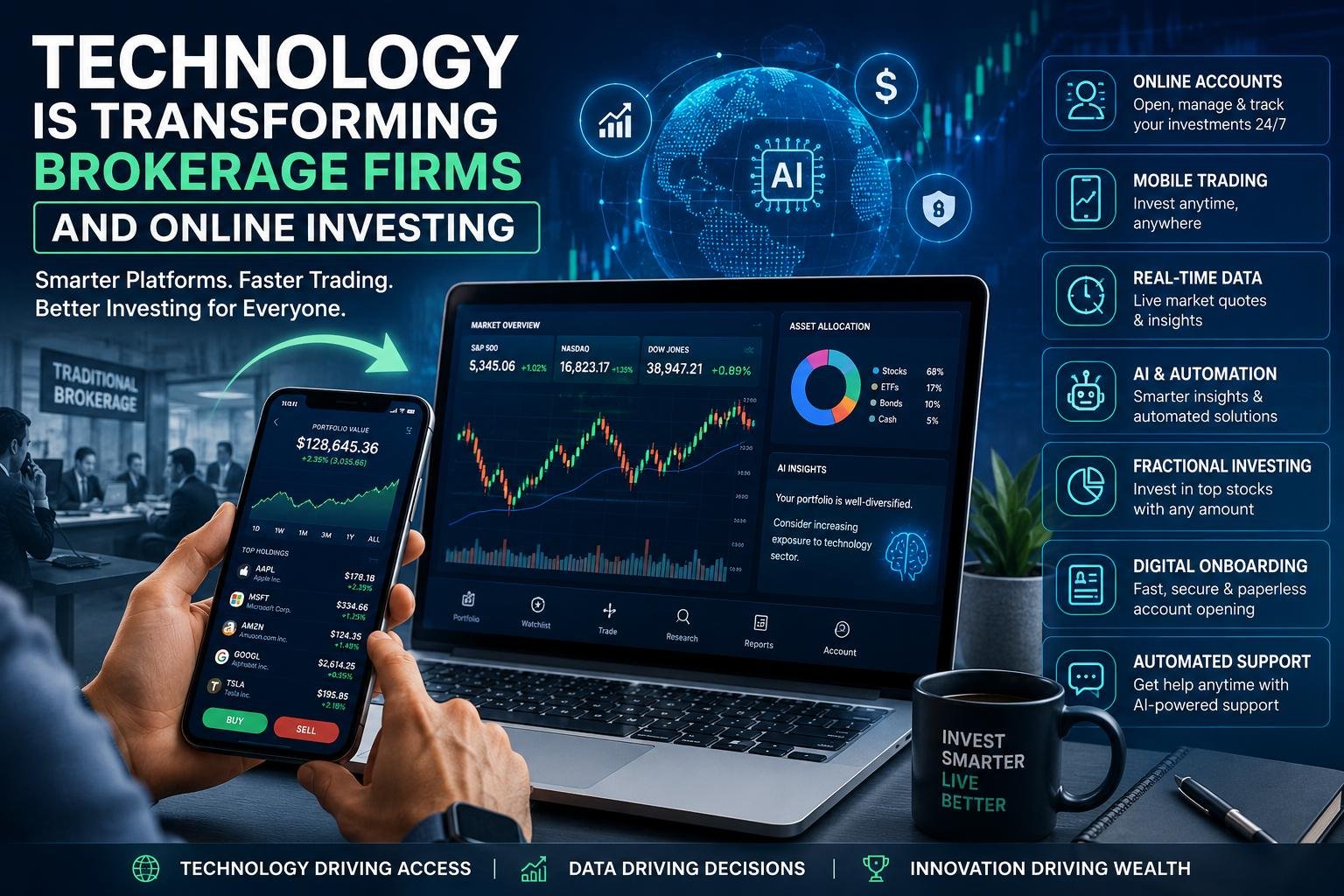
The use of technology has revolutionized the relationship between brokerage firms and investors and financial markets. In the past, traditional brokerage firms relied on a lot of things, such as having physical offices, taking instructions over the phone, dealing with paper forms, personal brokers and manually processing transactions. Most of today’s brokerages take the shape of technology firms that offer customers a digital platform to open accounts, conduct research, make trades, track portfolios and go to great lengths to supply financial data in seconds. Perhaps most importantly, automated portfolio management is a development that gets rid of the need for humans to make investment decisions like portfolio allocation or rebalancing the portfolio. Concurrently, digital onboarding, artificial intelligence, and automated customer support have emerged to make investing more convenient and accessible, while online brokerage accounts, mobile trading apps, real-time market quotes, fractional investing, and digital onboarding have made investing easier. Such technologies haven’t taken risks out of investing, but they have definitely transformed the investor’s relationship with their brokerage firm and the financial markets.
The Evolution of Traditional Brokerage Firms to Digital Investment Platforms
The traditional brokerage model was established on the basis of human relations and slow communication. A potential share buyer may have had to call or travel to an office to place an order and wait for the broker to process the order. Research and market information was also less timely as investors may rely on newspapers, financial press, print statements, or information provided by their broker. Brokerage firms facilitated the linking of investors with exchanges and other financial markets, but they were a lot of manually involved processes. These steps have been replaced by technology over time, and enabled many systems to process information and transactions electronically. Today, the broker platforms integrate the trading infrastructure, financial data, account management, analytical tools and customer support in one single digital environment. The brokerage company has therefore grown from its role as a mere middleman between investors and markets to a tech-driven platform which offers ongoing access to financial services.
Online Brokerage Accounts
Among the biggest technological advances in investing has been the creation of online brokerage accounts. But, rather than having to use paper documents and meet in person, investors can now execute a lot of the investment relationship online through a website or digital platform. After opening an account, customers are able to check balances, check holdings, transfer funds, place orders, view their transaction history, download statements and monitor their portfolio performance through an internet-connected device. Online accounts have also led to more people being able to invest, as they may not be close to a brokerage office or have a personal relationship with a financial adviser. Digital dashboards can present complicated financial information in charts, tables, alerts and performance summaries, that are easier to comprehend by average investors. This also helps brokerage firms as digital account administration could also minimize administration and boost operational efficiency. But investors still need to be aware of fees and risks, investment products, and account conditions, not relying solely on convenient technology to make investing a sure bet for profit.
Mobile Trading Apps
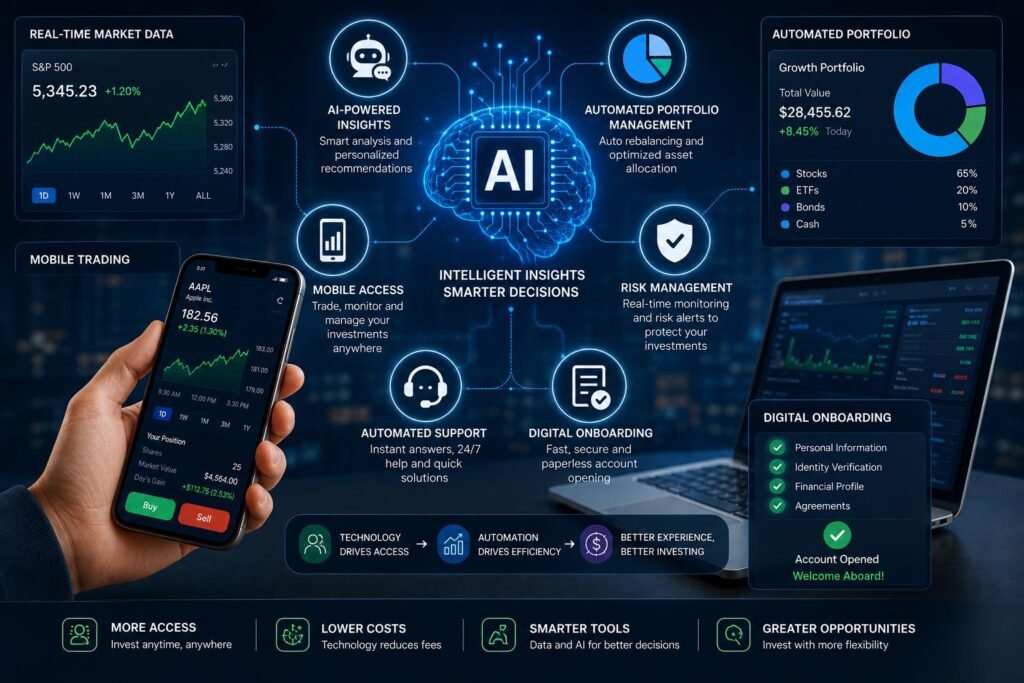
With the rise of smart phones, online investing has been taken one step further, making online investing more convenient for investors than ever before. Mobile trading applications enable traders to track markets, evaluate investments, get alerts, invest in securities, move money and place orders without having to be seated in front of a desktop computer. This has altered the expectations of investors and made investing more convenient as the expectation is that financial services are available anytime and virtually anywhere. Mobile applications can also send customized information on price changes, account transactions, new developments in the market, or other news that can have a significant impact on investors. Mobile apps are also a way for brokerage companies to connect with their clients, and gather data on how they interact with their website. However, there are some mobile trading issues. Easy access can result in some investors making impulsive and frequent trades based on short-term price movements. Hence, although mobile technology has streamlined the process of investing, the time needed, the research, the awareness of risks and a clear understanding of long-term financial goals are essential for responsible investing.
Real-Time Data and Investment Research Tools
Another significant change in financial information has been the availability and speed of financial information. Whereas in the past, delays in price information, or even the fact that there were no market publications, were relied upon by investors, today the information about the markets is available in real time or nearly real time, depending on the type of market and the type of service offered by the brokers. Investors can view share prices, volume of trading, charts, market moves, company updates and other financial data via their brokerage platform. Some high-end platforms even offer analytical functions that enable investors to compare securities analyze past performance, make watch lists and set price alerts. This has closed some of the information gaps between regular investors and investing professionals in a few ways. But, the more information one has the better it is not necessarily the case. The markets produce a lot of information in seconds and in a constantly updated manner, and investors can easily get inundated with that information. Now, as brokerage technology is more adept at conveying information, there is a greater emphasis on organizing and presenting information in a manner that assists the user in finding what they need without being distracted by all the micro trades taking place.
Provision of More Accessible and Fractional Investing
Technology has also played a role in the rise of fractional investing, which lets investors buy a share of an investment instead of having to buy an entire share or other whole unit, where it is offered by the brokerage. This can help people with limited capital get into some investments. For instance, if an investor wishes to invest in a security with a relatively high share price, he or she can invest a smaller quantity of money, rather than making a whole share purchase. With digital systems, this is possible because they keep accurate records of fractional ownership and deal with the underlying transactions digitally. This development can also help more flexible development of the portfolio since investors can put in a certain sum of money in a set of investments. There is no risk-free way to fractionalize, though – and the terms and conditions for fractional trading, voting, dividend payments, and transfers can vary between brokers. It’s important for investors to know the terms of the service before they include it in their investment strategy.
Testing and Verifying the Electronic Onboarding System.
It’s also become quite digital to open an investment account. Traditional customer onboarding often required the use of paper, hard copy signatures, identity verification by humans and multiple visits or contacts with the broker’s sales team. For many of these activities, digital onboarding enables these activities to happen online via an application. Customers can enter their personal information electronically, upload identification documents, complete disclosures and receive verification of their identity electronically beforehand to access their accounts. Automated systems have the capability to review information, detect missing applications or send odd applications to employees for further consideration. This may help speed up the length of time it takes to open an account and cut down on administrative and paperwork burden for brokerage firms. Digital onboarding is especially crucial in today’s context, as brokerages look to meet the expectations of their many customers in a timely and efficient manner. Convenience needs to be balanced with security and regulatory requirements, however, at the same time. Investment accounts hold valuable financial data, and can be stolen via identity theft, account takeover, and other means of financial crime, making it important for brokerage firms to have strong identity verification, fraud detection, data protection and compliance systems.
The Role of AI in Brokerage Services
AI is developing into yet another critical piece of tech-powered brokerage operations. Large volumes of financial data and customer information can be processed far more quickly by an AI system than by manual processing, allowing opportunities for personalized services and improved operational efficiency. AI can assist brokerage firms in spotting potentially suspicious activity, categorizing customer requests, analyzing market data, providing insights and tailoring the presentation of financial data to individual clients. Certain platforms could also implement machine-learning systems to assist with investing analysis or pattern recognition in extensive information. Certain platforms can also have machine-learning systems that assist with investing analysis or pattern-recognition in extensive information. AI can help investors with a more efficient way to locate information and navigate intricate financial services on platforms, thus making them more responsive. But, don’t consider artificial intelligence as a foolproof source of investment advice. AI-generated content may include inaccuracies, be heavily reliant on the quality of the information provided, and fail to properly grasp an individual investor’s situation or goals. This means that brokerage firms must implement the necessary controls, supervision, transparency, and risk management in their investment products and services that incorporate AI.
Automated Customer Support
Digital technology has also revolutionized customer support. Historically, the services brokerage firms relied on telephone agents for customer questions, account issues and to direct customers through services, as well as physical offices. Most businesses have automated chat, virtual assistants, searchable help centres and intelligent routing systems to manage the everyday queries of customers. Such systems can guide customers to information regarding account procedures, transactions, features of the platform, verification requirements, as well as other common problems without having to wait for a person. Around-the-clock support with automated service is helpful, especially for investors who need help outside of regular business hours or wish to trade and invest in international markets. For more complex cases, automated systems may not be able to offer the appropriate solution, and more complex cases can be transferred to human employees. The outcome is a blended customer-service approach that leaves technology to answer repetitive questions and puts staff at ease to deal with situations that require judgment or personal assistance. While beneficial, automated support must be well planned and designed because financial issues can be sensitive and confusing, and when a problem has financial implications, it is important to have human support to address issues of great importance for account security, disputes or complex financial situations.
The History and Future of Investing: Automation and Risk Management.
In addition to the interface an investor sees on a brokerage’s website and mobile app, there’s a massive technology system to serve as the backplane for order processing, account information, transaction tracking, data management and regulatory compliance. Brokerage companies can execute repetitive processes in a timely and consistent manner with automation, which decreases dependence on manual processes. Automated risk-management systems offer the ability to track transactions and account activity, detect any irregularities, enforce controls based on predetermined policies and procedures, and assist in complying with compliance procedures. Portfolio systems can automate a variety of functions as well, like regular investing, portfolio rebalancing, or allowance of funds based on specific rules. Brokerage firms can expand these services to a vast customer base thanks to cloud computing, application programming interfaces, data analytics and ever more sophisticated software systems. With increased automation, however, come technology risks. Financial services can be affected by system outages, cyberattacks, software errors, inaccurate data and a lack of connectivity. The brokerage industry, therefore, needs to spend much money on cyber security, system resilience, data protection, testing and backup solutions, to ensure convenience does not equate with reliability.
How Technology is Transforming the Investor Experience.
When these technologies are used together, it’s a complete transformation of the investor experience. The investment process has become much quicker, as digital systems can send instructions and information electronically, and it is more accessible, as investors can access the investment process via the Internet and through their smartphones without having to rely completely on physical offices and branch networks. The barriers to entry have also shifted, and the cost of services has reduced, since the advent of digital services allows firms to efficiently serve a large number of customers. Routine tasks of the portfolio can be automated and AI and data analytics can be used to structure information and customize digital experiences. Fractional investing can enable smaller investors to invest, and the digital onboarding might help to ease the administrative load of opening an account. Concurrently, technology poses new duties to investors. Meanwhile, technology also brings new responsibilities to investors. The ready availability can lead to over trading, over monitoring can lead to heightened emotional response to changes in markets, and automatic recommendations could be interpreted as guarantees. Thus, the best application of brokerage technology involves using technology to easily access your investment portfolio and gaining financial knowledge, while making careful investments, diversifying your portfolio and understanding investment risk.
Conclusion
Brokerage firms have evolved from an intermediary to an advanced digital investment platform thanks to technology. Online brokerage accounts have lessened the reliance on their offices, mobile apps have turned markets into smartphone apps, and real-time data have sped up the flow of financial information. With fractional investing, certain investments are now more accessible, and digital onboarding has streamlined the customer onboarding process for a brokerage. AI and automation are also transforming the way businesses process data, handle operations, identify any suspicious behavior, customize their services and interact with customers. Routine investment-management tasks can be carried out by automated portfolio tools, and digital customer support can be available to assist with customer inquiries without necessitating having a representative for each query. All of these have their own benefits, but with technology there are still the basic risks of investing. Markets can still fall, information can be misinterpreted and automated systems can fail.
Get more well researched information about Technology in online investing here.