Introduction
The financial technology (fintech) sector is revolutionizing capital markets by disrupting the way investors buy and sell securities, companies raise capital and financial institutions conduct investment activities. In the past, a lot of financial transactions were reliant on physical paperwork, phone orders, middle-men and the long processing times. In today’s world, digital platforms enable businesses and investors to get access to investment opportunities, make transactions and analyse financial details with ease. Investors can easily purchase and sell a wide range of financial products, such as stocks and bonds, using digital trading platforms. Electronic trading platforms have become increasingly common, making it easier for investors to trade financial products like stocks and bonds. The progress is also helping to make it easier to access, less time to operate and provide better informed investment decisions. But with the rise in technology, there are growing questions about cybersecurity, regulatory compliance, market stability and reliance on the digital infrastructure. The implications of these changes can help to better understand the future of today’s capital markets.
The Importance of Financial Technology in the context of the Capital Markets.
Financial technology is the use of digital technologies, software and systems to enhance financial services and activities. Fintech enables security trading, investment research, fundraising, portfolio management, transaction settlement and communication in the capital markets. As the technological solutions are becoming increasingly essential for the execution of their activities, the stock exchanges, investment banks, brokerage firms, asset managers and individual investors are increasingly relying on these solutions. An electronic order management system, cloud computing, artificial intelligence and automated data processing enable institutions to process vast amounts of data and minimize manual activities. For financial institutions, these technologies also allow the ability to provide service to their customers in various service centers without having to be in an office for every transaction. This in turn is making capital markets more connected, responsive and data-driven. However, technology alone can’t remove investment risks or ensure better investment returns. The basic value it can add is the enhancement of the processing of market information, the completion of transactions and the support of investment decisions.
The Mobile Trading platform and the Accessibility of the Markets
The digital trading platforms have revolutionized the way investors engage in the capital markets. The internet and mobile apps allow for people to gain access to the securities markets, check the market prices, submit orders, and keep track of their investment portfolios. In the past, investors were relying on brokers to transmit buy and sell orders and to get market data, which caused delays in the process and extra fees. Many of these activities have been made easy by electronic platforms, which offer easy access to trading services and account information. They can also provide educational content, analytical tools, price notifications, and portfolio statements that can make it easier for investors to comprehend their investments. Electronic trading systems can help companies and institutional investors to trade across multiple markets and help manage large orders. But it requires an Internet connection, eligibility to open an account, availability of the platform, and financial regulations. While digital platforms reduce some of the barriers to participation, it is important for investors to be familiar with trading costs, market fluctuations, and the associated risks of investing in securities.
Automated Investment System and Portfolio Management
Automated investment systems are investment systems that are supported by programmed rules, algorithms, and financial models to help with investment decisions and portfolio management. For instance, robo-advisers can suggest an investment allocation of a customer’s financial goals, investment time horizon, and risk tolerance. Other systems allow those portfolios to automatically rebalance if assets are allocated outside the set parameters. The tools can cut down repetitive administration, boost uniformity, and assist make specific investment services more affordable. In addition to screening securities, evaluating portfolio exposures, tracking performance and analyzing opportunities to invest in securities with specific investment criteria, automated systems are also used by professional investment managers. Especially when dealing with many assets across markets, automation can be beneficial to institutions to process information quicker than manual processing. Automated decisions require high-quality data, assumptions, and programming, however. Sub-optimal models can make sub-optimal recommendations, or react adversely to atypical market conditions. As a result, human oversight, clear investment principles and frequent testing of the systems are still of vital importance for investing responsibly.
Data and Analysis for Real Time Usage
Technology advancement in capital markets is the ability to get financial information in real time. Electronic data feeds, market dashboards, news services and analytical applications are used by investors and financial institutions to track security prices, trading volumes, interest rates and exchange rates, as well as economic indicators. Real-time (or near real-time) information enables market participants to react to market conditions faster and evaluate the impact new developments can have on investment opportunities. For example, an investor can analyze the company’s recent financial data and then compare it to past results and industry averages to adjust his opinion on the company’s stock. Data processing systems can also be utilized by trading firms to discover price differences or perhaps changes in market activity. The functions enhance the sharing of information and facilitate more rational decision-making. However, information may be incomplete, outdated, misinterpreted and inaccurate. But just having access to a lot of information isn’t necessarily an advantage to an investor and it is important to note the difference between reliable financial reporting, misleading commentary, and unverifiable claims on the internet.

Transforming Investment Practices with the Aid of Artificial Intelligence
Artificial intelligence (AI) is propelling the capabilities of financial institutions to better process information, detect patterns and aid in investment decisions. Machine learning systems can analyse past prices, company financial statements, economic indicators or other data sets, in order to discover correlations which might be hard to discover in traditional means. These features can be utilized by investment companies for portfolio optimization, risk analysis, market monitoring, and analyzing investment opportunities. AI may also be able to summarize financial statements, categorize research material, and assist analysts in research and analysis. Trading systems can incorporate pre-defined algorithms and market information to automate trades based on certain conditions in trading operations. But at financial markets unpredictable events, the psychology of investors, political developments, and sudden change in economic conditions can affect the financial markets. Past trends, therefore, may not be able to forecast the future. AI models can also perpetuate biases, draw incorrect conclusions, or behave in a negative manner when presented with unfamiliar situations. It is important to use technological analysis along with using professional judgment, independent validation and appropriate risk controls.
Application of Blockchain to Transaction Processing.
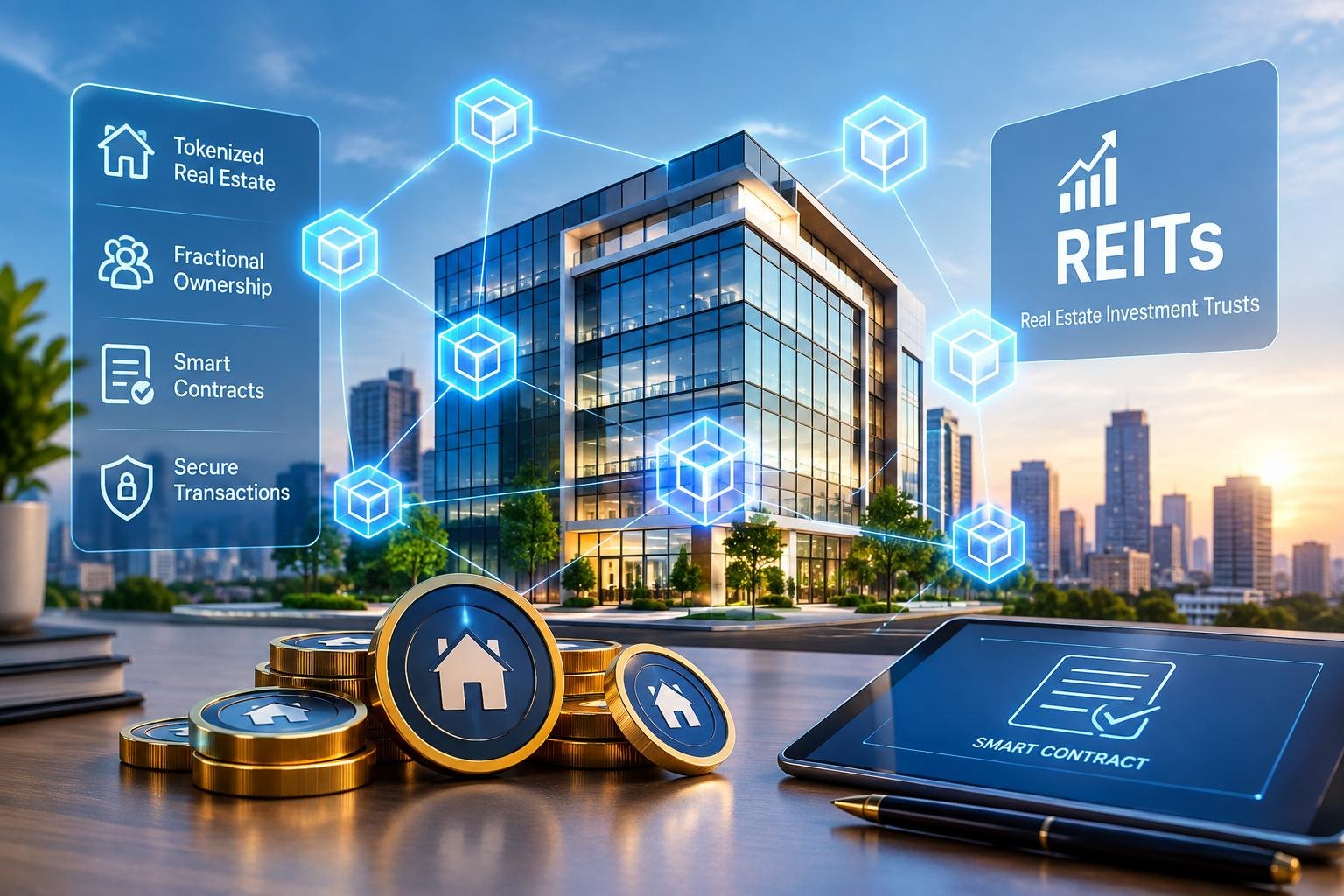
One way in which blockchain technology can enhance some of the functions of the capital markets is by solving problems related to how these markets are managed. A blockchain is a distributed digital ledger that is used to record transactions on a network using rules. Blockchain based systems can be used in securities markets to maintain a record of securities transfers, create digital securities, and facilitate transactions by using a shared record. Smart contracts are programs that run certain actions once they satisfy certain conditions; they can be used to automate some of the functions, like payment instructions or corporate actions. The features can ultimately eliminate the reconciliation needs, enhance data consistency and speed up settlement times in suitable deals. Additionally, some financial assets could be represented digitally through tokenization, which may enable new investment opportunities to be more accessible. But blockchain is no guarantee of fraud avoidance, accuracy, or that functioning of trusted legal arrangements is not necessary. The stakeholders in the market will have to take into account cyber security, governance, interoperability, the protection of investors and regulatory requirements. But it will rely on whether or not these systems offer reliable benefits over the existing financial systems.
How Fintech is helping Companies Raise Capital
Financial technology is also poised to transform the process of accessing funding through capital markets for businesses. Digital systems can be utilized by firms to create investor documentation, share economic data, speak with prospective investors, and browse securities providing. Data analytics is also employed by investment banks and other financial advisers to help with market analysis, investor appetite and in making decisions regarding timing and structure of capital raising activities. Information on available investment opportunities can be made more accessible to investors through digital investment services (as per local laws & platform requirements). Some types of crowdfunding and digital fundraising may be suitable options for smaller businesses, and may offer alternatives to traditional financing methods. Technology can ease the administrative burden and facilitate communication with audiences spread out across the globe, which can have a positive impact on fundraising efficiency. Even so, the success of undertaking capital rising rests on the performance of the business, the financial integrity of the business, investor confidence in the business and appropriate market conditions. Businesses need to make correct disclosures and stick to securities regulations; investors must evaluate the monetary risks of each opportunity and not solely on the basis of easy access via digital devices.
Optimizing Sharing Information and Optimizing Operational Efficiency
Technology is now playing a more prominent role in the financial sector, with financial institutions looking to technology to make their internal processes more efficient, but also to connect with other market players. Cloud Computing enables organizations to use computing services and store data without the need for them to keep all the resources in their own data centers. APIs can help facilitate the sharing of financial data between compatible systems and digital identity verification and electronic documentation can help streamline customer onboarding. Automated compliance tools can assist institutions in screening transactions, record keeping and detecting transactions that warrant additional investigation. The features can help to minimize duplication, speed up workflows and process high volumes of transactions. Better information sharing among brokers, custodians, exchanges and settlement firms could also help to eliminate inconsistencies in the administrative process. But the benefits will only be realized if it is integrated properly, access is controlled and the service providers are reliable. Financial institutions need to ensure that sensitive information is being managed securely, and that outsourcing their technology services is reliable and compliant with operational and regulatory needs. Technological improvements that lead to efficiency gains are most likely to be long-term when backed by appropriate procedures, properly trained staff, and accountable staff.
Challenges and Risks Related to Financial Technology.
However, with the rise in the use of fintech, there are also crucial challenges for the capital markets. Financial institutions and investors face significant risks with cyber security threats such as phishing, ransomware, data theft and access to accounts. System downtime, software bugs and Internet outages can make it impossible to complete transactions at key times. Automated trading can also help to drive quick movements in the market, when several systems react in the same way to new information or to unexpected conditions. Regulatory compliance is another challenge as financial institutions have to comply with the criteria related to investors’ protection, privacy of data, market conduct, anti-money laundering, and financial reporting. Cross-border operations are likely hindered by different regulation of digital securities, finance services, and financial technologies in various countries. Complacating cross-border operations are the application of different rules for digital securities, finance services, and emerging financial technologies. Technological dependence can also be a drawback for investors who do not have easy Internet access and/or do not have the technical expertise to operate online safely. Implementing robust cybersecurity protocols, having contingencies in place, training employees, conducting regular system audits, and ensuring robust regulatory and financial institution oversight of the situation are essential in addressing these concerns.
Impact of Tech to the Capital Markets in the Future
Emerging technologies such as AI and automation, digital investment platforms, real-time analytics and distributed ledger technologies will likely play a larger role in the future of capital markets. Predictive models could be adopted by financial institutions to gain insights into the risks of the financial portfolio, detect unusual trading behavior, and optimize operational planning. Investors may appreciate an improved and more customized research capability, more transparent digital reporting and access to portfolio information. Meanwhile, regulators and operators of the markets will keep looking for ways to regulate the increasingly intricate electronic markets and to defend the market participants from the new risks. The rate of uptake will depend on the infrastructure, the cost, regulation, the readiness of institutions and investor confidence. Not all innovations will be embraced worldwide and there may be some systems that have been in place for a while, which are still required due to their legal significance or reliability. Institutions with the best outcomes will be those that bring in useful technologies and have effective governance, reliable operations and suitable people to oversee them. In the end, innovation has to fulfill the broader objectives of market integrity, efficiency, transparency and the protection of investors.
Conclusion
Financial technology is transforming the capital markets, enhancing securities trading, investment management, financial analysis, fundraising and transaction processing. Participating in the market is more convenient on digital platforms, many tasks can be automated, data is real-time which facilitates timely analysis, artificial intelligence can enhance analytical capabilities, and specific use of blockchain can enhance selected transactions and recordkeeping processes. All these innovations can work together to make financial institutions more efficient, and offer investors greater information and services. But with all the advances of technology comes cybersecurity risks, compliance issues, operational weaknesses and dangers from over-reliance on automated systems. The issues highlighted illustrate the need for the development of innovation to go hand in hand with responsible management, regulatory oversight and investment decisions. Financial technology is evolving and its future impact will not only be on how fast and efficient transactions go, or how sophisticated the software becomes, but how it makes capital markets more accessible, resilient, transparent, and trustworthy.
Get more well researched information about Financial technology in capital markets here.