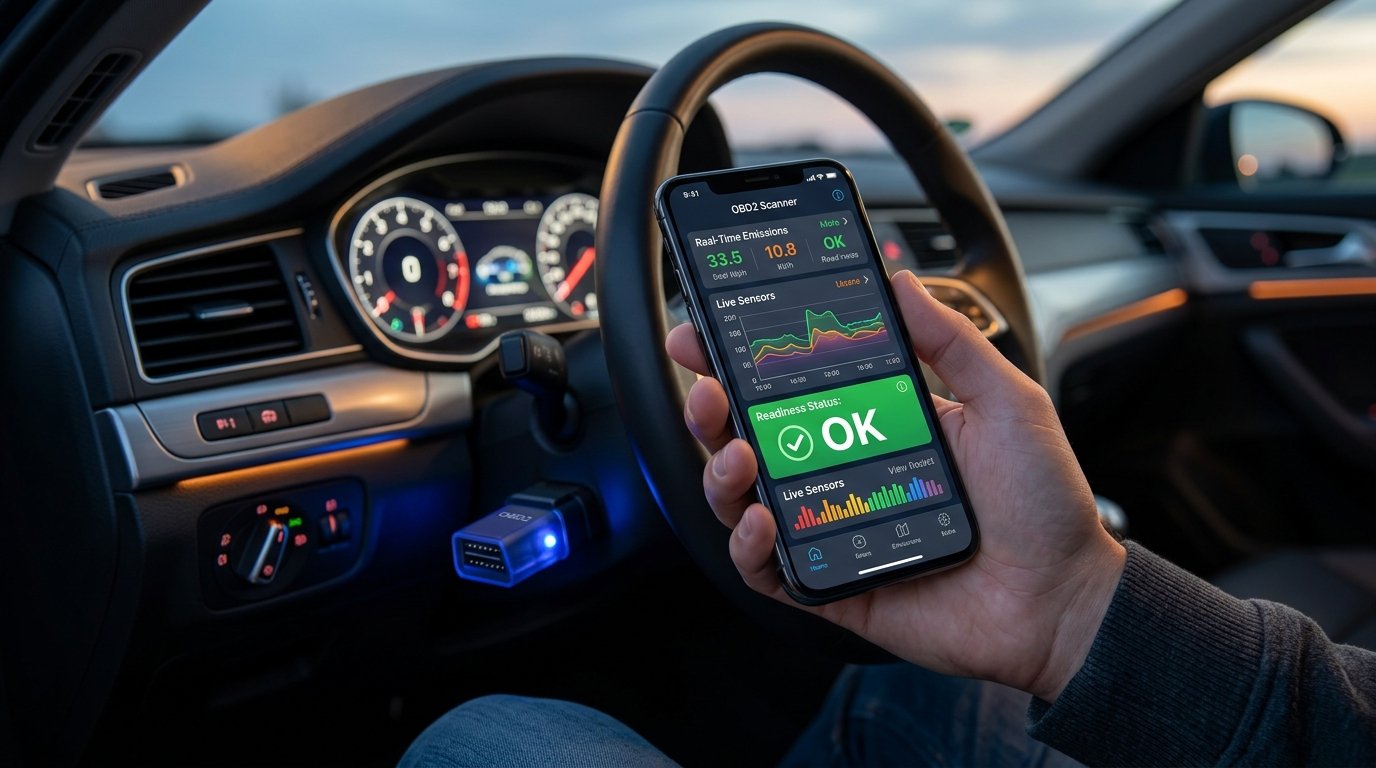
OBD2 emissions scanner apps provide a brilliant, easy way to check your car’s engine systems before taking it in for official testing. Modern cars are equipped with computers, sensors, and emissions-control systems to track their engine operation and minimize polluting emissions. If one of these systems has a fault, the computer on board the car can record an unusual reading and set a diagnostic trouble code (DTC). It could also trigger the check-engine light warning to alert drivers. This information can be accessed by a smartphone and a compatible adapter with an smartphone-based OBD2 scanner, so if you suspect a problem, you don’t have to go to a repair shop or take the vehicle for inspection.
The diagnostic trouble codes can be retrieved, selected live sensor readings can be displayed, and the readiness monitors for emissions can be checked with a smartphone-based OBD2 scanner. The features provide drivers with helpful information about what the vehicle’s computer has identified and can assist them in determining if further diagnostics are required. But an OBD2 app is not a replacement for professional testing; it is designed to be used as a diagnostic aid. It can give clues and be used to determine possible faults, but it may be necessary to perform further tests to accurately pinpoint the fault.
Function of OBD2 in Monitoring the Emissions From Vehicles
OBD2 is an electronic diagnostic system that keeps track of a variety of engine and emissions parts during the running of the vehicle. Sensors tell the ECM what they are measuring, and the ECM compares the data to a set of values. When the computer senses an unusual condition that fits the diagnostic criteria, it will store a trouble code and may set the check-engine light (CEL). These codes may apply to systems involving fuel control, exhaust emissions, oxygen monitoring, evaporative emissions, or other powertrain systems.
Emissions monitoring is a series of systems operating in concert; therefore, when an emissions-related code is present, that does not always indicate the component stated in the code has failed. Example: An oxygen-sensor code may pertain to wiring, an exhaust leak, fuel-control issues, or something else that impacts how the sensor is functioning. Likewise, there are various issues that can cause an EVAP code. Knowing this difference will keep drivers from ordering parts unnecessarily from a code description.
What OBD2 Scanner App Can Measure
An OBD2 scanner app requires an OBD2 adapter that is compatible with the PC (or tablet). Drivers can access stored and pending trouble codes, along with data including engine speed, coolant temp, airflow, throttle position, fuel-related data, and oxygen sensor data, depending on the vehicle and app. Some applications have the ability to record real-time data, so that users can see how some of the readings fluctuate as the engine runs under various circumstances.
These functions can be particularly valuable when the check-engine light comes on, but the car appears to be fine. A driver can make an initial scan and determine if the computer identifies a possible emissions problem. But it should not be used without taking into account other working conditions, such as engine temperature, load, speed, etc. The information provided by one unusual value is not necessarily evidence of a faulty sensor or component, so it is important to follow up with other information to arrive at a diagnosis.
Typical Problems a Car Can Experience That Are Revealed by an OBD2 App
OBD2 diagnostics are able to detect trouble codes for oxygen sensors, fuel mixture issues, catalytic-converter performance, evaporative emissions, exhaust-gas recirculation, and other systems that are monitored. For instance, the car might retain a code when it detects a signal from the oxygen sensors that is not what is expected, or the fuel mixture is outside the range expected. An EVAP code can also mean that there may be an issue with the system that regulates the fuel vapors.
What is important is that a diagnostic code indicates a condition that is detected, but does not necessarily indicate a failed part. A fuel-control code may have a number of potential causes, while a catalytic-converter code might be affected by other issues in the exhaust or engine. The code should therefore be used to decide which areas need further investigation by the driver. In the event that the cause is undetermined, the qualified technician can conduct the additional tests prior to replacing parts.
How to Check Readiness Monitors Before an Emissions Test
OBD2 cars are equipped with readiness monitors that will determine if any of the emissions-related systems have passed their self-tests. These monitors operate under certain conditions, and an OBD2 app that can support readiness information can display whether or not the monitors included are ready or incomplete. Having this information handy prior to an emissions inspection will enable drivers to gain a sense of the vehicle’s diagnostic status and what issues may need to be addressed.
It is important for drivers to avoid erasing trouble codes just prior to inspection. Readiness monitors can be reset by clearing codes, which may require further driving conditions before they are once again ready. When the light comes on, the vehicle is not necessarily in need of inspection. It would be better to find and fix the problem and let the vehicle’s monitoring system do its job.
Using an OBD2 App to Check Emissions Sensors
In modern engines, sensors are vital for supplying the computer with data that it needs to regulate fuel, air, temp, and emissions. Very special on this block are the oxygen sensors and air/fuel sensors, which provide a reading for the engine computer to make fuel control adjustments. There are other sensors, such as airflow, pressure, and temperature sensors, that can affect engine operations and emissions. If the computer receives an unusual signal, the OBD2 app could be used to determine the associated diagnostic code.
It may also be possible to display the real-time data from the sensors in some applications, giving further indications of engine performance. But the readings of the sensors vary depending upon the condition, such as engine temperature, speed, load, etc. So, if a reading is “unusual” at a particular time, it doesn’t necessarily mean the sensor has failed. To determine if replacement is needed, the sensor, wiring, connectors, and/or related mechanical systems should be checked first to accurately diagnose the issue.
Checking Catalytic-Converter Problems
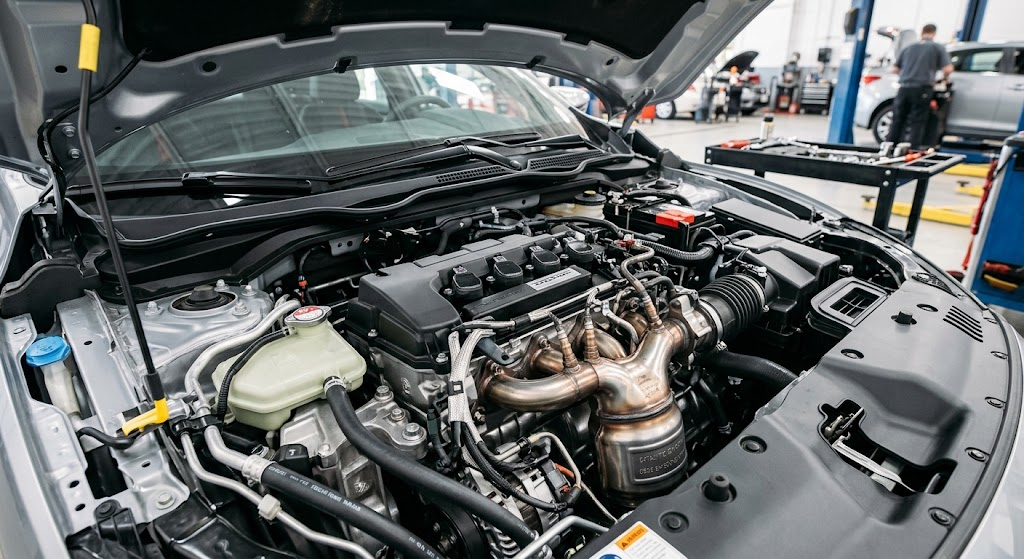
The catalytic converter is a key component in the reduction of some of the pollutants emitted by a car. Information gathered by the sensors situated around the exhaust system can be used by the computer in the vehicle to determine if the emissions-control system seems to be functioning correctly. If the computer detects a trend that indicates that the catalytic converter is not working as efficiently as it should, the computer may set a diagnostic trouble code that can be retrieved by an app on the mobile phone by using an OBD2 scanner.
A catalytic-converter code doesn’t necessarily indicate that the catalytic converter should be replaced. At times, the readings produced by the diagnostic system may be inaccurate due to problems with the engine, fuel-control system, exhaust system, or sensors. If there are issues with your car’s emissions or engine, it’s essential to identify them and fix them, as continuing to drive with some problems can only cause more. Using an OBD2 app can be a good initial indicator, and further testing can verify the cause.
Inspect EVAP System for Leaks
The evaporative emissions control system, or EVAP system, helps to keep fuel vapors contained from getting into the air. This consists of parts like vapor lines, valves, a charcoal canister, and other parts which regulate fuel vapor flow. The system operates under certain conditions during its diagnostic checks; if any component has an issue or a small leak, it can cause an emissions-related problem to set a code.
OBD2 apps can detect OBD2 codes and enable the driver to find out that the fuel-vapor system should be attended to. Fuel cap leaks or misalignment can occasionally be the cause of EVAP issues, but this isn’t the only contributor to EVAP issues. Other leaks, such as damaged hoses, loose valves, electrical issues, and more, can also cause codes. Once basic testing procedures have been performed, special testing may be necessary to determine the source of the problem.
Preparing for Inspection with OBD2 Emissions Scanner Apps
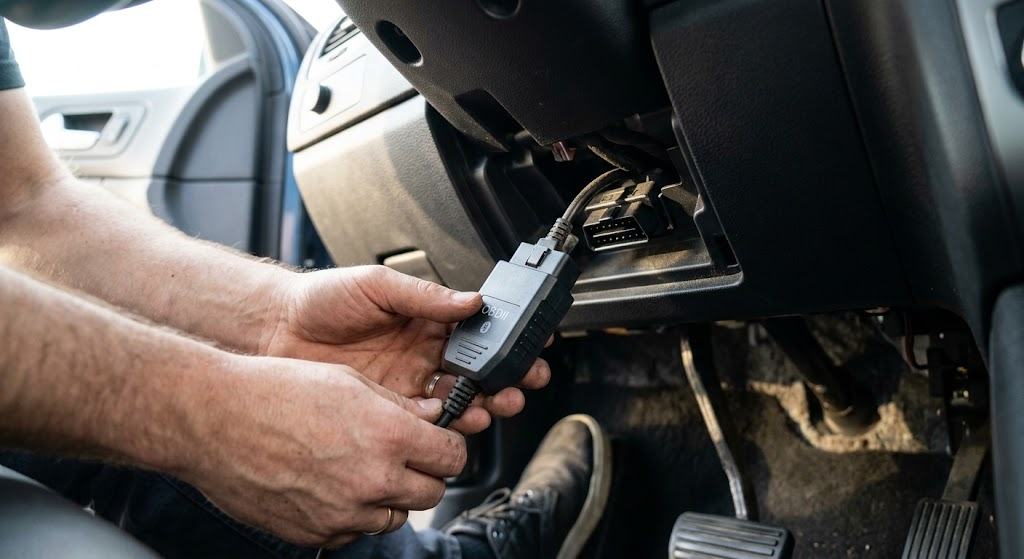
An OBD2 app can be used to do a preliminary diagnosis before an emission test. First, attach a compatible adapter to the vehicle’s OBD2 port and check for stored trouble codes and/or pending trouble codes. For applications that include readiness monitors, determine if the necessary systems are ready. Knowing what the information means on the dash can also help drivers review information that is relevant to them. These checks can be done well in advance of the inspection, giving more time to tackle any issues that may arise.
Inspection requirements differ from location to location and testing program to testing program, and an OBD2 app cannot ensure a car will pass. It can only give information on the diagnostic status of the vehicle. When trouble codes are being stored, the driver should look into and fix the cause of the trouble code, rather than just dismissing it. Once repaired, the vehicle will be required to run through its normal conditions of operation before the readiness monitors will be ready.
Pros and Cons of OBD2 Scanner Apps
The great thing about an OBD2 scanner app is its convenience. Drivers don’t need to use only a traditional handheld scanner, as they will be able to use a smartphone with a compatible adapter and access diagnostic information. Numerous applications are able to present trouble codes, live sensor data, and readiness information in an easy-to-understand format. This can assist drivers in understanding the meaning of a warning light and provide them with valuable data before taking the vehicle to a repair shop.
However, there are restrictions to be taken into account. Not all adapters or applications will fit every vehicle, and some more advanced diagnostic functions will need more advanced equipment. Also, a generic description of a trouble code might not be sufficient to diagnose a problem. More advanced electrical, mechanical, or emission issues may still require the use of professional diagnostic tools. It’s best, then, to use an OBD2 app to collect data and pinpoint potential trouble spots instead of trying to do a full vehicle inspection by one of the professionals.
Conclusion
OBD2 scanner apps can come in handy for drivers who wish to scan their cars for potential emissions issues before they go for an inspection or repair date. They can access trouble codes, display selected sensor readings, and provide readiness-monitor information. These characteristics can assist in the detection of possible fuel control, oxygen sensor, EVAP, catalytic converter, and other emissions-related problems.
What is most critical is to know the boundaries of the information that’s available. A diagnostic code is a means of starting an investigation, not proof that a specific component has failed. Scanning the vehicle early, checking readiness monitors, and fixing problems rather than just getting rid of warning codes allow drivers to be better prepared for emissions testing and make better repair decisions.