Introduction
The use of logic is one of the most fundamental aspects of discrete mathematics, as it allows for systematic ways of expressing statements, assessing arguments, checking that conclusions are valid from the information given, etc. Logic is used in mathematics and computer science to differentiate between correct and incorrect reasoning, using clear rules, not assumptions or intuition. It is the basis for comprehending mathematical proofs, developing algorithms, programming computers, building databases, and building artificial intelligence systems. Propositions, predicates, logical operators, quantifiers, and inference rules allow a clear representation of information and systematic analysis of complex problems for the program and the mathematician.
The computer program may, for example, have to decide if a user has entered a correct password, or if a student has fulfilled the requirements for an examination, or if a certain condition has been fulfilled before an instruction is executed. Logical principles are used to make these decisions. So knowledge of logic in discrete mathematics aids students, software developers and researchers in finding correct answers for their problems and lowering their error rate in mathematical reasoning and computer-based systems.
What is Logic in Discrete Mathematics?
In the field of Discrete Mathematics, logic is the area that is concerned with the formal structure of the rules employed to assess statements, establish linkage between ideas, and verify if conclusions are valid. Mathematical logic is fundamentally different from informal reasoning in that it relies on precise statements and well-supported principles to establish whether a statement is true or valid. It is a formal language for defining mathematical relationships and for stating conditions that computers can solve. For instance, the statement “Every even integer is even” is a mathematical statement that can be investigated mathematically while the statement “This is the most interesting subject” cannot be definitely given a mathematical truth value without other criteria.
In discrete mathematics, logic is especially significant because computer programs are written in terms of a finite number of symbols, binary numbers, and clearly defined instructions. A programmer can convert a problem into a logical expression and work out what might happen, spot any inconsistencies, and build correct solutions. Mathematical logic also serves as a means of establishing the proofs; that is, researchers can prove that something is true because of the way they used logic to derive it.
Understanding Propositions in Mathematical Logic
A proposition is a statement that can be simply said to be either true or false. Propositional logic is a logic of propositions, which is the simplest form of logical expression, whose basic building blocks are propositions. They might be something like “The number 8 is even” (true) or “The number 9 is divisible by 2” (false). In both instances, the statements are definite and can be evaluated. Questions and commands, for example, “What is your name?” and “Close the door,” are not propositions, since they do not contain a statement that could be classified as either true or false.
Likewise, x+3=7x+3=7 is not a proposition if the value of xx is unspecified since its truth is dependent on the value of x. Programmers can use propositions to describe conditions that control the operation of a software program. For example, a program can check to see if a number is positive before performing the next operation, or if a customer has gone through a registration process before continuing.
Simple and Compound Propositions
A simple proposition is a statement that makes exactly one statement, not the two statements that are combined by a logical operator. For instance, “The computer is switched on” might be represented as pp and “The internet connection is active” might be represented as qq. The statements are independent of one another, that is that they can be independently assessed as being true or false. Two or more propositions joined by logical operators and used to express relationships between their truth values are called compound propositions. For instance, p∧qp \land q is a computer that is on and the internet connection is on.
This compound is a true statement if both parts are true. For instance, p∨qp \lor q is equivalent to the computer is on, or the Internet connection is active, or the computer is on and the Internet connection is active. Complex conditions can be compactly and precisely expressed as compound propositions. These are used in programming to help the programmer to understand whether multiple requirements have to be met simultaneously, or if at least one requirement needs to be met. By recognizing simple propositions, and correctly combining them, programmers can create conditions that mimic the desired actions of an application.
Logical OR, AND, and NOT Operators
Logical operators are symbols which are used to join propositions and/or to change the meaning of propositions based on agreed rules. Propositional logic has five primary operators: negation, conjunction, disjunction, implication, and biconditional. Negation is represented by ¬p\neg p and it negates the truth value of a proposition: if pp is true, then ¬p\neg p is false, and if pp is false, then ¬p\neg p is true. Conjunction, p∧qp \land q, is only true if both propositions are true. Disjunction – p∨qp \lor q is true if either p or q is true. The implication p→qp \rightarrow q says that if pp is true, then qq must be true as well; and it is only false when pp is true and qq is false. Biconditional (p↔qp \leftrightarrow q) is true if both statements are true or both statements are false. Programming operators are vital in programming because they enable the programmer to accurately express conditions for decision making. To learn more about how these concepts are used in software development, read this introduction to logical operators, which will discuss their use in programming expressions and conditions.
Truth Tables and Their Importance
A truth table is a tabular representation of the truth values of a logical expression for all the possible truth values of its constituent propositions. Students can use truth tables to learn about the behavior of logical operators and programmers can use a truth table to check if the condition yields the desired outcome. There are four combinations of truth values for two propositions, pp and qq: pp true, qq false; pp true, qq true; pp false, qq true; and pp false, qq false. Analyzing such combinations can help determine the truth value of a compound statement.
Logical equivalence can also be used to verify logical compatibility using truth tables, and they can be used to analyse digital circuits and to test complex conditions in computer programs. For instance, if a site requires a valid password and active account to access, then a user must enter a valid password and have an active account to access. The truth table can show that the access should only be granted if both of these are true. This systematic approach enables developers to recognize errors in the logic of any decision making prior to impacting a user or the reliability of a system.
The following is an example of a Truth Table.
Discuss two statements pp and qq and their conjunction, disjunction and implication. The conjunction p∧qp \land q must be satisfied if both are true; the disjunction p∨qp \lor q must be satisfied if at least one of them is true. (Implication: p → qp \rightarrow q) is false only when pp is true and qq is false. These relationships can be summarised on the following truth table.
| pp | p∧qp \land q | p∨qp \lor q | p→qp \rightarrow q | |
| True | True | True | True | True |
| True | False | False | True | False |
| False | True | False | True | True |
| False | False | False | False | True |
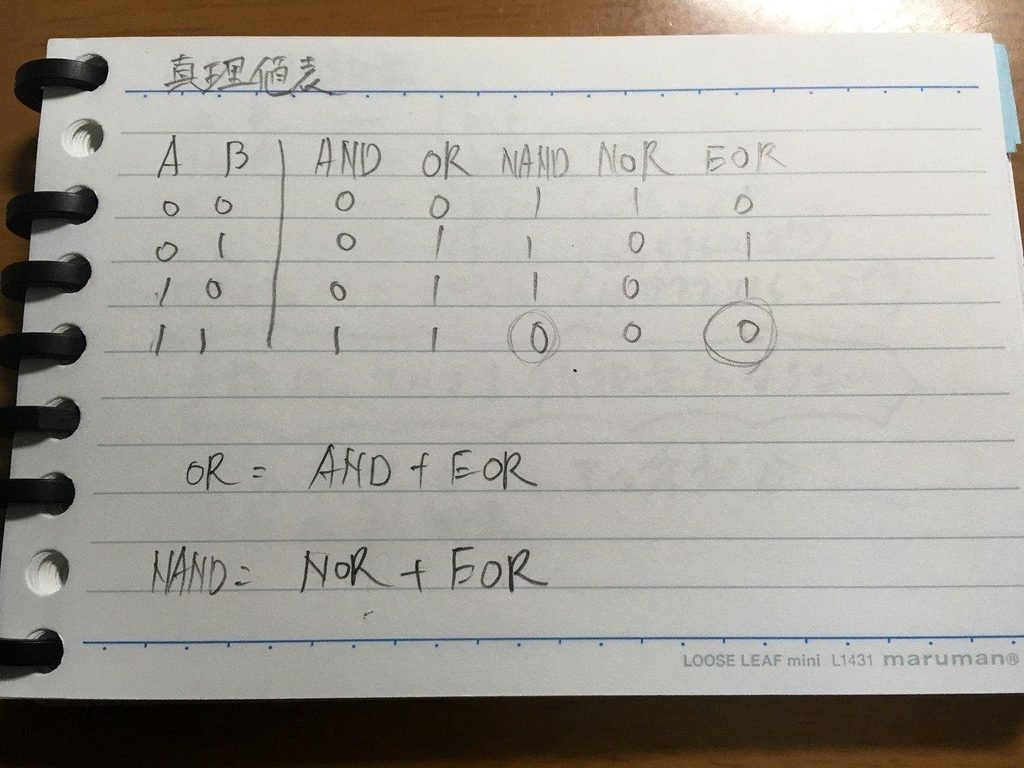
The table illustrates that each of the logical operators has a certain rule, irrespective of the subject represented by the propositions. For example, if a program has the condition p∧qp \land q, then both conditions p and q must be true for the whole condition to be true. An expression with p∨qp \lor q is true if at least one of the conditions or both is true. These differences are crucial in writing correct conditional statements, access control, and algorithm designs. Truth tables can be used to check your student’s logic without any difficulty, making them a useful tool both theoretically in maths, and practically when working with computers.
Basic verifying and open statements.
Predicates are an extension of propositional logic used to describe the properties of an object or relationship between objects. A predicate is an expression that contains a variable or more than one variable, and the truth or falsity of a predicate depends on the value or values of the variable(s). For instance, P(x):x>5P(x): x>5 is the property that is true about the number xx whenever it is greater than five. The statement is true when x=8x=8 and false when x=3x=3. Predicates are open statements, as opposed to a proposition which has been given a truth value, and they are not a proposition until the variables are quantified or given values.
Predicates are particularly useful when a mathematical statement is true of a set of objects, but not necessarily true of a single object. In computing, they are used for searching, filtering, validation and condition checking. For instance all students with examination scores > 70 could be selected using a database query. The condition Score>70Score>70 is a predicate that is applied to every student record. Predicates are important to describe general rules and to locate objects that meet specific criteria.
Predicates with Multiple Variables.
There are predicates with two or more variables that describe relationships between objects. For instance, R(x,y):x>yR(x,y): x>y means that x is greater than y. The predicate is true if x=10x=10 and y=4y=4, but false if x=2x=2 and y=7y=7. Predicates with more than one variable are useful for modelling relationships like equality, ordering, membership, and connectivity. A relation is a relationship defined in a database, such as the relation Enrolled(Student, Course)Enrolled(Student, Course) that associates a particular student with a particular course.
A system can assess this relationship to decide whether or not a student should be allowed access to the course material. Likewise, a graph algorithm can also be based on predicates to determine if an edge exists between two vertices. The examples show that predicates are a flexible way to express relationships which are not always best conveyed by simple propositions. Predicates can be combined with logical operators and quantifiers to create more complex conditions and develop more precise rules to use when processing information.
Quantifiers in Predicate Logic
The quantifiers are used to define the number of elements in a given domain that satisfy a predicate. The two main quantifiers are the universal quantifier ∀\forall and the existential quantifier ∃\exists. The universal quantifier is “for all” or “for every,” and the existential quantifier is “there exists at least one. For instance, ∀x∈N,x+1>x means that 1 added to any natural number yields a larger number. The existential statement (There exists x in Z such that x2=9) is equivalent to saying that there is some integer x which satisfies x2=9 and in this case, both 3 and −3 are solutions.
Because quantifiers enable mathematical statements to refer to an entire collection of objects without naming each one, they are important. In programming, universal quantification can be used to represent a requirement that all records must meet a certain condition, and existential quantification may be used to represent the existence of at least one record that meets a certain condition. In algorithms, a quantifier can be used to specify the condition of a proof, and in database queries, understanding quantifiers can help the programmer write precise queries.
Negating Quantified Statements
Quantified statements are negated in accordance with certain logical rules. The negation of a universal statement is an existential statement, and the negation of an existential statement is a universal statement. Symbolically, a negation of a universal quantifier is logically equivalent to an existential quantifier, that is, ¬(∀x P(x))\neg(\forall x,P(x)) is equivalent to ∃x ¬P(x).Symbolically, the negation of a universal quantifier is logically equivalent to an existential quantifier, that is, ¬(∀x P(x))\neg(\forall x,P(x)) is equivalent to ∃x ¬P(x). In the same way, ¬(∃x P(x))\neg(\exists x,P(x)) is equivalent to ∀x ¬P(x)\forall x,\neg P(x), which means that no object satisfies the predicate.
Suppose that everyone has taken a test and passed it. It is not that no student passed, it is that at least one student did not pass. These differences are relevant in verifying requirements, writing database queries and establishing mathematical statements. When quantifying an expression, it is important to negate it correctly, otherwise the meaning of a condition can be changed. Carefully using these rules enables students and developers to accurately represent exceptions and to test whether general claims hold true on a case-by-case basis.
Logical Equivalence and its Applications.
Two logical expressions are logically equivalent if they have the same truth value for all possible combinations of truth values for their parts. The symbol ≡\equiv represents logical equivalence, and the truth-table or recognised logical identities can be used to establish logical equivalence. For instance, ¬(p∧q) = ¬p∨¬q\neg p \lor \neg q. This relation is called De Morgan’s law. In the same way, ¬(p∨q) = ¬p∧¬q\neg (p \lor q) = ¬p \land \neg q. The following laws illustrate how to manipulate expressions in different ways without altering their meaning.
In programming, logical equivalence is useful because programmers can make more complicated conditions easier to understand, clearer, and find other ways to write the same condition that would have the same meaning. It also is helpful for mathematical proofs, in that one expression can be substituted for another expression that is mathematically equivalent. Equivalent expressions can result in different circuit arrangements capable of executing the same logic. Knowing these identities will enable students to better appreciate the structure of logical expressions and learn faster ways of reasoning and solving problems.
Implications and Conditional Reasoning.
An implication is a statement of the form p→qp \rightarrow q which is interpreted as “if pp, then qq.” The clause to the left of the implication symbol “PP” is called the Antecedent and the clause to the right of the implication symbol “qq” is called the Consequent. An implication is false if its consequent is false, and its antecedent is true. For instance, the sentence “If a number is divisible by 4, then it is even.” is true because all numbers divisible by 4 are even. It is also important to recognize the difference between implication, contrapositive, converse, and inverse. The converse of p→qp \rightarrow q is q→pq \rightarrow p, and the inverse of p→qp \rightarrow q is ¬p→¬q\neg p \rightarrow \neg q.
The converse and the inverse of an implication are not necessarily equivalent to the implication. But, the contrapositive ¬q→¬p\neg q \rightarrow \neg p is logically equivalent to the original statement. The differences are relevant to mathematics and software development because it is possible to draw wrong conclusions if a condition is reversed. The logic of conditional statements in programming, like if-else structures, is similar to that used to decide which instructions to run when certain conditions are met.
Rules of Inference and Valid Arguments
Rules of inference are formal principles which enable valid conclusions to be reached from given premises. They are the basis of mathematical proofs and automated reasoning since they demonstrate how new information can be acquired without assuming any information that is not supported. A rule is an important one that says, if p→qp \rightarrow q is true and pp is true, then qq must also be true. For instance, if all the registered students have access to the student portal, and a specific student is registered, then that student has access to the student portal (as long as the precedent makes sense).
Another rule of inference is modus tollens: ¬p\neg p is valid if both p→qp \rightarrow q and ¬q\neg q are true. For instance, if a system has a requirement that only successful logins can have a valid password, then when a logon fails for some reason, that logon will not have met the requirement for a valid password. Rules of inferences enable complicated arguments to be broken down into simpler steps. In programming and Artificial Intelligence they are used to accommodate the rule-based systems, which derive conclusions based on facts, conditions and relationships they have already established.
Common Logical Fallacies
A logical fallacy is an error in reasoning in the construction of an argument, or the failure to present a conclusion that is warranted by the argument’s premises. Two fallacies in conditional logic occur when affirming the consequent and denying the antecedent. In affirming the consequent, someone has deduced that if p→qp \rightarrow q then pp must be true for the argument to be valid. This is not correct since qq could turn true for another reason. For instance, because the road is wet, when it rains, it is not necessary that it actually rained, as water from another source could have left it wet.
Denying the antecedent is when someone assumes that if p →qp \rightarrow q and pp is false, then qq must also be false. This is not a valid conclusion because qq might be true without pp. Students can critically assess an argument when they identify errors, and developers can avoid making false assumptions when developing software rules. When making decisions based on several conditions or partial information, logical reasoning is critical.
Common Reasoning Techniques in Discrete Mathematics.
There are several ways of using reasoning that assist the mathematician and computer scientists in validating statements and in tackling difficult problems. Direct proof uses accepted premises and logical steps to arrive at the desired conclusion. For instance, to show that the sum of two even integers is even, let the two even integers be 2a2a and 2b2b, where aa and bb are integers. The sum of them is 2a+2b = 2(a+b)2a+2b = 2(a+b) divisible by 2 and hence even. Proof by contradiction assumes a statement is false and shows that there is a contradiction that arises from this assumption. The principle of mathematical induction is to verify a statement for one particular point (the base case) and then assume that the statement is true for any arbitrary point and then prove that it is true for the next one.
This is a technique that is especially helpful for proving properties of sequences, recursive definitions, and algorithms. Proof by contraposition: If one way to prove an implication is to prove its equivalent contrapositive, then one may do so by proof by contraposition. Correctness is systematically demonstrated by each technique. These techniques are employed in computer science for algorithm verification, program behavior analysis and the proof that a solution meets all the specified requirements.
Uses of Logic in Computing.
In programming, logic is very important because there will be a number of times that software will have to check the conditions before it performs the instructions. Boolean expressions are used to decide if a program proceeds to a specific branch or repeats a loop, or if it accepts an input, or if it allows access to a resource. An online registration system, for instance, may ask for an email address and acceptance of terms and conditions prior to a form being submitted. Logical conjunction may be used to indicate “both,” that is, both conditions must be true. Logical reasoning is applied by algorithms to compare values, find patterns, make decisions about when to cease, and deal with unusual cases.
Predicates and logical operators are used in database management to help with queries that filter records based on criteria. A query could return customers living within a specific city who have purchased more than a certain amount. In AI, logic is used for representing knowledge, inference from the facts provided, and for making decisions on the basis of rules. In digital circuits, logic is implemented with logic gates like AND, OR and NOT using Boolean logic. This shows how mathematical logic can be used in applications other than just theory; it’s a practical tool for constructing dependable computing systems.

Logic in Algorithm Design and Verification
The design of an algorithm is a series of statements that solve a problem correctly and efficiently. By using logic, the developer can describe the conditions when an algorithm is supposed to be used, the desired results, and if an algorithm’s steps maintain correctness. For instance, a search algorithm can continue to match an item with candidates in a set until a match is discovered or the set is exhausted. Logical conditions are used to decide when to search and when to stop searching. Loop invariants can also be formally reasoned about to ensure that they are satisfied at each iteration of a loop.
If it is proved that an invariant is true to begin with, at each iteration and when the algorithm terminates, the developers can construct a structured proof of correctness. The process is especially useful in the case of sorting algorithms, search algorithms, security-sensitive programs, and applications that deal with large volumes of data. However, logic can also be used to catch edge cases where collections are empty or invalid data is provided, which might result in unexpected behaviour. Thus, by using formal reasoning in designing and testing software, software reliability can be enhanced and algorithms can be made easier to maintain.
The Role of Logic in AI and Digital Systems.
Facts, interpretation of relations and conclusions from information are frequent tasks for artificial intelligence systems. Formal logic offers ways to represent rules and to use a knowledge base to draw conclusions. For instance a rule based system can be used to represent the relation “If device is overheating, then device temperature is above allowed limit. If the system gets temperature information from a device, then it will be able to check the rule and decide if the condition is true or false. While many modern AI systems employ statistical and machine-learning methods, symbolic reasoning, constraint solving, knowledge representation, and verification still have a place in AI.
Boolean logic is the basis of digital electronics circuits that work with binary signals. AND gates, OR gates, and NOT gates perform logical functions and are combined together to create more complicated circuits that are employed in processors, memory units, and control circuits. Logic also has applications in cybersecurity, in which access control policies determine the allowed actions for the users under certain conditions. The following examples show how formal logical principles relate abstract mathematical concepts to real life systems which are required to make consistent decisions and are required to process information accurately.
Conclusion
In discrete mathematics, logic offers a systematic approach to assessing statements, analyzing arguments, and creating sound solutions to mathematical and computing issues. Propositions are the building blocks of logical reasoning, and logical operators and truth tables will show how propositions combine and how the truth value for a compound proposition is determined. Predicates and quantifiers provide a framework for these, generalizing to properties or relationships over collections of objects. Expressions can be simplified without altering their meaning using logical equivalence; and two forms of logical inference, implications and rules of inference, are used to prove a valid conclusion.
Direct proof, contradiction, contraposition, and mathematical induction are examples of reasoning skills that are useful to establish the correctness of mathematical statements and algorithms. These ideas are used in many of the fields of programming, database queries, artificial intelligence, designing digital circuits, cyber security and automated reasoning. Students and developers will be able to develop valid conditions, recognize invalid conditions, test conditions, and build reliable systems with mathematical logic. Logical reasoning will continue to be an important part of learning and understanding how systems process information and how to design solutions that are accurate, efficient and logically consistent as computing continues to advance.