Introduction
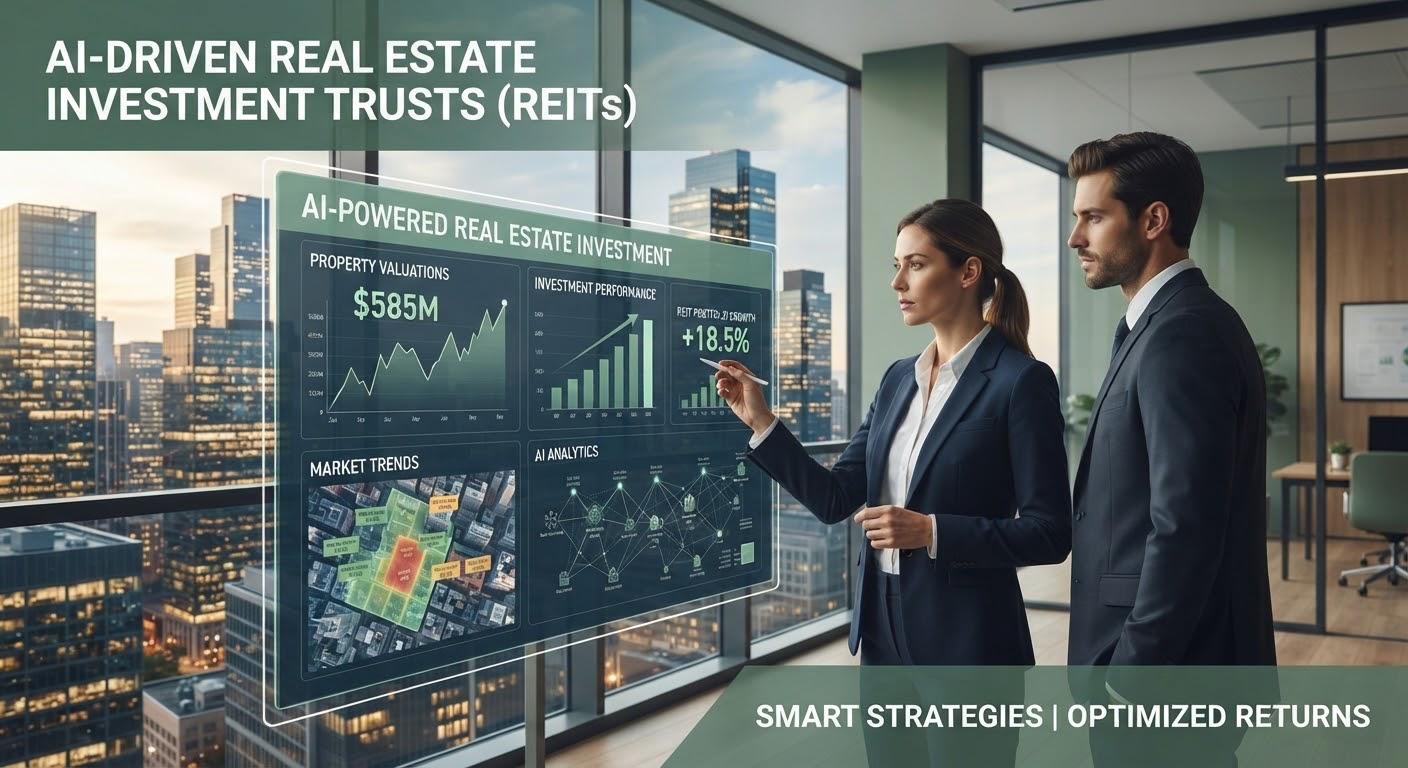
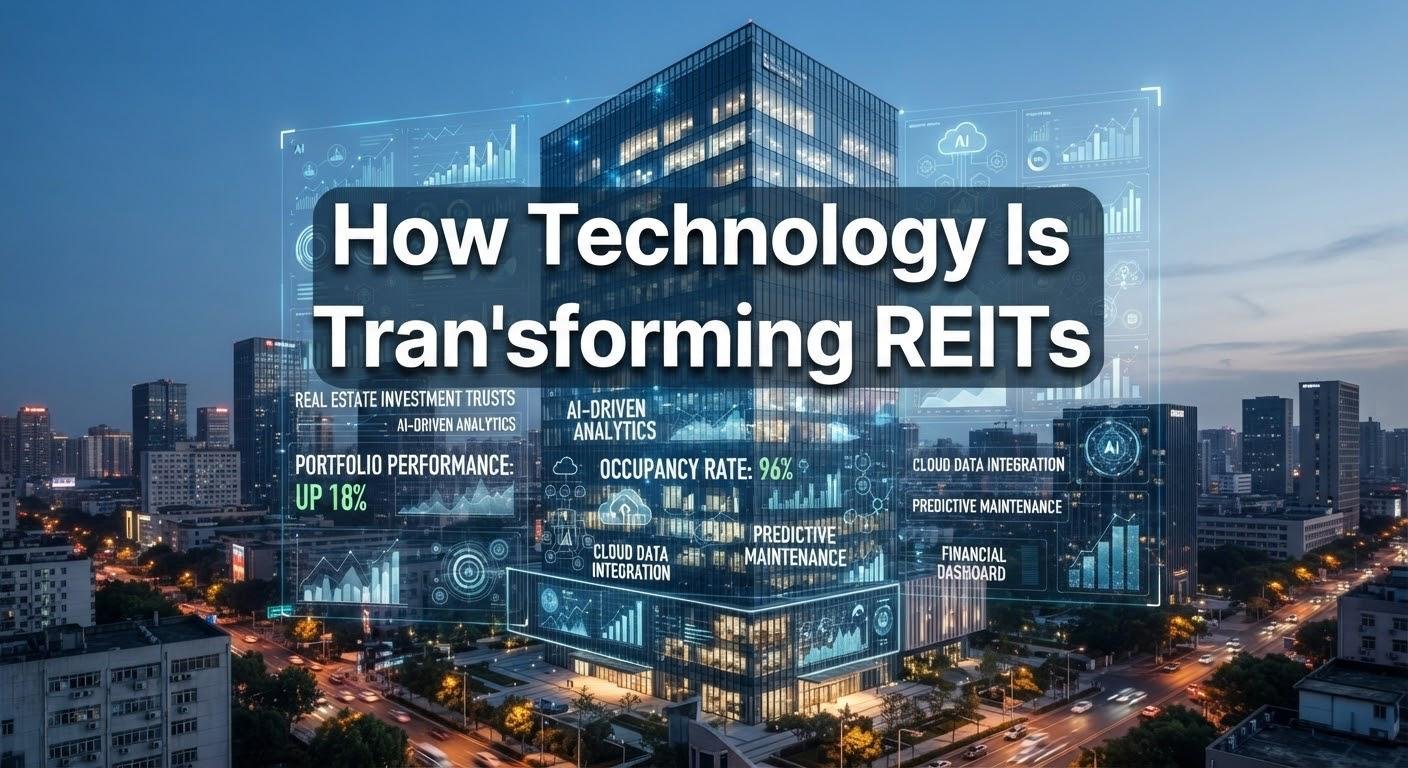
Traditionally, real estate investment would rely on face-to-face meetings, spreadsheets, paper documents, professional judgment, and a physical inspection. Today, technology is transforming almost every aspect of the REIT business and has become a key component of finding properties, watching performance and communicating with investors. While REITs can provide a way for investors to gain exposure to income-producing real estate, the underlying assets are becoming more digital when it comes to how they’re acquired, managed, valued, financed and operated. Property management platforms, cloud computing, AI, automation, analytics and digital investor portals provide REIT managers with quicker information processing and decision-making capabilities to react to fluctuations in market conditions. You don’t need to do away with financial skills or real estate knowledge in this transformation. Rather, it provides more resources to professionals to integrate property, market, financial, tenant, and operational data and information when making decisions.
New Technologies and the Modern REIT Business
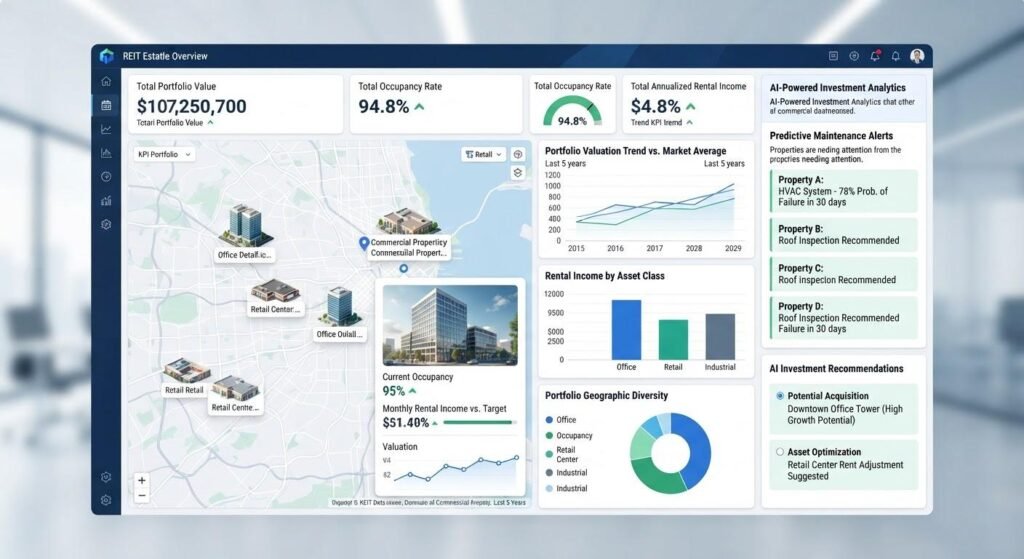
Real estate portfolios provide a ton of information, so technology has become significant to REITs. One building can generate analytics on occupancy, rental income or maintenance requests, energy usage, tenant activity, insurance, taxes, financing and operating costs. Having a lot of properties can make it challenging to make decisions and manage these aspects on a manual basis, which can lead to inconsistencies. Digital systems can also enable the integration of information from a variety of assets to a central dashboard, where managers can compare properties and make fast decisions about changes. Decision makers do not have to wait for reports, but can check in on regularly updated information in one environment. This can help to enhance coordination among investment teams, Property Managers, finance department, and Executive. Technology thus enables REITs to go beyond just replacing paper, but rather to provide them with an integrated operating model where information flows smoothly throughout the company and helps them make decisions at the property and portfolio level.
How Property Management Platforms Enhances Operations
One of the most obvious ways the technology is impacting REITs is through the rise of property management platforms. These systems can manage more than lease information, rental payments, maintenance issues, occupancy records, vendor contacts, inspections, work orders and property expenses in one digital space. This is helpful for REITs that hold assets in many different locations, and helps to make sense of what’s going on if the information isn’t always being reported by property teams. Managers can track vacancies, late payments, maintenance requests, and more on dashboards, and submit requests via digital portals which will be automatically updated to the tenants via email. Seamless integration with accounting solutions can minimize duplicate data entry and ensure data consistency. This can lead to quicker reactions, improved documentation and efficient coordination. Among all of this, however, data quality, employee adoption, system integration and proper cyber security are the most important factors that influence the value of a platform.
How Cloud Computing Creates Scalable Infrastructure.
Another crucial aspect of digital transformation in the REIT industry is cloud computing. In addition to providing access to applications and data from physical servers and locally-stored files, REIT organizations can leverage cloud based infrastructure to access applications and data from other locations and devices. It’s helpful for companies where the investment, finance, property management and operations departments are all in various locations. Without having to deploy a large physical infrastructure, cloud systems can help with collaboration, centralized storage, application updates, backups and scalable computing resources. They are also able to integrate property management software with accounting, analytics, document management and investor reporting software. The more information there is to be processed, the more flexible cloud infrastructure will be. However, transferring data to the cloud doesn’t necessarily mean that the data is secure. To protect sensitive information, REITs have to implement measures such as access control, authentication, encryption, vendor monitoring, backup policies and incident response plans.
Importance of AI in Investment Analysis
AI is augmenting REIT managers’ analytical tools. AI systems have the ability to analyze vast amounts of data and uncover patterns or connections that might not be apparent when looking at the data manually. In the realm of real estate investments, these skills can help in predicting rent demand, occupancy, operating costs, maintenance requirements, and the performance of assets. AI can also assist teams in analyzing numerous properties based on factors such as location features, past occupancy data, tenant profiles, demographic trends, and market trends. A model could detect the properties that are increasingly spending more than expected on their operations, and/or the properties that have potential to increase their occupancy. AI can then serve as a tool for investment professionals to focus on what they should pay attention to, and can test scenarios before they make decisions. The use of AI should, however, be limited to a decision support tool as models can be based upon bad data, old biases, wrong assumptions, or evolving market conditions. Business evaluation is nonetheless vital for substantial investments.
How Real Estate Analytics Contributes to Accurate Real Estate Valuation.
Valuations in the real estate industry have always been an exact science, but with the help of technology, it’s on the move toward data-driven valuations. The value of the property can be calculated using modern analytics tools, which include financial statements for the property, similar transactions, rent information, market trends, interest rates, geographical data and more. These can be used by REIT managers to track asset values and to benchmark individual assets to the portfolio. Relationships can be identified between properties and other elements like transportation, population growth, employment hotspots, retail sites and development initiatives, and geographic analytics can uncover them. This can enable investors to gain insight into what factors could affect the performance going forward. Whilst technology can enhance speed and consistency, valuation will still be complex, as market conditions, financing costs, regulation, tenant quality, supply and demand and local conditions will all impact the market. Digital models should thus be used in tandem with the professional valuation processes, and not as a replacement of the latter, particularly when making significant investment decisions.
Importance of Automation in REITs
Automation is revolutionizing REIT operations with the elimination of repetitive administrative tasks. There are a lot of activities that can be automated by using software, like reminders for rent collection, processing of invoices, document organization, workflow for reporting, payment reconciliation, scheduling of maintenance, and some compliance-related activities. With proper automation, employees will have more time to focus on decision-making, bargaining, interpersonal skills, and strategy. Automation can also help to minimize basic mistakes that can be made when an employee has to enter or duplicate data from one system to another. Automated workflows can help streamline financial operations, such as organizing transactions and establishing a consistent approval process. Automated notifications can connect with the tenants, vendors or managers to inform them of scheduled activities in property management. But rules and monitoring are required in automation. An improperly designed process can make a mistake many times, and it is imperative it be supervised. REITs require controls that will enable employees to identify exceptions, rectify errors, and override any information that isn’t accurate in real-world situations.
Technology Effects on Property Acquisition
Technology is also impacting upon the acquisition process and the evaluation REITs now do to find acquisition targets. Database tools, mapping platforms, market intelligence tools, property records, financial models, and automated screening tools can be used by investment teams to evaluate investment opportunities and decide whether to invest time and resources into due diligence. Analysts can create a set of specifications for the location, asset type, expected income, occupancy, valuation, development potential, and risk and then run software to compile a list of the properties that meet those specifications. The digitized due diligence can contain the lease, financial statements, inspection records, legal documents and other information that can be organized during an acquisition. This can enable comparisons to be made in a more systematic way and help to minimize some administrative delays. That said, technology can’t replace onsite inspections, legal analysis, environmental issues, tenant analysis or local market knowledge. The best acquisition process is a digital screen and analytics complemented by human investigation in order to test the attractiveness of the numbers against reality of the property and the surrounding market.
The effect of Technology on Financial and Risk Management
Technology can also impact REIT decision making when it comes to financing. The firms involved in real estate must keep an eye on various financial risks such as debt, interest rates, maturity period, cash flow, refinancing needs, etc. This information can be combined together in a digital financial system, and can be used to model the impact of rate, occupancy, rents, and operating expense changes on cash flow and debt service. Before the decision to finance, management can consider the various possible outcomes using scenario analysis. Technology can also enhance reporting processes by consolidating financial data in a timely fashion and enable teams to monitor performance against budgets and forecasts. In risk management, analytics can identify changes that may be occurring in expenses, income, occupancy, or other metrics that are out of the ordinary that need to be investigated. However, financial risk cannot be eliminated by technology. Although a model may forecast these economic cycles, movements in property markets, borrowing rates and refinancing rates, REITs continue to be vulnerable.
Digital Investor Portals
As REITs embrace online portals and the latest in investor reporting tools, investor communication is taking a digital turn. Investors are coming to expect to have easy access to financial information, portfolio data, distributions, reports, announcements, and other data without having to rely solely on print or manual correspondence. A good investor portal can help to structure these resources into one place, and promote better communication that’s more timely and accessible. Digital reporting can then be used to display complex information in various formats like charts, dashboards and interactive summaries, enabling investors to grasp the portfolio’s performance and significant events. In-house systems can help simplify the distribution of documents and the response to repetitive requests. While communication tools can help improve transparency and investor relations, it’s important for REITs to maintain accuracy and compliance while ensuring digital convenience. Cybersecurity is also crucial for investor portals, as they can include sensitive financial data, necessitating robust authentication procedures, permissions, secure data transmission, and careful content management.
The Process of Making Decisions using Data
Possibly, the greatest use of technology can be in linking systems together instead of employing each system individually. If information about the property, accounting records, market data, tenant information, financing details and investor reporting can all communicate, that’s when REIT managers can get a more complete picture of the portfolio’s performance. Occupancy changes will impact rental income, projections, valuation assumptions, financing assumptions, and investor reporting. Integrated systems can assist teams to observe these correlations and act on them promptly. Data driven decision making also helps REIT managers to utilize consistent performance metrics, not just their gut feeling. Meanwhile, more data doesn’t necessarily lead to better decisions. The organizations should have clear definitions, data governance policies, quality controls and responsibilities for the interpretation of data. These safeguards can help to prevent the production of conflicting numbers or too much information that can make decisions more difficult than they need to be.
The Hurdles of Digital Transformation in REITs
While there may be advantages to adopting technology, it brings a lot of complications to REITs. Adopting new platforms, transferring old data, training your staff, connecting systems and ensuring cybersecurity may involve significant investments. Replacing an older system can be challenging if information is important or it is established within the system. Another primary issue is cybersecurity as REITs handle financial data, tenant information, property data, employee data, and commercially sensitive data. Technology can also make the software vendor and third party provider dependent. If new systems are implemented without proper training and explanations, employees are likely to be resistant to it. REITs must then have a plan that defines priorities for the company and then match up technology to these priorities. Digital transformation is not about buying the latest software and it’s about enhancing processes, securing information, building employee skills and ensuring technology creates real business value.
Future of Tech Driven REITs
The next generation of REIT technology will likely feature greater connectivity between AI, Cloud, Automation, Analytics, Connected Buildings and Digital Communication systems. Smart building technologies can provide managers with data on energy consumption, equipment performance, occupancy and environmental conditions, which can help them to save money and optimize operations. Predictive maintenance systems can detect issues in equipment before they turn into costly failures and advanced analytics can help with more in-depth prediction of property/portfolio performance. Document Analysis, Market Research, Scenario Modeling, and routine Communication could all be areas where AI could play an increasing role. In the future, though, technology will not be the only determining factor. While REITs will require investment experts, property managers, financial advisors, legal counsel and others who can assess real estate’s physical and financial attributes, they will still need help from these professionals.
Conclusion
Technology is changing the way that real estate assets are acquired, managed, valued, financed, operated, and presented to investors, and that’s impacting the REIT business. Property management platforms can help to streamline day-to-day tasks, cloud computing can offer scalable infrastructure, AI can enhance data analysis, analytics can aid with valuations and projections, automation can save repetitive work, and digital investor portals can boost communication. Combined, these technologies can help REITs be more efficient, responsive and data driven. However, digital transformation has its costs, cybersecurity risks, integration issues, data quality issues, and requires employee training and human oversight. Successful REITs will thus take a holistic view of technology, not the technology itself, but a technology strategy that is part of their business plan. With proven data, robust digital systems, sound professional judgment and solid governance, REITs can leverage technology to drive greater efficiency and effectiveness as they make better informed decisions in a more competitive real estate landscape.
Get more well researched information about technology in real estate investment trusts here.