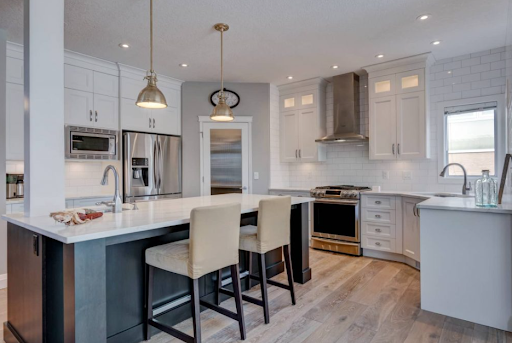
The kitchen is the one place in a home that reveals incorrect judgements every single day. A closet with odd storage is irritating. A badly organised kitchen is something else completely – laborious, friction-filled, and difficult to ignore. What makes things worse is that most kitchen issues do not show up until the makeover itself. They arrive a few months later, once the euphoria has faded and normal daily life has settled back in. That gap between how a kitchen renovations at handover and how it actually works is where most makeovers quietly fall short. Kitchen improvements designed around how a household truly lives tend to stand up. Those constructed around showroom aesthetics rarely do.
The Layout Problem Nobody Admits
Professional kitchens are designed around movement — specific points in the room that a cook travels between constantly during meal preparation. Residential kitchens often ignore this entirely. Layout decisions get made around where existing plumbing happens to sit rather than where it should sit for the space to work properly. Moving a sink or relocating a gas point gets treated as unnecessary disruption. In practice, those are frequently the changes that make everything else function well. Skipping them to avoid the complication is a decision that tends to be regretted quietly — and often for a very long time.
Storage Built Around Real Habits
Most kitchen storage plans are designed around an idealised version of cooking rather than the real version. The result is a beautifully finished kitchen where the benchtop stays perpetually cluttered because nothing has a genuinely logical home. Renovations that begin with an honest look at what a household actually owns — and how often each item gets reached for — produce storage configurations that feel almost effortless to maintain. The difference between a drawer sized for a specific set of pots and a generic cabinet that technically fits them is the difference between a kitchen that stays orderly and one that does not. That distinction sounds small. It does not feel small after a year of daily use.
Lighting Decisions That Stick
Lighting is where kitchen renovations produce the most regrets that cannot easily be corrected after the fact. Repositioning a downlight that landed in the wrong spot means cutting back into a finished ceiling. Adding under-cabinet task lighting after cabinetry is already installed is messier and less clean than running cabling beforehand. These are not minor inconveniences — they become permanent compromises. The most common failure is overhead lighting positioned to illuminate the centre of the room rather than the benchtop surface where work actually happens. Getting lighting right means resolving it at the rough-in stage, not during a walkthrough after everything is done.
What Benchtop Choices Actually Mean
SStone benchtops photograph wonderfully and dominate remodelling inspiration content. What such photos do not express is maintenance behaviour, heat tolerance, staining sensitivity, or how a particular material responds to the unique routines of a real family. A household that cooks regularly and extensively has radically different benchtop requirements than someone who entertains rarely and generally assembles meals rather than prepares it from scratch. Choosing a benchtop material based on how it appears in a photo without understanding how it functions is one of the decisions homeowners most typically wish they had reconsidered before committing.
Where Coordination Actually Fails
Kitchens fall apart at the coordination stage more often than at the design stage. Cabinetry delivered before electrical rough-in is finished. Tiling started before plumbing sign-off. Appliances specified without confirming cutout dimensions against cabinet drawings. Each of these sounds like a small administrative oversight. Each one creates delays, forces rework, or leaves a permanent compromise somewhere in the finished result. Builders who treat sequencing as a genuine skill rather than a scheduling formality have usually learned its importance the hard way on earlier projects.
Conclusion
Planning a kitchen on true daily activities rather than remodelling trends is what divides a place that enhances real living from one that merely appears different for a while. Kitchen renovations that consider movement patterns, storage logic, lighting location, and material behaviour seriously before a single cabinet is bought routinely outperform those addressing these as secondary issues. The kitchen merits that degree of care. It is the most utilised space in the home and it reveals – clearly and everyday — when the idea behind it was serious.