There is a particular kind of regret that comes with window covering decisions. It does not arrive on installation day, when everything looks fresh and intentional. It arrives six months later, when the afternoon sun has turned the living room into something resembling a greenhouse, or when the timber slats have started bowing because nobody accounted for the salt air coming off the harbour. Sydney is a city with a genuinely demanding climate, and blinds in Sydney homes fail more often from mismatched expectations than from poor quality. Understanding why that happens is more useful than any product comparison.
The West-Facing Window Trap
West-facing rooms in Sydney receive afternoon sun at an angle and intensity that most people do not fully appreciate until they are living inside it. The problem is not light — it is radiant heat, and the two require different solutions. A sheer fabric diffuses light beautifully and does almost nothing about heat. A blind with a low openness factor — meaning tighter weave, less gap between fibres — intercepts solar energy before it enters the room rather than softening it after it already has. That distinction sounds technical but translates directly into whether a room is usable on a February afternoon or quietly abandoned until evening.
What Coastal Humidity Actually Does
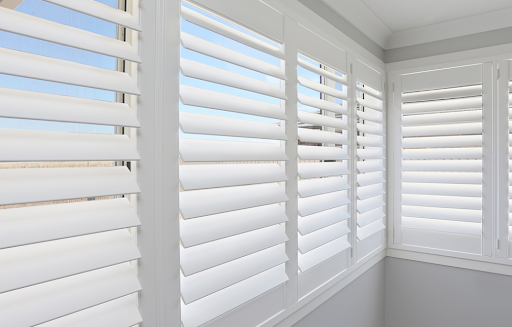
Real timber venetians have genuine appeal. The warmth, the texture, the way they age — all of it reads well in an interior. In Sydney’s coastal suburbs, though, real timber behaves in ways that showroom samples in climate-controlled environments never suggest. Moisture absorption causes slats to bow, warp, and eventually fail to sit flat. This is not a quality issue with the product — it is a materials science issue with the environment. Faux timber composites were developed specifically to address this, and blinds in Sydney suburbs within a few kilometres of the coastline almost always perform better in this material than the real alternative, regardless of how the real thing looks on day one.
Privacy in a City That Has Grown Upward
Sydney’s residential densification has created privacy dynamics that existing homes were never designed to handle. A single-storey home that sat in relative isolation a decade ago now looks directly into the balconies and living rooms of recently built apartment buildings next door. Standard blockout solutions work, but they work by eliminating light alongside visibility, which is not always what a room needs. Dual roller systems — a sheer and a blockout on the same bracket — allow privacy and natural light to be managed independently throughout the day. It is a solution that emerged directly from urban density, and it is one of the more genuinely useful developments in blinds in Sydney in recent years.
Architecture First, Fabric Second
Sydney’s housing range spans Federation terraces, post-war brick veneer, and contemporary glass-heavy builds within the same suburb in some areas. The blind that suits one reads as completely wrong in another — not because the product is poor, but because window covering decisions made in isolation from the architecture of the building tend to produce results that feel slightly off without anyone being able to explain exactly why. Roman blinds carry a softness and structure that complements older homes with defined cornices and timber floors. The same blind in a building designed around frameless glass and raw concrete creates a visual inconsistency that accumulates across every room it appears in.
The Motorisation Question
Sydney’s split-level homes, particularly across the North Shore and Eastern Suburbs, regularly feature clerestory windows, stairwell glazing, and highlight windows above door frames — all of which are effectively unreachable by hand on any practical basis. A manually operated blind on a window that requires a ladder to access gets operated approximately never, which defeats the purpose of having it. Motorised systems connected to a simple remote or home automation setup solve this without requiring a full building renovation. For these specific applications, motorisation is not a premium addition. It is the only version of the product that actually functions as intended.
Conclusion
Blinds in Sydney homes sit at the intersection of climate, architecture, density, and daily practicality in ways that generic window covering advice consistently fails to address. The decisions that hold up over years are the ones made with Sydney’s specific conditions as the starting point — the humidity, the sun angles, the privacy pressures of a denser city, and the architectural character of the individual property. Everything else is a compromise that tends to make itself known gradually and inconveniently.