Introduction
Exams are at times very stressful for students which also applies to when they have a great deal of material to cover in a short amount of time. Many students break down not because of a lack of ability but because they do not do a good job of time management. Poor time output of energy goes into large scale review sessions right before an exam which in turn causes anxiety and does little for long term retention of info, on the other hand good time management allows for consistent study, organization, and performance confidence in exams.
In this article we go into practical and realistic strategies students can use to put together a study plan, balance between academic and personal life, and also to break the cycle of procrastination. Also we introduce useful planning tools and productivity tools which in turn make study time more of a structured and less stressful experience.
How Time Management plays a key role in exam preparation.
Time management is a key skill for students as they prepare for exams which in turn improves productivity, focus and academic performance. Without a proper plan students tend to spend too much time on secondary issues and at the same time ignore the more difficult topics which they should be putting more effort into. Effective time management will see that all subjects get the study time they require and that revision is done in a structured way as opposed to at random. Also it reduces mental stress as students will know what they are to study each day. A good place to start in terms of study structure is to learn from practical planning methods which we discuss in this guide on how students can better organize their study schedules, which also includes breaking down large subjects into more manageable tasks. When time is managed well students do better academically also they are able to maintain a better study to rest balance.
How to Set Up an Effective Study Plan.
Creating a study plan is a very practical thing for students to do as it brings order to what may otherwise feel very chaotic. A good study plan starts with an inventory of all subjects and topics which require coverage which you then break down into daily or weekly study sessions. Also spend more time on the tough subjects while at the same time revision of easy topics is done often to keep a balance.
Also it is important to set study times which play to your natural energy for instance if you perform better in the morning do more study then. Also each study session should have a definite aim like to finish a certain topic or to do practice questions instead of just reading. This also helps to avoid waste of time and increase focus. Also very important is consistency which in turn builds discipline into your routine and reduces that rush at the end before exams.
Breaking out study tasks into smaller pieces.
One of the best ways to approach exam prep is by turning large subjects into smaller more manageable tasks. Many students report feeling overcome when they look at the full syllabus, but when you break it up into chapters, topics, or even subtopics it goes down much better. For example, instead of putting out that I am going to study biology I can break that down into separate components of “cell structure”, “genetics” or “human systems”.

This not only makes the study session more of a doable task but also leaves a student with a sense of achievement once a task is completed. Also what we find is that the brain does a better job of retaining smaller amounts of info as opposed to large chunks at once. Also a pro tip of task division is that it allows for clear progress tracking which in turn up your motivation. As you check off each section of the syllabus you go over you are more likely to stick with it and also less likely to put it off until later or give up.
Prioritization Techniques for Exam Success
Urgent and important, important but not urgent, urgent but not important, and neither urgent nor important. In terms of exam prep this means students should go after high impact topics first. Also of use is to base priority on what you struggle with which in turn means to put more time into difficult to grasp subjects.
This tactic helps students do only what they know well which may not be what is best. Also in the mix is setting daily goals which may include finishing certain topics before moving onto the next. By putting first things first, students see best results from their study time and at the same time reduce exam time stress.
Understanding Academic and Personal Balance
While it is true that exam preparation is a key issue, students also do well to put into practice a balance between academics and personal duties. What we see is that too much of a good thing in this case intensive study is not — it leads to burn out which in turn decreases productivity and affects mental health. Students have many responsibilities which include that of doing the housework, being part of school activities or just having personal down time which must be put in their daily plan. A balanced timetable which includes study sessions broken up by short breaks, relaxation and adequate sleep is what we are after.
Also for students to do well they must put forth to family members what they require from a study point of view so as to minimize unnecessary disruptions during study time. When balance is achieved we see that students do better in terms of consistency in their prep and they are less likely to fall into that state of exhaustion and overwhelming beforehand. In the end a healthy routine leads to better academic performance and improved well being.
Managing Distractions and Staying Focused
Distractions are a major issue which students put up with at exam time, in large part thanks to the presence of smartphones, social media, and noisy settings. To do well against distractions, we see to it that students set up a study area which is quiet, organized, and free of interruptions. Also, getting the phone out of the room, or use of focus modes is a great way to improve attention during study. Also we see that block scheduling which devotes a set time, for example 45 or 60 min to study and then a short break is very useful.

This does in fact train the brain to focus better over long periods of time without becoming overwhelmed. Also it is a good idea to let friends and family know of your study times in order to reduce unneeded interruptions. Once these distractions are under control, study sessions seem to be more productive and what used to take a lot of time is covered in less. Also by concentrating in this way study also goes deeper and topics are understood better.
Avoiding Procrastination During Exam Preparation
Procrastination is a primary issue which students face in exam time which in turn causes them to do crammed revision and perform poorly. It is at times a result of feeling overcome or having no clear plan. The best way to get over procrastination is to break up tasks into small steps and to start with the easy ones which in turn will build up momentum. Once a student starts studying it is easier to keep at it. Also setting deadlines for each topic also creates a sense of urgency which in turn reduces the chance of putting off work.
Also we see that breaking the rule of 5 which is a practice of committing to study for just 5 minutes which in fact ends up stretching out into longer study sessions once you get going. Also into this we can include reward systems which may be taking a short break or doing a fun activity once a task is completed. By addressing the issue of procrastination early on students can maintain a steady progress and also avoid the stress of last minute preparation.
Productive Tools for Students that help with Organization.
In the digital age we see a great many productivity tools which have been developed for students to better manage their study time. Apps like Google Calendar which is a part of the digital suite allow students to put in study session times, set reminders, and track deadlines. Also we have task management tools like Todoist or Microsoft To Do which help students with organization of daily tasks and which in turn puts their assignment work in perspective. For note taking we have apps like Notion or Evernote which are great for keeping all study material in one place which in turn makes revision easy.
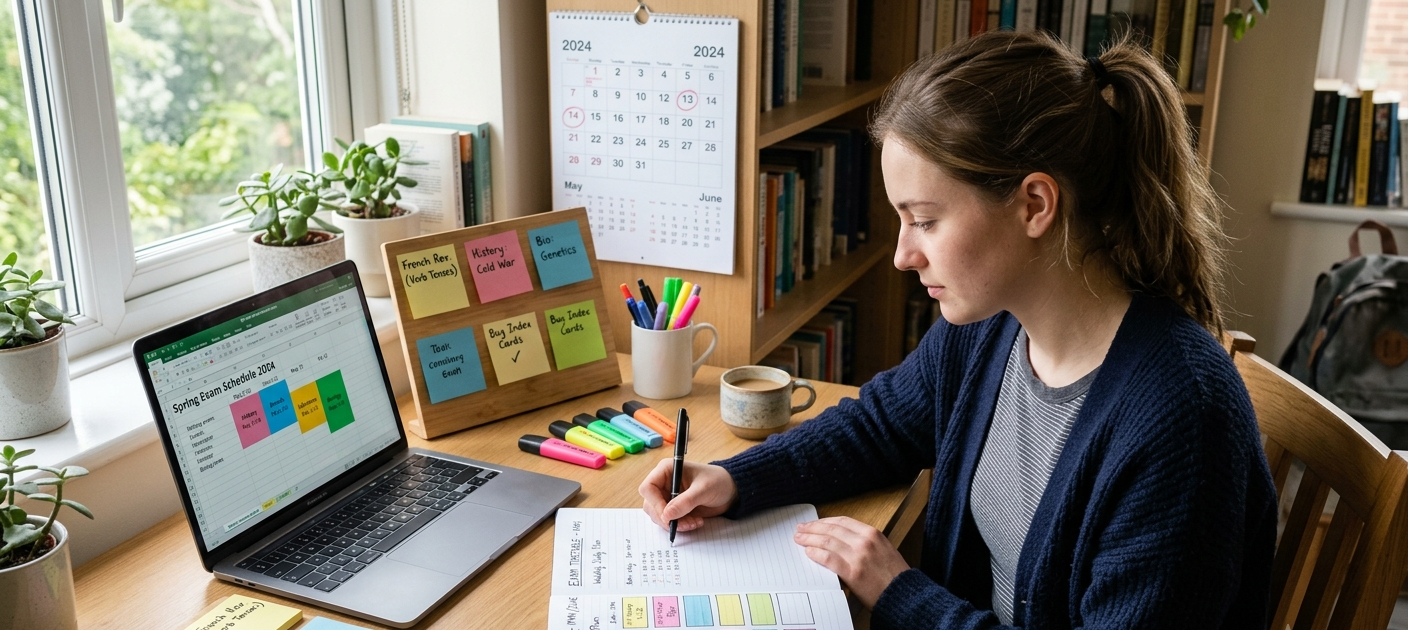
Also we see the use of Pomodoro timer apps which improve focus by breaking study time into intervals which are followed by breaks. Even very basic tools like physical planners or sticky notes which some may prefer to write things out on are very effective. The key is to pick out the tools which best fit personal study styles and to use them regularly. When used right these products help students to stay organized, reduce confusion and make exam prep more of a structured and efficient process.
Conclusion
Effective time management is a matter of studying smarter not harder. As students learn to structure their study schedules, set priorities, balance responsibilities, and break free of procrastination they see great improvement in their academic performance and reduced exam stress. Each student comes with his or her own set of strengths and challenges but what we put forward is that use of a framework for structuring planning will see time used better and more productively.
Productivity tools and the use of consistent routines support better organization and focus. In the end what makes for successful exam prep is discipline, consistency and smart planning. By developing these strong time management skills early on students not only do better in exams but also develop a base of skills which will serve them in higher education and future careers.