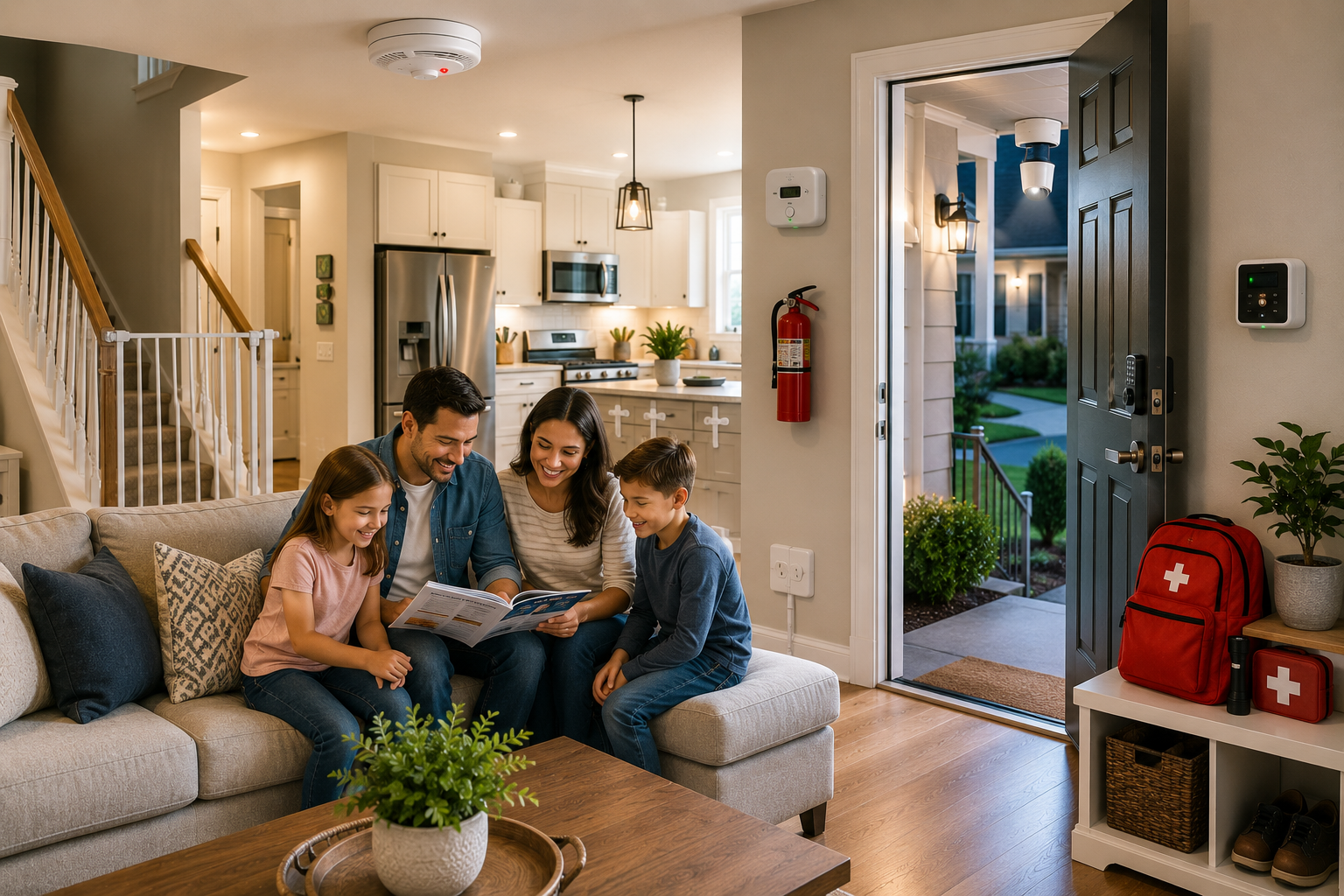
Home Safety Tips help homeowners create a safer environment for their families while protecting their property from accidents, fires, and emergencies. One of the most crucial tasks of any homeowner is to make the home a safe space. There are numerous measures you can take to safeguard your family and property from fire and in case of emergency. The article examines key essential home safety practices that all families should follow, including fire safety, smoke detectors, carbon monoxide, childproofing, home security and preparedness. All of these strategies will help to minimize risk, prevent accidents and ensure peace of mind.
Home safety is more than just what you do during an emergency; it’s about establishing habits and systems that help reduce the risk of emergencies. Whether it is detectors, door security, or teaching children what to do in an emergency, a proactive attitude to safety is experienced by every family. When homeowners consider safety as an ongoing process, instead of a checklist, they can ensure they have a safe and resilient home.
Fire Prevention: Reducing the Risk of Household Fires
The first step in fire prevention is to be aware and to take proactive steps. Kitchens are the place where many home fires start, and are frequently caused by unattended cooking. Always keep stoves and ovens turned off when you are not there to supervise them and never put anything near them such as dish towels and paper products that can burn. Electrical safety is also a concern: Do not overload outlets, and have damaged cords replaced, and keep appliances in good condition. Consider using curtains that are fire resistant and installing other fire resistant materials will provide additional protection.
In addition to day-to-day activities, homeowners should have fire extinguishers in their home and know how to use them properly. Locate extinguishers in strategic locations like the kitchen, garage and by fireplaces. Check on their expiration dates and pressure regularly. Also, have an escape plan and practice it with your family including clear routes to escape fire. These actions help to decrease the risk of fire, as well as let you know how to act quickly in the event of a fire.
Smoke Detector Maintenance: Your First Line of Defense

The smoke detector is your first line of defense against fire and smoke. Smoke detectors play a significant role in fire detection, but many homes don’t maintain their smoke detectors. If a smoke detector is working properly, it could save lives or significantly lessen the effects of a tragedy. Press the test button on the detector every month to test them and change the batteries at least once a year. One of the most common detector types is the modern detector, which can include long-life lithium batteries, but even these should be checked regularly to ensure that they are reliable.
It’s as important to place them as it is to keep them. Make sure smoke alarms are installed in every bedroom; outside sleeping areas of your home; on each level of your home, including the basement. Inter-connected detectors are strongly suggested as all alarms will sound if one alarm sounds. This will give maximum warning time particularly in emergencies at night, where seconds count.
Carbon Monoxide Awareness: The Invisible Threat
Carbon Monoxide Awareness raises awareness about the dangers of carbon monoxide. CO is a colourless and odourless gas which if left unnoticed, can be fatal. Typical sources are car exhaust from attached garages, fireplaces and gas furnaces. Carbon monoxide is also a silent gas; with no warning except special equipment, it is imperative to install CO detectors. Keep them close to sleeping quarters, and on each floor of your house for complete protection.
Regular servicing of fuel-fired appliances is also crucial. Make sure to have your heating systems, water heaters and chimneys professionally serviced yearly to avoid leaks. Portable generators should NOT be used in buildings, and cars should NOT be used in garages, anywhere! By teaching everyone in the family the signs and symptoms of CO exposure (headaches, dizziness, nausea) you can help catch CO exposure early, and save lives.
Childproofing: Creating a Safe Environment for Young Ones
Childproofing means creating a safe environment for young ones. Childproofing is a vital aspect of home safety, especially for families with toddlers and young children. First of all anchor furniture and heavy appliances to walls to help avoid tip over incidents. Use safety gates on stairs, and outlet covers to prevent electrical shock. Lock up or store cleaning supplies, medications and sharp objects.
In addition to physical protection, take into account the arrangement of your house. Tie down televisions, keep cords secured and check window locks are working. Water safety is another major point—never leave children unsupervised in the bathtub, pool or bucket of water. You can help keep the environment safe by planning ahead for possible dangers and avoiding them.
Home Security Improvements: Protecting Against Intruders
Home Security Improvements focus on defending against burglaries. It is not simply about technology; it’s about multiple layers of protection. Use good locks on windows and doors; install a deadbolt or smart lock for extra security. Another good deterrent is outdoor lighting: motion-sensor lights can keep dark corners from providing hiding places for intruders. Landscaping is also a factor – keep bushes and trees away from areas around entrances which could give refuge to potential burglars.
Today’s security technology includes security cameras, alarm systems and monitoring remotely. Many systems will enable you to monitor your home from your cell phone, so you can feel at ease no matter where you are. Community awareness and neighborhood watch programs also contribute to safety; community awareness can often deter crimes before they can happen. With a combination of physical barriers and technology, your home will stay safe.
Emergency Preparedness: Planning for the Unexpected
Emergency Preparedness is a plan for unexpected events. Eminently, any emergency can occur at any moment; be it a natural calamity or a medical condition. Being prepared starts with making an Emergency Kit with water, non-perishable food, flashlights, batteries, first-aid supplies, and important documents. Keep the kit where everyone in the family can easily reach it and locate the kit. Keep supplies fresh and usable by regularly updating them.
A communication plan is also as important. Pick an outside location to meet with family in the event of an evacuation and determine a way to communicate if the family get separated. Conduct practice drills for various situations, such as fire, earthquakes and extreme weather. Practice these plans and avoid all panic and make them more efficient in an emergency. With readiness, you go from uncertainty to confidence, making a difference when challenges occur.
Conclusion: Building a Safer Home for Your Family
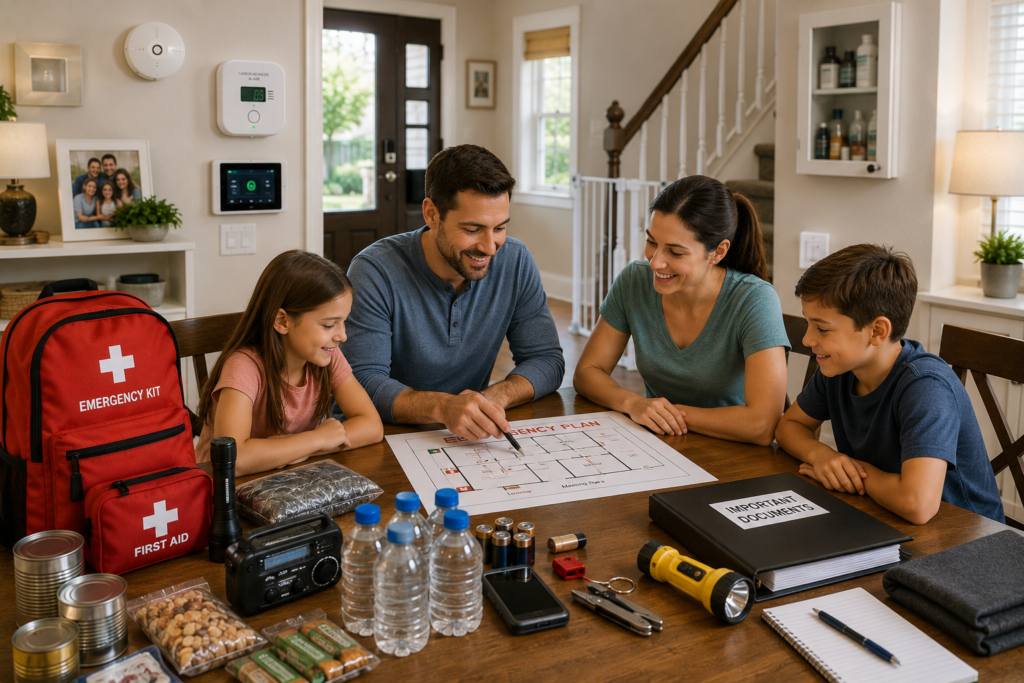
Discuss how to create a safer home for your family. Home safety is not a one-time event, it is an attitude that is repeated over and over again. You could create an extensive safety net for your family by taking steps to prevent fires, keeping smoke and carbon monoxide detectors in place, making your home “Child Proof,” strengthening home security, and planning for emergencies. Such measures not only serve the purpose of protecting property but also saving lives, thus providing peace of mind in an unpredictable world.
It is a family responsibility—all family members help to keep family members safe. Discuss openly the risks and solutions; review your safety plans regularly. With dedication and vigilance, your house can be your haven of safety – your sanctuary. Making safety a continuous process, and not a final goal, means your home will be resilient, ready, and protected when disaster strikes.