Introduction
Online banking has become a huge part of how people and businesses run their money. However, this has led to cybercriminals being able to steal personal details, passwords and get into someone’s bank account. Passwords are no longer a secure way of keeping your financial details safe. This is because they can often be guessed, hacked, copied or leaked. To keep customers’ money safe banks have had to introduce more secure ways of keeping their details safe. A great way to do this is by introducing multi-factor authentication. Multi-factor authentication ensures that users have to enter at least two pieces of information to verify their identity. This helps banks increase security and reduce the chances of fraud.
Multi-Factor Authentication
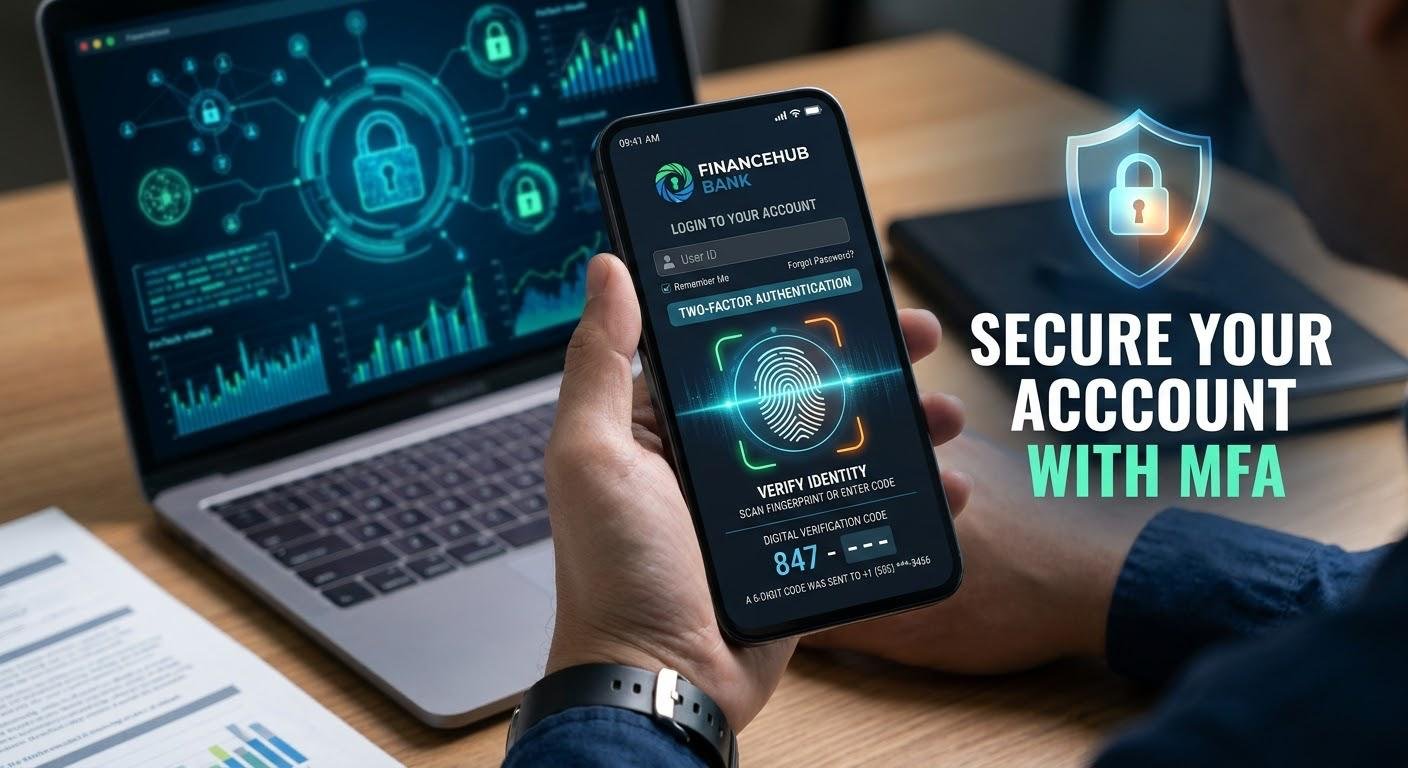
Multi-Factor Authentication (MFA) is an authentication method that can be used to ensure users are who they say they are. There are typically three different types of authentication used. These are: ‘something the user knows’, ‘Something they have’ and ‘Something they are’. ‘Something they know’ could be anything like a password, PIN or security question. ‘Something they have’ can be a physical or digital device such as a smartphone, authentication app or key. ‘Something they are’ could be a unique biological trait like fingerprints. If a customer were to log into their banking app using their password and then their fingerprint, this would mean the bank is using two different authentication methods. This makes it much harder for cybercriminals to get into their account.
Why Passwords Alone Aren’t Secure
Although passwords are an important part of digital security, there are many issues that prevent them from being secure. Many customers will use easy passwords that contain names, birth dates or easy number/letters. Some people will use the same password for multiple sites and apps. This means that if one site gets hacked they can get into multiple accounts. Cybercriminals can also use techniques such as credential stuffing, brute force and phishing to get peoples login details. If they discover someone’s password they may try to get into their online banking account, change their details or make fraudulent transactions. MFA helps overcome this issue by making users have to enter extra information to get into their account. This means knowing or stealing a password won’t give them full access.
Different Multi-Factor Authentication Methods
Banks will use different technologies to help ensure their customers’ accounts are secure. Some are based around temporary codes whilst others use specialized devices or encryption. Whilst all of these technologies add more security, they won’t all be fully secure. Knowing what each of these methods are can help customers make informed decisions about keeping their financial information safe. It can also help banks and other financial organizations decide which methods to use. These are becoming increasingly important in modern banking.
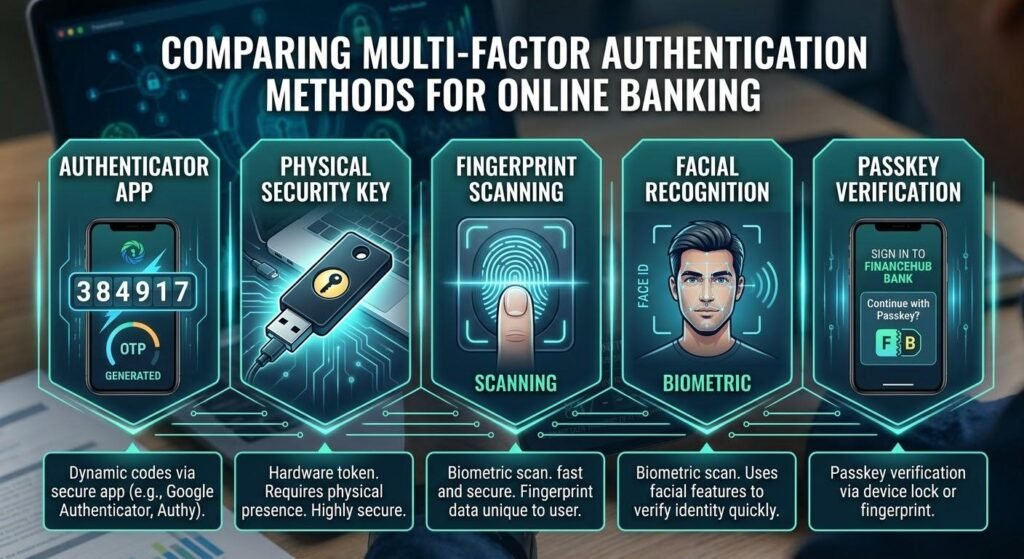
1. Authenticator Apps
Authenticators apps help generate temporary codes. This will be used with the customer’s banking password. Examples of authenticator apps include Google Authenticator and Microsoft Authenticator. These apps can help generate time based onetime passwords. These typically last around 30 seconds. This means that if an attacker were to gain access to an old code they wouldn’t be able to use it. Authenticator apps are typically much more secure than SMS codes. However, customers should ensure they keep their devices secure and do not share any codes. Banks should also ensure they have secure methods to help customers who lose their phone, if set up correctly authenticator apps are a good option to help increase security within online banking.
2. Security Keys
Security keys are physical devices that can be used to add extra security. These can be plugged in using USB, NFC or another compatible method. When trying to gain access to an account the security key will need to be connected or held close to the device. Many modern security keys use FIDO2 and WebAuthn. These allow cryptographic authentication to help reduce phishing. As these aren’t just regular codes they can ensure the request is coming from the correct site or app. This makes them a great option for customers and businesses who handle sensitive financial information. However, customers should ensure they have backup keys in a secure place in case they lose their device.
3. One Time Passwords
One time passwords are temporary codes that can be generated or sent to users. These are commonly sent via SMS, email or authenticator apps. These are only used once and typically have a short lifespan. This means that if someone was to intercept a code it is less likely that they will be able to use it. However, if they are sent via SMS they can be prone to SIM swapping, interception and social engineering. Phishing sites can trick customers into entering their verification codes. Banks should ensure they use more secure technologies alongside one time passwords. This is because they aren’t fully secure.
4. Passkeys
Passkeys are a modern method of authentication that helps reduce the need for passwords. This uses public-key cryptography. This means there is a private key which is kept secure on the user’s device and a public key which is stored. When authenticating the private key will be used on the device to prove the user’s identity. These are typically unlocked using a fingerprint, facial recognition or PIN. As these are linked to the correct site or app they cannot be used on many phishing sites. This can make them a great option for online banking customers. If financial institutions use passkeys they can reduce the risk of passwords and make it easier for customers to access their accounts.
5. Biometric Verification
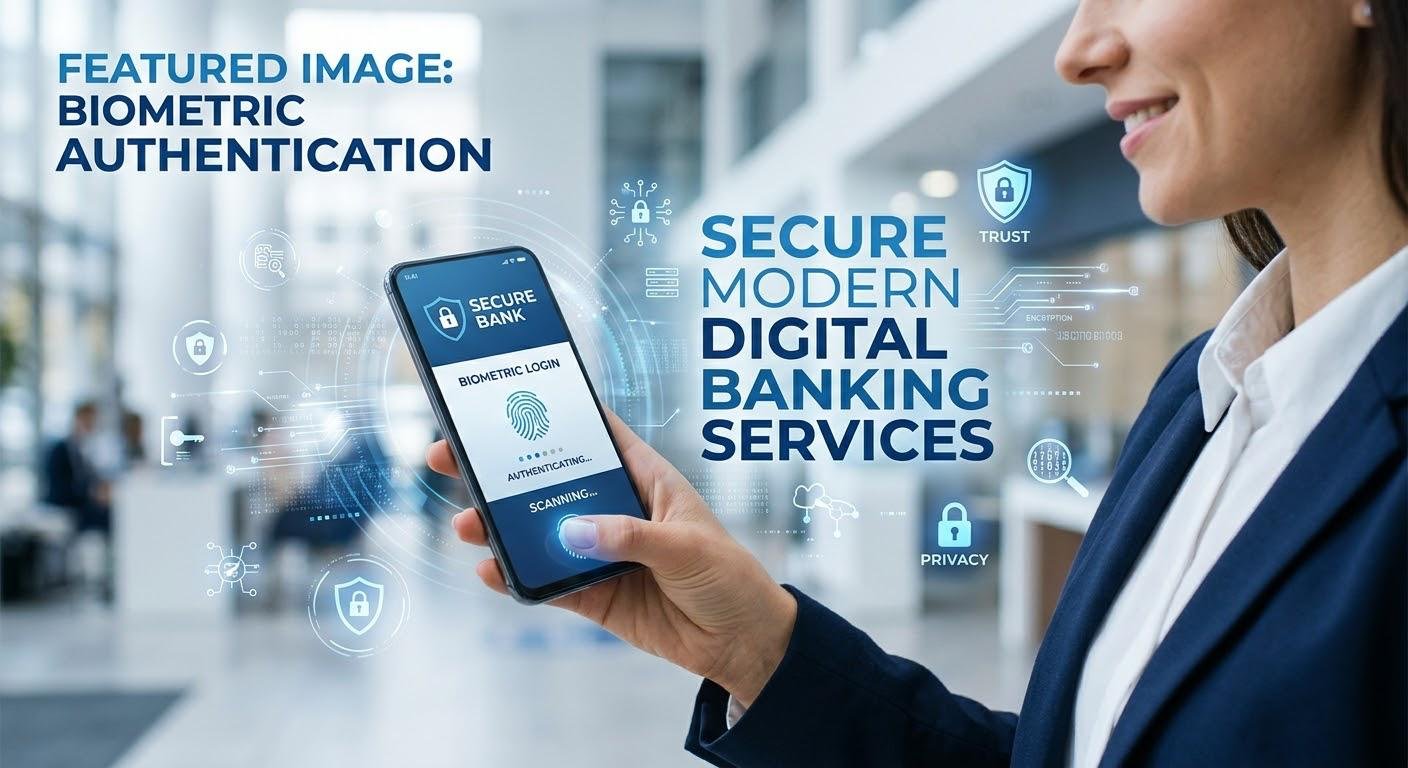
Biometric verification uses unique physical or behavioral traits to prove someone’s identity. Common examples are fingerprint scanners, facial recognition or voice recognition in some specialist systems. Many smartphones and banking apps now have biometric authentication. This can help make it easier for customers to verify their identities without having to enter passwords or PINs multiple times. However, biometric details are personal and cannot be changed as easily if they were to be compromised. Banks should ensure they use secure biometric technologies. They should also ensure they have alternative verification methods for customers who cannot complete the verification, if used with another independent factor this can greatly increase the security of financial accounts.
Main Cybersecurity Threats MFA Can Help Prevent
1. Stolen Passwords
One of the most common ways cybercriminals will get into online banking accounts is by stealing passwords. Attackers can steal login details by hacking, malware, fake sites or social engineering. Once they have this information they can pretend to be legitimate customers and make fraudulent transactions. Using MFA can help reduce this as they will need more than just the password. They will also need to get another verification method. However, customers should still know that it can still be possible to steal their account. They should always ensure they are using unique passwords and not clicking any suspicious links. Banks should also ensure they have systems in place to detect any suspicious logins and ask for extra verification.
2. Phishing
Phishing can occur when cybercriminals pretend to be a legitimate organization by sending fake emails, texts, websites or phone calls. For example, they can send a message stating that a customer’s bank account has been suspended. They will then ask them to click on a link to reactivate their account. This may take them to a fake banking site which will ask for passwords and verification codes. Using MFA can help reduce phishing as they will need to enter extra information. If using phishing proof methods such as passkeys and security keys it can help reduce this. However, attackers can use real-time phishing to take advantage of users. This can help them get hold of temporary verification codes and use them straight away. Customers should ensure they check the web address and do not share OTPs. They should also ensure they are using official apps or sites.
3. SIM Swapping
SIM swapping is a type of fraud where cybercriminals will persuade a mobile network provider to transfer a victim’s phone number onto a SIM card they own. This can cause them to receive SMS messages and verification codes that should go to the legitimate account holder. This can pose a big risk to banking customers who use text verification exclusively. If the attacker already knows the customer’s password they can use the stolen phone number to log into their account or make certain transactions. Banks can help reduce this by providing customers with authenticator apps, passkeys and hardware keys. Customers should also ensure their mobile network account is secure and use any SIM protection available. If their phone suddenly loses signal they should contact their network provider.
4. Unauthorized Logins
Cybercriminals often try to get into banking accounts using automated software. They may try using stolen login details or multiple password combinations. This can come from unknown devices, locations or internet addresses. If there isn’t any extra security in place customers can be at risk of their accounts being taken over. Using MFA can help prevent this as they will need another verification method. Banks can help by using login alerts, device recognition, transaction monitoring and risk based authentication. For example, if a customer is trying to log in using an unknown device they may need to complete extra verification. Using MFA alongside constant monitoring can help identify any suspicious activity quicker.
How Customers Can Increase Security
Customers can play an important role in keeping their accounts safe. Even with advanced security systems in place, they should always take responsibility. They should ensure they have MFA enabled on all banking platforms available. They should also ensure they are using more secure methods such as passkeys or authenticator apps. Customers should always have unique and complex passwords for their financial accounts. They should never share any OTPs, passwords, PINs or approval requests with anyone claiming to be from their bank. They should ensure their smartphone and banking apps are up to date and only download software from trusted sources. They shouldn’t access their financial accounts using public or unsecure Wi-Fi. Customers should also enable transaction alerts and regularly check their statements. They should also report any suspicious logins.
How Banks and Financial Businesses Can Increase MFA Security
Banks and other financial organizations should ensure they have security measures in place to keep customers safe. They should offer multiple different verification methods. This can include authenticator apps, passkeys, biometric verification and physical keys. Financial institutions should not solely use SMS based OTPs for sensitive transactions. This can be prone to SIM swapping and interception. They should also use risk based authentication to detect suspicious login activity. Employees should also be trained so they aren’t targeted by phishing, impersonation and social engineering. Businesses should also regularly audit their verification systems. They should also monitor any security issues, have secure account recovery systems and educate customers on new fraud techniques. This can help create a more secure environment without causing any unnecessary issues.
Conclusion
Multi-factor authentication has become an essential part of online banking security. Passwords alone are no longer secure enough. Using multi-factor authentication with independent verification methods such as ‘Something they know’, ‘Something they have’ and ‘something they are’ can greatly reduce the chances of unauthorized access. There are many different methods available to increase security including authenticator apps, security keys, one time passwords, passkeys and biometric verification. However, these will only be effective if implemented correctly. Customers should also take responsibility and banks should implement more secure authentication technologies. They should also educate customers on password theft, phishing, SIM swapping and unauthorized logins. Customers should also take responsibility for keeping their credentials secure. As digital banking becomes more popular using reliable methods of multi-factor authentication will be an important step in keeping financial information safe, preventing account takeovers and building trust.
Get more well researched information about Multi-Factor Authentication here.