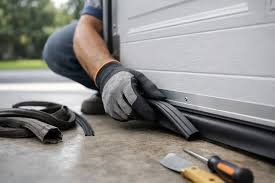
A garage door can be perfectly functional and still have a problem that is easy to overlook: gaps around the edges. When the door is closed, worn or missing weather stripping can allow outside air, rainwater, dust, leaves, and insects into the garage.
Garage door seals are designed to reduce those gaps. They are not the most complicated parts of a garage door, but they serve an important protective function. A damaged seal can also be an early indication that the door, floor, frame, or surrounding components need closer attention.
For homeowners searching for a Garage Door Company in Huntington Station, understanding how garage door seals work can help determine whether a simple weather stripping replacement is needed or whether the door requires a more complete inspection.
What Is Garage Door Weather Stripping?
Garage door weather stripping refers to sealing materials installed around the door to reduce unwanted openings when the door is closed.
There is not just one type of garage door seal. Different seals are designed for different areas of the opening.
The most common types include:
- Bottom seal: Attached to the bottom edge of the garage door. It compresses against the floor when the door closes.
- Perimeter seal: Installed along the sides and top of the garage door opening.
- Jamb seal: A type of perimeter seal used along the vertical sides of the opening.
- Threshold seal: Installed on the garage floor beneath the closed door.
- Section or hinge seals: Used on certain sectional garage doors to reduce gaps between door sections.
The correct combination depends on the door design, floor condition, frame, climate exposure, and the type of gap that needs to be addressed.
Why Garage Door Seals Matter
1. They Help Reduce Air Infiltration
Weather stripping is primarily an air-sealing measure. The U.S. Department of Energy identifies weatherstripping as a method for reducing air leakage around movable building components.
A garage may be unconditioned, but attached garages often share walls or ceilings with conditioned portions of a home. Limiting unnecessary air movement around the garage door can therefore contribute to the overall air-sealing strategy of the property.
It is important to keep expectations realistic. Weather stripping does not turn a garage into a conditioned room and does not replace insulation. Its primary job is to close gaps around the moving door.
2. They Help Limit Water Entry
The bottom of a garage door is particularly exposed to rainwater and water running across the driveway.
A deteriorated bottom seal can leave spaces between the door and the garage floor. During rain, water may enter through these openings.
A threshold seal can provide an additional barrier in situations where the floor is uneven or where water tends to collect near the door.
However, a garage door seal cannot correct major drainage problems. If water is flowing toward the garage because of driveway grading, drainage, or another structural issue, replacing the seal alone may not solve the problem.
3. They Reduce Drafts and Outdoor Debris
A noticeable draft is one of the simplest signs that the garage door is not sealing properly.
Gaps can also allow leaves, dust, dirt, and other windblown debris to enter. This can become particularly noticeable during periods of strong wind or seasonal weather.
A properly fitted perimeter and bottom seal creates a more consistent barrier around the closed door.
4. They Help Discourage Pest Entry
Small gaps around a garage door can provide an entry route for insects and other small pests.
Weather stripping is not a substitute for professional pest control, but maintaining the seals removes one obvious access point.
This is particularly relevant when homeowners notice insects, nesting material, or other signs of outdoor activity near damaged sections of weather stripping.
5. They Help Protect Items Stored in the Garage
Garages are often used for storing tools, bicycles, cardboard boxes, lawn equipment, seasonal decorations, and other household belongings.
Keeping unnecessary moisture and outdoor debris out of the garage can help create a better storage environment.
A seal cannot prevent every moisture problem, but closing obvious gaps is a practical part of garage maintenance.
Different Garage Door Seals and Their Uses
| Seal Type | Where It Is Installed | Main Purpose | When It May Need Attention |
| Bottom seal | Bottom of garage door | Limits gaps under the door | Cracking, flattening, gaps or water entry |
| Perimeter seal | Sides and top of opening | Reduces air and weather gaps | Light, drafts or rain entering around edges |
| Jamb seal | Vertical sides | Creates contact between door and frame | Torn, detached or compressed material |
| Threshold seal | Garage floor | Creates additional floor-level barrier | Water entry or uneven floor contact |
| Section seal | Between door sections | Limits gaps between panels | Deterioration or visible openings |
| Retainer | Holds bottom seal | Keeps weather seal attached | Damage or loose attachment |
The important point is that replacing one seal may not address every source of air or water infiltration.
How Do You Know Your Garage Door Seal Is Worn Out?
Garage door weather stripping is a wear component. Exposure to sunlight, temperature changes, moisture, repeated compression, and normal operation can gradually affect the material.
Inspect the seals for:
- Cracks or splits
- Brittle or hardened material
- Sections pulling away from the frame
- Flattening or loss of flexibility
- Visible gaps when the door is closed
- Daylight visible underneath or around the door
- Water entering during rainfall
- Increased dust or leaves inside the garage
- Drafts around the closed door
- Signs that insects are entering through the gap
A seal does not necessarily need replacement simply because it has been installed for a certain number of years. Its physical condition and ability to close the intended gap are more useful indicators.
Does a Garage Door Seal Stop All Water?
No.
This is an important distinction when evaluating weather stripping.
Garage door seals can reduce water entering through gaps around the closed door, but they cannot guarantee a completely waterproof garage opening.
Strong wind-driven rain can reach areas around sectional garage doors, and water can also enter because of drainage, driveway slope, floor irregularities, or the way water runs across the exterior.
The Door and Access Systems Manufacturers Association has published technical guidance specifically addressing wind-driven rain and sectional garage doors, recognizing that water can enter around the sides, bottom, and between door sections under certain conditions.
Therefore, if a garage repeatedly experiences significant water intrusion, homeowners should investigate the drainage and door-opening conditions rather than assuming a new seal is the complete solution.
What About an Uneven Garage Floor?
An uneven concrete floor can make sealing the bottom of a garage door more difficult.
If the floor rises or falls beneath the door, a standard bottom seal may make strong contact in one area while leaving a gap in another.
In these circumstances, a different bottom-seal profile or a threshold seal may be considered.
The right solution depends on the size and location of the gap. If the floor is significantly uneven, the issue may require more than simply changing the weather stripping.
Can Weather Stripping Improve Garage Energy Efficiency?
Weather stripping can help reduce air leakage, but it is important not to overstate its effect.
The Department of Energy identifies air sealing as part of improving building energy performance. Sealing gaps around doors can reduce unwanted air movement.
For a garage, the potential benefit is more relevant when the garage is attached to the house, when there is conditioned space above or beside it, or when the garage itself is used frequently.
A garage door seal is not the same thing as an insulated garage door. Insulation reduces heat transfer through the door material, while weather stripping primarily addresses gaps around moving components.
For the best result, both the door’s insulation characteristics and its sealing condition should be considered when appropriate.
Should You Replace the Seal or the Garage Door?
A worn seal does not automatically mean the garage door needs replacement.
If the panels, tracks, rollers, springs, opener, and supporting hardware are in suitable condition, replacing the weather stripping may be enough.
Garage door replacement becomes a separate consideration when the door has extensive structural damage, repeated component failures, poor insulation for the homeowner’s needs, or other issues that make continued repair impractical.
A professional inspection can help distinguish between a sealing problem and a larger door problem.
Can Homeowners Replace Garage Door Weather Stripping?
Some bottom and perimeter seal replacements are relatively straightforward when the correct replacement product is known and the door is otherwise functioning properly.
Before purchasing a seal, homeowners should identify the existing retainer or mounting arrangement and measure the relevant area. Different doors use different profiles, so a seal that looks similar may not fit correctly.
After installation, the door should close normally and make appropriate contact with the seal. If the new material prevents the door from closing, causes unusual resistance, or results in the opener reversing, the installation should be reassessed.
Homeowners should not use a sealing project as an opportunity to adjust springs, cables, bottom brackets, or other components under tension. Those components can present serious safety hazards.
When Should You Call a Garage Door Company?
A Garage Door Company in Huntington Station can be useful when the sealing problem appears to be connected to another part of the garage door system.
Professional inspection is particularly appropriate when:
- The door is crooked when closed.
- A large gap remains after replacing the weather stripping.
- The bottom seal contacts the floor unevenly.
- The door rubs against the frame.
- The tracks appear bent or misaligned.
- Rollers are making unusual noises.
- The opener reverses or struggles.
- The door does not close completely.
- Water continues entering despite a new seal.
- Springs or cables show visible damage.
These symptoms may indicate that the problem is not simply worn weather stripping.
How to Maintain Garage Door Seals
Regular inspection is more useful than replacing seals according to an arbitrary schedule.
A few times each year, homeowners can examine the bottom and perimeter seals for cracks, hardening, separation, and gaps. Clean dirt and debris from accessible surfaces using appropriate methods recommended by the seal or door manufacturer.
Pay particular attention after periods of severe weather. Strong wind, heavy rain, and temperature changes can expose existing weaknesses in the sealing system.
If a seal has become brittle or permanently compressed, replacement is generally more practical than attempting to restore its original flexibility.
Huntington Station Considerations
Huntington Station is within the Town of Huntington, where the Building & Housing Division administers building permits and inspections for applicable construction activity.
The Town’s published requirements identify various residential alterations, repairs, modifications, and structural work as activities that can require permits. Requirements can vary according to the nature and scope of the project.
A routine weather-stripping replacement should not automatically be treated the same way as a structural garage alteration. However, homeowners undertaking work that changes the garage opening, framing, structure, or other building components should confirm the applicable requirements with the Town.
Suffolk County also regulates home-improvement contractors and provides consumers with contractor licensing and complaint-verification resources. The county specifically advises consumers to obtain multiple written estimates and check licensing before hiring a home-improvement contractor.
Questions to Ask Before Hiring a Garage Door Company
Before approving weather-stripping work, homeowners can ask:
- Which seal is causing the problem?
- Is the door itself properly aligned?
- What type of replacement seal is recommended?
- Does the existing retainer need replacement?
- Would a threshold seal help with the floor condition?
- Is there evidence of water coming from another source?
- Will the replacement affect door operation?
- What parts and labor are included in the estimate?
- Is the work covered by a labor warranty?
- Are additional repairs necessary?
Clear answers can help prevent a homeowner from paying for a replacement that does not address the underlying issue.
Protect Your Garage with the Right Service from Ocean Global NY
Garage door seals may be small components, but they play a practical role in limiting gaps around the closed door. Proper weather stripping can help reduce drafts, outdoor debris, moisture entry, and potential pest access while supporting the overall condition of the garage.
For homeowners searching for a Garage Door Company in Huntington Station, the best approach is to identify whether the problem is limited to deteriorated weather stripping or connected to the door’s alignment, floor, frame, tracks, or other components.
Ocean Global NY offers garage door services in Huntington Station, including repair, installation, replacement, opener services, and maintenance. Homeowners considering service can discuss the condition of their garage door, ask what needs to be replaced, and request a clear estimate before authorizing the work.
Choosing the appropriate seal and addressing the actual source of the gap can help homeowners avoid unnecessary repairs while keeping the garage door’s sealing system in better condition.