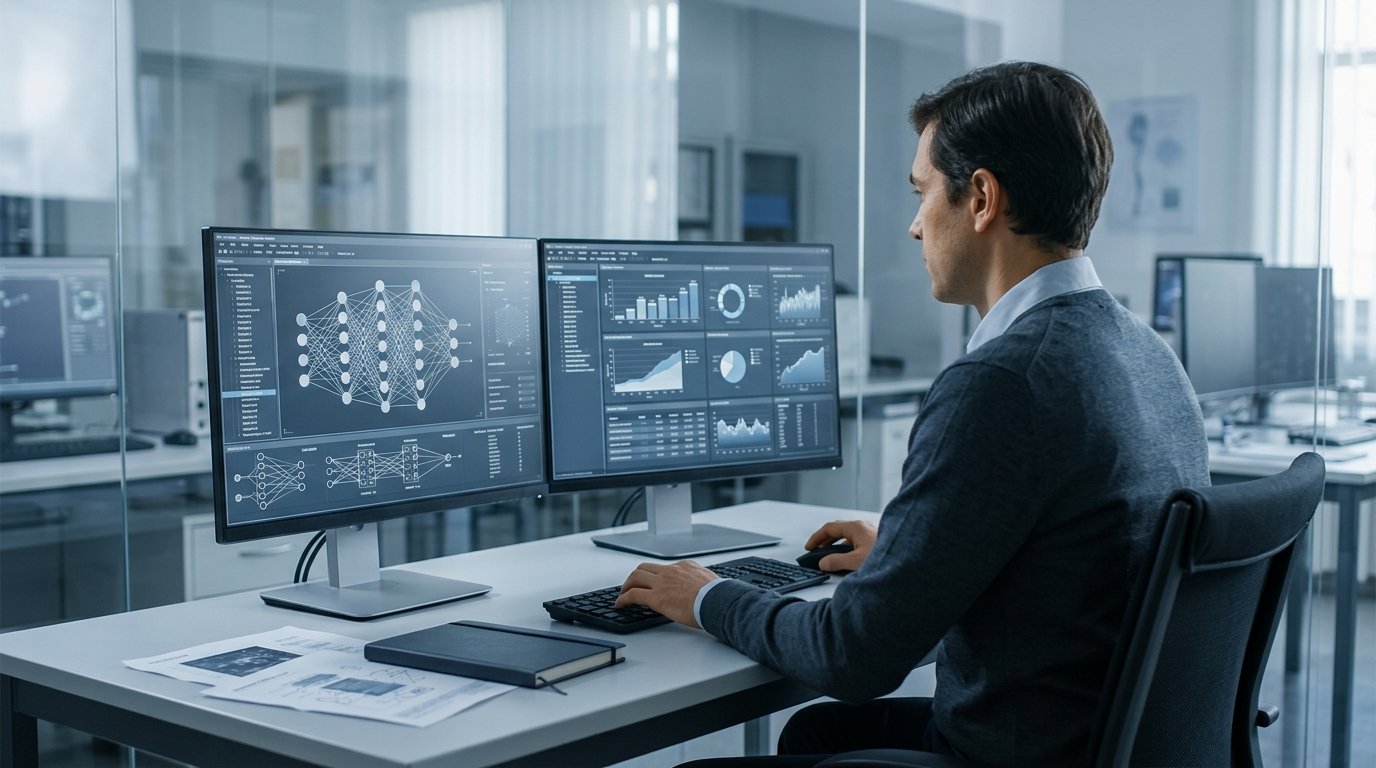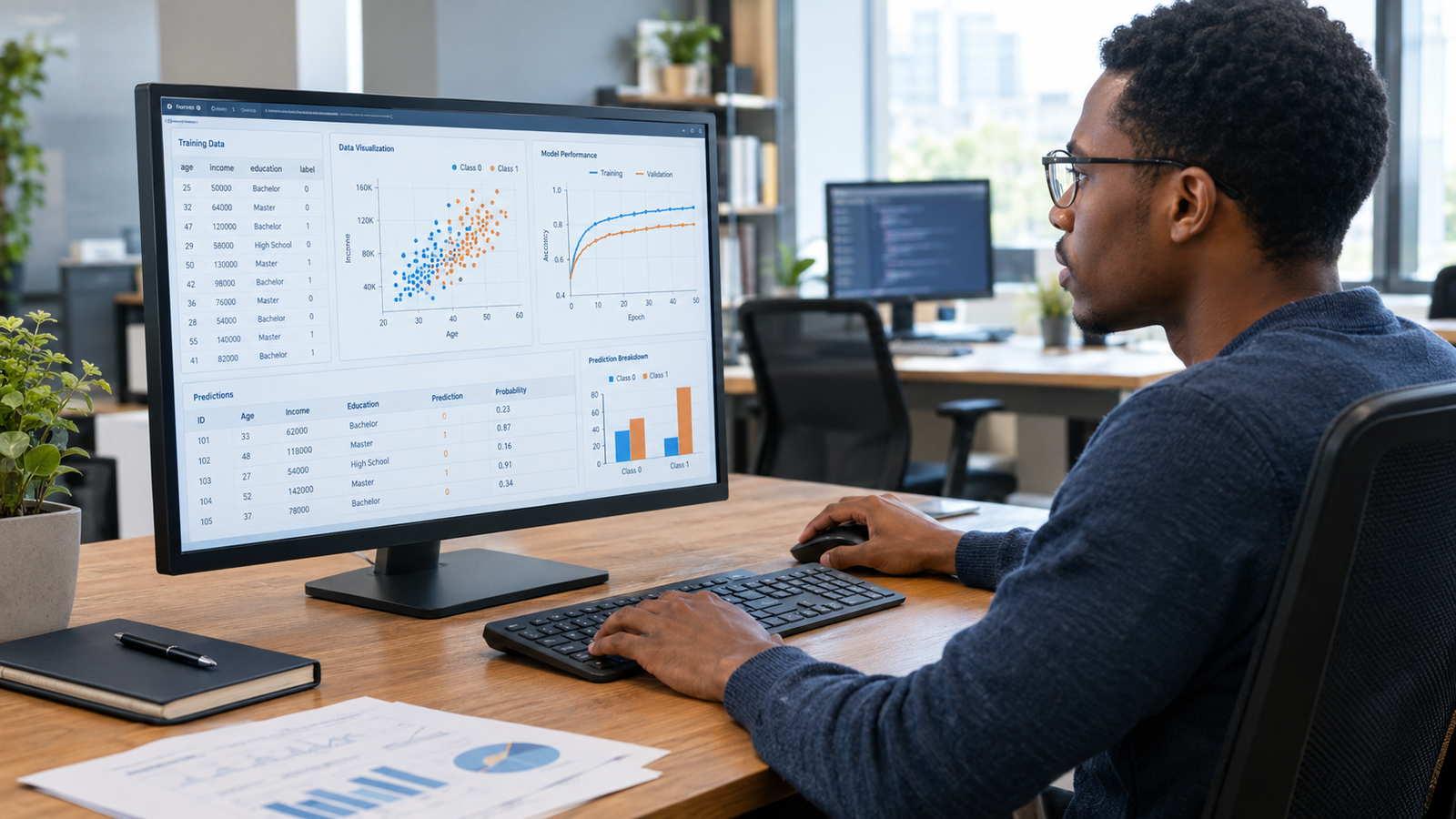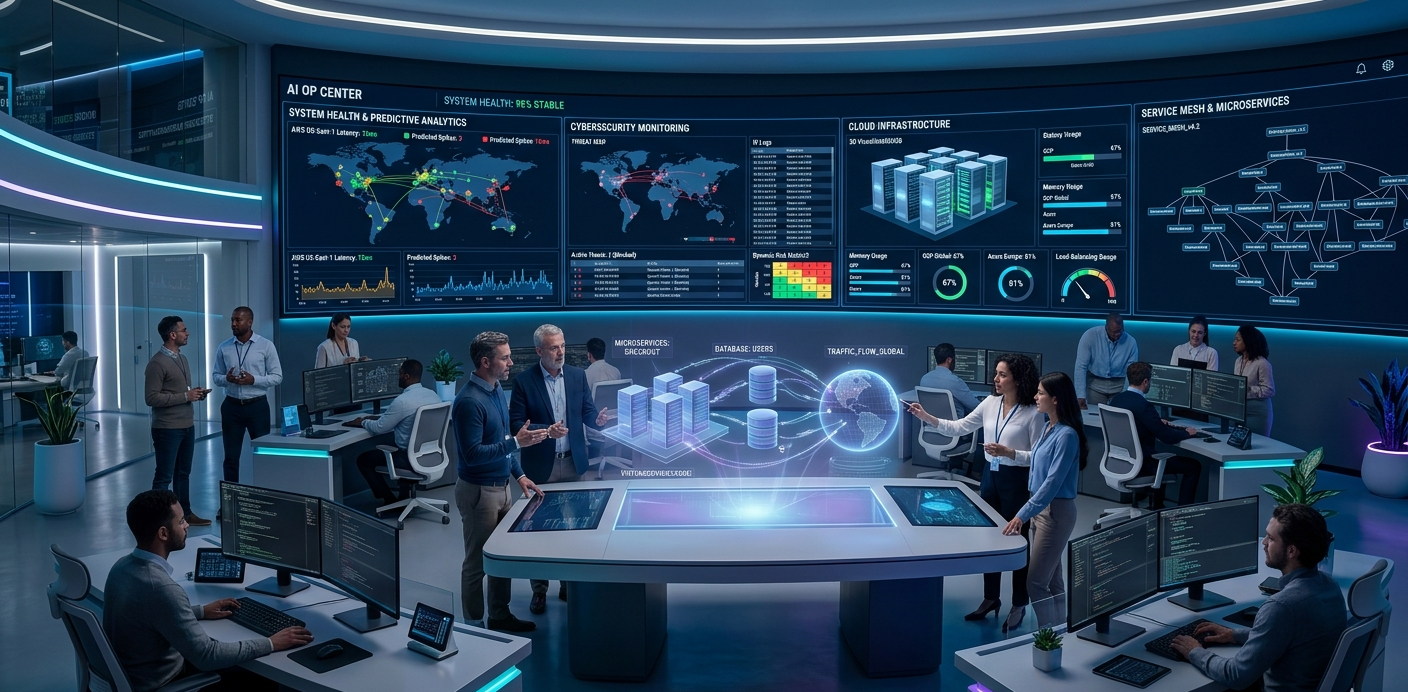
The digital ecosystem is growing at a pace that far exceeds the governance of humans. In today’s highly distributed and multi-cloud microservices world, the amount of telemetry data generated—from logs, metrics, traces, and user events—has skyrocketed. This complex chain of elements can’t be managed manually—it’s not even possible. The operational crisis has driven the emergence of the new paradigm of Artificial Intelligence for IT Operations (AIOps) and machine learning models designed to manage systemic complexity. Organizations are moving beyond the traditional reactive “break-fix” approach and into autonomous governance by embedding intelligent automation at the very heart of the pipeline. It is a redefinition of the way IT software management is managed that gives engineering departments the ability to maximize software performance, reduce operational costs, and ensure software structural resilience without human involvement.
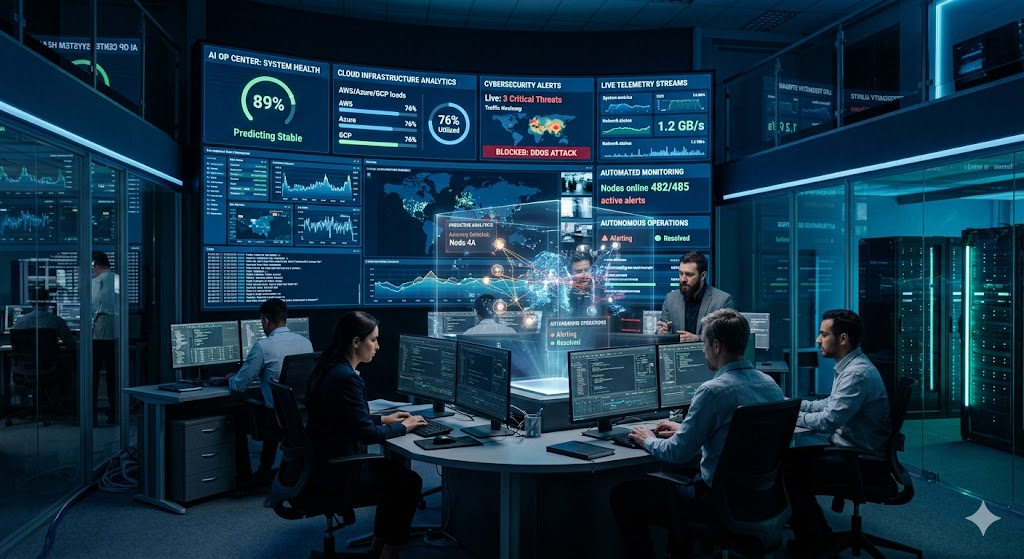
Traditional Monitoring Limitations in Modern Software Systems
Traditionally, software administration relied on a handful of monitoring tools that were basically static and threshold based. Systems administrators would write rules that were hard coded with the strict 85% limit, and fire an urgent alert if any server’s CPU utilization exceeded that limit. This works fine for predictable infrastructure but it is a disaster in today’s cloud environment with constantly changing workloads. There is no way to tell the difference between a harmless anticipated traffic spike during a marketing campaign and a true memory leak that is a sign of structural software degradation with traditional monitors. This lack of nuance comes with a problem that’s sometimes referred to as “alert fatigue” — in which engineers are inundated with thousands of non-critical alerts each day. Operational anomalies are often missed due to lack of attention as teams get used to the noise. When applied to the world of AI, this vulnerability can be mitigated by baselines that are not static, but instead constantly adapt to the system’s behavior, learning the unique behavioral signature of each system and being able to signal real discrepancies.
Intelligent Observability and Alert Noise Mitigation
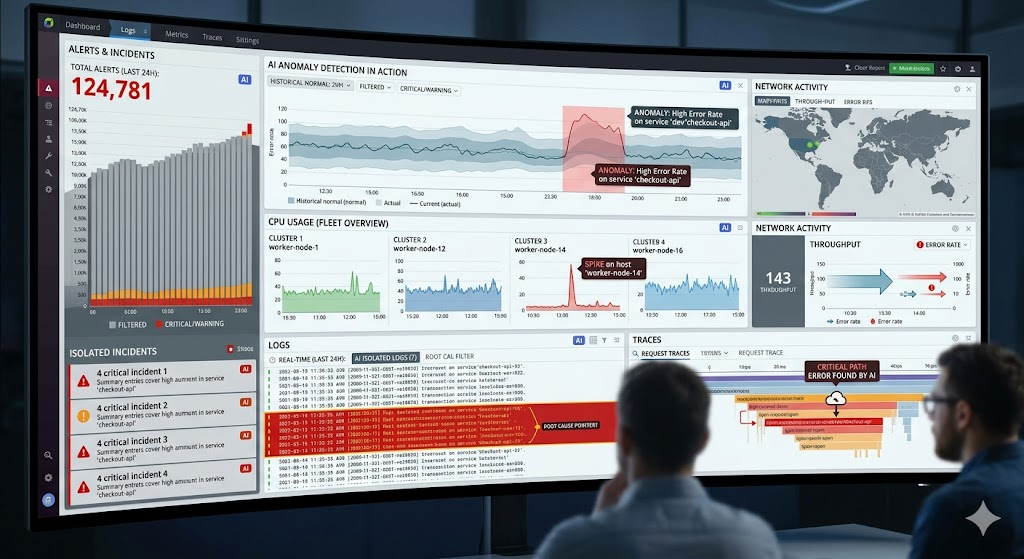
The application of machine learning algorithms by software monitoring tools has transformed the observability field. Rather than storing telemetry metrics as data silos, AI monitoring platforms are constantly collecting and combining multiple data streams in real-time. These state of the art platforms use unsupervised learning algorithms to create a very flexible operational baseline that adapts to temporal patterns, such as how different a Tuesday afternoon was from a Sunday night. The system’s understanding of the context of software behaviour enables it to correctly identify benign operational changes from legitimate system threats. With this advanced feature, it’s possible to filter out as much as 90% of irrelevant alerts, end cognitive friction in site reliability engineering (SRE) departments, and prioritize critical software problems.
AI Observability:
Moreover, the AI models of today are very good for cross-stack event correlation which is the ability to follow one issue as it moves through several layers of an architecture. If a database failure cascades to many other microservices, an unassisted human operator may end up seeing hundreds of unrelated error logs spread throughout various applications’ dashboards. An integrated AIOps engine, on the other hand, analyzes the full sequence, detects the structural relationships between the various events and brings them together in one overall incident report. This process filters out the exact cause immediately, avoiding the creation of a cross department incident war room. AI reduces the chaos of modern software monitoring into a neat, structured and analytical operational pipeline by condensing thousands of data points into one actionable story.
Move from Reactive Repair to Predictive Software Maintenance
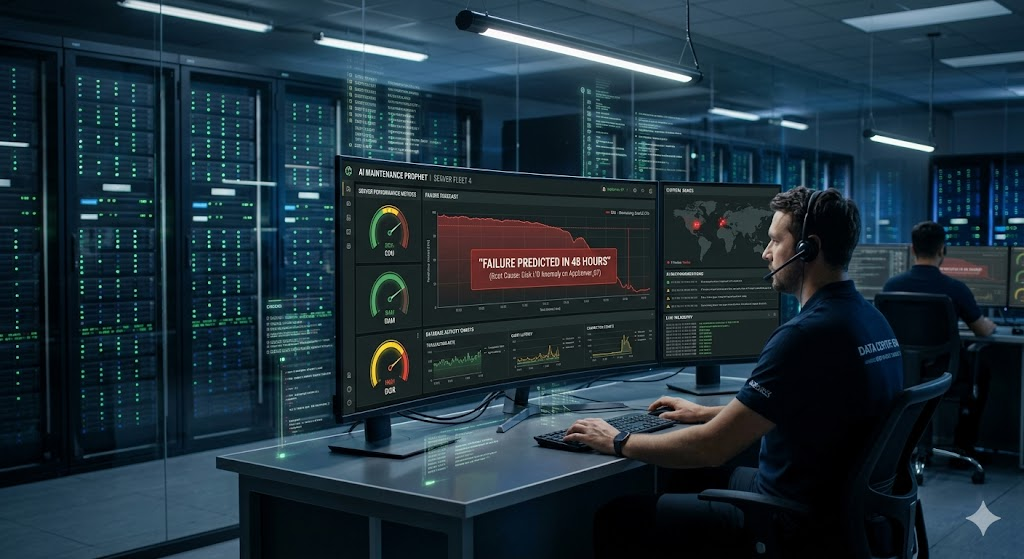
Machine learning models are not just increasing visibility into running applications, they are changing the manner in which software maintenance cycles are made. Traditionally, applications were maintained, either through a periodic calendar schedule, or by patching immediately after an unexpected system crash. This approach has many operational risks: too early to maintain systems wastes precious engineering resources, too late and it’s costly to have the application out of service. AI-powered predictive maintenance addresses this structural paradox by tracking the continuous data of variables like memory usage, database query latency, API execution time, and more. Predictive algorithms analyze the failure history of software and correlate the data with real-time telemetry to detect early signs of software degradation weeks before failure, enabling teams to take preventative measures in a safe environment.
Major industry analysts find that firms employing AI-based predictive maintenance tactics experience a 35% to 45% cut in unplanned downtime and up to 75% decrease in unexpected breakdowns.
These predictive engines work out accurate parameters like Remaining Useful Life (RUL) for key application processes or cluster components. Rather than informing a developer that a database is under high stress, the system offers a concrete prediction; assuming that a database has a certain transactional velocity, the system predicts that the database will likely be using all available threads in a thread pool in a matter of forty-eight hours. This foresight enables engineering teams to roll out patches when it’s not open season, avoiding the potentially expensive impact on end users. As an outcome, software maintenance is no longer an emergency operational cost but a well-optimized business process, proactively prolonging the life and structural durability of enterprise software assets.
Self-Healing and Autonomous Troubleshooting Infrastructures
This evolution of generative AI and agentic software workflows has transformed troubleshooting from human-led diagnostic triage to systemic remediation by program agents. For high maturity DevOps organizations, the role of the AI tool is not limited to being a passive advisor, but an active operational agent that is empowered to control infrastructure control planes. If an anomaly is detected, the AI doesn’t just tell an on-call engineer about it. Rather, it triggers a multi-step investigation that starts by cross-referencing log time with other logs, checking the recent code deployments in the continuous integration and continuous deployment (CI/CD) pipeline, and pinpointing the malfunctioning container or service, as well as identifying the safest path to recovery.
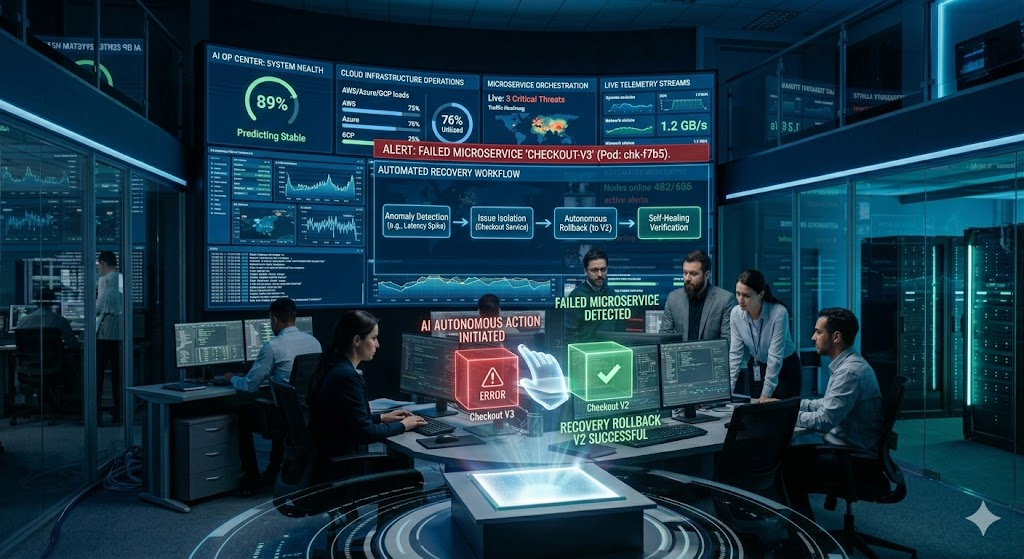
This transformation allows for the development of software architectures that are able to self-heal and rectify internal errors without any human interaction. For example, when an AI agent identifies that a newly deployed microservice is suddenly generating a surge of 500-series server errors, the AI can automatically trigger a canary rollback and take automated snapshots of the affected thread dumps and log states that can be sent to the developers for investigation. In the event of a sudden storage constraint, the AI can trigger automated scripts to remove temporary caches or automatically scale cloud-native resources. This capability is known as negative Mean Time to Resolution (MTTR) meaning that software abnormalities are identified, diagnosed and completely remediated before the human engineering team or end consumer ever knows that an operational bottleneck has occurred.
Exploring and Applying Advanced Analytical Insights for Strategic Software Design
Beyond its practical uses in solving day-to-day problems, AI can provide deep insights into software design and architecture, leading to strategic decisions that impact long-term product development. With the rise of modern enterprise platforms, huge amounts of real-time operational telemetry are created, and are full of patterns that reflect user activities, architectural constraints, and resource under-utilization. These enormous amounts of data are fed into AI analytics platforms that can perform automated capacity planning to accurately forecast when additional computational needs will require a major overhaul of the underlying infrastructure. This allows engineering management to make decisions based on empirical data and facts rather than hunch, preventing common operational issues like over-provisioning unnecessary cloud resources and under-provisioning resources, which could result in system slowdowns.
| Metric / Dimension | Traditional Analytics | AI-Driven Analytics |
| Data Ingestion Mode | Batch processing of isolated historical logs | Real-time telemetry stream aggregation & processing |
| Analysis Focus | Reporting past failures | Forward-looking prescriptive optimization models |
| Alerting Mechanism | Tight thresholds causing false alarms | Adaptive anomaly detection with dynamic baselines |
| Resolution Target | Manual triage and reactive response | Self-repairing and self-healing infrastructure |
In addition, machine learning models can be used to directly analyze software performance from the perspective of business value, taking key business performance indicators as the basis. An AI analytics engine can identify which microservice’s performance is having the biggest impact on user abandonment by correlating the software latency to user abandonment data. This visibility alters the way that development backlogs are prioritized. Instead of taking a random approach to which technical debt to pay down first, teams are provided with prescriptive, data-driven answers on where they should focus for the greatest return on investment. AI transforms the function of IT software analytics from being just a collection of bugs from the past into a vision of the future for product development.
Demonstrating and Maintaining the Autonomy of a System with Rigorous Guardrails
The role of the IT professional is drastically changing as AI gets more prominent in the modern software development lifecycle. The days of software operators working late at night and manually reviewing large numbers of metrics on the complex dashboard, manually interpreting the vast amount of text in files and manually executing shell scripts during outages are coming to an end. With this new paradigm, human engineers become high-level system architects and governance directors. The real challenge for today’s organisations is not just how to create faster automation scripts; it’s how to build robust guardrails for the operation of autonomous AI agents to ensure they behave in predictable, safe, and strictly defined compliance boundaries.
In the end, the future of software management will be with organizations that can integrate the analytical power and speed of machine learning with human oversight. Cloud telemetry is handled by automated agents while human teams can concentrate on strategic innovation, system design and security architecture, all the while executing routine self-healing workflows. These smart tools help businesses deal with the complexity of operations, safeguard their engineering teams against burnout and unlock software reliability that was previously unimaginable. AI has gone from being a niche luxury to the core power supply of the next-generation, scalable, resilient, and self-service digital enterprises.