Introduction
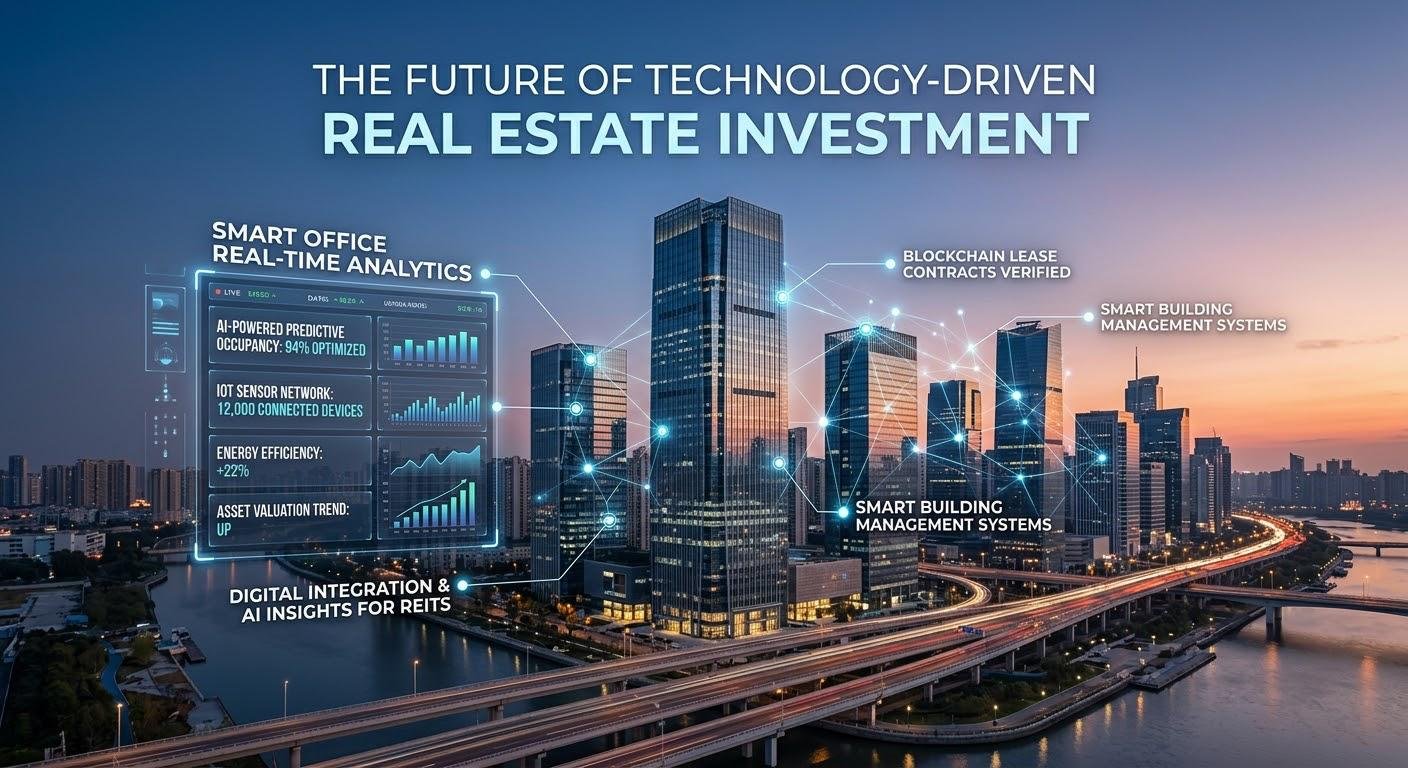
Technology have changed the way real estate investment trusts (REITs) are acquiring real estate, managing their holdings, evaluating investment opportunities and communicating with investors. The 4 pillars of property inspections, financial reporting, market research, as well as manual administration have been the business model of the traditional REIT. Although these methods are still useful, a digital method will provide speedy access to information, enhance operational efficiency, and help with well-informed investment decisions. This data-driven approach, connected systems and intelligent automation are a feature of the digital transformation of REITs. Advancements in Artificial Intelligence (AI), the Internet of Things (IoT), cloud computing and blockchain, as well as predictive analytics are rapidly boosting REIT’s ability to leverage these new tools to improve the performance of its properties, engage investors and adjust to market conditions. To grasp how real estate investing could transform in the future, it is vital to comprehend these technologies.
How AI and Machine Learning Affect the Operations of REITs.
The use of AI and machine learning is going to play a greater role in a REIT’s decision-making. These technologies can be used on massive amounts of data such as rental history, property occupancy, economic data, financial data, and property market data to identify patterns and trends that are difficult to see using conventional data analysis techniques. AI systems can prove valuable, for example, in forecasting rental demand, identifying properties that are good for growth, and forecasting possible monetary consequences of market changes. They can also make use of the data as it is fed into them, which can improve their predictions and tweak their strategies over time, enabling investment teams to fine-tune their decision-making processes based on machine learning models. There are also intelligent systems that can be integrated into the building management system that helps to identify potential tenants who are in danger of leasing out, and to help decide on suitable rent and prioritizing requests for care. But AI suggestions rely on the top quality of the information and assumptions that underpin them. Being successful in the REIT game requires them to merge the talents of technology, financial analysis and local real estate market intuition and use these in tandem.
Internet of Things and Smart Property Management
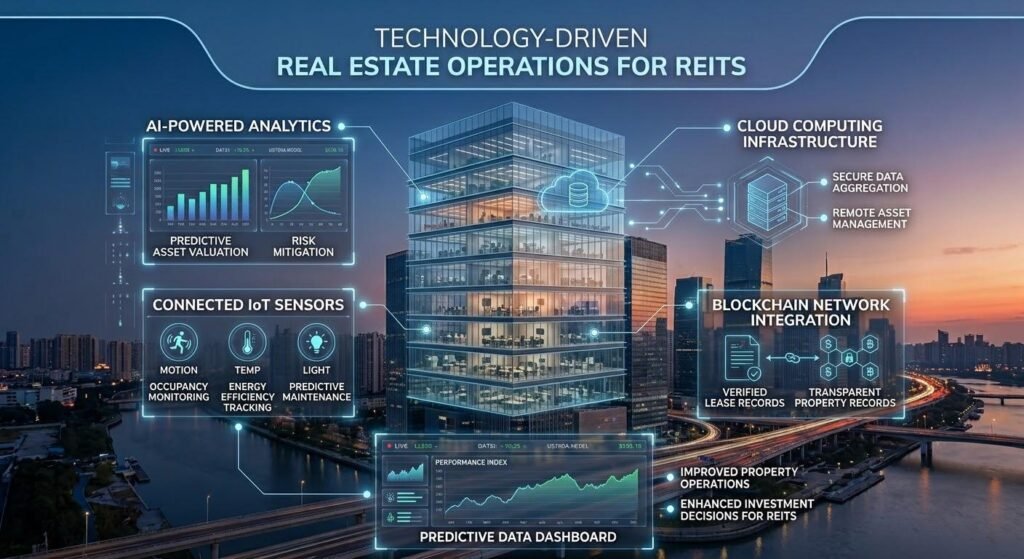
IoT is the integration of physical devices, sensors and building systems to gather and share data. In the context of REITs, IoT enables devices to track energy usage, indoor temperatures, water and equipment usage, and building occupancy. The features help property managers to grasp how buildings are functioning without relying on a complete reliance on tenants to complain or periodic property checks. For example, sensors can detect anything out of the ordinary when it comes to energy consumption, and connected equipment can communicate with a maintenance crew and notify them of an inefficient operating heating and cooling system. This data can be used for preventive maintenance, to avoid unnecessary downtime, and can even enhance tenant satisfaction. Smart buildings can also regulate the lighting and ventilation by occupancy, which can also provide cost savings in operating costs. With the integration of AI and IoT data into the future, REITs may be able to analyze their data sets and identify recurring issues across their holdings, as well as coordinate maintenance efforts across all properties. However, issues such as device reliability, cyber security, device installation, and protection of information gathered from occupied buildings should all be taken into account.
Cloud Computing and Connected Real Estate Data
When it comes to software, storage and computing resources, cloud computing offers REITs the flexibility to access these resources without having each system running through local infrastructure. Platforms that are connected enable property managers, accountants, analysts and executives to access necessary data from multiple sites, which aids collaboration and expedites reporting. A cloud-based property management solution can provide a central location for lease agreements, rent payments, maintenance, costs and occupancy data. This integration means that the information in these two systems is synchronized, eliminating the need to enter data twice into a spreadsheet and disconnected from another system, and thus eliminating inconsistencies and delays in important decisions. Another benefit of Cloud platforms is portfolio-wide reporting; enabling REIT leaders to make comparisons of property performance and highlight properties that need further attention. The more ports that are added, the more computing capacity an organization can increase to accommodate them. For cloud adoption though, it’s important to get the right vendor, levels of access, backups up and running, and policies in place that govern the data. REITs also need to take service disruptions, regulatory requirements, and risk of relying too much on third parties into technology service providers into account.
New Digital Investment Platform with Blockchain and Tokenization
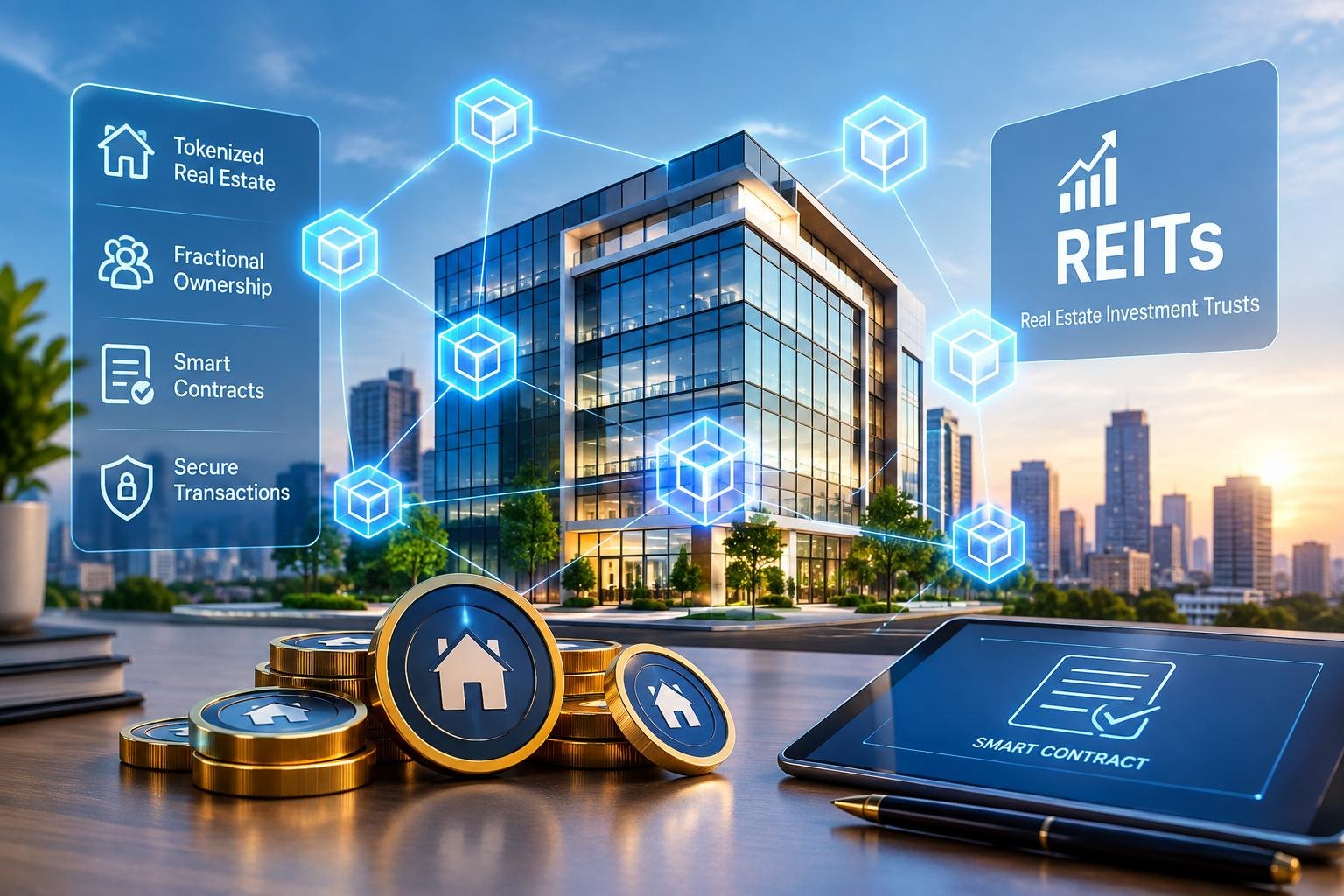
The blockchain technology might have an impact on how the real estate investment transactions are recorded, verified and administered. It can use distributed record-keeping to enable transaction histories that are traceable and can use smart contracts to trigger some actions when it fulfills predefined conditions. These abilities can help streamline ownership transfer, distribution and compliance paperwork in appropriate arrangements. Another option is to create digital tokens which represent eligible investment interests, called tokenization. This may ease the process of fractional investment and may widen the base of investors who can invest in such an investment method. Digital investment platforms can play a supporting role to these advancements and can assist REIT investors in researching REITs, reading disclosures, monitoring their investments and more on the website or via mobile apps. But tokenization does not insure legal ownership of the property, liquidity or the elimination of the regulatory requirements. Digital securities need to adhere to the legal requirements and even investors have to deal with market risks, operational risks, and cybersecurity risks. Older, publicly-traded REITs will also rely on existing exchanges and disclosure norms and investor protections.
The Application of Predictive Analytics and Data-Driven Asset Valuation
Predictive analytics uses historic data, analytics and forecasting to forecast potential future results. These tools are suitable for REITs for property valuation, acquisition and decision making, rental forecasting, and portfolio planning. Similar property sales, population growth, job growth, new facilities, interest rates, and the need for neighbors can be studied to assess investment possibilities. AVMs can handle the relevant information in a rapid manner and GIS can provide insights into the connections between the properties’ geographic locations, transportation systems, environmental risks, and local economic activities. The predictive models can also be used to anticipate assets that could be under reduced demand or high maintenance costs, prior to a negative impact on financial results. However, there is no guarantee of estimates. Model assumptions can be compromised as a result of sudden changes in interest rates, down economic conditions, planning limitations, and unexpected local events. REITs should therefore run multiple scenarios and validate data sources and compare automated estimates to professional appraisals and market evidence. A blend of quantitative and qualitative analysis delivers a better platform for investment decisions than algorithms do.
The Future of Property Operations using Automation.
For REIT companies, automation can cut down the time spent on repetitive administrative tasks. Rent Processing, Lease Invoices Management, Document Classification, Lease Reminders, Expense Reporting and routine Financial Reconciliation can be supported by software tools. These systems can integrate with other property management and accounting software, which can streamline the flow of information between departments and minimize data entry errors and delays. An automated workflow can also facilitate teams to keep track of unpaid payments, track up to date contract deadlines, and generate common reports for management review. These enhancements can yield significant efficiencies in larger portfolios as small savings of hundreds of properties can add up over time. Future systems might be more complicated and integrate maintenance scheduling, contractor assignment, and tenant communication, among other aspects, with minimal manual effort. But automation is not about doing away with the need to oversee. Problems can arise due to incorrect configurations, incomplete records or software failure, causing a costly problem. In rare transactions, for sensitive tenant issues, contractual conflicts, and where expert interpretation is needed, human review is crucial.
Sustainability, Energy Efficiency, and Climate Risk
Energy efficiency, environmental laws and climate risks are influencing the performance of real estate investments, making sustainability an important consideration. The use of digital technologies can assist REITs in quantifying building emissions, tracking resource use, and assessing opportunities for building efficiency gains. AI systems can suggest changes to the heating and ventilation systems and lighting, while sensors connected to the Internet of Things can detect whether energy is being used in excess. Using relevant climate and geographic information, predictive analytics can be used to measure the risk of flooding, heat extremes, water scarcity and other environmental risks. Cloud-based reporting systems can streamline sustainability data collection by integrating it into a portfolio to enable comparison of properties and tracking of progress towards environmental targets. These attributes can give REITs a better idea of whether they have cost-cutting opportunities or if the assets are likely to be resilient in the long run. However, technologies are not the only thing that will ensure sustainable results. The information should be accurate, any improvement should be based on credible reference points and proposed investments should be financially and operationally sound. The uncertainty in climate models is also a source of uncertainty, and so scenario analysis and continuous reassessment is necessary.
Investor Relations, Portfolio Management and Risk Analysis
Digital platforms have revolutionized the way REITs communicate financial information and communicate with shareholders. Reports, distribution information and updates about the portfolios can be easily accessed through online investor portal, disclosures, interactive dashboards and mobile applications. This can help to make reports, distribution information, updates about the portfolios and corporate announcements more accessible. Improved reporting systems could enable investors to gain a greater understanding of a property’s performance and the financial condition of a REIT, even if they rely less on traditional reporting methods. An integrated dashboard can help managers to gather rental income, occupancy, debt obligations, property expenses and valuation estimates internally and easily, enabling them to detect potential issues earlier. AI and predictive analytics can help with the risk analysis by analyzing tenant concentration, refinancing needs, market volatility, and alterations in operating costs. These tools can be used to drive discussions and preparedness plans for investment teams. But digital reporting should maintain the accuracy, transparency and disclosure principles. REITs should also ensure that they shield investors from information, keep an eye out for the unusual, and have reliable systems to communicate significant developments.
Challenges and Priorities to Technology Adoption
While digital transformation offers a lot of possibilities, there are also practice challenges for REITs. The initial costs and the time needed for employees to learn new systems, move data, and adapt to new workflows are all significant challenges when implementing advanced systems. Older software can also be problematic when it comes to integrating with newer operating systems especially if property data is stored in a number of different systems. Cybersecurity is also a significant worry, as the handling of digital property could include financial records, tenant details, access systems, and financially relevant investment details. The technology risks can be addressed by having a clear technology strategy, implementing adequate access controls, creating backups and implementing adequate testing of security arrangements. They also need to assess if there are tools being proposed that will really meet the needs of the business or if they are just “new” tools. Pilot projects can help organizations to determine costs, and weaknesses, and to prove practical usefulness, before expanding the implementation. Staff involvement is also crucial as effective use of new systems depends on the understanding and use by people.
Conclusion
The future of REITs will rely on the intelligent software, connected buildings, reliable data and accessible digital investment services. AI and machine learning have the potential to enhance forecasting and decision making, whereas IoT and automation can help to optimize property operation and maintenance. Information can be shared across portfolios through cloud computing, a new generation of transactions and investment models can be provided by blockchain, and predictive analytics can aid organisations in their valuation, sustainability and risk assessments. The research and interaction of investors with investment providers will remain influenced by digital platforms. But the technology most successful will not necessarily be the ones that the most successful REITs are embracing. They will be the organizations that will responsibly leverage the right tools to achieve the right results, preserve trust in the information, safeguard stakeholders and be able to tie digital investments to business outcomes. Through a delicate combination of innovation and good governance and professional expertise, REITs can create more efficient operations, make informed investment decisions and command a better ability to adapt to the evolving real estate landscape.
Get more well researched information about Technology in REITs here.