Introduction
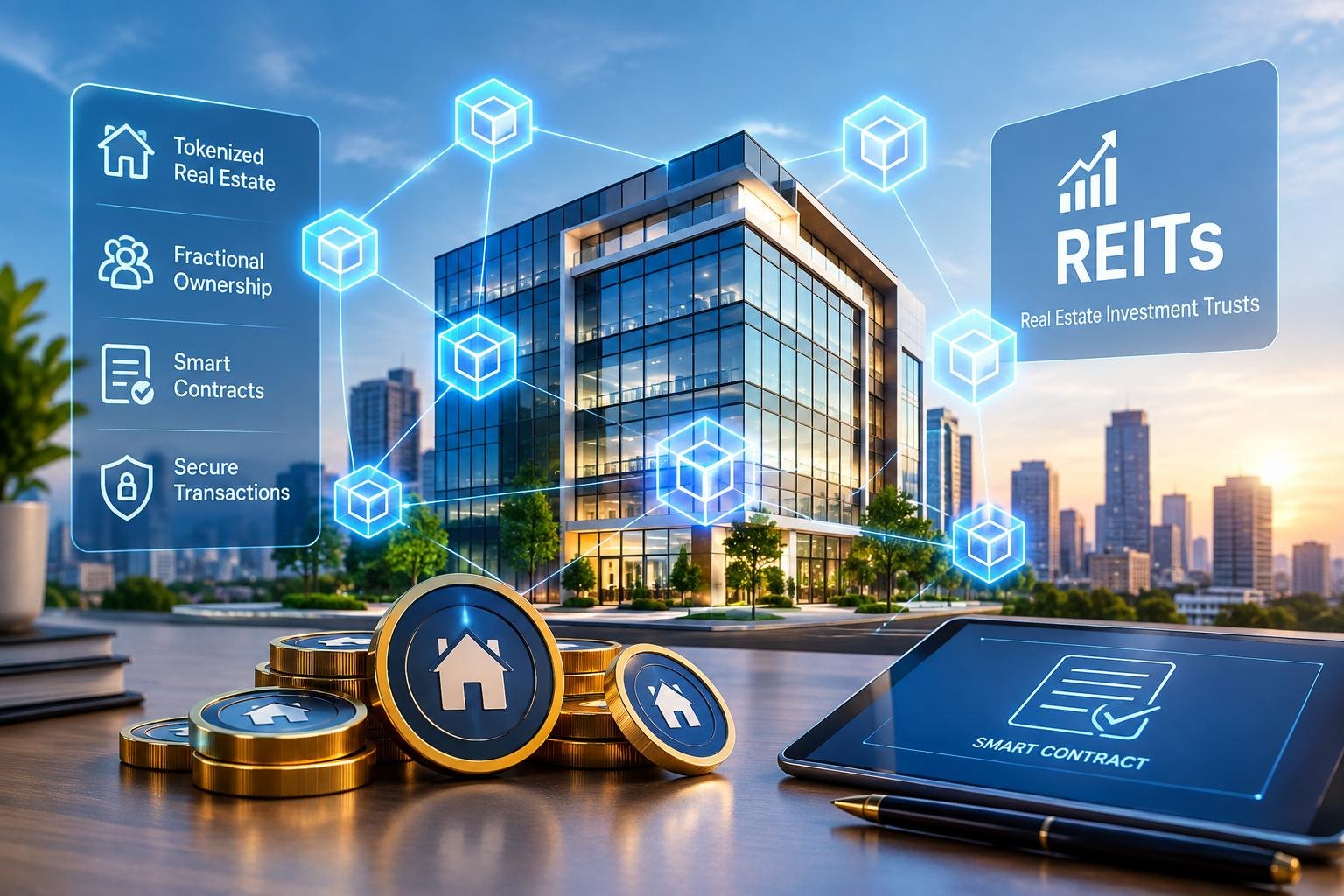
The traditional approach to real estate investment has involved a significant amount of time and extensive paperwork to facilitate transactions, and the need for large amounts of capital. Real Estate Investment Trusts (REITs) have made property investing more convenient by enabling people to invest in firms which possess or back income-generating real estate. But blockchain technology is adding possibilities in the area of ownership, transfer of investment interests and financial transaction management. In tokenized real estate, physical real estate or rights to real estate assets can be converted into a digital representation on a blockchain, which may open up new avenues for investors to access real estate markets. While tokenization can’t replace existing investment structures completely, it could be a useful addition to REITs, enhancing the investment infrastructure, facilitating small investment sizes, and providing more investment information. To grasp this connection, let’s look into the mechanisms of blockchain technology, the advantages of tokenization, and the legal and practical difficulties to be overcome for this concept to gain widespread acceptance.
The Concept of Blockchain Technology and REITs
The blockchain can be seen as a digital recordkeeping system that stores transactions in a series of linked records across a network of computers. Depending on the design, the participants can check transactions without having to completely trust one central record keeper. It will be challenging to modify historical information once the transactions are validated and recorded, especially when the network is well secured. This characteristic could be of great value to blockchain when it comes to keeping records of investment ownership, transfers, and financial activities. REITs, on the other hand, are corporations and/or trusts that own, operate, or invest in income-generating real estate and share or offer other approved interests in real estate with investors. Existing financial markets, brokers, custodians and regulatory processes are already in place for publicly traded REITs. While some aspects of these structures could be modernized by the use of blockchain, property laws, investment laws, professional management, and financial liabilities of real estate ownership would not become extinct.
The Potential of Tokenization to Bring Blockchain and REITs Together.
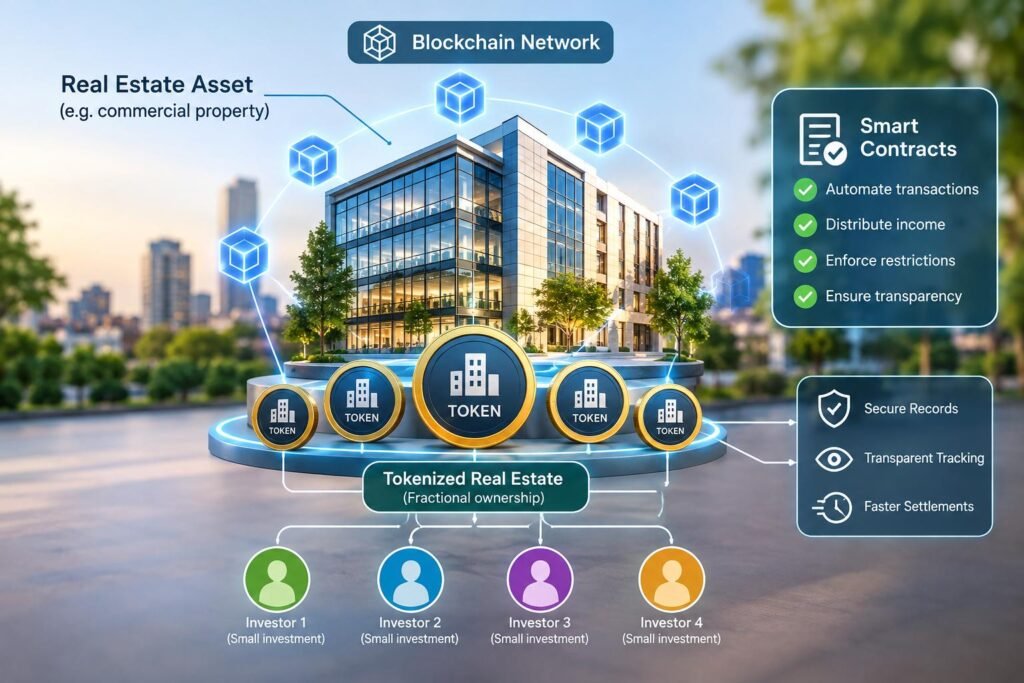
The tokenization process entails generating digital tokens that represent ownership rights, financial interests, or claims to an underlying asset. In the real estate sector, a token can stand for the right to a permitted interest in a property-owning company, a fund, a debt instrument or any other legal arrangement. A company that owns an office building may consider selling interests in the company (as digital securities) under the laws in effect. Investors would purchase the tokens based on the offering terms and the underlying property would remain managed by the applicable legal entity. The token holders need not own the actual building in their possession. Rather, the rights that can be vested in a token rely on the legal deal with the investment. Properly embedded in REIT structures, tokenization can enable digital token issuance, ownership tracking, transfers, and continue to maintain professional property management and existing investor protections.
Fractional Ownership and Greater Investment Accessibility
A possible benefit of tokenization may be the ability to break down investor interests that are suitable for tokenization into smaller investment units. Real estate transactions typically involve a considerable amount of money, making it difficult for people who don’t have much saved up to be active buyers of a home. Depending on regulations and minimum investment requirements, tokenization of securities may enable investors to buy shares in a property-owning company or eligible real estate fund, with shares being smaller portions of the underlying asset. For example, instead of buying an entire commercial property, an investor could buy a relatively small number of tokens that represent an interest in an investment vehicle that owns the commercial property. No new concept would be introduced with tokenization as it is already possible with shares in REITs. It can play a role in shifting the paradigm of issuing, registering and transferring investment interests. Yet, a smaller unit does not necessarily mean that it is less expensive, is risk-free to invest in or that it is available to all investors.
Blockchain-Based Ownership Records and Transparency
Records of the property owner are vital to real estate investing as there may be several parties involved in transaction, many documents involved and a number of verification points. A blockchain system could keep shared records of the time digital securities, if eligible, are issued, transferred, or redeemed. Authorized participants may more efficiently cross-reference these records than they could do if they were to cross-reference separately created databases by different organizations. This would allow REITs to more easily track the number of investor shares, corporate actions, and transactions. Investors and administrators might be better able to see what they were interested in, without having to ask for this information from multiple intermediaries again and again. However, official land registers should not be confused with blockchain records. Note taking does not constitute legal documentation of the transfer of ownership of a building. To ensure the reliability of implementation, it is necessary to link the digital records to enforceable contracts, provide accurate property documentation, verify identities and establish recognized legal procedures. There should also be adequate privacy controls in place for the transparency, to safeguard confidential investor and commercial information.
Smart Contracts and Effective Transactions
The smart contract is a computer program that is deployed on a blockchain that is programmed to perform specific actions when certain conditions are met. A smart contract could be used to implement any restrictions on transfers, to log eligible transactions, or to award payouts based on rules in a tokenized real estate investment. For instance, a smart contract can be employed to allocate the available income to the eligible token holders once verified payment info is supplied and the circumstances are met. These systems may help to minimize certain administrative duties required to be done by hand and limit the errors of repetitive data entry. Blockchain technology could also contribute to quicker settlement by enabling compatible digital systems for eligible securities and payments to interact with each other. But smart contracts can’t verify all the real-world events, such as: has there been enough renting income from a building? Has the property dispute been settled? They might require external data sources, financial institutions and legal approvals. They must therefore be carefully programmed, information accurate, and there must be appropriate oversight.
The Benefits of REIT Investing and REIT Management
The introduction of tokenization into asset investment might provide a number of operational benefits in the context of REIT investments. The digital issuance and transfer of securities could lead to a decrease in paperwork, streamline some administrative processes, and enhance coordination between investment platforms, custodians, and services. Improved transaction documentation would also facilitate audits of selected activities, and investigations of discrepancies. Digital dashboards that showcase transaction history, distribution data, holdings and disclosures could be helpful for investors. When it comes to transfers outside of regular market hours, tokenized securities may be able to do the same in the future (see above restrictions and trading arrangements). For property managers, technology could still be used to support possible financial tasks, while they continue to focus on essential tasks, including tenant relations, maintaining property, leasing, and improving the property. All these potentialities notwithstanding, lower costs and higher efficiency are not ensured. Expanding to secure platforms, integration of existing platforms, meeting regulatory requirements and educating investors can all be costly, and it is important to consider the cost versus any possible savings.
Identify Opportunities and Limitations of Liquidity.
Liquidity is the ability to quickly trade an asset or property without a major impact on the price. Tokenization is also sometimes touted as a means to liquidize real estate investing since the digital tokens can be more easily transferable than the real estate property interests. Fractional units also might appeal to wider audience of potential investors, leading to more trading opportunities if there are suitable markets available. But, it’s not enough to make tokens to make buyers or sellers. If demand for a tokenized REIT doesn’t pick up or trading platforms aren’t available or transfer restrictions prevent trading, it may be hard to sell an investment. Some offerings may be subject to restrictions regarding who may participate, or may be subject to securities legislation and/or contractual restrictions. The market, the performance of tenants, interest rates and fluctuations in asset values continue to pose a risk on property investments. Investors should therefore evaluate what the actual trading mechanisms and arrangements are, what the expected transaction costs are, what are the redemption rights and what is the actual demand for the underlying market?
Regulatory, Legal and Security issues
One of the most critical aspects that will influence the connection between blockchain and REITs in the future is regulation. As stated above, the nature of tokenized real estate interests could mean that they are treated as securities, which would result in registration, disclosure, investor eligibility, custody, and trading requirements. Issuers need to detail precisely what rights will accrue to investors, and make sure that the digital records match enforceable legal contracts. There can be extra complexities associated with cross-border offerings as the legal treatment of digital assets, ownership of it, taxation, and financial services vary from country to country.
Security is a major issue as well. Software issues, hacked accounts, phishing attacks and service failures are potential vulnerabilities in blockchain networks and investment platforms. Smart contracts can have bugs which will lead to transactions being completed incorrectly, and investors can end up losing their money with their private keys stolen. Whilst, blockchain records are not easy to alter, not all the applications created using blockchain are secure. Good authentication, separate code checks, secure handling, incident response (IR) procedures, and procedures to correct errors are all vital. However, there is the risk that investors will be deceived, that App valuations are incorrect, that there are insufficient disclosures, and that there may be disputes over the legal rights of tokens.
Will Traditional REITs be Replaced with Tokenization?
Tokenization is likely to fit into a lot of the current REIT structures rather than to be substituted in the near future. There are already well-known ways for investors to gain access to traditional REITs’ portfolios of real estate, distributions, and trading in traditional financial markets. Publicly traded REITs can also take advantage of the existing brokerage system, reporting requirements and trading system. The adoption of blockchain could be most beneficial where it can help solve issues, like disjointed ownership records, repetitive administration and intricate settlement procedures. Private real estate funds or some other type of property investment option could have different means of tokenization, as their ownership structures and restrictions of transfers may vary from that of publicly traded REITs. The adoption will ultimately be based on the measurable benefits of the technology without compromising governance, investor protection, or legal certainty. Technical and financial innovation along with good financial management and compliance will be the most effective models.
Conclusion
Real estate investment interests could be impacted by the blockchain technology and the tokenization of these interests. Tokenization can enable a number of potentially valuable opportunities for REIT managers and investors, such as fractional investment, shared transaction records, programmable processes and potentially more efficient settlement. But these benefits require good implementation, having appropriate markets and the rights associated with each digital token. Uncertainty about regulations, cybersecurity risks, lack of liquidity, and the difference between digital records and ownership of legal property are significant issues to still be addressed. While tokenization may be considered a viable alternative to the current real estate investment models, it is important to assess its suitability for investors and its potential to enhance the accessibility of real estate investing. The successful applications will be those that incorporate the attributes of blockchain with transparent disclosures, enforceable ownership rights, secure security and responsible investment practices as rules and regulations come to fruition and infrastructure is built.
Get more well researched information about Blockchain and REITs here.