Introduction: The Evolution from 5G Networks to 6G Networks
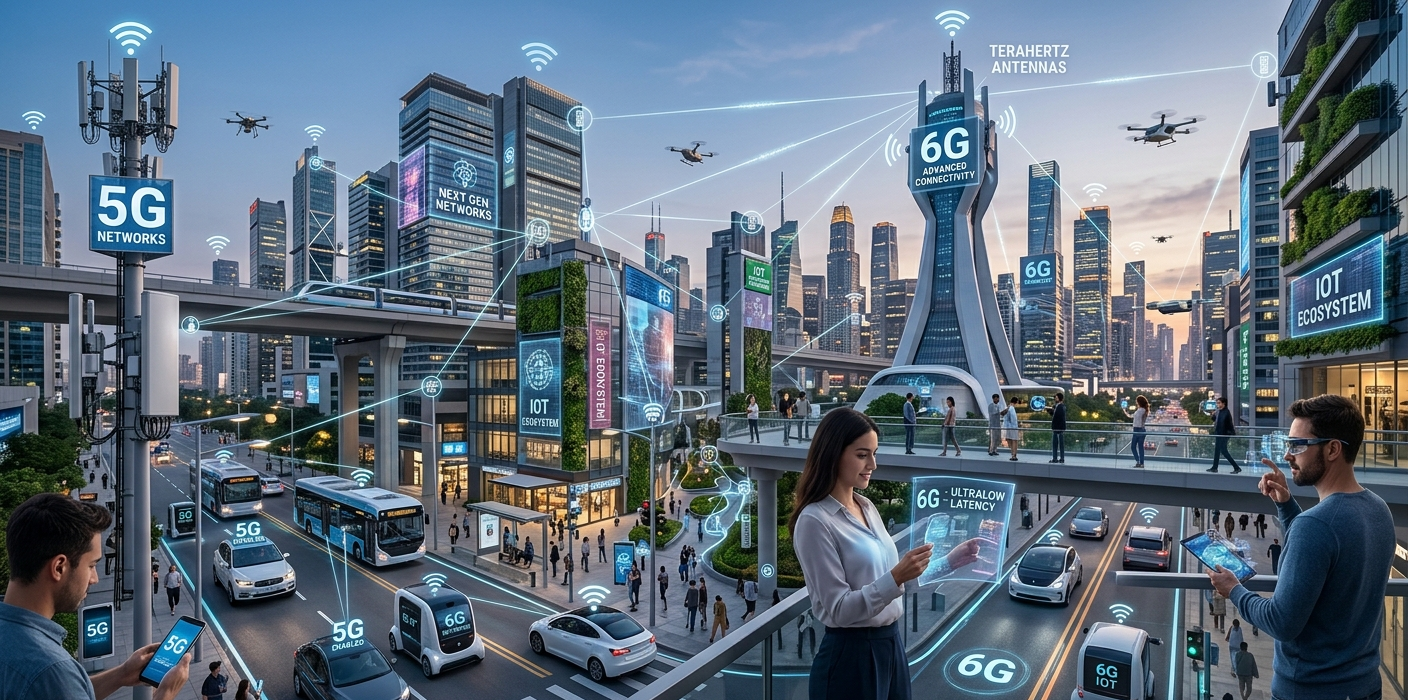
Mobile communication networks have changed the way people communicate, work, learn, and interact with digital technology. Every generation of wireless technology has brought new possibilities for communication, from early voice communications to today’s high-speed Internet connections. With the introduction of 5G networks, users have experienced a significant transformation with its ability to provide increased speed, reduced latency, reliability and the capacity to support billions of connected devices. But with industries looking for more sophisticated digital experiences, researchers and technology firms are already taking steps to the next phase – 6G networks. The shift from 5G to 6G promises to usher in a new era of an even smarter, more responsive and connected world where artificial intelligence, autonomous systems, extended reality (XR) and advanced IoT applications will come together in an unprecedented harmony.
5G is already enabling a variety of groundbreaking new applications such as smart cities, connected vehicles, industrial automation and cloud-based services. It can process huge volumes of data without causing any lag time, which has led to businesses and consumers having more reliable digital services. Currently, new technologies like full autonomy in transportation, more realistic virtual environments and advanced robotics are in need of networks that are capable of more than 5G. To meet these future needs 6G is expected to bring a number of innovations including ultra-fast communication, AI network support, energy efficiency and better interaction between physical and digital worlds. Ericsson’s in-depth research into the anticipated innovations of 6G offers a window into the potential future impact of networks on global connectivity. Ericsson’s research into the future of 6G, which explores how the networks of the future will affect global connectivity, provides further insight into these developments. Learn more about the expected innovations of 6G and how they may shape future connectivity.
What is 5G and Why Is It Important?
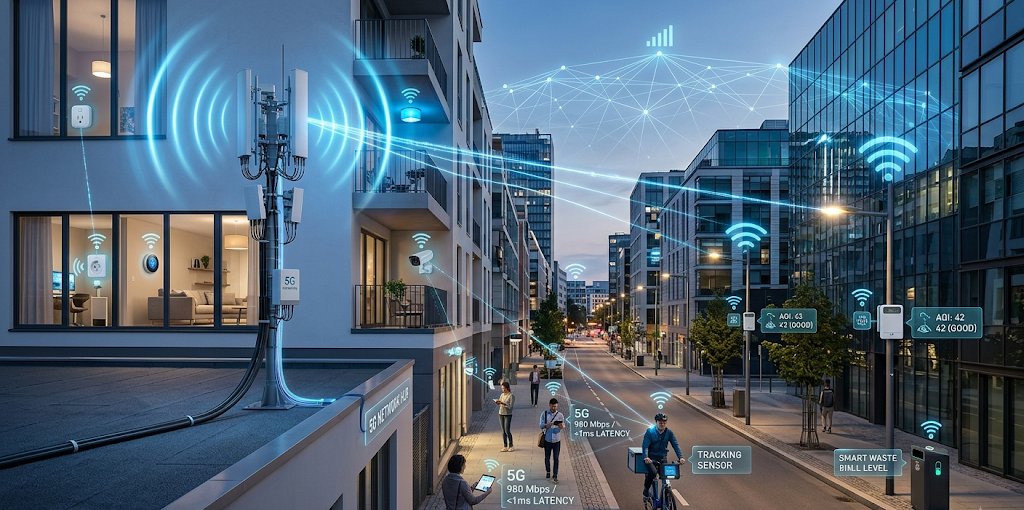
The 5G network, known as fifth-generation wireless technology, is the next generation of wireless technology to reach users that is meant to enhance the speed, capacity and reliability of wireless networks compared with the 4G LTE and 4G VoLTE generations that have come before. Unlike previous networks, which primarily aimed to provide faster mobile internet, 5G was created to accommodate a variety of applications, such as smart devices and gadgets, autonomous vehicles, real-time communication systems, and industrial automation.
One of the largest changes being brought by 5G is that it will be able to support a significantly increased number of connected devices at very low latency. For this reason it is a very significant technology for the development of the IoT – billions of sensors, machines and smart devices communicate with one another.
The Importance of Bandwidth in 5G Networks
One of the highlights of 5G is its capacity to deliver a greater bandwidth than previous networks. Bandwidth is the volume of data sent over a network over a given period of time. Increased bandwidth enables faster download of big files, better streaming of videos, more interactive online experiences and running of more sophisticated digital services.
Businesses can benefit from cloud applications, automated factories, and real-time data analysis with higher bandwidth. The 5G network’s capacity to handle massive amounts of data is becoming increasingly vital for the advancement of technology, with more and more organizations relying on digital systems.
Latency in 5G Performance
Another key characteristic of 5G technology is its latency, or delay. A latency is the time it takes for a network to respond to a request made. Many traditional mobile phone networks were often slow and did not allow for quick responses from applications. One major advantage of 5G is its ability to drastically cut down on latency, enabling devices and systems to communicate essentially instantaneously. The enhancement is particularly crucial for sectors where small downtimes can have an impact, like healthcare, transport, manufacturing and gaming.
The low latency enables 5G to deliver advanced technologies that are reliant on real-time communication. For instance, autonomous vehicles need continuous communication between their sensors, their vehicles, and other infrastructure to make safe decisions. Likewise, the remote medical and industrial robotic operations rely on instant responses. These technologies would have severe restrictions if it weren’t for low latency connections. With its ability to decrease communication time lag, 5G paves the way for numerous new applications and offers a more responsive digital environment.
Network Slicing in 5G Network
Network slicing is one of the most significant capabilities brought by 5G. Network slicing enables to break up a single physical network infrastructure into multiple virtual networks, each with its own set of requirements. There are few situations in which a single network solution is effective.No single network solution is effective for every application. Consider, for instance, a gaming service which demands an extremely low latency requirement, or a smart agriculture system which demands a long battery life and reliable communication as opposed to speed.
In network slicing, service providers are able to provide dedicated network slices for different sectors and customers. A hospital could use a network slice optimized for medical devices, a transportation firm could resort to another one that was optimized for autonomous vehicles. This flexibility also boosts the efficiency, security, and performance of each application by allocating the resources it requires. By enabling network slicing, 5G is not just about faster internet, it’s about flexible communication infrastructure that can meet a wide range of digital services.
How 5G Supports IoT Connectivity
One of the most significant fields in which 5G is adding value is the Internet of Things (IoT). IoT is about making physical objects—like sensors, vehicles, appliances, and industrial machines—intermittently and continuously collect and exchange data. As more and more devices connect to networks, they need to be able to handle huge communication requirements. The speed, capacity and reliability of 5G is essential for large scale deployments of IoT.
The real-world application that best exemplifies the benefits of 5G-powered IoT connectivity is smart cities.Smart cities are a prime example of how 5G-powered IoT connectivity can enhance everyday living. Connected traffic systems can monitor the condition of the road, alleviate traffic jams, and enhance the efficiency of transportation systems. Smart energy systems can make analyses and optimise the electricity distribution. In agriculture, sensors can be connected to track soil moisture, weather conditions, and crop health, which contributes to better agricultural management. The applications showcase the 5G possibilities for smarter, more efficient, and more connected technology.
Understanding 6G Networks and Future Possibilities
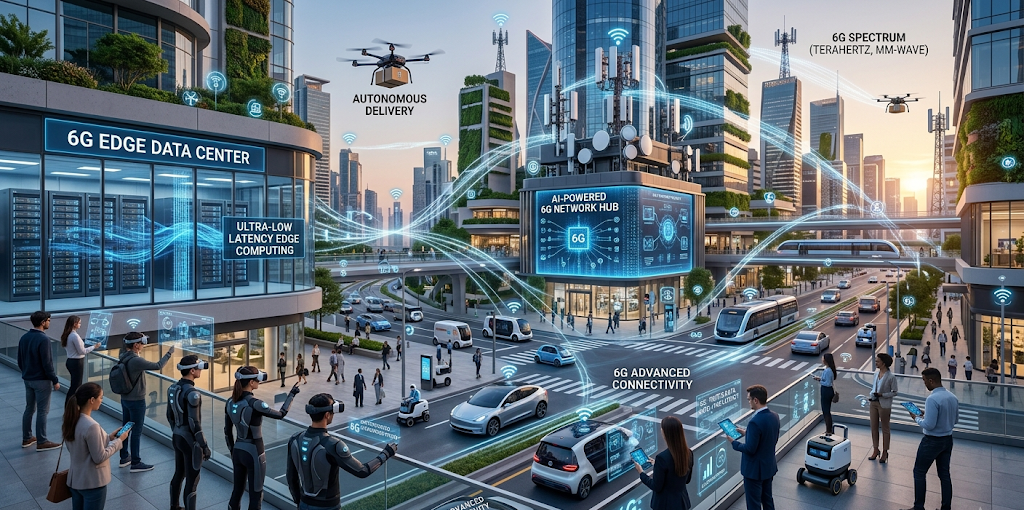
6G is the next generation of wireless communication technology that is anticipated to come after 5G. 5G will be more about connectivity and support current digital transformation, whereas 6G will be more about making the communication environment more intelligent and integrated. In the future 6G networks will feature advanced wireless communication technologies coupled with artificial intelligence and automation, sensing technologies and ultra-high data speeds, researchers expect.
While 6G is still in the developmental phase, experts forecast that it will offer features that surpass existing networks. New 6G systems could enable even more rapid communications, much lower latency and new human-to-human, machine-to-machine and man-to-cyber […] 6G will not only connect devices to the web, it’s anticipated to be a network that grasps, anticipates, and instantly adapts to user needs.
Expected Innovations and Features of 6G Networks
Improvements in speed, intelligence, reliability, and technologies that demand advanced communication capabilities are among the innovations anticipated for 6G. One of the key areas of development is the use of AI in network management. The automatic detection of issues, optimization of performance and allocation of resources in AI-powered networks would happen without constant human control.
The other anticipated improvement will be better support for extended reality (XR) technologies. XR is a fusion of virtual reality, augmented reality and mixed reality that creates interactive digital experiences. Some XR uses can be accommodated with current networks, but others will need higher speeds and lower delays to achieve realistic experiences. The benefits of 6G could be highly immersive learning environments, improved technology for collaboration in the workplace, and new entertainment experiences that cross the real and virtual divide.
6G, Autonomous Systems and Smart Technologies
One of the big advantages of 6G networks will be the autonomous systems. Examples of such systems are autonomous vehicles, smart robots, drones, and automated industrial machinery. Self-contained technologies need up-to-date information constantly and must be able to make decisions in real time. These systems will be able to communicate with one another more quickly and precisely with a more sophisticated communication network.
In smart cities, 6G could enable thousands of autonomous systems to be working together. Roads, traffic systems, and vehicles may communicate to optimize transportation networks. Intelligent systems can enable emergency services to respond quicker in critical situations. Industries could be transformed into manufacturing environments that are fully automatic and have machines working side by side with very little human involvement. These scenarios illustrate how next generation networks could be the basis for a very connected and very automated world.
Edge Computing in the Era of 5G and 6G
Another tech that is closely related to the advanced wireless network is edge computing. Edge computing processes data near where it is created as opposed to sending everything to distant cloud servers for processing. This helps to minimise delays, improve efficiency and enable applications to react more quickly. Edge Computing will be used to support real time digital services with both 5G and 6G networks.
Autonomous cars, for instance, produce massive data from their navigation systems, sensors and cameras. All this information would need to be sent to a far away data center, which would cause unnecessary delays. With edge computing, significant decisions can be made in the immediate vicinity of the vehicle, which significantly enhances safety and performance. Likewise, factories with robotics and automation can also process data locally to ensure smooth operations.
The Significance of Next-Generation Networks in Creating Opportunities
The advent of 5G and 6G networks opens up opportunities in various industries. The healthcare industry benefits from advanced networks as they enable remote patient monitoring, intelligent medical devices, and better access to healthcare services. Immersive learning experiences have the potential to give students an interactive, out-of-the-classroom experience in education. In the business world, better and quicker communication can help increase productivity, automation and collaboration on an international scale.
Next generation networks will provide new communication, working and digital content experiences for individuals. Virtual meetings could be more realistic, entertainment more interactive, smart devices more helpful and responsive. These technologies will not only enhance the current services but also generate new industry and job opportunities as well.
Differences Between 5G and 6G Networks
The key difference between 5G and 6G is the intelligence, speed, and integration it is expected to deliver. 5G places emphasis on enhanced connectivity, with faster speeds, lower latency, the ability to slice networks, and support for massive IoT networks. It connects with the old and new communication systems, the present and the future.
With 6G, the idea is to push this development even further by developing networks that are more autonomous, smart, and able to enable advanced technologies. 5G will facilitate smart devices and connected systems, whereas 6G will bring a more seamless landscape where AI, communication networks, and digital experiences will mesh together. It will not only mark faster Internet but a paradigm shift in the relationship between people and machines and technology.
Conclusion
The transition from 5G to 6G is a significant milestone in the journey towards a more connected and intelligent world. 5G is already reshaping the world of communication by boosting speed, cutting latency, facilitating network slicing, and enabling greater capacity for IoT devices. The features have enabled industries to create smarter systems, automated processes and innovative digital services.
With the ongoing progress of technological advancements, 6G is bringing new opportunities with the integration of artificial intelligence, improved XR experiences, autonomous systems, and advanced edge computing. Most of the 6G technologies are still under investigation but they are influencing the future of communications. The future of 5G and 6G networks promises to be a transformative force, driving new innovations and opportunities for businesses, communities, and individuals around the world.