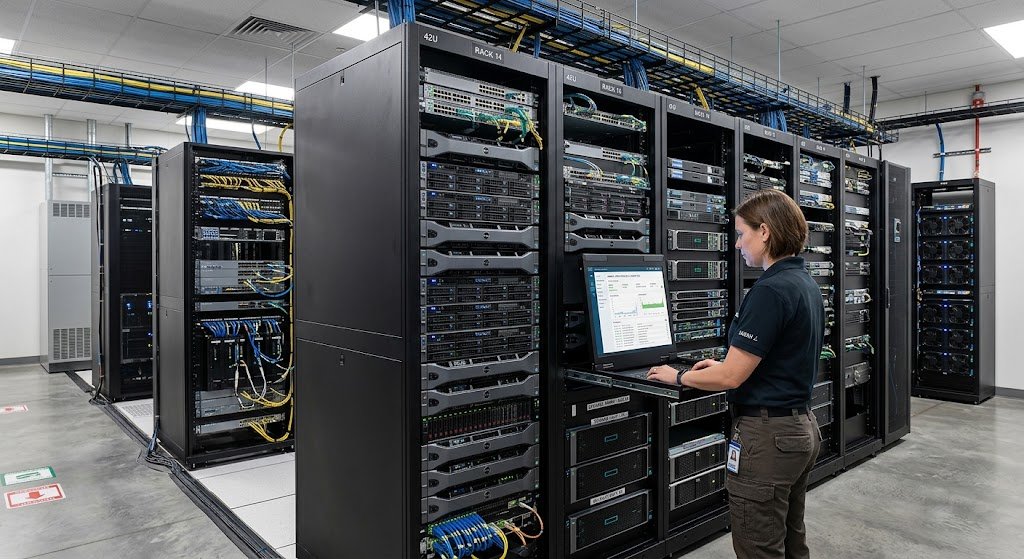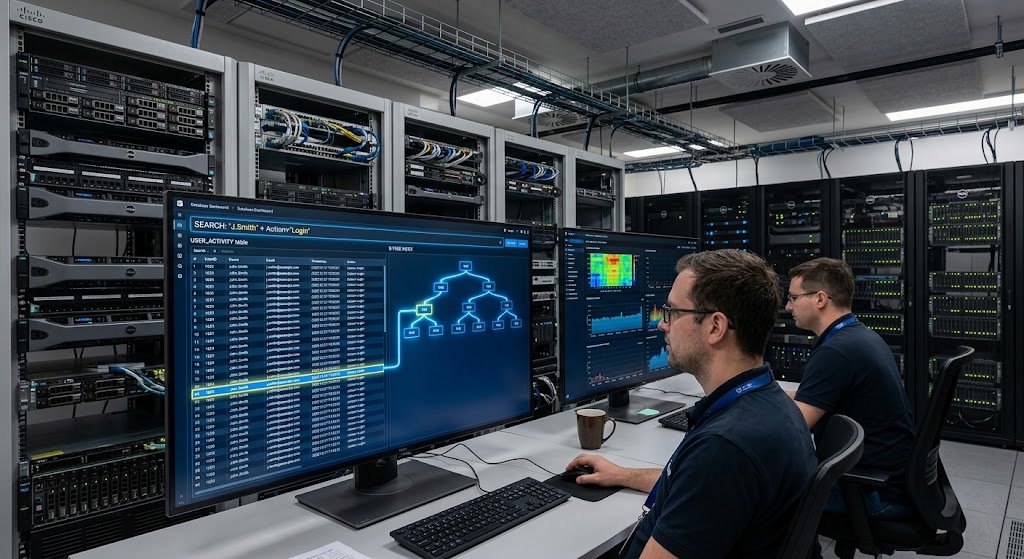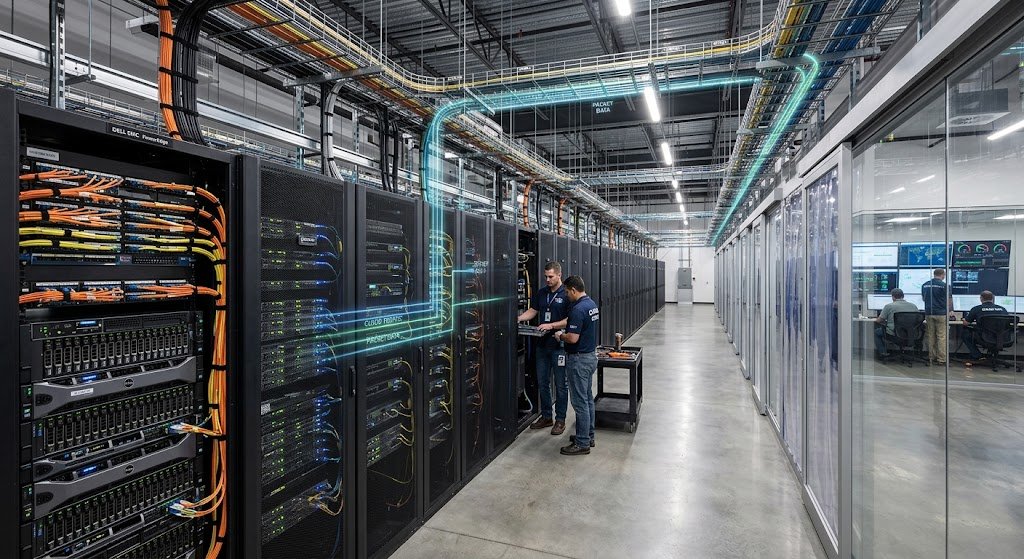
Cloud computing has evolved from a useful method to rent computing resources to one of the most important pillars of contemporary digital technology. Cloud platforms are increasingly relied upon by businesses, schools, governments, developers and individuals to store information, run applications, analyze data, communicate, and offer information and services. Cloud computing isn’t sitting still though. As businesses seek higher performance, security, flexibility, automation, and intelligence from applications, the technology is continually evolving.
However, new concepts like serverless computing, edge computing, containerization, cloud-native development, AI, machine learning and multi-cloud are reshaping how cloud resources are created and deployed. It’s crucial to grasp these changes as more than just shifting files and applications to distant servers, because the future of cloud computing will be defined by them. It will be increasingly based on distributed infrastructure, automated operations, intelligent services and computing resources that can respond dynamically to changing requirements.
The Changing Face of Cloud Computing.
The initial widespread cloud services were mainly for the provision of computing infrastructure and software over the Internet. Organizations would not have to buy hardware to run their systems, but instead could lease processing power, storage, databases, and other resources on the cloud and pay for the amount of services they used. This enabled technology to be more accessible and enabled companies to add or remove resources without having to continually buy new hardware. Cloud computing, however, has evolved into a more comprehensive strategy for the design and operation of digital systems over time. Cloud systems can be used to handle extremely distributed applications, real-time data processing, automated infrastructure management and advanced artificial intelligence workloads. Such a shift is being pushed by the requirements to provide service to users at various locations, with tremendous volumes of data being managed. Consequently, the future cloud is becoming ever more programmable, flexible, distributed, and tightly coupled with other realms of computing.
In another significant shift, organisations are increasingly interested in the capabilities of cloud platforms, instead of just seeing the cloud as a replacement for physical data centres. Now developers can leverage managed databases, application platforms, analytics tools, artificial intelligence services, security systems and automation without having to create all the components. This transition enables development teams to focus more on application development and less on the infrastructure that supports it. Meanwhile, businesses need to make better-informed decisions on architecture, security, budgets, data governance, and reliance on providers. Cloud computing of the future is going to be both technologically innovative and good management practice. Those businesses that have an understanding of how cloud technologies can interact with each other will be best suited to seize new opportunities without added complexity.
Serverless Computing
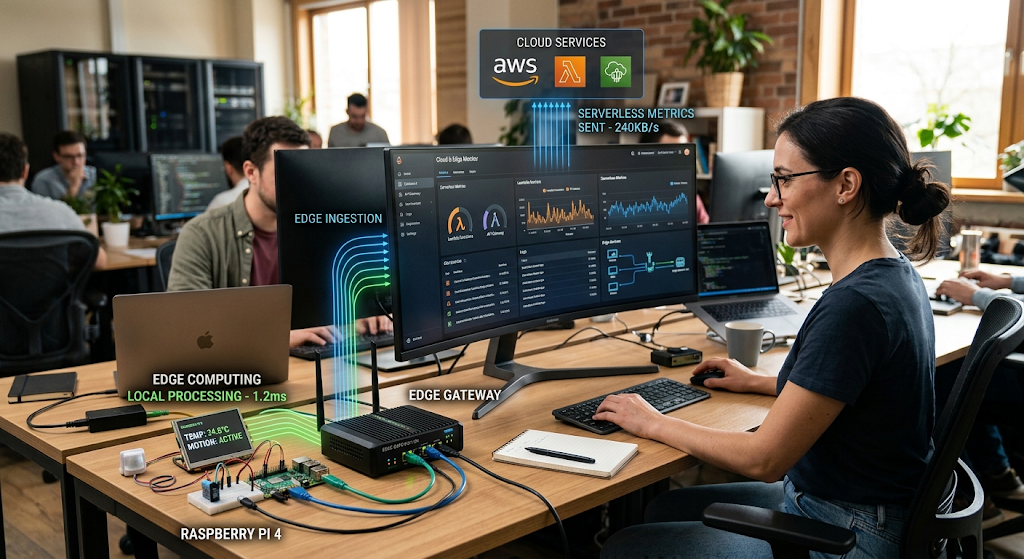
One of the biggest changes in modern-day cloud architecture is serverless computing. In spite of the name, Serversless Computing doesn’t imply that applications run without servers. Rather, the cloud service provider takes care of the underlying servers and infrastructure, with the developer mainly concentrating on the application code and business logic. In a traditional setting, developers or operations teams could be responsible for provisioning servers, configuring operating systems, managing capacity, applying patches and preparing for peak demand times. With serverless architectures, many of these responsibilities are handled by the cloud provider. Applications may run functions in response to an event, like some file being uploaded, an API call, a database update, or another application event. This can help with the deployment and scaling of some workloads to make them easier to use.This can simplify some workloads to deploy and scale as they can be deployed as needed.
As serverless continues to evolve, we can expect to see more advanced managed services in the future and more integration with databases, AI, APIs, and event-driven systems, to name a few. Serverless architectures can help manage the infrastructure footprint for applications with irregular or unpredictable workload, as they do not require the constant operation of servers. Developers can also create applications faster if they can integrate special cloud services instead of developing all the capabilities themselves. Yet not all applications are a good fit for serverless computing. There are still factors to take into account like performance needs, execution restrictions, security, monitoring, cost, and reliance on a specific provider. While serverless may become an architectural staple, rather than a one-size-fits-all solution as cloud platforms evolve.
Edge Computing
The conventional approach to cloud computing has been to transmit data to central data centers to be processed and stored there. Though this model is still very useful, certain uses demand information to be processed much closer to where it is created or utilized. Edge computing is designed to meet this need by moving computing and storage resources near the users, devices, sensors, and other data sources. This can shorten the path information needs must travel, and may help to enhance responsiveness. Edge computing is a key area that is important for systems that need to make decisions quickly and without relying on cloud computing, such as connected devices, industrial systems, smart infrastructure, telecommunications, and others that generate lots of data in real time. Some data processing can be done at or near the edge before selected data is sent to centralized systems, rather than sending all information to a remote central location for processing.
Edge computing and cloud computing, therefore, will develop a stronger connection in the future. It’s unlikely to be a battle between edge and central cloud data centers in the future. Many systems, however, will employ both of these. Edge locations can provide time-sensitive processing, centralized cloud platforms can offer large storage, analytics, machine learning, coordination and long-term management. This distributed strategy is an effective way to deal with the growing number of connected devices and volumes of real-time information. Cloud architectures can be expanded to be spread across geographies as networks get better and Edge infrastructure is managed more easily. Developers will then have to consider where applications will be deployed, where data will be computed, and how various computing sites securely communicate with one another.
Containerization
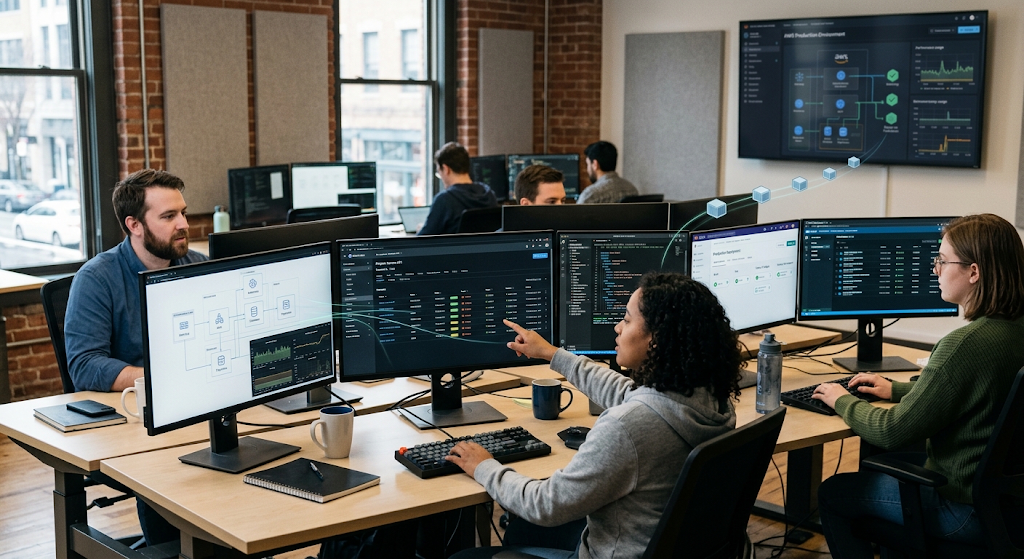
Containerization is a crucial aspect of contemporary software development as it offers a standardized approach to packaging software applications and their associated components. Application code, libraries, configuration requirements, and other elements may be part of a container to enable the application to work. This helps minimize issues with the differences between development, testing and production environments. They’re also fairly light on resources compared to standard virtual machines, enabling organizations to host numerous components of their applications effectively. Container orchestration platforms can then automate processes like deployment, restarting failed workloads, service discovery, and load balancing across available resources. This method has proved to be very useful for building complex applications made up of numerous independent services.
Automated infrastructure management and cloud-native development will continue to be closely tied to containerization in the future. Developers can utilize containers to create portable workloads that can run across a variety of environments from public cloud platforms, private infrastructure, and edge locations. But portability does not mean there are no differences between cloud environments. There can still be dependencies from networking, storage, security, monitoring and provider-specific services. In fact, organisations must integrate containers with good architecture and governance instead of taking the easy route to believing that containers will solve every portability problem. The introduction of cloud environments is becoming more distributed, and container technologies can offer a valuable envelope for packaging and deploying applications consistently across those environments.
Cloud-Native Applications
Cloud-native applications are built to harness the attributes of today’s cloud-based systems. Instead of porting an application from an organization’s data center to a cloud server, a developer can create an application around the concepts of microservices, containers, automated deployment, managed services, elastic scaling, and continuous delivery. These applications are usually created to be flexible and scalable, suitable for a setting with fast-changing needs and infrastructure. Additionally, cloud-native development facilitates teams to automate software delivery and continuously monitor applications. This can help to make it easier for organizations to make improvements more often and to discover and resolve issues earlier.
The trend of cloud native development is driving a shift in the design of future cloud applications—where distributed infrastructure is seen as a key component from the outset. A new application could integrate containers, serverless functions, managed databases, APIs, artificial intelligence services and automated deployment pipelines. Not all of the developers will have to deal with each one since more and more cloud companies provide specialized services for the common tech needs. This ease of use brings about a need for more architectural knowledge. The developers should know the interaction of the services, the flow of data between the components, the handling of failures, and the maintenance of security. Cloud-native development is then not just about the number of cloud services; it’s about creating applications that can leverage the cloud as needed without compromising reliability, security or maintainability.
Artificial Intelligence and Machine Learning
AI and machine learning are poised to be a significant part of the cloud’s future. Advanced machine learning systems can be complex and require significant computing resources, large datasets, and specialized hardware and software environments to train and run. Many of these resources can be accessed by organizations through cloud platforms without them having to invest in and own the required infrastructure. Cloud-based systems are appealing for enterprises aiming to leverage AI, build predictive models, process massive amounts of data, or incorporate intelligent capabilities into applications. Cloud service providers are also creating managed AI and machine learning solutions that can streamline the development of models, data processing, deployment, monitoring and more.
Meanwhile, AI will impact how cloud infrastructure is managed. AI-driven systems help detect anomalies, review performance data, forecast potential issues with infrastructure, optimize resource usage, and aid security monitoring. Machine learning can also be useful to the organizations to gain insight into the trends in resource utilization and make more informed decisions relating to capacity. With the progress of these technologies, cloud platforms can better respond to the requirements of the workloads automatically. However, human oversight will remain necessary as automated systems have the potential to make wrong decisions, or can pose a security, privacy, or reliability issue if not properly configured. However, the future is likely to be about intelligent automation and human expertise working together and not replaceable.
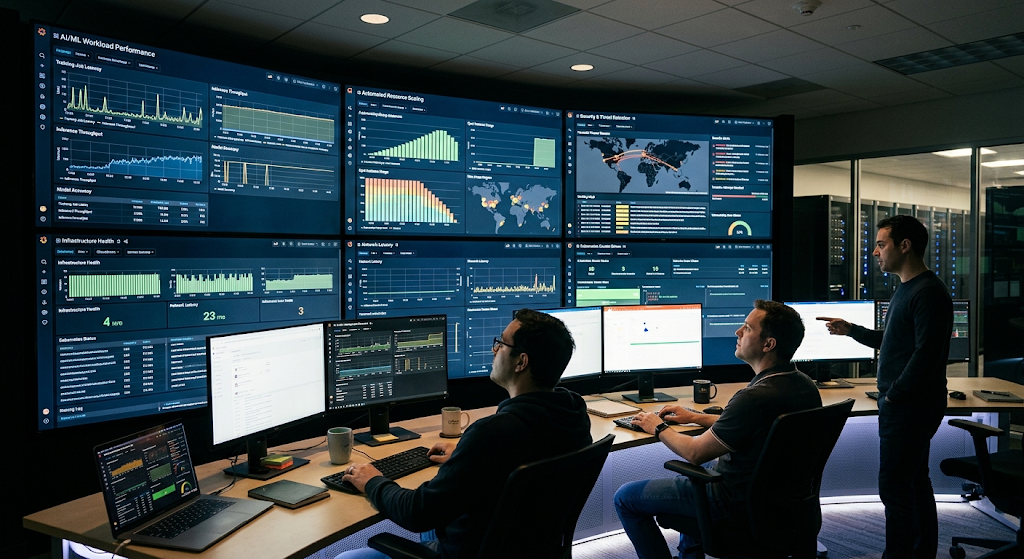
The use of automation is already a key element of today’s cloud environments and it’s expected to grow even more. Keeping track of large cloud infrastructures manually becomes challenging when there are many applications, services, users and resources. Tools can automate the provisioning of infrastructure, deployment of software, application of configurations, monitoring of systems, scaling of workloads, and responding to some operational events. One of the ways in which it can be done is through Infrastructure as Code where the infrastructure configuration is defined in files and managed through repeatable processes. This can help minimize configuration inconsistencies and simplify infrastructure change tracking. Automation can also aid in continuous integration and continuous delivery to enhance the regularity of software testing and release.
The future cloud generation will most likely mix automation and more intelligent decision making. Some systems can assess performance and operational information and suggest or make changes to suit. Automated security systems can detect suspicious activity and take actions as per the policies. Some resource-management systems can scale up and down according to workload patterns. These advances can help to limit repetitive work and enable technical teams to focus on more complicated issues. But automation is not something that should be done in a blind manner as a wrong automated action can impact many of the systems in a very short span of time. Appropriate permissions, monitoring, testing, logging, and human controls around automated processes, are then required to manage the cloud effectively.
Multi-Cloud and Hybrid Strategies
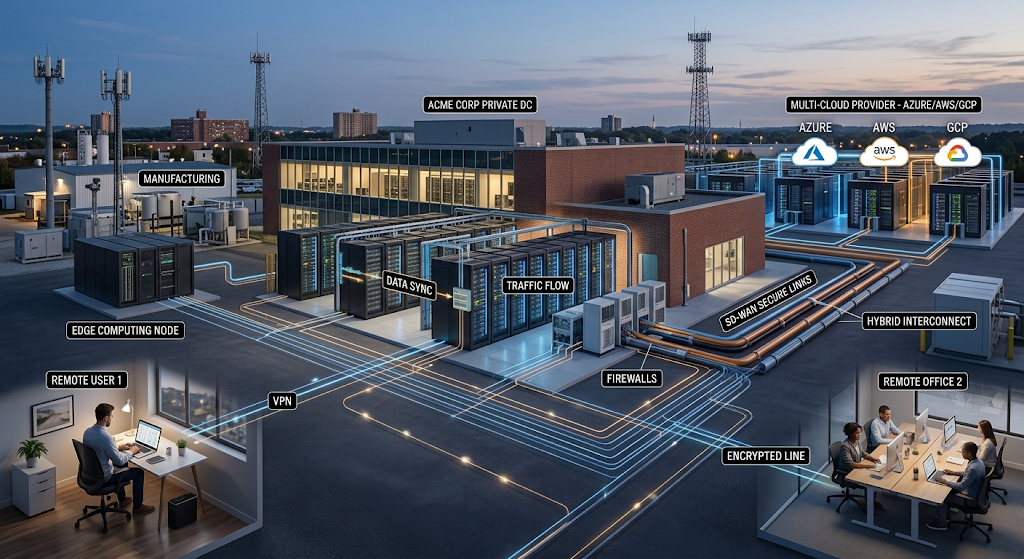
With increasing awareness, organizations realize that they may not always be able to find an environment in the cloud that suits every business or technical need. A multi-cloud approach is the use of services from multiple cloud providers, and a hybrid approach is the use of cloud environments in conjunction with private infrastructure or other computing locations. Some of these choices may be made based on application requirements, regulatory requirements, geographical requirements, resilience, existing investments, or access to a specialized service. One provider may have more interesting machine learning features and another may be more attractive for a specific workload, for instance. However, multi-cloud solutions can offer flexibility, and they can also create a lot of complexity due to the variety of platforms, security models, pricing models, tools, and technical configurations that require management.
Multi-cloud management and interoperability will be the key to the future of multi-cloud computing. Tools that can offer the same view and understanding of apps, data and resources across environments will be necessary for organizations. Security policies will also have to work on various platforms. In some cases, the containerization and cloud-native technologies can help by offering a more consistent application packaging without being the solution for all provider-specific dependencies. A successful multi-cloud approach should start with well-defined business and technical goals, and not just because it’s thought to be more flexible. In many cases, the correct solution will be to purposefully select which workloads go into which environments, and ensure that they are all governed consistently.
Security and Privacy
Security will continue to be one of the most critical issues affecting cloud computing as it advances in its use of critical applications. Cloud’s next generation will be handling more and more valuable information and more and more services that organizations and individuals rely upon every day. This presents opportunities for intruders and the risk of security breaches. Organizations will have to safeguard identities, applications, data, APIs, infrastructure and connected devices, and keep an eye out for suspicious activity. Security strategies will likely be more automated and tightly coupled to cloud development and operations, rather than being considered a separate process after an application is created.
Multi-country, multi-provider, multi-location operations will also have privacy and data governance implications. Teams must know where the data is stored, where the data is being processed, who has access to the data, and how the data is being protected. Data can be processed at multiple sites instead of a single site as edge computing and distributed applications grow in scope. This may complicate governance. To achieve this, it is essential that organisations have robust identity management, encryption, access control, monitoring, secure software development and information handling policies. While speed and capacity are important for cloud computing, it will also rely on making it trustworthy.
Sustainability
As demand for cloud computing grows, it also brings with it the challenges of energy usage and environmental effects. The data centers need power to operate the computers, network, cooling, storage and other infrastructure. The increase in cloud usage and growing demands on AI workloads for computing will make efficient infrastructure even more crucial. Energy-efficient hardware, enhanced cooling systems, renewable power sources, and resource utilization will likely continue to be areas of focus for investment in cloud providers and technology companies. The choice of software architecture can also affect efficiency as less efficient programs can utilize more resources.
Sustainability could be a key criterion in future when organizations consider cloud architectures. You can lower the need for unnecessary resources by scheduling workloads efficiently, auto-scaling them, using them more efficiently, and then smartly managing the resources. Edge computing could be a part of it, too, as it could help cut down on the amount of data that needs to be sent to central points for some workloads, but edge infrastructure costs energy as well. This will vary depending on the application and its needs. Sustainability will then be considered in the wider context of cloud governance — alongside security, cost, performance and reliability.
The Future of Cloud Computing
The future cloud will most likely be more distributed, automated, intelligent, and adaptable than the current cloud environment. Rather than envision the cloud as a group of servers thousands of miles away in a large data center, it’s becoming more helpful to think of cloud computing as a vast array of computing resources, available in a wide variety of locations, including centralized data centers, edge locations, private infrastructure, connected devices, and specialized services. Depending on the performance requirements, the workload, location, security policies and business needs, applications can use different resources automatically. As layers of new services like managed services, containers, serverless functions, APIs, databases, and AI capabilities become available, developers can increasingly build their applications on top of them, without needing to control each and every infrastructure component directly.
These changes will also impact on the roles of technology professionals. Cloud computing in the future isn’t just about building a virtual machine or uploading a file to the cloud; it’s about understanding it. The professionals will have to know application architecture, automation, security, data management, networking, containers, distributed systems, artificial intelligence, and cost optimization. Meanwhile, the general concepts of cloud computing will continue to be relevant. Reliable infrastructure, data security, scalability, governance and responsible resource management will continue to be critical for organizations. These goals will be influenced by new technologies that will change the way they are realised, but they will not make principles of understanding redundant.
Conclusion
Cloud computing is moving from a computing power delivery model from the Internet towards a wide technology platform for the modern digital transformation. The usage of these technologies can help organizations cut down on infrastructure management, deploy processing capabilities closer to users and devices, enhance application portability, and create scalable and flexible software. AI and machine learning continue to enhance capabilities on the cloud and automation has been improving infrastructure and application management. Meanwhile, multi-cloud and hybrid approaches are providing enterprises with more options regarding where workloads and data should run. The developments are a testament to the fact that the future of cloud computing will not be the technology itself, but the manner in which many technologies are used in harmony.
Knowing these trends is beneficial for businesses, developers and technology professionals, as cloud computing will continue to be a key driver of digital innovation for many years to come. Those most benefited from such strategies do not necessarily use all new technologies at a quick pace. Rather, successful adoption of the cloud will rely on the selection of technologies that address meaningful problems, with the proper level of security, reliability, cost control and governance. Cloud will continue to enable the infrastructure and services that allow for the creation of new digital experiences, as computing becomes more distributed and intelligent. The future of it is not just one about moving more workloads online; its future is all about building computing environments that are more responsive, automated, intelligent and are able to support the next generation of digital services.