Introduction
Financial institutions today operate in an environment that is constantly changing with respect to interest rates, market volatility, customer behavior, economic instability, and technology. To be stable and competitive banks and other financial companies must look ahead at what may happen instead of looking only to past financial performance or present market conditions. We see that predictive analytics play a large role in this forward thinking by which it uses past data, statistics, and machine learning to determine what may come to pass and also to recognize potential issues. These reports help financial institutions to predict income, control cash flow, assess credit risk, and plan for economic crises. Also we find that through the analysis of what is present in financial transactions and market indicators institutions are able to put their hands on financial risks as they are just beginning to form before they grow into large scale operational and financial issues. Although the models from predictive analytics do not always give us the exact outcome, it does provide a very useful base for decision making, efficient resource allocation and a better chance of long term success.
Understanding Predictive Analytics in Finance
Predict also known as predictive analytics is the practice of looking at present and past data to determine what will transpire in the future. In finance we see this play out via the use of statistics, math models, data mining, and machine learning which in turn we see play out in the identification of relationships between financial variables and what may be ahead. Banks look at past loan performance, deposit trends, customer spend, interest rates, inflation, and market performance to put together their forecasts. For example a bank may study past withdrawal trends to determine how much cash customers may require at a given time. Also an investment firm may look at past market action and economic indicators to try and determine what may happen to asset prices. What this does is it gives decision makers a look into what may play out and thus they are better prepared to react. Also it is important to note that predictive analytics is different from just reporting on history which is what this practice does.
Predictive Models Used in Financial Forecasting
Statistical and Time Series Models
Statistical models which financial institutions use to determine relationships between variables and to project future performance. For example regression analysis looks at how interest rates, inflation, employment levels and other economic variables play a role in determination of lending demand or investment returns. Time series models which look at data collected over time to identify trends, seasonal changes and regular patterns. Banks may use them to forecast deposits, loan demand, operating expenses, and interest income. For instance it has been seen in the past that withdrawal rates go up around certain holidays which in turn allows the bank to have adequate liquidity. But statistical models also rest on the quality and relevance of their underlying assumptions. Unforeseen political events, sudden economic shocks, or changes in consumer behavior may diminish their accuracy. Financial institutions thus review their models on a regular basis and they also use professional judgment in conjunction with statistical forecasting.
Machine Learning and Predictive Modeling
Machine learning broadens what is possible in forecasting by which it identifies very complex relationships in large data sets. We see these systems looking at thousands of variables and to which conventional methods may turn a blind eye. In credit risk management machine learning models are used to determine the chance that a borrower will default on payment by which they look at income, present debt, payment history, and account activity. Also investment companies use predictive models to determine market trends and to assess how changing portfolio risks play out. As new info comes in some models are updated to reflect that. Also it is a fallacy that complex models are always better than simple ones. We see that poor data choice, over fitting, and change in economic relationships which in turn may produce mis-leading results. That is why financial institutions must test model performance, document assumptions, and have human input to which they may bring perspective to keep predictions relevant and easy to understand.
Predictive Analytics in Finance and Business Forecasting
Cash Flow and Liquidity Management
Effective cash flow projection is what banks use to see into the future of their cash in and out flows. Predictive analytics which we use looks at deposit levels, customer withdrawal trends, loan repayments, payment terms, and borrowing needs in order to put together a picture of what the future cash position will be. Also these forecasts are used by the treasury teams to see if we have enough funds to cover customer withdrawals, to pay off our debts, and to back our lending activities. For instance if a model projects that we will have more withdrawals then normal during an economic down turn we can go over our liquid asset levels and funding strategies before the situation gets worse. Also accurate forecasting is great for not having too much money sit idle when it could be put to productive use. But also what we must do is take into account that there is a degree of uncertainty as customers may react in unanticipated ways to rumors, financial news, or changes in confidence. We still must do regular check- ins and have alternative funding plans in place.
Market Trends and Investment Decisions
Financial markets react to economic indicators, corporate performance reports, investor sentiment, and international events. In that regard predictive analytics which is a tool at the investment managers’ disposal helps to study these elements and put forth it’s thoughts on what we may see in terms of asset prices, market volatility, and investment returns. By looking at what has played out in the past between variables we see that forecasting models are a great support to portfolio allocation, asset selection and risk assessment. For instance an investment manager may use inflation forecasts and interest rate play out to determine how various investments may do in a changing economic environment. Also banks may use market forecasts to study their exposure to foreign exchange, bond prices and interest rate fluctuations. This information supports better strategic decisions but is not to be looked at as a sure fire thing in terms of market direction. We still see unexpected announcements, geopolitical issues, and sudden changes in investor sentiment which cause markets to act out of character from what we have seen in the past.

Predictive Analytics in Financial Risk Management
Credit Risk and Loan Defaults
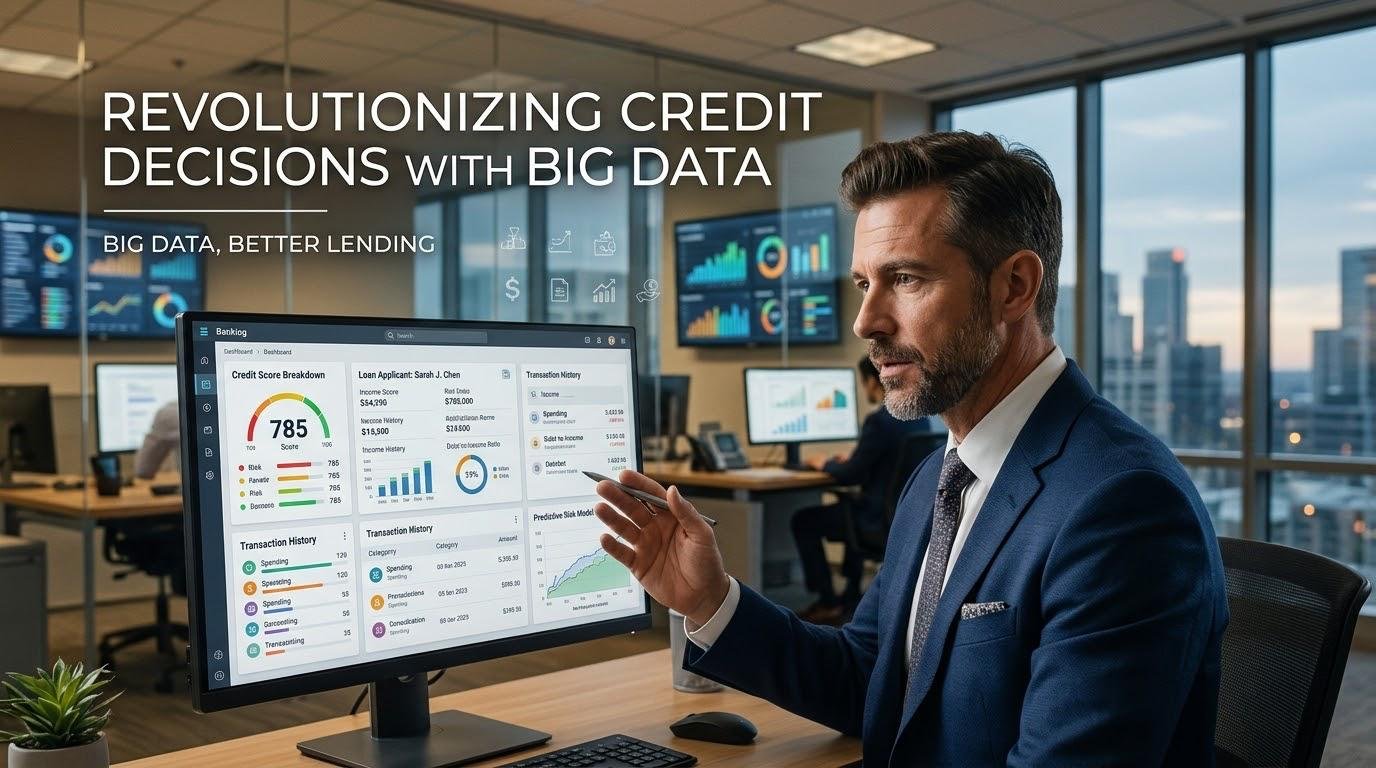
Credit risk is present when borrowers do not live up to their repayment terms. In order to predict this risk which is present in the field, lenders use analytics which in turn study the borrower’s profile, past payment history, income stability, present level of debt, and also other related info. Models put out the chance of default which in turn helps institutions set out right lending parameters, interest rates, and terms. Also we see that early warning systems which pay attention to changes in the financial behavior of the borrowers which in turn point out to increasing issues in payment also play a role in which lenders may give out the right kind of support to at risk borrowers or review their risk exposure. Also these practices may improve the consistency of the process and help in the early identification of which loans may go bad. But it is also very important that credit models be very thought out in their design to avoid unfair discrimination and also to not base decisions on in accurate or improper info. Also lenders should on a regular basis review model results, be able to explain large scale decisions when required, and see to it that auto generated results are in compliance with the relevant regulations.
Stress Testing and Scenario Analysis
Stress testing and scenario analysis are tools which financial institutions use to look at how different economic scenarios play out for their financial health. Instead of putting all eggs in one basket with a single forecast, institutions look at many what if scenarios which include things like rising interest rates, falling property values, higher unemployment, currency devaluation, and increased loan defaults. Scenario analysis looks at how particular events play out for financial performance and stress testing looks at how the institution holds up under very stressful conditions. For example a bank may look at how a recession plays out which in turn plays into what customers will do with their deposits, how they pay back loans, what comes in terms of lending income, and capital adequacy. The results of these analyses inform contingency plans, capital allocation, and changes to lending policies. While we can’t time a crisis to the dot with these exercises, what we can do is bring to light issues that may have gone unnoticed and we can put in place practical solutions before financial pressure really hits.
Real Time Monitoring and Emerging Risks
Financial risks may present at short notice as a result of changes in transactions, customer behavior, and market conditions. We use real time risk monitoring which has access to current info to identify out of the ordinary activity and changes in risk exposure. We have predictive models which put forward warning signs for atypical payment trends, large account withdrawals, sharp rise in loan default rates, or atypical trade activity. Risk teams pay attention to these indicators and react before losses grow larger. For instance an unexpected spike in missed payments from a certain customer group may be a sign of that group’s financial stress. Also we use monitoring tools to look into the root cause of issues and to change our risk assessments. But real time systems also may report false alerts or ignore new types of threats. By combining auto monitoring with human analysis, quality data, and clear reporting lines we improve the value of these systems and support better decision making.
Benefits of Strategic Planning and Resource Allocation
Predictive analytics which in turn improves strategic planning for financial institutions by putting forward what is to be expected in terms of results which in turn they in turn use to set operational priorities. We see that which includes the forecast of lending demand, customer activity, operating costs, and market conditions that in turn allow managers to put in place the right capital, staff, technology, and liquidity. For example a bank which sees that it will have greater demand for small business loans can put in place the right funding and staffing. Also a financial institution that is seeing that it will have higher credit losses may put in which is to say may increase its provisions, reevaluate lending practices or in some way reduce exposure to at risk sectors. Also prediction supports budgeting by which we mean that which allows managers to put forth budgets based on different scenarios. Also these in turn improve planning and help organizations to react faster to change. At the same time though predictions should not take the place of decision making, management must also look at business goals, regulatory issues, customer wants which may not be captured in the models.
Challenges and Limitations of Predictive Analytics
Despite what predictive analytics bring to the table it is also a fact that it has some very serious issues. Data quality is issues we see play out in many ways from partial records to incorrect transactions, from inconsistent reporting to old info which in turn distorts what we project. Also models which are based on past data may have trouble when we see large scale changes in economy or when we get totally new financial products which do not have a history to base the model on. Also we see algorithmic bias which in many cases is a result of past data which may have reflected unfair access to credit and other structural issues. Also very complex models may be hard to break down for managers and regulators which in turn make it hard to see what is behind a certain prediction. Financial institutions should put in place data validation, independent model testing, regular performance reviews, privacy protections, and proper governance. Also they should be comparing what the models predict with how it actually plays out and to have contingency plans. These measures will reduce what we put out which is avoidable but at the same time we must accept that we can’t remove all elements of uncertainty.
Conclusion
Predict in the present and project into the future is what predictive analytics does best in finance and risk management which is its growing importance. Via stats models, machine learning, what may happen in different scenarios, stress testing and real time info analysis, financial institutions are able to see cash flow shifts, determine credit worth of a company, see which way the market is going and also which may be at risk of issues before they happen. These in turn support better management of liquidity, more smart resource allocation, stronger risk management and in the end better informed strategy. At the same time it is important to note that the value of predictive analytics is in the quality of the data used, the models which are put in place, the governance around it and in the constant review of results. While we can’t do away with financial uncertainty and even the best models may break down in a surprise event. By using data based info with professional judgment and putting in place contingency plans for the unexpected, financial institutions can better prepare for what is to come, strengthen their resilience and in the end make more responsible decisions in a very uncertain economic climate.
Get more well researched information about Predictive Analytics in Financial Forecasting here.