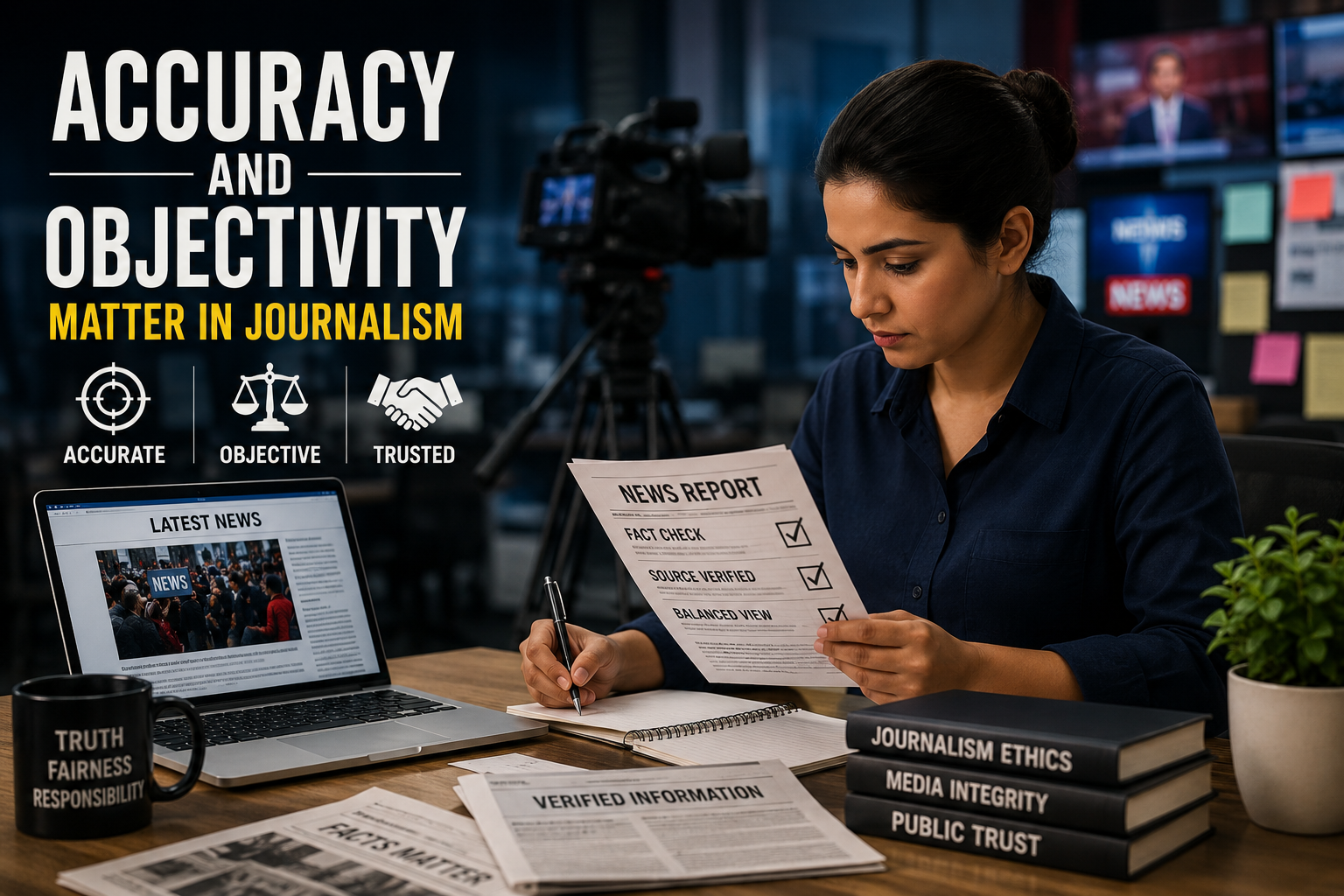
Photojournalism is the border of photography as an art and photography as a fact. Photojournalism requires truth, timing, and emotional accuracy, unlike in general photography where aesthetics tend to come into the limelight. One frame could turn out to be historical evidence, social comment, or even a representation of human strength. Even the most powerful photojournalists simply record the events, but when they identify a moment with an emotional, cultural, or political implication, they capture it in a manner that resonates even better than words.
It involves more than technical expertise of a camera. It requires foresight, tolerance, and human understanding in high-paced settings. There is usually a difference between a typical photograph and a spectacular journal photograph, and that would be a split second. Being able to know when to shut the shutter can be a matter of getting the precise gesture, expression, or interaction that constitutes the bigger story behind the action.
In contemporary journalism, readers are being fed information more than at any other time, and pictures are, in many situations, what make the initial impression before any written report is read. This is the reason why time and context are significant. A shot of a protester who is determined, a child in reaction to a crisis, or a leader in a moment of being down can convey the strata of meaning immediately.
There are numerous classic instances of how the generation of powerful journalistic images can be used, but which have influenced common interpretation of the past since they solidify human reality in the moment. These instances are hardly by accident. They are the outcome of training, practice, and good sense of narrative structure. Understanding how these moments are determined by photojournalists can assist upcoming professionals to enhance their visual storytelling, producing powerful journalistic images, as well as their professionalism in journalism
The Decisive Moment in Photojournalism
The term of the decisive moment is the very moment when all the visual and emotional factors are in perfect harmony to convey the most powerful story. In photojournalism, this may be a facial expression, body language, or engagement between the subject matter that may be something more than what was actually happening. It is the time when the image is more than documentation; it turns out to be interpretation which does not distort the truth. It is also imperative that photographers identify such moments by being aware of what is occurring and why it is important.
This involves learning about the environment, being cognizant of the social dynamics, and being in the mind. Good photojournalists practice to understand the way people behave, and they can predict when such a situation will occur. It is this predictive ability that makes reactive photography and intentional storytelling different.
Another common mistake of many beginners is that they take pictures of what is obvious. Seasoned photojournalists understand that the heart of an event, in most cases, lies at the periphery of the event. At other times, the speech at the podium is not the story, but the response in the audience. At other times, it is not the athlete who crosses the finish line, but the tears which follow right behind. Good journalism photography involves peering behind the scene to capture the emotional reality behind the scene. This has widened the scope of awareness, which enables photographers to do more complete stories that resonate with the viewers on a personal level. The moment of decision is frequently in these obscure areas and awaits a patient observer.
Instructors: The Art of Narration
Reading Human Behavior
The unseen art of every great journalistic picture is observation. Photographers have to research a scene before taking the shot. Emotional tendencies usually guide human behavior, anticipation, reaction, release. The interpretation of these patterns assists photographers to be in the right position when the most significant visual situation is taking place. Indicatively, in political events, there is build-up to announcements. Emotional peaks are usually preceded by critical moments of sports coverage. In times of humanitarian emergencies, the gestures of assistance or helplessness can have a significant impact, manifesting in surprising ways. A trained observer is taught to detect these patterns and be on alert. Observing is not a passive process, but rather an active process of analyzing movement, feeling, and relationships among subjects.
It is also a part of reading human behavior which entails knowledge of body language. Conflict, trust, fear, or connection can be indicated by folded arms, clenched fists, eye contact, or physical distance between persons. These are the non-verbal messages that can be more true than words. When photojournalists learn body language, they are able to get a shot that demonstrates real human emotion. This makes a mere photograph a multi-layered story which viewers can read and experience.
Studying the Environment
There is no existence of a meaningful image in isolation. Context matters. Storytelling is usually reinforced by the visual indications of the environment. An overpopulated refugee camp, a room left vacant post-conflict, a street left destroyed following a demonstration can give the human subject in the frame a necessary meaning. Expert photojournalists would analyse the background as much as the foreground since, in most cases, the background defines the situation. The presentation of environmental information provides pictorial background and a clearer idea to the observer of the action.
Timing is also enhanced with environmental awareness. The photographers will know where the action will occur, and therefore they can be placed strategically. This minimizes the chances of missing out on good compositions and enhances the possibility of capturing good compositions. In journalism that is fast-moving, the most important thing is preparation which is based on observing the environment.
Timing: The Importance of Seconds in Visual Journalism
One of the most significant aspects of photojournalism is timing since reality is ever-changing and immediate. A smile passes away, a hand is shook, a tear is shed. Losing that very fraction of a second may diminish the emotional appeal of the picture. Timing is built up by practice and intuition in the work of professional photojournalists. They are taught to foresee and not to react. This involves observing and anticipating probable events prior to their happening. Opportunity is not by chance; it is preparation that met the opportunity.
The best journalistic images can be those that document a transition of some sort before, in the middle of, or after the main event. Such transitions are emotional due to the authentic reactions displayed. To illustrate, the pre-protest nervousness can be evident in the run-up to the protest. The instant following a win can be exhaustion and relief. These moments of transition usually have a greater narrative content to them than the event itself. Knowing this can make photographers not create expected pictures but concentrate on telling emotional stories.
Context: Photographs to Narratives
Even a picture that looks quite striking can be lost without context. Context gives us reasons as to why a moment is important. Context in journalism encompasses location, event importance, historical context, and relationship between the subject. The crying child may symbolize an innumerable number of stories, but with context added, such as war displacement, family separation, survival in a disaster, the image becomes more understandable and has more emotions. Whenever possible, photojournalists should obtain this context prior to taking the shots.
Journalistic integrity is also safeguarded by context. Contextual images may be misinterpreted or misused by viewers. Conscientious photojournalists would make sure that their work is a true reflection of reality by knowing all the circumstances in which the people they cover are. This usually involves talking to witnesses, studying what has happened, or waiting longer before taking pictures. Powerful context renders pictures more believable and powerful.
Developing Narrative Chronologically
It takes one picture to tell a tale. Occasionally, a series is more eloquent. Photojournalists will get several moments related to each other to form a more complete narrative structure. This may involve setting up shots, emotional close-ups, and aftermath shots. These images collectively take the audience through the event in a more in-depth manner. A sequence offers an introduction, development, and closure, similar to written journalism.
Complexity is maintained with the aid of visual sequencing. Significant events are never easy to handle, and a single frame can simplify things. Photographers create a series of truth to give more and more truth, but also to point out the decisive moments. This will enhance storytelling and editorial value.
The Patience in Seizing the Truth
One of the most important skills in photojournalism, which is least talked about, is patience. Momentous moments are not always to be imposed. In many cases, photographers have to wait, possibly hours, to capture the desired interaction, expression, or occurrence. Patience enables photographers to go beyond superficial pictures and get a genuine human experience. Hurrying regularly leads to a one-dimensional photographic image lacking emotions.
Trust is another quality of patience. In sensitive settings, individuals feel freer with time, and more natural instances come into play. This is necessary, particularly in conflict zones, hospitals, or in personal crisis situations. As subjects become familiar with the photographer, authenticity is enhanced. Patience will allow truth to come its way naturally.
Technical Preparedness in Unforeseen Situations
Technical mastery aids in telling the story by eliminating nervousness. Photojournalists should have mastery of their equipment to enable them to act swiftly when they see the opportunity. You should automatically adjust exposure, focus, and shutter speed. Experimentation is often not an option in unpredictable environments. Technical confidence guarantees that photographers are able to focus on stories rather than environments.
High shutter speeds can be critical to freeze emotional motion, and continuous autofocus keeps things in focus when they move. The quality of spontaneous images is also enhanced with the understanding of natural light and composition. Technical preparedness does not make significant moments, but it makes sure that moments are captured in a clear and effective manner.
Moral in Taking Snapshots
Vulnerability can be a component of meaningful moments, and this poses ethical responsibilities. Photojournalists have to juggle between the interest of the people and human dignity. Not all emotions need to be captured on film, and not all photos need to be printed. Making ethical choices should be sensitive, particularly when the subjects are going through a traumatic event, grief, or danger.
Duty-bound journalists do not exploit. They are seeking the truth, not sensationalism. Ethical photojournalism acknowledges the subject and enlightens people. This equilibrium enhances the confidence between journalists and audiences. Credibility is more crucial in the long term than dramatic imagery.
Conclusion
The path between lens and story is created upon timing, observation, and context. Great photojournalists are not merely eyewitnesses to events, but grasp their subject matter so well that they know which are the truth-revealing moments. By paying close attention, indulging emotions, being patient, and being technologically prepared, they make ordinary scenes into significant visual messages.
These pictures are not just photographs, but a documentation of human experience and history. Capturing meaningful moments goes beyond the aspect of luck and instinct. It is a rigorous method of training, knowledge, and moral accountability. To upcoming photojournalists, learning how to do this is the key to a career that is based on truth and influence. The strength of visual storytelling is one of the most powerful tools of journalism in a world that is driven by images.
Frequently Asked Questions
What makes a photojournalistic image meaningful?
A purposeful photojournalistic image not only captures emotion, context, and truth but does it in a manner that conveys a bigger story. It transcends the image to show more about humanity or social life.
Why is timing important in photojournalism?
Timing enables photographers to document crucial instances that have emotional or storytelling value. Even the slightest delay of one second can alter the story.
How can beginners improve observation skills?
Novices can enhance their skills through learning about human behavior, examining settings, and anticipation in the course of live events or situations in daily life.
Why does context matter in journalism photography?
Context assists the viewer to know the reason why an image is important and avoids misinterpretation. It brings visual storytelling a touch of fact.