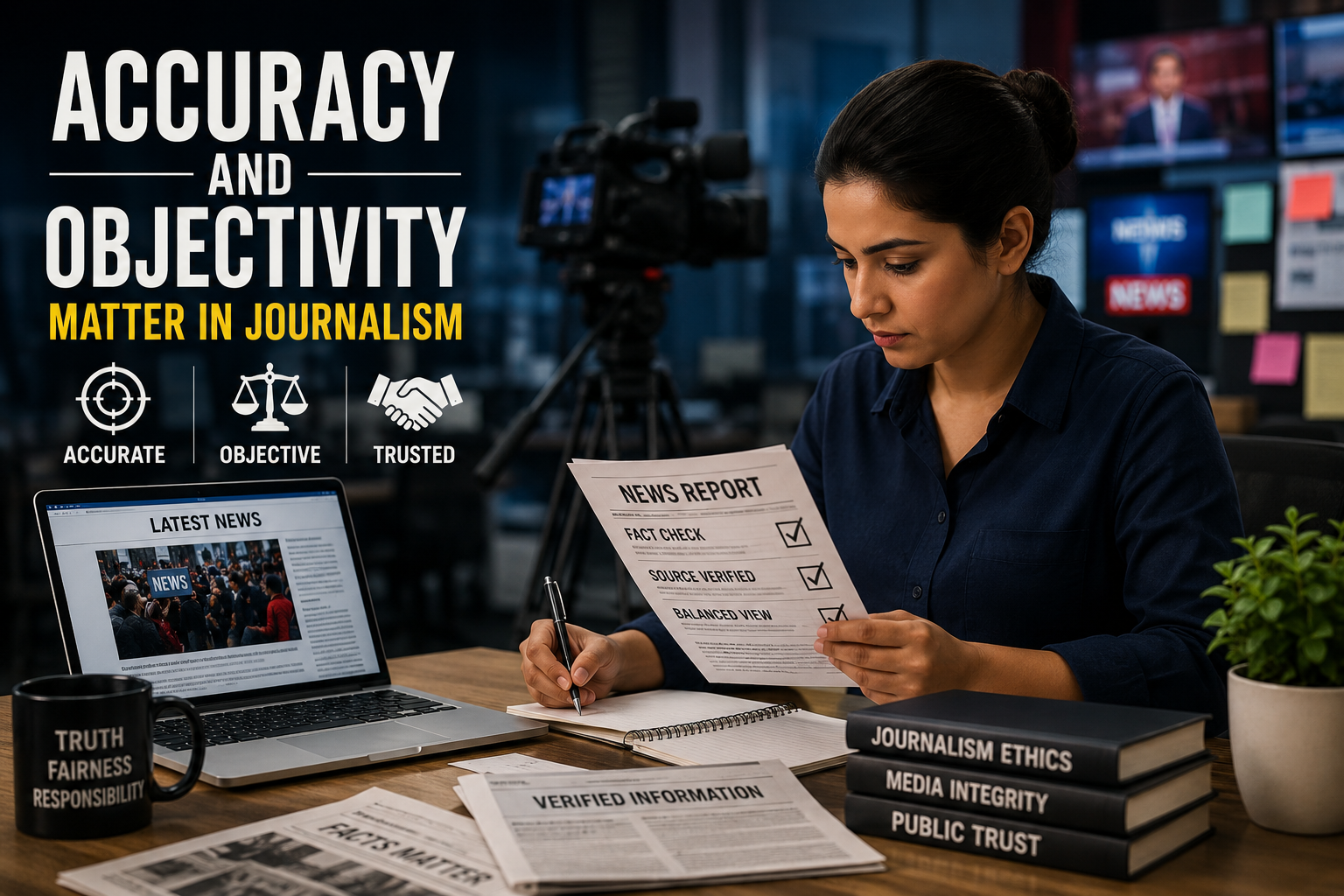
Journalism is one of the most influential media of communication in today’s rapidly evolving digital era, shaping people’s understanding. News reports shape the opinions and behavior of the public and the actions of the community in relation to significant events, and as such, accuracy and objectivity in journalism have become important. Journalists have a duty to report the truth and act with fairness when covering elections, health emergencies, economic matters, and social issues. Otherwise, people can be easily misled, and trust in media institutions can easily diminish.
The ethical responsibilities of journalists extend beyond just information collection and dissemination. Journalists should check the facts, report in a balanced way and refrain from bias or personal or institutional prejudice in their reporting. These duties are the moral underpinnings of professional journalism and a key to maintaining its credibility. Truthfulness, fairness, accountability and responsible conduct should dictate the entire process in reporting.
As the dissemination of misinformation has become more critical than ever, accuracy and objectivity in journalismare basic to public trust and the reliability of the information journalism provides.
The article discusses the importance of accuracy and objectivity, the ethical obligations that journalists must uphold, and the techniques employed to ensure professionalism in today’s journalism.
Understanding Accuracy In News Media
One of the basic tenets of journalism is accuracy. A belief that one should tell the truth and include every detail of a story that is true. Reliable journalism can guide readers towards a reliable understanding of events, and to making the correct decisions based on trustworthy information.
It is far from “no spelling errors or dates incorrect” when it comes to accuracy. It needs to be a disciplined process of collecting, verifying and cross-checking the information before it is published. Journalists will ensure that all names, quotes, statistics and context are thoroughly checked.
The Key Elements of Accurate Reporting
Journalists usually concentrate on the following to ensure that the information they present is accurate:
- Confirming names, titles and locations
- Verifying dates and timeline
- Checking quotes against recordings or notes
- Cross-checking information from more than one source
- Examining official records/documents
Immediately editing and correcting errors after they have appeared in print
One factual error in the whole article can destroy the trustworthiness of the article. The impact of misreporting can be damaging in extreme situations, to people’s reputations, to clarity and to the integrity of the media.
Defining Objectivity in Journalism
Objectivity refers to reporting information fairly and partially, that is, getting the information out without taking it in a biased or forced direction because of personal opinion or outside influences. Though neutrality may be hard to attain, professional journalists should strive to be neutral and to present information in a balanced way.
Objectivity enables readers to make their own interpretations from the facts. Rather than trying to convince the reader to take a certain stance, journalists should give the reader enough accurate information to make a judgment.
Features of Objective Reporting
According to the principles of objective journalism, the following things should be included:
- Neutral and objective vocabulary
- Balanced representation of multiple Viewpoints
- Clear differentiation between facts and opinions
- Treatment of all involved in a fair manner
- Use of ‘neutral’ or ‘sensational’ language is avoided
If a journalist is not objective, they may report what they think they should report and this can shape and change the public opinion.
The Building of Public Trust through Accuracy and Objectivity in Journalism
Trust is a priceless asset that a news organization can earn. Journalists are the source for truthful and balanced information for audiences, particularly in times of uncertainty or crisis.
If the readers regularly get accurate and objective reporting they will come to trust the reliability of a publication. This trust bolsters the very important function of journalism as a public service.
How Trust Benefits Society
Trustworthy journalism serves communities by:
- Promoting citizen engagement in government through information
- Supporting citizens to assess politicians/ policies
- Being able to give reliable advice in emergencies.
- Reducing confusion due to rumours or misinformation
- Promoting accountability of public institutions
In the absence of trust, individuals can seek out unreliable sources on the internet which can make misinformation even more hazardous.
The Ethical Responsibilities of Journalists in Verification of Sources
One of the biggest ethics responsibilities of a journalist is source verification. The reporters have to ensure the content they present is information-giving and there is a reliable and credible source of information. Strong verification practices ensures that reports are not false, as well as shielding the public from misinformation.
Common Source Verification Methods
These are some of the techniques employed by professional journalists:
- Interviewing a number of independent sources
- Checking the record of the government and official documents
- Confirming digital images and video products
- Seeking to substantiate information from witnesses by providing other evidence.
- Determining the reliability and the intentions of sources
- Utilizing professionals in the field when needed
There may be instances in which an anonymous source is required, such as in the case of investigative journalism, but in such instances, other evidence should be provided, if possible. Appropriate source verification is an indication of the ethical obligations of journalists and a sign of respect for truth and accountability.
Consequences of Inaccurate Reporting
If journalists release false information, it could be devastating and have a lasting impact. Small mistakes can decrease people’s trust, and big mistakes can have individual and social consequences.
Common Consequences of Inaccuracy
1. Reputations Damage
Reporting inaccuracies can cause a person to be ruined in his/her employment, home and family life, and reputation in the community.
2. Public Confusion and Panic
Misinformation or exaggeration during the crisis can fuel unnecessary fear or promote negative behaviors.
3. Financial and Legal Consequences
Media outlets could be liable for libel, fines and/or damages when their reporting is inaccurate and results in an actual loss.
4. Credibility Loss
Audiences are unlikely to regain their trust in a news outlet after losing it. These consequences demonstrate why accuracy always comes first over speed and/or sensationalism.
The Dangers of Bias in Journalism
There are numerous ways to have a biased report. It could be manifested in language, in the selection of a source, in the formation of a story or the lack of key context.
Common Forms of Journalistic Bias
- Bias can manifest itself in many ways, such as:
- Political bias
- Cultural bias
- Confirmation bias
- Influence by corporate or advertiser
- Personal ideological bias
Even unintentional bias can be perpetuated and can influence how audiences will view the events even if the intent is not to. Great journalists need to regularly look at their own attitudes and seek advice and comments from the editor to minimise the impact of their own personal biases.
Practical Strategies for Maintaining Accuracy and Objectivity in Journalism
Journalists have special professional practices to maintain the ethical standards and enhance the trustworthiness of their reporting.
Effective Professional Practices
1. Fact-Check Every Detail
All claims, statistics and quotations should be thoroughly checked prior to publishing.
2. Use Different Sources
Separate verification helps to minimise the threat of misinformation and to increase balance.
3. Avoid Emotionally Loaded Language
Neutral language helps maintain objectivity, and leaves room for readers to draw their own conclusions, not from being misled.
4. Differentiate Between News and Opinion
Opinion pieces should always be identified as such so as to be separated from factual reporting.
5. Correct Mistakes Transparently
Quick fixes are a sign of accountability and can restore audiences’ trust.
Daily Habits That Strengthen Ethical Reporting Practices
Journalists can also help themselves to adopt best practices in professional integrity by:
- Having an organized set of notes for reporting
- Recording interviews whenever possible
- Asking follow-up questions
- Regularly read and reviewed ethical guidelines
- Seeking editorial peer review
Ethics of Journalism in the Digital Age
Social media, viral misinformation and the high rate of quick publishing are challenging the modern journalism business.
Unless users are careful, digital platforms can be quick and emotional, instead of thorough. This atmosphere may be conducive to shoddy reporting and sensationalism.
Ethical Issues in Online Journalism
Today’s news makers have to deal with:
- Viral misinformation
- Manipulated videos and Images
- Urgent need to publish
- Audience polarization
- Loss of confidence in traditional institutions
In spite of these problems, ethical journalism is still a vital role in society. The tenets of truth, fairness and accountability don’t change, only the way in which news is delivered through technology.
Why Society Needs Accurate and Objective Journalism
Good, honest and reliable journalism helps to ensure public interest and advance democracy. Citizens should have access to credible information to enable them to be active and responsible citizens.
The Role of Journalism in the Society
Responsible journalism supports:
- Government accountability
- Community safety and awareness
- Transparency in institutions
- Informed political participation
- Social comprehension and discussion
In the absence of reliable news, misinformation can lead to public misinformation and undermine democratic processes.
Conclusion
It is not a choice of standards in journalism, to be accurate and objective, they are important ethical obligations. Journalists can be extremely powerful in shaping public understanding, discussion, and provide a shield for democratic values. That power is always to be exercised in a manner that is truthful, fair and responsible.
Journalism is more than a rapid-fire reporting job, it has ethical duties. They require diligent fact checking, fair reporting and truthful service to the public. Therefore, by maintaining accuracy and objectivity, journalists preserve credibility, builds public trust and strengthen the role of journalism as one of the pillars of society.
Frequently Asked Questions (FAQs)
Is accuracy and objectivity in journalism crucial?
The public must be given a truthful, balanced and reliable information, which only can be provided if the information is accurate and objective. Accurate reporting makes sure that there isn’t any misinformation and objective journalism means that readers could make their own decision based on the facts instead of their own opinion. These values in combination foster a sense of trust and confidence between the media and the community and contribute to the legitimacy of the media.
What are the ethical responsibilities of Journalist?
Ethical responsibilities of journalists are fact checking, maintaining confidentiality of sources if required, reporting fairly, maintaining objectivity, correcting errors in a transparent way, and doing public service journalism. Journalists should report in a manner that is truthful, accountable and fair in all aspects of the reporting process. Ethical guidelines, including ethical responsibilities of journalists, contribute towards high standards in reporting.
How do journalists determine if information they report is accurate?
Journalists check out information using other independent sources, reading official documents, fact checking names and numbers, checking quotes and cross checking eyewitness accounts. A lot of reporters also employ digital verification instruments to validate the validity of images, videos and online content before publishing.
Is it possible to have a completely objective journalism?
It can be challenging to be completely objective as journalists can have their own opinions. But news reporters try their best to be neutral and unbiased in their work, using neutral language, revealing multiple perspectives and distinguishing facts from opinions. The aim is to be impartial and balanced, not neutral.
What are the consequences of the publication of inaccurate information by the media?
Mistakes in reporting may result in a tarnished reputation, confusion, legal ramifications, and a loss of trust in the media. Exaggerating events can affect the results of elections, add to emergency situations of panic, and negatively affect the institutions and individuals involved in the exaggeration. Fact-checking is essential to good reporting, which is why it is so important in journalism.
How does biased journalism impact society?
Biased news coverage can misinform the general population, exacerbate political or social polarization and spread misinformation. Failing to include a balance of fact in favor of opinion within the media could lead to audiences hearing only part of the story or a more distorted one. Objective journalism is beneficial to the development of an informed and balanced society.