
Introduction
Natural Language Processing (NLP) is a division of artificial intelligence which has computers perform, understand, analyze, and produce human language. It is the back end for many of our daily programs which include search engines, email filters, translation services, voice based virtual assistants, chatbots, and content analysis tools. As a person uses the Internet, talks into their device, translates between languages, or puts in a question to an AI assistant what they are seeing is the result of NLP which makes the system’s response relevant.
Human language is complex which is in part due to the fact that words have multiple meanings based on context. For example the word “bank” may mean a financial company or the edge of a water body. In the field of NLP we see the use of computational tools and machine learning to study which words are associated with each other and to recognize patterns which in turn help determine the intended meaning. By looking at how these processes play out we see how machines translate our communication into data which they are able to analyze and use.
What Is Natural Language Processing?
Natural Language Processing is a field which includes elements of artificial intelligence and linguistics as well as machine learning to improve how computers interact with human language. Out of traditional programs which had to be given exact instructions, Natural Language Processing applications are very different; they are able to interpret everyday language, questions, and conversations. Also they are able to put forth which info is important, to sort documents, to translate between languages, to recognize speech, and to generate text.
Natural Language Processing is made up of natural language understanding and natural language generation. In understanding the system breaks down input to determine meaning, intent and the relationship between words. In generation the system puts together readable language in response to a question or instruction. For example a chatbot may look at a customer’s issue, determine the problem, and put forth a solution. While these systems do a great job at producing natural language responses they aren’t always accurate.
How Natural Language Processing Works
NLP systems for the most part take in human language which they then put into a form that computers are able to work with. As per the application at hand we may see text prepared first, broken into smaller elements, that data turned into numbers, we see analysis of patterns and out comes some result. A spam filter may sort an email, a translation application will turn text into another language.
What we see is that the stages do in fact work together, as a unit, although the precise process varies by the task. In speech based apps we see the conversion of audio to text as a first step, while in conversation systems we see the analysis of a message before a reply is generated. Each stage plays a role in the computer’s language processing and in putting out relevant results.
- Tokenization: Dividing Text into Smaller Units.
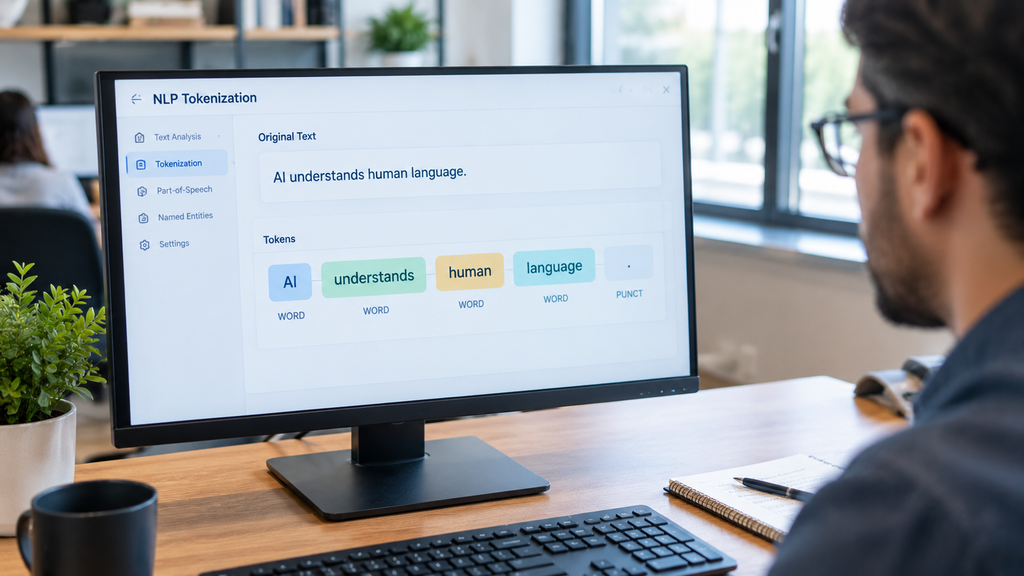
Tokenization is the action of breaking text into what are called tokens. Which may be full words, word parts, or punctuation. For example the sentence “AI understands human language” we put into separate elements which then can be put into numbers for the computer to process.
Today many of the modern language models use subword tokenization which they in turn break down unknown words into smaller elements. This is a handy feature when we are dealing with technical terms, names, and rare expressions. Tokenization is a step which also enables better analysis of text but it does not in itself determine the meaning of a sentence.
- Language Models Understand Context
Language models are trained on large sets of text which in turn informs the patterns they learn. They put this knowledge to use in tasks like question answering, document summarization, translation, and content drafting. Also through their training they develop a sense of the relations between words and what is considered to be “out of the ordinary” in language use.
Many today’s language models use transformer architectures which put into practice attention mechanisms for analysis of token relationships. This improves a model’s ability to use nearby words for context. For example, a post which reports someone’s trip to the bank may cause the model to associate “bank” with a financial institution. Also still these models may at times misinterpret questions or put out wrong info.
- Sentiment Analysis: Recognizing Opinions and Emotions.
Sentiment analysis is an important application of natural language processing that identifies the opinions and emotions expressed in written text, typically classifying them as positive, negative, or neutral. Businesses use sentiment analysis to examine customer reviews, survey responses, and social media posts, helping them identify recurring complaints, understand customer satisfaction, and recognize the features people appreciate most. However, because sarcasm, humor, cultural differences, and context can affect interpretation, automated results should be treated as useful estimates rather than definitive judgments about how a person feels.
More complex systems report out specific emotions like frustration and satisfaction. But with sarcasm, humor and cultural references included, sentiment analysis is a tough task. Thus it is best to look at the automatic results as a first pass approximation of how a person is feeling as opposed to a for sure report of their state of mind.
- Machine Translation: Translating Languages.
Machine translation is a field within NLP which translates text from one language to another at the same time preserving the intent. Translation tools have to consider grammar, word order, idiomatic expressions, and the different ways languages put across ideas. Just translating words individually may result in unnatural or incorrect output.
Today’s neural translation systems learn from sets of different languages’ examples and use what they learn to put out translations. They support international communication, education, and business. But translation accuracy does vary at times, in particular for rare languages, specialized terminology, and cultural references. It is best to have a human review for important documents.
- Speech Recognition: Comprehending what is said out loud.
Speech recognition systems that can identify spoken words and input them as text. We have voice typing, automatic transcription, virtual assistants, and accessibility options to show for that. What happens is the systems take in audio signals and use trained models to determine what was said.
Speech recognition is impacted by background noise, different accents, fast speech, and similar sounding words. Context which we have at times does in fact help sort out some of the issues but error is still a very real thing. To learn more about how speech recognition works and how it allows computers to process the human voice go here.
Speech recognition is a component which at times works in conjunction with other NLP tools. A voice assistant will take a spoken question, turn it into text, determine the intent of the user, find relevant info, and put together a response. Some systems also have speech synthesis which will read that response out loud.
- Text Classification: Gathering Data.
Text classification is a practice of putting text into pre determined categories. In email apps we see it in the form of which messages are tagged as spam, also at times businesses use it to sort out customer emails into groups of complaints, inquiries or feedback. Also news sites are known to classify their articles by topic which in turn helps users to better find what they are looking for.
Another similar process that exists is that of named entity recognition, which notes out people’s names, organizations, locations, and dates. For example a system of NLP can extract a company name and a meeting date from a business document. Also these processes which include large scale text sets’ organization do report some issues of misclassification and error.
- Conversational Systems: How Chatbot Reactions.
Conversational systems use natural language processing to have interaction with users via text or voice. They include customer service chatbots, virtual assistants, and AI which answers questions. Also these systems analyze user input, determine intent, take into account available context, and put forth responses.
Today we see that in Modern Conversational AI language models are used to interpret many different ways in the same question. Also some systems interface with databases or external tools for info retrieval. For example a customer service chatbot which has access to an order database may be able to give out delivery updates as opposed to just what it is programmed with in terms of general language knowledge.
However, in some cases conversational systems may forget early details or give out wrong info. Their performance is a function of the quality of their models, the data they have access to, and how well they interpret the user’s requests.
Everyday Applications of Natural Language Processing
NLP is present in many digital services. Search engines which use language processing technologies to understand search queries and to put out relevant results. In email we see NLP in the form of spam filtering, predictive text and suggested replies. Also we have translation tools which break down language barriers and voice assistants which combine speech recognition with language interpretation to answer verbal commands.
Businesses also use natural language processing to analyze customer feedback, summarize documents, extract information, and identify common questions. By combining NLP with text mining techniques, organizations can identify patterns across large collections of reviews, emails, and reports. These insights can help businesses organize information, recognize recurring issues, and reduce repetitive work while processing large amounts of text more efficiently.
Challenges and Limitations of NLP

Human language is a challenge for machines to handle as it is very much a product of context, culture, tone, and individual expression. Issues like sarcasm, jargon, ambiguous word choice, and different dialects can play into making NLP systems’ work very hard. Also we see that at times which models’ training sets do not include enough of a given language’s features or topics in which they are to perform which also causes issues.
Other issues are privacy, bias, computing cost, and reliability. We see that what models present as fact may in fact be faulty and at the same time some classifiers are putting forth non important things of great import. Also it is the job of the developer to determine performance, secure private info, and have human input in which large scale errors play out.
The Future of Natural Language Processing
NLP is growing as we see greater model capability in terms of document processing, support for multiple languages, and performance in complex tasks. We may also see in the future a combination of language processing with speech, document retrieval, databases and other tools which in turn will provide better assistance.
Progress also does not live in natural sounding responses alone. What we have in terms of reliable info, privacy protection, effective evaluation, and responsible deployment is still very much what we require. In applications which value accuracy and accountableness human oversight will continue to be a key element.
Conclusion
Natural Language Processing is the field which makes AI systems able to work with human language through processes like tokenization, language modeling, sentiment analysis, translation, speech recognition, and text classification. We see these processes in applications like search engines, email filters, translation tools, voice assistants, chatbots, and content analysis software.
Although we have seen great progress in the field of NLP which has improved our interaction with computers we still see that there is work to be done on issues related to context, ambiguity, bias, and accuracy. Also by familiarizing ourselves with how NLP works which aspects of this technology to improve and — in what ways it is still flawed, as AI transforms the way people interface with tech.