Introduction
It has developed from the era of the old-fashioned institutional foreign exchange market, where most currency transactions were conducted via the telephone, to the present-day extremely interconnected electronic network, in which currency prices and orders can change in a matter of seconds, between participants. This has enabled traders, brokers, banks, liquidity providers, and other market participants to communicate and route orders using advanced communication and order-routing technology. The foreign exchange market is not a single exchange and therefore, it is crucial to understand the infrastructure it operates under. However, the foreign exchange market is decentralized and global, and consists of multiple participants and electronic markets spread across the globe that collectively makes foreign exchange liquid. Technology is thus seen as a major factor in the way that prices are received, orders are passed and trades are ultimately executed.
Electronic Communication in Forex
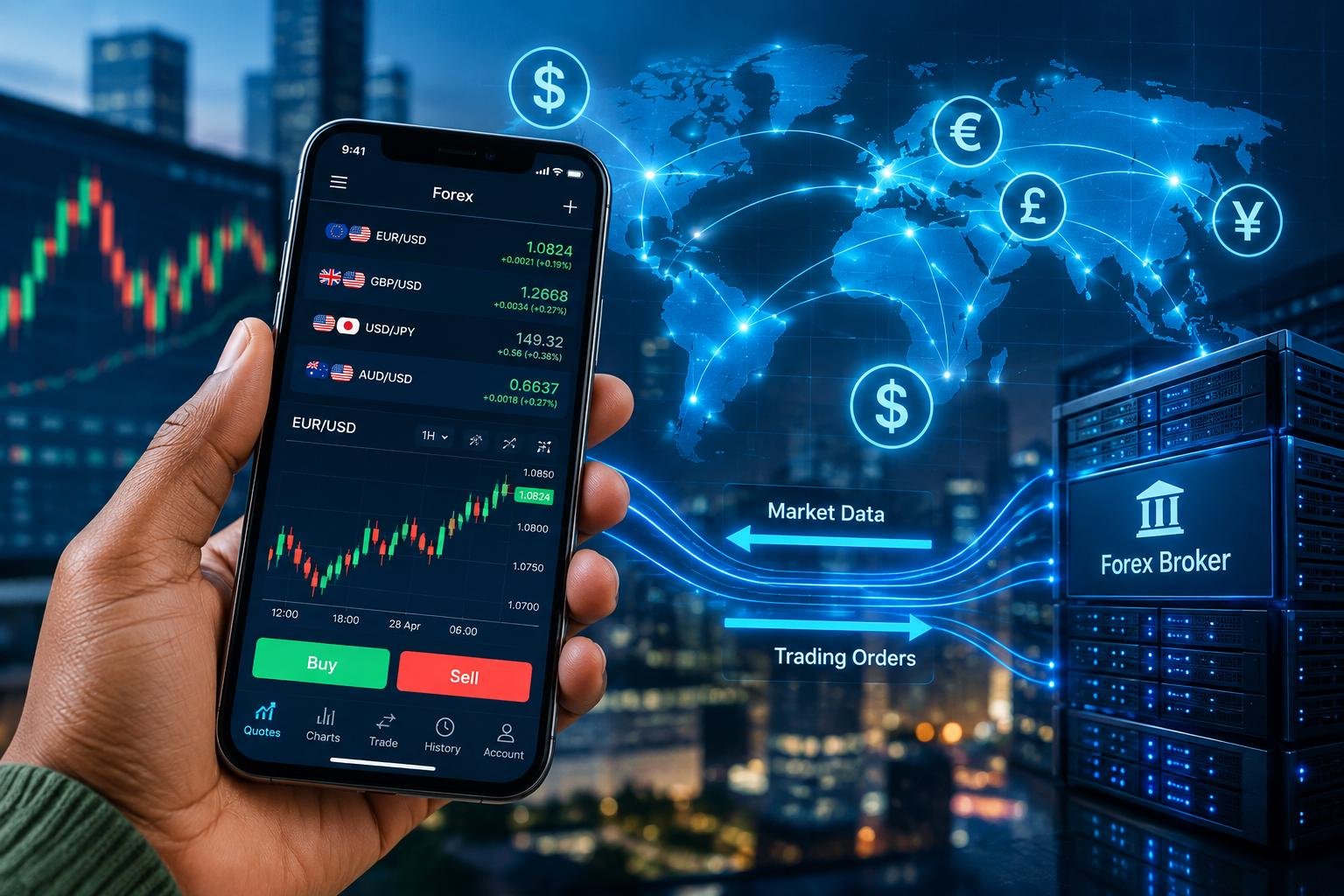
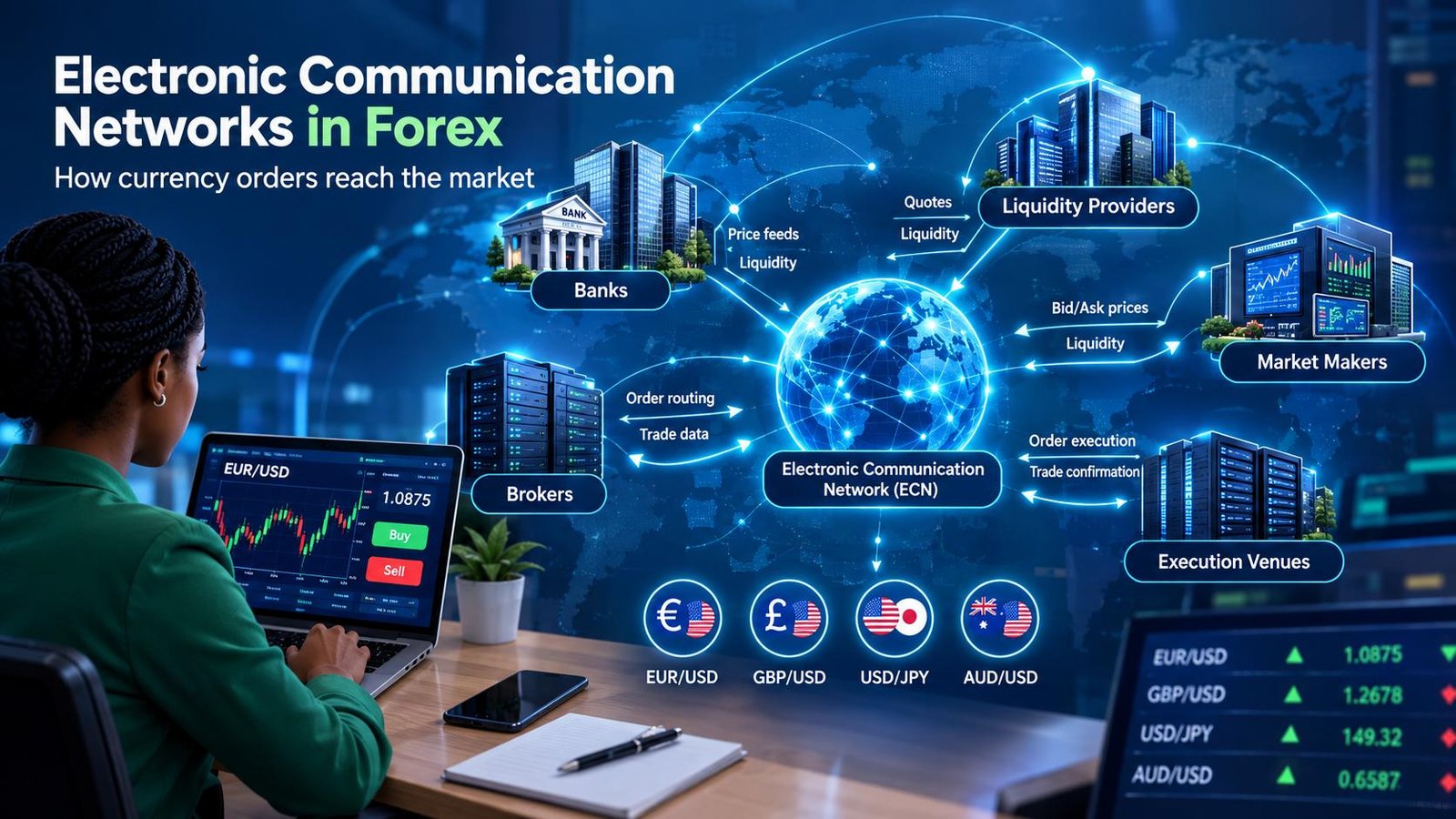
In the context of trading foreign exchange, electronic communication is the technology that is utilized to send out information about the market and trading instructions to those involved in trading. Several technical processes occur when a trader opens a trading application and observes an evolving EUR/USD price. The banks, non-bank financial institutions, market makers, liquidity providers and electronic trading venues might provide price information prior to processing and it being displayed on the broker’s platform. Once the trader places an order, the instruction goes through the trader’s broker’s technology to an execution venue or liquidity source. These instructions are processed by servers, communication protocols, pricing systems, order-management systems and network connections. The performance of these systems can, therefore, impact on the speed and dependability at which a broker is able to provide prices and execute buy/sell orders.
Foxes are not the same as a regular stock exchange, as there is not a central exchange where all the currency orders are made. The various participants can join each other via electronic communication networks, interdealer platforms, bank trading systems, broker networks and other electronic market access. An electronic communication network can link up buying and selling interest from different sources and have orders and prices interact electronically. The term may be used to refer to various configurations, however, depending on the provider and market structure. Some systems offer direct access to various liquidity sources; others serve as a part of a broker’s execution platform. The underlying principle is that the use of electronic communication reduces the need to intervene manually and enables the speedy transmission of information regarding the market and the orders of the factors involved across geographical distances.
Electronic Order Routing and the Brokers’ Function
Electronic order routing is the mechanism by which the trader’s order gets from the trading platform to a source of liquidity or execution. If the trader places a research buy order into a forex application, what is the risk to his account? If a trader has placed a research buy order in a forex application, what are the dangers to his account? The teaching is not just contained within the application. It is sent to the broker’s trading servers where the order is validated, executed, and sent to the appropriate liquidity arrangements available to the broker that is consistent with the broker’s model. Depending on the specific arrangement, the broker may place the order with one or more liquidity provider, an electronic communication venue, an internal dealing system, or other execution system. The technology has to manage info like currency pair, direction of the order, the size of the trade, the kind of the order, and the requested price. Automated routing enables this process to happen quickly, and without having to manually forward each individual order, which a human employee would be required to do.
Brokers play a crucial role between numerous retail traders and the larger forex liquidity network. The electronic trading platform provides the customer with the interface where he sees the prices and issues orders, while the broker offers the technological and financial infrastructure through which the customer’s interface is connected to the available sources of execution. Each broker has their own specific set-up. Some brokers might be more of an order booking agent that forwards trades to, for example, external liquidity providers, and other brokers might have in-house technology that allows them to execute some of their customer’s orders. A broker may be able to mix execution strategies. This implies that two platforms of similar services for currencies may treat orders from the customers in different technological and liquidity ways. This is useful when assessing how an order gets from the trading screen, as it is a useful way to understand the broker’s execution model.

Liquidity and the Price of the Currency
A liquidity provider is a firm or institution that offers a set of prices at which a particular currency can be sold or purchased. The institutional forex market consists of large financial institutions, mainly banks, but also non-bank financial institutions and specialized market makers in the modern market. The liquidity provider can electronically provide bid and ask prices to a broker or trading venue. The prices are indicative of what the provider is willing to deal at for a specific currency pair under specified conditions. Brokers can access several sources to get a wider perspective of available liquidity as different providers often provide different prices and quantities of liquidity. The resulting network enables the currency pricing to be continually updated as market conditions, order flow, liquidity, risk positions, etc. evolve.
One of the most critical aspects of liquidity is that a currency order must have a counterparty that is willing to trade. One currency pair that is a very liquid pair might have many price quotes and a lot of activity in trading, while the less liquid currency pairs might not have as many quotes and/or the buying and selling price may be more spread out. This liquidity is transmitted and processed using electronic systems, which enable the receipt of price streams from various providers and subsequently provide the trading platforms with them. Having multiple connections, however, does not ensure that all the orders will be filled at the quoted price or filled at the level that is quoted. Liquidities, i.e. available quotations, can be highly volatile, especially on large economic announcements, in times of major economic volatility or when the attitude of market participants to quote is lowered.
Price Aggregation and Spread
Another crucial function included in electronic forex infrastructure is price aggregation. The broker or trading technology provider could get price feeds from multiple liquidity sources at the same time. Software can take all of these quotes and put them together into a price stream for customers. For instance, one provider may be willing to provide a specific bid, another provider may be willing to provide a more competitive bid and a third provider may be willing to provide a more competitive bid. These prices and quantities can be assessed by an aggregation system prior to offering a market view. This process may enhance ease of access to liquidity available, as trading does not necessarily depend on a single trader’s quote.
The spread is the difference between the bids and ask price and is a crucial component of the cost of forex trading. Spreads offered by a broker may be influenced by electronic communication and competition among the liquidity sources. If multiple providers are bidding a specific currency pair, then the price of a currency pair may fluctuate with other providers, which can result in smaller spreads that are visible. If periods of low liquidity or increased uncertainty occur, spreads may change as providers may change prices and quantities available. Traders need to be aware that the spread may not be permanent, and that when a pair is displayed on the chart, it does not necessarily mean that it will remain on the chart all the time. This will depend on market conditions, liquidity, volume of trade and the pricing and execution agreements of the broker.
Methodology for Executing Forex Orders
After an order is directed to an execution source the system should decide if the order can be executed. Execution means to coordinate the order with the liquidity that is available in the specified trading conditions. A market order will place it at the most convenient price available in the exchange or system at the time of placing the order while a limit order will place it at a price that is required. There are other order types which may have further instructions. These conditions are automatically processed by electronic execution systems and provide information about the status back to the broker and trader. It can occur very rapidly, but the price at which it is executed may vary from the price you see when you place an order, as the price of the currency and available liquidity can fluctuate continually.
Slippage is one of the most important terms relating to electronic execution. Slippage is when the actual price of the trade is different from what was hoped for / seen when trading the order. It can happen either way around based on market conditions and execution mechanism. When the market is moving quickly, the liquidity of a security at a given price may be exhausted before the order can be executed at that price. For a larger order, there is the possibility that it may be partially matched at a number of different prices instead of being matched at a single price. Execution may be impacted by network delays, server processing, volatility and liquidity fluctuations. This results in faster and more automated trading, yet without reducing the basic market risk of price fluctuation and illiquidity.
Types of Access for The Forex Markets
There are a number of ways to enter the Forex market and it’s essential to differentiate between them to understand how orders get to the market. Retail traders typically trade on currency markets via currency brokers that offer trading platforms and facilitate trading by linking customers to the market via their own technological network. Institutional participants could be able to use interdealer systems, bank platforms, electronic communication networks or specific institutional trading venues. A few trades go directly to the banks, others to multi-dealer platforms that enable them to compare prices from multiple banks. There are various variations of these arrangements in terms of how many liquidity sources they offer, how they price orders, order size, execution methods, and who can be connected to the arrangement.
The other difference is that some brokers have only a few customer orders that are routed externally while others route most of them externally. In the case of an external routing, customer orders can be routed to liquidity providers or execution venues. An internalized deal may be a broker matching some customer trades against other customer trades or the broker’s dealing operation. These can be mixed with each other. The differences are not a guarantee of the same experience for all traders, as execution quality is dependent on technology, liquidity arrangements, characteristics of orders, market conditions and broker practices. For traders, it’s important to review the execution data and conditions offered by their broker rather than assuming it is the same on all forex platforms.
Connectivity, Servers, and Network Infrastructure
Electronic Forex Communication is actually a network of servers and communication links that enable the swift and dependable transmission of information. Trading platforms are connected to broker servers and broker systems are connected to liquidity providers, banks, aggregators, or other execution venues. Physical separation of servers can be a factor as data needs to be sent from one location to another before an order is placed. Hence, financial technology service providers might rely on data centers and dedicated connectivity to minimize delays in the network. Infrastructure with low latency can be especially relevant for institutions that see high transaction volumes or strategies that rely heavily on quick transactions. Despite this, the speed of the network is just part of the jigsaw. The overall liquidity, execution and order handling, software design, risk management and execution policies also impact the trading experience.
Electronic systems need to be functional as well when the market is in a high-speed state. Monitoring systems, backup infrastructure, authentication measures, risk management and redundant technology are all used by brokers and liquidity providers to ensure continuous operation. A technical outage can keep traders from getting real-time prices or placing trades, and a problem might occur between a broker and a liquidity provider and impact order routing. Forex is open around the world with different time zones and usually trades around the clock during a normal trading week without breaks, requiring infrastructure to accommodate participants from various regions and varying trading volumes. Reliability is thus as crucial as speed and pricing are to market access when it concerns electronics.
Conclusion
Electronic communication is crucial in the modern-day forex market as traders are spread across the globe and trading currencies requires vast amounts of information which is constantly changing. In the absence of participants having to physically be on one exchange, price feeds, order-routing systems, liquidity aggregators, trading servers, execution engines and communication networks connect various components of the market. Much of this infrastructure is packaged up within a trading application, and only accessible to retail traders. The processes can start with a few interlinked technological systems and a click of a finger on a smartphone or desktop platform before an order is sent to an execution source and a result sent back to the customer.
When dealing in these types of assets, traders should be aware of this infrastructure to help interpret what occurs in between the order being placed and the confirmation received. Numbers aren’t just numbers on a screen they’re a component of a bigger system with pricing sources, liquidity providers, technology systems, and execution arrangements. The spread shown may change at any time, as may the liquidity and/or execution prices. Although forex trading is quicker and more automated thanks to electronic communication, it hasn’t changed the essential qualities of a decentralized market. The technology now joins in an efficient manner, and the liquidity of the market, the conditions under which orders are executed and the characteristics of the orders remain the criteria for the individual currency orders.
Get more well researched information about Electronic Communication Networks in Forex here.