Introduction
The entire real estate investment process from discovery to evaluation and to get involved in real estate investments has been revolutionized by the technology. In the old days, substantial amounts of funds were needed to invest in real estate particularly research and time to make a real estate deal. Real Estate Investment Trusts (REITs) have already opened real estate to investors, by allowing them to invest in shares of companies that hold or invest in income-producing real estate. This has been extended by digital platforms with the inclusion of information on investments, investment and trading services and tools for investment portfolios on the internet, immensely expanding this accessibility. They can learn about REITs, compare investment options, and monitor investments using online brokerage platforms, mobile investment apps, tools that can be accessed online for research and interactive dashboard apps. When it’s easy to get a hold of, however, there’s none of the volatility or uncertainty that exists in the financial markets nor the lack of research. It’s important to be aware of the opportunities and constraints of digital REIT investing to ensure that you make informed investment decisions.
Digital Realty Trust (REIT) Investment
Digital REIT investing involves research and analysis, acquisition, management and monitoring REIT investments online and by computer, rather than paper and pen. Normally public traded REIT’s can be purchased and sold via brokerage accounts just as other publicly traded companies. This allows investors to invest across the different types of property such as residential buildings, healthcare facilities, shopping centres, offices, industrial warehouses and data centres, without having to purchase a property. Digital Investment Services make the process of investing much easier by gathering all the facts and figures; financial reports, and offer a range of transaction facilities. However, REITs are an investment in a company or trust and not in a particular property. It’s important for investors to know the business model, financial status, asset mix and distribution strategy of the REIT before they invest.
Investing and Online Brokerage Platforms
Online brokerage sites have come to play a major role in providing individual investors with access to REITs. These services enable users who are eligible to open investment accounts, to find listed securities, to view prices and submit purchase and sell orders electronically. Some platforms also offer company profiles, historical price charts, dividend data and financial data that enable investors to compare the various REITs. Instead of going to the bank or other conventional investor services, an investor can get a lot of services on a computer or a smart phone. Some brokers provide educational materials and screening tools that can be used to look for REITs based on market cap, dividend yield, sector or other financial attributes. The securities, fees, account criteria and investor protections vary among providers and countries, however. Before opening an account, investors must check the regulation, transaction fees and availability of access to their preferred markets.
Conducting Investment Tasks via Mobile Apps
Mobile investing applications have made it simpler for individuals to invest in REITs, permitting customers to log in to their accounts from basically anywhere with a solid web connection. The applications allow investors to access the market, the balance of their accounts, confirm transactions, and track dividend payments (if supported). Alerts may inform the user of important price changes, corporate news or other events that impact the securities followed by the user. Other applications also provide learning resources for beginners, including an explanation of dividend yield, diversification and market capitalization. Such characteristics may make investment information easier to come by and even get people to keep a closer eye on their investments. But convenience can also be a bad thing, resulting in emotional short-term trading when the price moves or when there are constant alerts. A mobile application should, therefore, be considered an investment management tool, but not a replacement for financial planning, independent investment research or knowledge of the risks pertaining to REIT securities.
How to Effectively Use Digital Data Analysis to Evaluate REITs
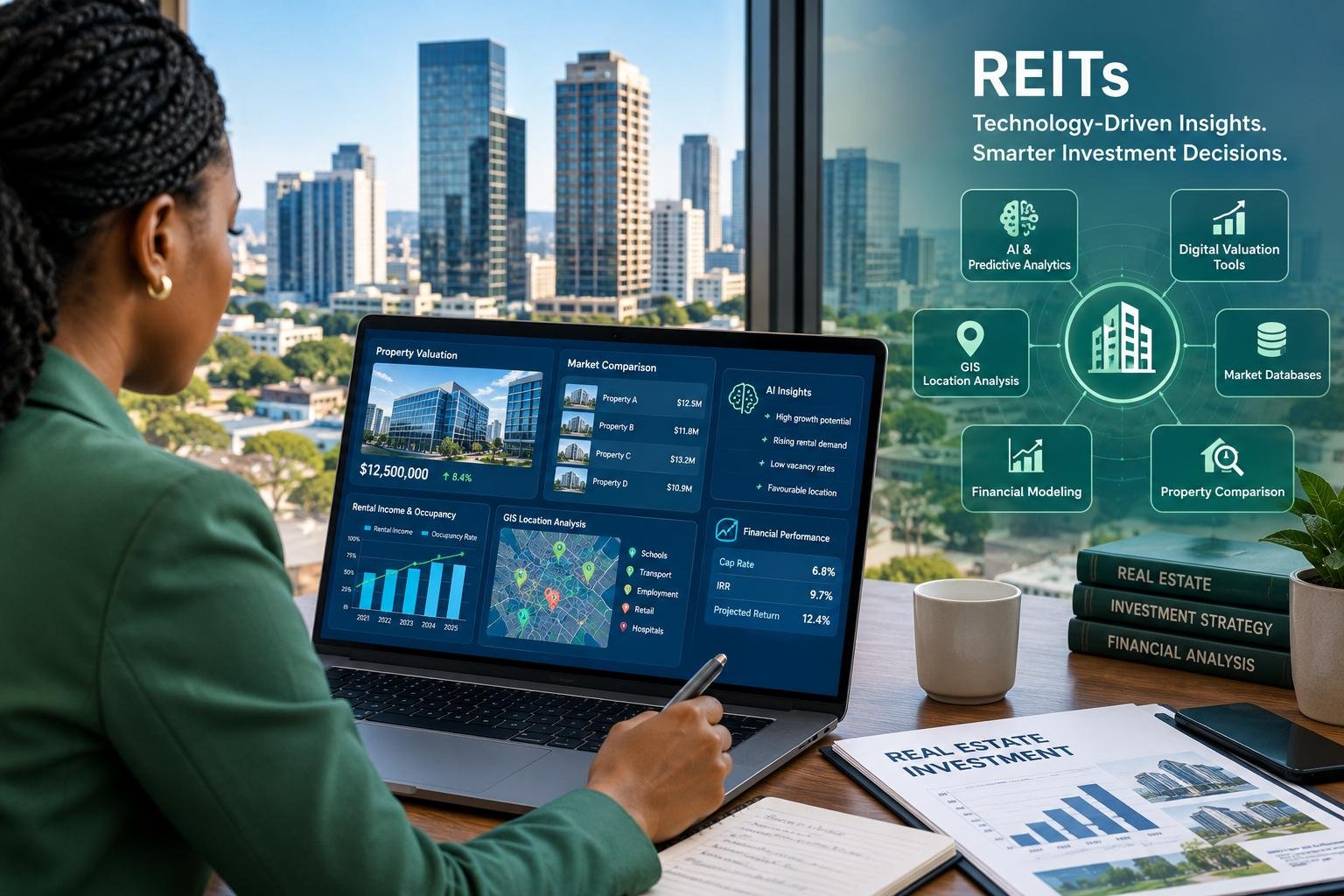
Digital research tools enable investors to analyze REIT performance with data that may take a lot of time to gather and organize. Revenue, operating expenses, debt, occupancy, property type, and dividend distributions are among the types of information that can be found through financial websites, brokerage research sections, company investor relations pages and market databases. To shortlist a large list of securities based on certain criteria and to compare companies that follow a similar property space, investors can utilize screening apparatus. For instance, investors who are interested in industrial property can look at warehouse REITs and see how well they’re doing, where they are located, how many tenants they have in each, and what they owe on. Some platforms even offer analyst comments and historical information which can help you understand the current market trends. However, research tools may be subject to error in information, in recording or estimates based on assumptions. Investors should verify critical figures with the official financial statements and regulatory disclosures, rather than relying on summaries or analysts’ opinions on the platform as a sure sign of future gains.
Automated Portfolio Tracking and Performance Monitoring
An automated portfolio tracking system allows investors to track their REIT investments without having to make every transaction or track every performance measure manually. Depending on the platform, tracking systems give investors insight into their investments’ value, share price fluctuations, dividend earnings, asset allocation, and portfolio performance. Other tools use data from multiple investments to give a more comprehensive understanding of investment exposure. This can be useful to investors to determine if their portfolios are exposed to any one sector, company or geographic market. For example, an investor who has a strong concentration in the office REIT space might consider looking at how the workplace landscape and commercial property demand are evolving. Automated tracking can also ease recordkeeping and help to facilitate regular portfolio reviews. But, unless taxes, transaction costs, currency movement or inflation are explicitly included, displayed returns may not fully account for taxes, transaction costs, currency movement or inflation. It’s important for investors to know how the numbers are determined and compare their portfolio with their financial objectives.

Significance of Electronic Disclosure and Access to Reliable Information
Electronic disclosures have enhanced the process by which investors get crucial information on REITs. Publicly traded companies report to shareholders via investment relations websites and by electronically filing financial statements, annual reports, quarterly results, material announcements, and other documents with the authorities. These resources enable individuals to review information regarding property portfolios, debt commitments, operating performance, management decisions and risk without having to accept all the information on the face value. Electronic documents can also be searched, downloaded from the internet and compared over time to show investors if a business has improved or deteriorated over time. Depending on disclosure requirements and reporting practices, details about the dividend, such as the dividend announcement, and any corporate updates may be available online shortly after the dividend is made public. But just because an electronic document exists, doesn’t mean that its implications will be clear to an investor, and information will be available on every platform as quickly as possible. The reading, verification of publication date and analysis of historical versus forward-looking results are still key components of responsible investing research.
Financial Decision Making and Investor Dashboards
Investor dashboards present crucial information about the account and markets in a graphical representation, enabling more convenient monitoring and comparison. All of these attributes, including holdings, portfolio allocation, investment returns, dividend history, transaction records and selected market indicators, can be displayed on a single screen on a dashboard. Some services enable the users to tailor the information to reflect their investment interests or financial goals. This can aid in the evaluation of whether the investor’s REIT portfolio still meets the income (return), growth and risk mix the investor is looking for. For instance, if there is a dashboard breakdown of the investments by property sector, it can show if there is too much reliance on one section of the real estate market. It may be beneficial for novices to be able to see the differences from performance in visual summaries before going through separate documents. However, dashboards can reduce data to its bare essentials and can be misleading if they do not include information on debt, property valuations, liquidity or management quality. Investors should always take a look at dashboards as a beginning, and then review detailed financial reports prior to making major decisions.
Drawbacks and Dangers of Digital REITs Investments.
Digital platforms lower the barriers to accessing investment information, but do not eliminate the risk of real estate securities. Share prices of REITs can vary for a number of reasons including changes in interest rates, the overall economy, investor confidence, real estate market performance and company-specific news. Higher interest rates can make it more expensive to finance and less competitive for securities to pay dividends compared to other investments. Property owners can also see the decrease in tenants, defaults, increased maintenance costs, or decreased rental income. Additionally, some REITs might have high levels of debt, and some REITs may be having trouble selling their real estate units quickly enough for what they want. Digital platforms raise additional issues, such as cybersecurity risks, fraudulent investment apps, technical issues, bogus ads, and unauthorized access to accounts. Use trusted providers, ones that are properly regulated, and make sure that security measures are enabled and then look into new investments that you don’t know about. Most importantly, having an easy access to a trading screen is not the same as knowing what you can expect to get as a return on investment.
Enhancing the Ability to make Investment Decisions using Digital Literacy
Investing in digital real estate properties isn’t as simple as navigating an application or reading a price chart. Investors must have enough financial knowledge to comprehend dividend yields, funds from operations (FFO), debt ratios, occupancy rates and how interest rates affect property values. FFO is widely cited as an indicator of the operating performance of REITs as it strips out some real estate-related items, such as gains or losses from real estate sales, and depreciation. It is not, however, the same as cash available for distribution and so other factors will be required in assessing the sustainability of the dividend. Investors also should consider comparing REITs to other businesses that are similar, reviewing the management strategies, analyzing geographic concentration and sector concentration, and considering their investment time horizon and risk aversion. Digital calculators and other educational materials can assist this process, but are only as useful as the information that is fed into them, and how the investor interprets the information. Independent judgment and technology yield a stronger cornerstone for financial decision-making.
The Future of Digital REIT Investing
A digital REIT investing is expected to keep evolving as financial platforms create new, advanced analytical tools, customize dashboards, provide automated alerts and artificial intelligence-driven research capabilities. These technologies can be beneficial for investors when they are managing vast amounts of financial data, spotting irregular trends in performance and the ability to more readily compare investment opportunities. Better digital reporting may also help to make disclosures readily searchable and easier to comprehend. But, automated recommendations are reliant on the precision of the information available, on the presumptions incorporated into the analytical systems, and even on the restrictions of the models used. Artificial intelligence can make a summary of reports, or spot trends and patterns, but it will not accurately foresee all economic shifts, property market upheavals, or company bankruptcies. Investors should, therefore, consider automated insights with a critical mind and not consider algorithmic insights as certainties. Beyond convenience, transparency, quality of data, and security will be vital to the long-term value these innovations will bring for people that have to make informed decisions.
Conclusion
Digital platforms have revolutionized how REITs are invested by offering brokerage services, mobile apps, research tools, ease of electronic disclosures, automated portfolio tracking and investor dashboards to individuals. These technologies enable investors to find securities, compare financial data, track their portfolios and engage in real estate markets without having to physically manage real estate. They can also streamline the time and effort that is needed to gather investment data and to assess performance. But digital accessibility does not mean there’s no volatility, financial risks, cyber security threats, or property business evaluation complexity. While these are important steps, REIT investors still need to take a look at the financial statements, understand the support for the debt and dividend, factor in diversification, and determine if the investment is right for their goals. Technology is at its best when it enhances the making of good judgment not its replacement. With a combination of digital resources and in-depth research, financial education, and realistic expectations, individual investors can invest in REITs with greater confidence and responsibility.
Get more well researched information about Digital REIT investing here.