Introduction
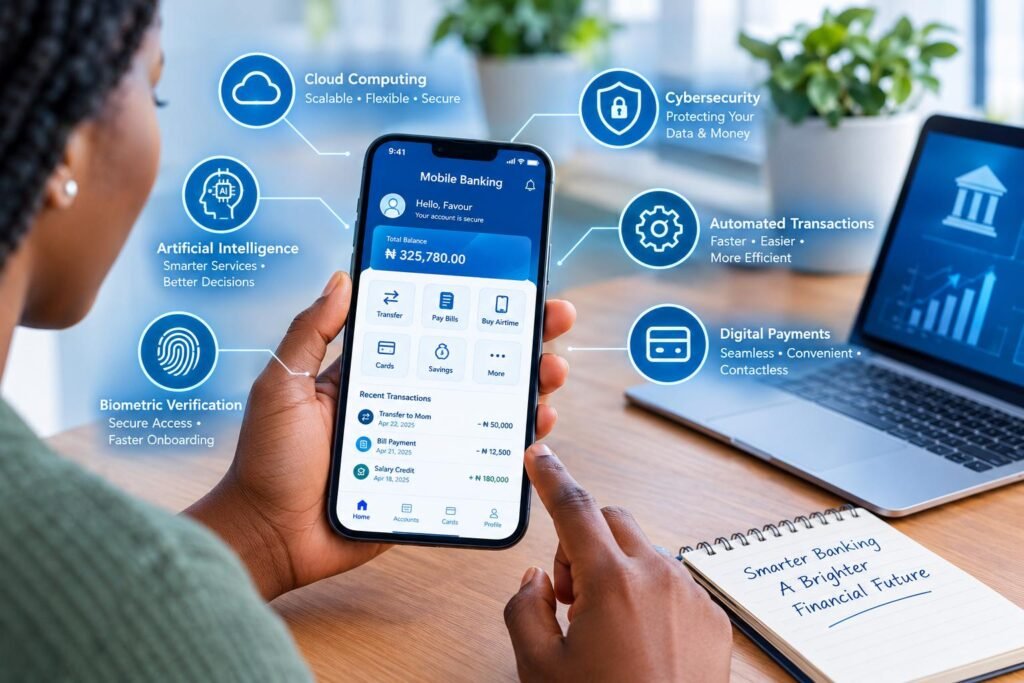
Digital innovation is reshaping the financial landscape by evolving the financial services industry’s delivery of services, management of transactions, protection of customer data, and the way it meets financial needs. In the days gone by it was essential for people to go to a physical bank branch to open an account, move funds, look into their account’s balance, and solve other bank account problems. Nowadays, these can be done on a smartphone, computer and other connected devices. This transformation has bettered the banking experience for the user and businesses in terms of convenience, accessibility and efficiency. Mobile banking, cloud computing, artificial intelligence, automated transactions and digital identity verification are among the technologies that are aiding banks’ efforts to create services that are available outside of banking hours. But, digital transformation comes with its challenges in terms of cybersecurity, system reliability, customer trust, and access to technology. These trends are critical in comprehending the shift in banking and what financial institutions will need to do in order to stay competitive.
The Change from Traditional Banking to Digital Banking
In traditional banking, brick and mortar branches and paper documentation plays a critical role, as do customer-banking staff interactions. While these services are still a great help, especially when making complex financial decisions, and when someone would like to use the personal service they may create long lines, limited hours of operation and incur extra administrative expenses. Digital banking has many answers to these constraints with customers being able to access financial services remotely. Banks can offer their account management, payment, transfer, loan application, and customer service over digital platforms. This doesn’t have to mean that physical branches will cease to exist. Rather, numerous institutions are switching to a hybrid banking approach, which is digital, but with human support as needed. The combination of online services with traditional services will provide banks with a more efficient way to serve more customers, and also let bank staff concentrate on more complex requests, relationship management and financial planning services that are best provided in a personal manner.
Mobile Banking and Internet Banking
Mobile Banking
Mobile banking is a one of the most significant innovations in financial services in recent years. The banking apps now run on the smartphone and allow users to check their balance, transfer money, pay bills, buy airtime, manage their cards and receive notifications when bills are due all without having to go to the bank branch. Additionally, some applications feature budgeting and spending summaries, as well as savings and biometric login capabilities. In Nigeria, where mobile phones are an important means of delivering financial services, these are all valuable capabilities. Mobile banking allows customers to save on travel expenses, save time and manage their financial affairs all day. But to be successful it requires a good Internet connection, accommodating devices, and secure application design. Banks need to, therefore, keep the user interface accessible and user friendly, offer user-friendly customer service, and ensure that their apps are stable on various types of devices and networks.
Internet Banking
Customers can use Internet banking to view and transact with financial accounts via secure websites through a computer, tablet or their mobile browser. This is particularly beneficial for companies and people that require to see extended account statements, handle multiple accounts, make payments or download transaction reports. Online banking platforms help businesses keep track of their cash flow, make payments to suppliers and balance their books with accounting records. These services not only decrease paperwork but also make the financial teams more efficient in carrying out their normal tasks. Internet banking also allows for some of the customers to perform some actions outside of the bank hours – depending on the type of action, it can take some time and it might not be available. Banks need to safeguard their online portals from unauthorized access, phishing, fraudulent transactions and to maintain Customer confidence in them.
Cloud Computing and Banking Infrastructure
Cloud computing is making banking services’ technological infrastructure on a transformation. Banks can utilize cloud computing resources in exchange for having to rely completely on their own physical servers, which have to be kept in their premises. Cloud services can offer institutions greater computing capacity when it’s needed, deploy software updates more efficiently, and decrease the burden on institutions to purchase and maintain all of their own hardware, depending on how it is used. Data analytics, payment systems, and customer service are other typical applications that rely on cloud infrastructure. But with banks being subject to strict regulatory environments and sensitive financial information, the decision to adopt Cloud technology needs to be planned carefully. Institutions need to evaluate cloud vendors and manage data access, implement proper encryption, implement robust backup/recovery plans, and more. Proper monitoring is crucial to avoid misconfigurations, to handle risks from third parties and to make sure critical banking services are available on technical failures.
Mobile Banking and its Effects on the Economy
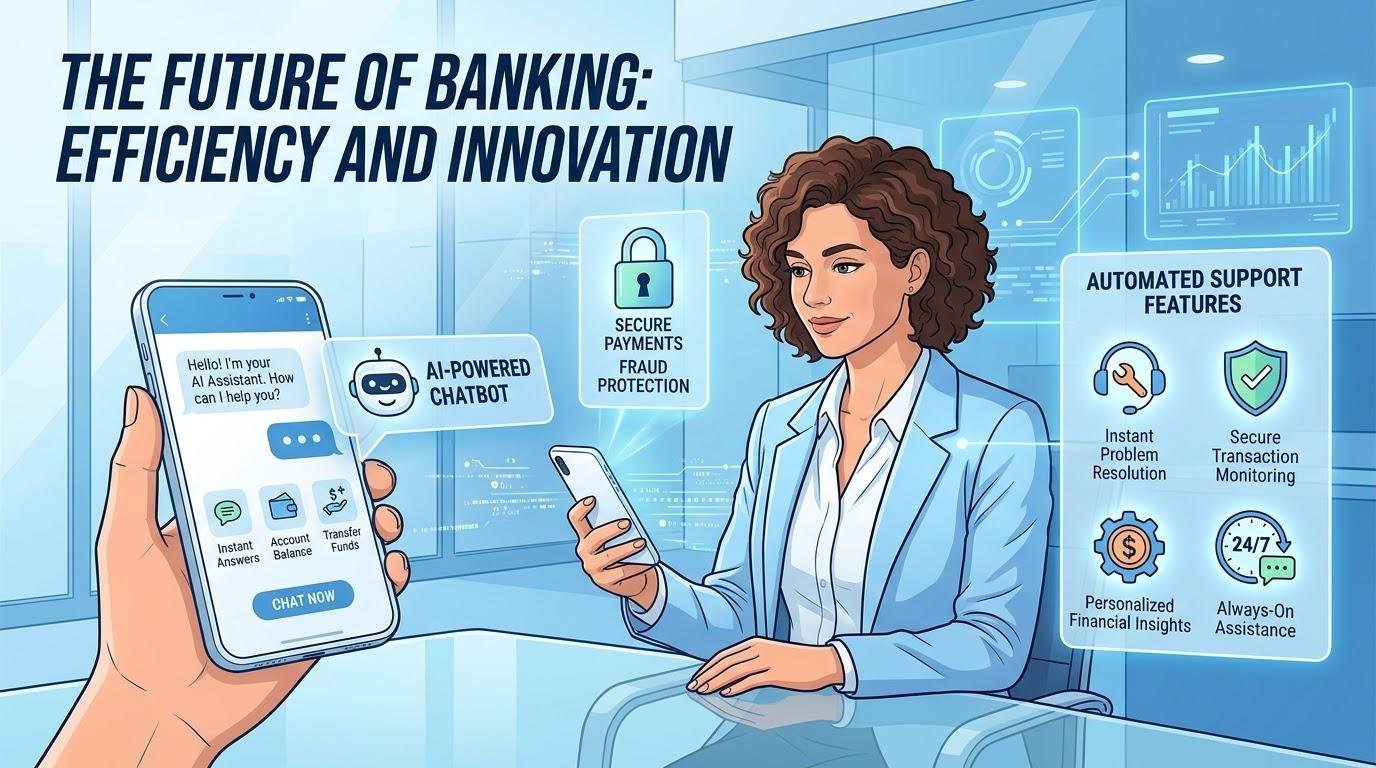
Advanced analytics, automation, fraud detection and prevention, and enhanced personalization are becoming the focus of artificial intelligence (AI) in the banking sector. AI powered systems can review transaction patterns and flag any suspicious payments that may be a sign of fraud. They can also be used to route to the right assistance, classify service requests and power up customer service teams with chatbots to answer common customer questions. In lending, analytical models can be used to assist with the assessment of repayment risk by analyzing relevant financial information subject to the law and responsible lending practices. Another significant application is personalization. With insightful information provided from user activity and customer preferences, banking platforms can provide customized spending advice, savings reminders, spending summaries, and product recommendations. These services can assist customers to make informed financial decisions. However, banks need to take the risks with inaccuracy in prediction, biased algorithms and over-collection of data. While AI can enhance many aspects of the HR function, it is essential that it is used responsibly, with transparency in its operations, measures in place to maintain privacy, and procedures to review significant decisions.
Identity Verification and Automated Transactions
Digital Identity Verification
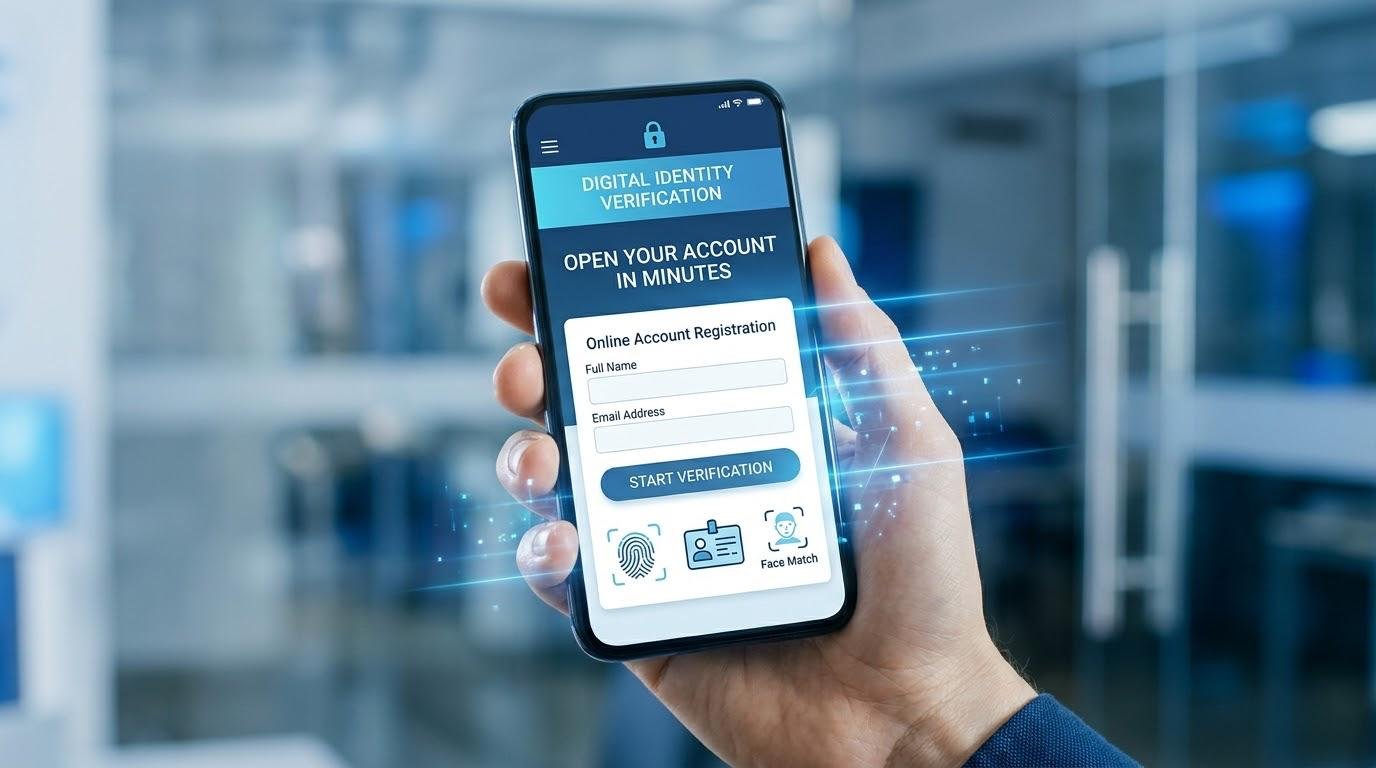
Digital ID Verification enables bankers to determine if an individual seeking a financial account or service is actually that individual. Instead of relying solely on physical documents and checks, institutions can check identities with any identity document, facial verification, biometric checks or other approved electronic means. Digital identity verification can enable banks to automate their customer onboarding, fulfill the regulatory obligation to know their customer and minimize identity fraud opportunities. If executed properly, it can enable qualified customers to open accounts without going to a location and have services with less administrative backlog. But an identity verification system should include the all too likely scenario of legitimate customers being wrongly denied as well as the threat of forgery, impersonation and deep faking. Banks should ensure attention to the protection of biometric and identity data, implement alternative verification options as appropriate, and ensure adherence to relevant financial and privacy laws and regulations.
Automated Banking Transactions
Financial activities that are automated enable financial institutions and their users to carry out financial activities that are repetitive or routine with little or no manual interaction. These include such things as bill payments, standing orders, automatic saving transfers, salary payments, Interest calculations, and transaction reconciliation. Automated systems are also employed by banks for managing payments, creating statements and refreshing customer records. These features can help to save time, minimize repetitive administrative tasks, and enhance uniformity. Automation can streamline things for businesses with regards to payroll, supplier payments and matching the transactions with accounting records. However, having to have proper controls in place to support automation. Financial losses can be caused if systems are not operating with the necessary checks, due to incorrect data, software problems, duplicate payments and instructions not authorized. Banks ought to have transaction caps, rules for authorizing sensitive transactions, an exception monitoring system and error correction rules. Good automation is fast and provides clear accountability and monitoring.
How Digital Banking Enhances Accessibility and Operational Efficiency
Digital banking can help enhance financial inclusion by delivering vital financial services to those who are far from bank branches and/or have poor mobility. Money transfers, payments and managing savings can be done using a mobile device instead of spending on the transport and logistics of money. Digital platforms can also be used to receive payments and keep records in small businesses to enable them to join the formal economy. Operational: Digital services eliminate the need for repetitive customer interactions and manual data entry, as well as paper forms. Banks can free up resources for their fraud prevention, product development and more sophisticated customer requirements. Digital records also allow for easier access to transaction history and tracking the operational performance. But these advantages don’t apply to all people. Individuals with limited access to the Internet, cell phones, digital literacy, and/or the interface may find it difficult to use Internet services. Banks should therefore strive to have an appropriate support system and cater for older people, the disabled, and communities who are not served.
Cybersecurity threats and Customer Trust
With a digitalization of banking services, criminals have more opportunities to attack users and banks. In an increasingly digital banking world, criminals have more opportunities to attack banking users and banks. Financial information or the ability to make transactions can be compromised through phishing messages, social engineering, malware, stolen passwords, account takeovers and fraudulent applications. Multilayered security systems are required, such as multifactor authentication, encryption, transaction monitoring, secure software development and prompt security patches. While AI can enhance fraud detection algorithms in finding unusual patterns, fraudsters can also exploit AI for crafting believable messages, to impersonate people, or to automate attacks. Technical controls therefore need to be complemented by the training of employees, customer education, incident response planning and monitoring. It is important for customers to be aware of how to safeguard passwords, how to verify payment requests and how to report suspicious activity. Trust is not only dependent on defense against attacks, but also on open and honest communication if there is a problem. Banks must offer clear explanations of their security measures, take quick action on complaints and offer easy mechanisms for customer reporting of fraud and disputed transactions.
Challenges Associated with Digital Banking
Digital banking relies on technology infrastructure, networks, software, electricity, data centres, payment systems and external technology service providers. Customers might not be able to move money, or take out cash using linked services or verify if payment was received for an important system going down. These disruptions have the potential to cause inconvenience to people and disruption to business, especially if they rely heavily on digital channels to access their customers. To minimize the impact of outages, banks must have tested backup systems, disaster recovery plans, resilient infrastructure systems, and communication plans. Digital exclusion is also an issue as some customers do not have access to affordable connectivity, appropriate devices and are not confident enough to access financial applications. Trust can also be diminished due to privacy issues if customers are not aware how their data is being captured and utilized. Institutions can work to overcome these challenges by creating accessible services, explicitly articulating data practices, offering alternative access points to services, and conducting frequent system tests. Digital transformation is successful when technology advances enhancing the overall customer experience and not adding new obstacles.
The Future of Digital Banking
Banking will continue to become more deeply integrated with AI, real-time payments, open banking, digital identity and more and more automated financial processes will be the future. Predictive analytics can be employed by banks to detect customer needs, enhance fraud detection and prevention strategies, and deliver timely financial insights. Open banking (where allowed and allowed by proper consent and security measures) can allow customers to share financial data with authorized financial service providers to gain access to other financial services. Embedded financial services and digital wallets could also lead to payments and account management becoming commonplace in digital interactions. Meanwhile, financial institutions need to stay on top of the regulations, operational resilience, ethical use of technology, and evolving customer expectations. It’s not just about innovation to make for better banking. Sustainable digital services will be more likely to be developed by institutions that have effective technology, good human support, high quality governance and communication.
Conclusion
The adoption of digital banking is revolutionizing the financial services sector by bringing many of the traditional financial services to a convenient, connected and increasingly intelligent digital environment. The advantages are mobile and internet banking that increases accessibility, cloud computing for flexible infrastructure, artificial intelligence that helps to prevent fraud and personalize banking services, and digital identity verification that makes customer onboarding easier. Automated transactions also can help cut down on administrative workloads and enhance operational efficiency. While there are benefits to these, cybersecurity issues still exist, systems are not always available, and privacy and digital exclusion are vital concerns. To mitigate these risks, banks need to invest in their infrastructure and recovery systems, provide customer support, and implement data management practices. It’s not just about replacing the traditional banking processes with digital tools, it is about the most successful institutions that will do that. They will make innovative and reliable financial services, inclusive and trustworthy, that are efficient, secure, and meet the requirements of today’s customers.
Get more well researched information about Digital Banking Trends here.