Introduction
Credit availability plays an important part in financial inclusion. Many individuals and small businesses struggle to receive loans due to them not having a traditional credit history. Traditionally financial institutions will look at an individual’s credit report, past loan repayments, outstanding debt and borrowing history. Many people who’ve never borrowed before may not have any credit history. This can cause issues for young adults, informal employees, small businesses and people outside the mainstream.
Financial institutions are increasingly using alternative data in credit scoring to better understand a borrowers financial behavior. Using non-traditional data can help lenders understand how individuals earn, spend, save and manage their finances. By looking at digital financial data, lenders can make informed decisions on who to lend to. This helps increase financial inclusion.
Alternative Data
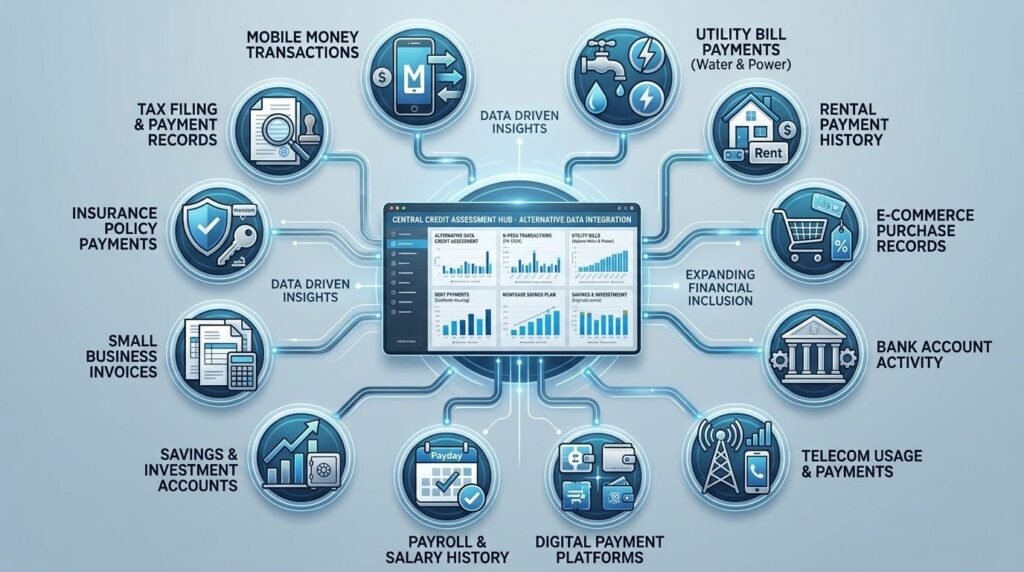
Alternative data is financial and behavioral data that lenders can use when looking to lend to individuals. This can include mobile money, utility payments, rental payments, telecommunication services, online shopping and other activities that show a person is financially responsible. Alternative data can give a wider insight to lenders than traditional data.
Using Alternative Data in Credit Scoring can help lenders identify individuals who may not have much of a credit history but show they’re financially responsible based on their other activities. Digital lenders, microfinance institutions and traditional banks can look at this data to help understand how likely they are to repay their loan. However, this should be used alongside responsible lending practices.
12 Types of Alternative Data Used to Assess Borrowers
1. Mobile Money
Mobile money can show lenders how individuals receive, send and manage their money. In some areas individuals may not have access to traditional banking so mobile money platforms are a great way to receive their salary, send money to family members, pay merchants and purchase essential services. By looking at how frequently they send and receive money, how much they’re earning, how much they’re spending, their balance and how regularly they’re performing transactions can show lenders how financially responsible they are. If someone regularly receives payments for their business, they may be showing they have a reliable income source. Microfinance institutions can look at this data to identify individuals who are actively participating in the digital economy and may be able to manage smaller loan repayments.
2. Utility Payments
Electricity, water, gas and internet bills can help lenders understand how regularly individuals pay their bills. If customers regularly pay their bills on time or early, they’ll be showing they’re able to manage their regular payments. Financial institutions may look at this data to understand if they’re paying on time, late or have outstanding payments. If someone regularly pays their electricity bill they may be showing they’re financially responsible. However, lenders need to ensure they understand why they may be missing payments. This could be due to financial issues, incorrect bills, service issues or unreliable income.
3. Rental Payments
Rental payments can help lenders understand how regularly individuals pay their bills. If tenants are regularly paying their rent, they’ll be showing they’re able to manage large regular payments. If they have the correct permissions, lenders may be able to get verified rental data from property management, landlords or rental platforms. This can show how regularly they’re paying, any outstanding payments, late payments and how long they’ve been renting. If someone regularly pays their rent for a few years, they may be showing they’re financially responsible. However, housing costs can vary greatly and late payments don’t necessarily mean they won’t be able to repay any loans.
4. E-Commerce
E-Commerce can help lenders understand how individuals spend their money. Platforms will provide data on how regularly they’re purchasing items, how much they’re spending, how they’re paying, any refunds and completed orders. With the correct permissions, lenders may look at this data to understand their spending habits, if they’re regularly purchasing essential items, paying for their orders and have predictable spending habits this can add to their profile. Small businesses can also show lenders how popular their products are, how regularly they’re making income and how they’re performing. However, if they’re purchasing high value items this doesn’t necessarily mean they’re financially strong. Lenders need to ensure they’re not making assumptions and they’re really able to repay.
5. Bank Accounts
Bank accounts can give lenders a wider understanding of how individuals are managing their money. Whilst bank statements may be used in traditional lending, looking at the transaction data can help lenders gain insights from alternative data. Financial institutions may look at how regularly they’re depositing money, withdrawing money, their balance, salary payments, business income, regular payments and saving habits. This helps lenders understand how much disposable income they have. If an individual regularly deposits money from their small business and have manageable business costs they may be able to repay their loan. However, lenders need to ensure they’re really earning the money and not transferring between personal accounts. They also need to consider if they’re depositing money temporarily.
6. Telecommunications
Telecommunications companies will have data on individual’s mobile subscriptions, how much airtime they purchase, data usage, how regularly they top up and how they’re paying their account. Some lenders will use this data (with the correct permissions) to gain more insights into individuals with little traditional financial data. If individuals are regularly purchasing airtime top-ups or paying their postpaid mobile bills they may be showing they’re paying regularly. Lenders can also work with telecommunications companies to reach individuals in communities who may not have easy access to banking services. However, lenders shouldn’t look at sensitive data such as what they’re calling, private messages or personal communications. They should only look at relevant data that’s legal and has been given the correct permissions. This can cause privacy issues and unfair assumptions.
7. Digital Payment History
Digital payment history can show lenders how regularly individuals are paying, receiving money, purchasing items and paying their bills. Lenders may look at this data to understand how regularly they’re making transactions, how much they’re paying, average payments and regular payments. If individuals regularly receive payments via digital wallets they may be showing they have a regular income. Merchants who regularly receive electronic payments can also show lenders they’re regularly making sales. This data is particularly useful to understand individuals who are operating in a cashless economy. However, lenders should consider if there are any reversed transactions, refunds, shared accounts or transfers that don’t represent real income.
8. Payroll
Payroll data can help lenders understand how regularly individuals are earning money. This data may include salary deposits, how regularly they’re paid, how long they’ve been in employment, contract payments and verified payments from an authorized payroll platform. If individuals don’t have a credit history but regularly receive a salary they may be showing they have a reliable income source. Digital lenders may look at verified freelance payments and contract worker income. This can help lenders understand how financially responsible workers may be. However, individuals may change jobs and their income may not be regular.
9. Savings and Investments
Savings and investments can give lenders extra information on how individuals are planning their finances. Financial institutions may look at verified savings, account balances, investment deposits and how regularly they’re saving. If individuals regularly save a portion of their income they may be showing they’re financially responsible. Individuals using digital savings or cooperative financial services may have data to help lenders understand their financial habits. Investments can also show lenders they have extra money available. However, their investment account may vary and shouldn’t be assumed they have money to repay.
10. Small Business Invoices
Many small businesses struggle to get finance due to not having formal financial statements, borrowing history or business statements. Alternative data can help lenders by looking at verified invoices, digital receipts, sales, customer payments and transaction history. Lenders may look at how regularly they’re making income, how popular their products are, average sales, seasonal variations and any outstanding invoices. If a small retailer regularly receives electronic payments from their customers they may be showing they have enough business activity to qualify for a working capital loan. Digital lenders and microfinance institutions can use this data to understand informal businesses that aren’t often considered by traditional lending. However, lenders should ensure the sales are verified.
11. Insurance Payments
Insurance payments can help lenders understand how regularly individuals are making regular payments. If individuals regularly pay for their health, car, life or business insurance they’ll be showing they’re able to manage regular payments. With the correct permissions lenders may look at how regularly they’re paying, any outstanding payments, how regularly they’re insured and how regularly they’re paying. This can help lenders when looking at individuals without a credit history. If individuals regularly pay for their insurance and have regular income deposits they may be showing they’re organized with their financial responsibilities. However, individuals may have different insurance depending on their situation and how much they can afford. Individuals without insurance shouldn’t be seen as higher risk borrowers.
12. Tax and Government Payments
Verified tax payments, business registration and other relevant government payments can help lenders understand how individuals are performing economically. If individuals or small businesses are regularly paying the correct amount of tax they may be showing they’re organized with their finances and are participating in the economy. Business registration can help lenders verify the business exists, how long they’ve been trading and who owns them. If legally allowed lenders may look at relevant payments to understand how they’re earning and if they’re regularly making sales. This can be particularly useful for small businesses that don’t have traditional financial statements. However, tax information needs to be understood carefully as informal workers and new businesses may not have much documentation and doesn’t necessarily mean they’re higher risk borrowers.
How Alternative Data Increases Financial Inclusion
Alternative data can help financial institutions understand individuals who would traditionally struggle to get loans due to not having a credit history. Digital lenders and microfinance institutions can look at verified transaction data to help identify potential borrowers from informal traders, freelancers, young adults, rural communities and small businesses. This helps lenders not rely on traditional credit bureau data and gives individuals who have shown they’re financially responsible an opportunity. Small businesses can also benefit from digital sales and payments data to show they have a credible business. However, lenders should still ensure they’re not lending to everyone. They should still consider if they can afford to pay back, if they’re able to repay, if they have any current obligations and if they may face financial issues.
Challenges and Risks of Using Alternative Data
Whilst alternative data can be beneficial there are some key challenges that financial institutions need to consider. One main issue is ensuring the data is accurate. Digital transactions may not always be complete; there could be duplicate data, incorrect customer information or payments made by others. If individuals share their mobile money account with family members their financial data may not be accurate. Privacy is also a big consideration. Lenders may be gaining access to personal information from telecommunications companies, digital platforms and financial apps. Lenders should ensure they have informed consent, explain how they’ll be gathering the data, only allow authorized individuals access and follow any data protection rules. Poorly designed algorithms may also cause discrimination. Algorithms may use location data, spending data and other indirect data which can cause discrimination.
Conclusion
Alternative data is changing how financial institutions are assessing borrowers who don’t have much of a credit history. By using mobile money, utility payments, rental payments, digital shopping, bank accounts, telecoms and small business data lenders can gain extra insights. This can help digital lenders, commercial banks and microfinance institutions reach those outside the mainstream. To ensure this is done successfully lenders should ensure they have accurate data, transparent assessments, informed consents, robust privacy measures and no discrimination from algorithms. Overall, this should be used as an additional method to traditional lending practices to help lenders make fairer decisions. When used responsibly this can help increase financial inclusion, create more opportunities for individuals and small businesses and help create a more accessible lending environment.
Get more well researched information about Alternative data for credit assessment here.