Introduction
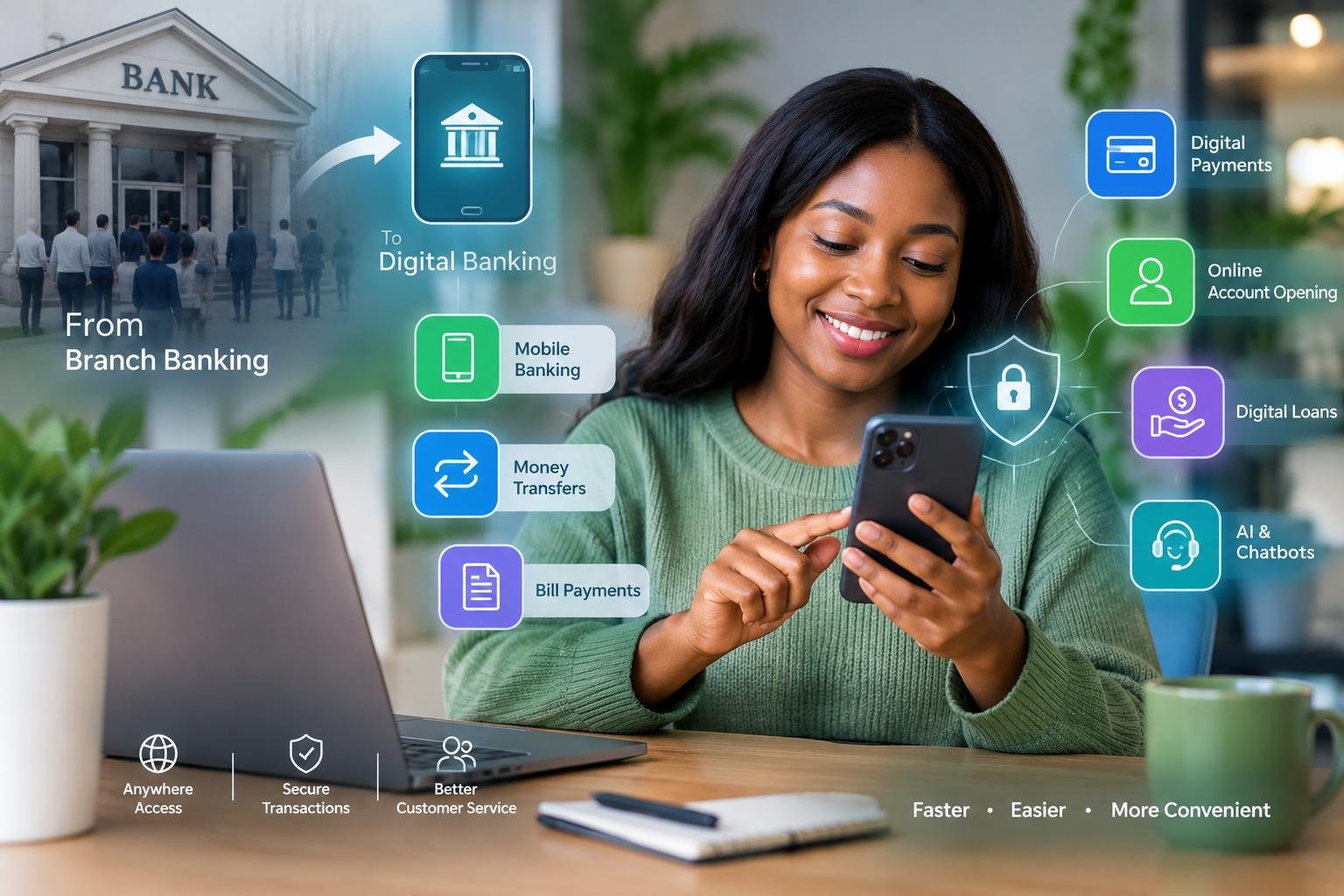
The landscape of banking has drastically transformed over time, with the advent of technology enabling many financial services to shift from physical branches to digital. Now customers don’t have to go into a bank to check their balance, to transfer money, to pay their bills or make payments. With the advent of the internet banking, smartphone applications, cloud-based systems, artificial intelligence and electronic payment systems, it is now possible to do a lot of banking from nearly anywhere. The rise of mobile banking applications is significant in particular as banking customers can operate their accounts directly from their mobile. This transformation has created a new set of expectations from customers that banks must deliver faster, more convenient, and increasingly personalized service, and less reliance on branch-based banking.
Transformation from Traditional Banking to Digital Banking
The traditional banking system was dependent upon having physical branches, paper forms, cash transactions, and people have to interact with bank staff in person. To open an account, you might have to go to a branch, fill out a few forms, present ID and wait for staff to process the application. The same was the case with loan applications, changing account details and accessing certain banking services. Many of these manual processes have been superseded over time with electronic means. Digital platforms are making their way into banking operations and are currently being adopted for data collection, identity verification, transaction processing, customer communication and the delivery of financial products. While the branches are still relevant for some services and customers, digital banking has opened another channel for everyone to be able to do many of their daily banking activities without having to step in the door of a bank.
Technology Delivers Accessible Banking via the Internet
One of the first significant advances in the evolution of digital financial services was Internet banking. Customers can access their accounts on a secure banking website via their PC, tablet or smartphone, and do things which they would normally need to go to a branch to do. Usually these services involve viewing account balances, transaction history, transferring funds, paying bills, managing beneficiaries and downloading statements. In addition, internet banking has made things more convenient for the business and people who require financial information at times other than banking hours. Customers can do many of the same procedures at one time that they would normally have to do with a branch opening. The flexibility has been making banking more convenient for people who work and live extremely busy schedules or who live far from banking branches.
Mobile Banking
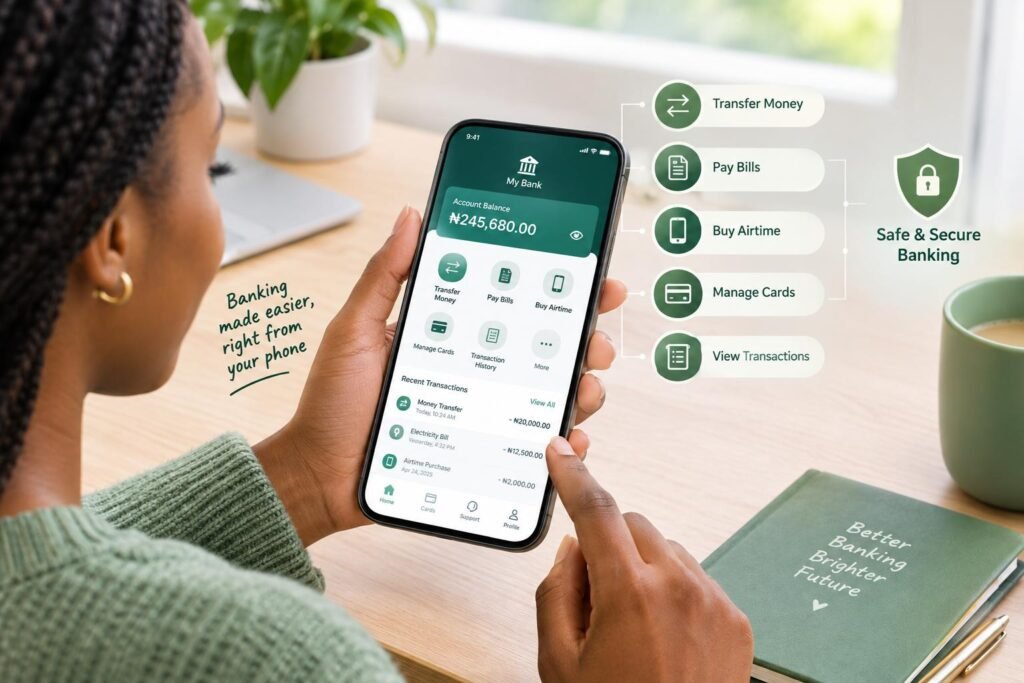
The ubiquity of smartphones has helped spur digital banking as mobile technology enables bankers to have banking services with them all day. Tasks such as transferring money, paying bills, buying airtime, managing cards, getting transaction updates, and checking their balance can all be accomplished through mobile banking platforms. Some banks offer this service to customers, and they can temporarily block their cards, make changes to some security features, or be alerted if a transaction takes place. Increasingly, banking is perceived as a service that can be undertaken at anytime, anywhere, and the convenience of mobile banking has altered the customer’s perception of financial services. But, this is only part of the equation as it requires a dependable internet connection, secure applications, compatible devices and good technical support when users have issues.
Online Account Opening
Financial institutions are also working on digital onboarding processes, making it easier to open up a bank account. In place of filling the entire application in a branch, a potential customer could enter their personal information online, upload necessary documents, enter identification information and complete identity verification in an online manner. In some systems, automated checks, electronic verification and some biometric technologies are used to verify applicants’ compliance with regulatory requirements. This will cut down on paperwork and speed up account opening time. It can also help to make banking more convenient for those living in areas with fewer branches. However, convenience and security in online account opening must go hand in hand. Although there may be some benefits, banks require robust identity verification measures since weak customer onboarding can leave them vulnerable to identity theft, fraudulent applications, and other financial crimes.
Digital Loans
The lending process has been revolutionized by technology, as financial institutions and banks are able to provide loan applications digitally. Some loans can now be applied for online or via banking applications, with fewer steps being taken in a branch. Digital lending platforms can gather application details, determine eligibility, confirm documents, and send out electronic communications about eligibility. Financial data and other information authorized for analysis could also be used to assist in credit evaluations with automated systems. This can provide more convenient and quicker loans to the borrowers, especially for those who require simpler financial products. Digital lending also places some obligations on banks and borrowers, however. People who are considering taking a loan should be aware of the conditions of the loan, such as the interest rates, fees, and length of the loan, as well as the penalties that may be incurred if the loan is not paid back on time. Banks, on the other hand, need to have accurate, responsible, transparent and compliant automated lending systems, while adhering to relevant laws and regulations.
Chatbots and Automated Customer Service
Another area of technology that has altered the bank customer relationship is customer service. Chatbots and automated customer support systems can utilize AI to respond to frequently asked questions, walk customers through simple procedures, and deliver information, thus reducing the need for a customer service agent to address every query personally. For instance, a chatbot can clarify a password reset procedure, find a specific service, inform about the status of a transaction, or provide details about banking products. Automated systems can work out of regular business hours and provide customers with fundamental help when branches and call centres are closed. Not all situations are appropriate for automated customer service, though. Sometimes, even with all the above, it may be necessary to involve a human employee who can grasp the situation and offer the necessary help.
Cashless Transactions.
Digital technology has also helped shift towards not cash-based payments. In addition to bank cards, online transfers, mobile payment systems, QR codes and more, customers are now able to pay for goods and services electronically. This has enabled transactions to take place without having to exchange notes and coins in person. Digital payments are also convenient for businesses, as they can streamline transactions and eliminate some of the risks of dealing with a lot of cash. Consumers also get quicker payments and electronic records which are easier to keep track of spending. Meanwhile, cashless banking is reliant on secure digital systems. Customers will not be able to access electronic payment services for a short time if there is a network failure, a power outage, downtime in payment processing systems, cyberattacks, or technical issues. Reliable infrastructure is still crucial in the event of network failures, power outages, and downtime in payment systems, cyberattacks and technical issues, which will temporarily prevent customers from accessing electronic payment services.
The Key Benefits of Digital Banking for Customers
The number one advantage in digital banking is the convenience, given customers can undertake many services without having to travel to a physical branch. Digital platforms can also shorten waiting times, enable more speedy transactions, and enable access to banking services outside of bank hours. Customers can view their accounts more often, be alerted with transactions, and control their finances by using digital records. These services can facilitate formal financial services for those who don’t have access to a bank branch. It is also possible that digital banking can be a way for financial institutions to meet the needs of more customers than they would expand their physical branch network to. The more information the banks can collect on how the customers are using their services, the more likely there is to be the development of more customized products and an enhanced experience for the customer. These benefits make digital banking an integral part of today’s financial services.
Challenges of no-Physical-Branch Banking Services
While promising many benefits, digital banking is not without its troubles. Cybersecurity is one of the biggest concerns as financial accounts are sought out by criminals for passwords, personal information, payment information or access to money. Phishing emails, bogus banking sites, malicious apps and social engineering attempts all pose risks to customers. Another concern is digital exclusion as not everyone can access an appropriate smart phone, a reliable internet connection, or adequate digital skills. Some customers may also prefer to talk to employees of a bank, especially if they are having complex financial matters. When applications and/or web pages fail to be available due to technical issues, this can add extra frustration. Financial institutions have to, therefore, invest in the ease of use of technology, security, customer education, reliable systems, access and human support to make digital banking sustainable.
Securing and Privacy
With these changes towards digital banking, the need for safeguarding customer information grows in importance. Banks operate on sensitive financial and personal data, which means that they have to ensure that the security measures are robust across their digital systems. Encryption, multi-factor authentication, biometric verification, transaction monitoring, and fraud detection are some of the technologies that can help safeguard accounts against unauthorized access. It will also rely on customers to maintain a strong password, not click on links sent by unknown senders, being mindful of authentication codes, and only downloading banking software from trusted sources. Privacy is also paramount as digital banking systems have access to a considerable amount of customer data. Banks have a responsibility to safeguard this information and adhere to data protection and financial laws. Security will not and should not be considered an add-on service as customer trust is one of the pillars of a successful digital banking relationship.
Future of Physical Bank Branches
However, digital banking doesn’t imply the end of physical bank branches they won’t be completely phased out. Even with the rise of online and digital platforms, branches still play a crucial role for customers who seek in-person support, especially for complex financial matters, specialized services, and issues that are hard to resolve via digital channels. There may also be people who find it difficult to be digitally literate or who have less access to good internet services. As a result, many banks are in the process of shifting from a digital/digital dual mode to an integrated digital/physical mode. A customer may start their application online, get support via a mobile app and only go to a branch when it’s necessary for verification or expert guidance. This mix can enable customers to have more options and for banks to have human resources where technology would otherwise not be adequate.
The Future of Digital Banking
Digital banking is poised to keep evolving with banks implementing new technologies and consumers getting accustomed to their transactions happening digitally. One application of AI in finance is enhancing the personalization of financial services by assisting banks and other financial institutions in identifying customer needs, spotting suspicious transactions, and delivering personalized financial information. Technologies like cloud computing can help build scalable banking infrastructure, and enhanced digital identity systems can make it easier to open new accounts and verify customers. Banks can also go on consolidating payments, saving, investing, lending, insurance and other financial services on a single digital platform. But, innovation needs to be responsible given the advancement of technology. It is essential that financial institutions take security, privacy, accessibility, regulatory concerns and customer requirements into account, particularly those of less tech-savvy customers. Technology will thus make the strongest digital banking systems, those that enhance the customer journey without sacrificing the reassuring feel of human interaction and support.
Conclusion
Technology has transformed the way banks interact with customers, replacing many of the in-person interactions with online, mobile, automated and electronic payment options. Customers are now able to make money transfers, pay bills, open accounts, apply for some loans, keep track of transactions, and get assistance without having to go to any branch for any of these tasks. The developments have brought more convenience, faster, more readily available, and more efficient operations and greater opportunities for financial institutions to better serve customers. However, the digital banking sector also presents issues with cybersecurity, privacy, technical stability, digital exclusion, and human assistance. It won’t just be a new technology replacing the old banking services. Rather, successful banks will be required to have access to secure digital banking solutions as well as reliable customer support, offering banking experiences that are convenient, yet at the same time accessible, trusted, and responsive to customer needs.
Get more well researched information about digital banking here.