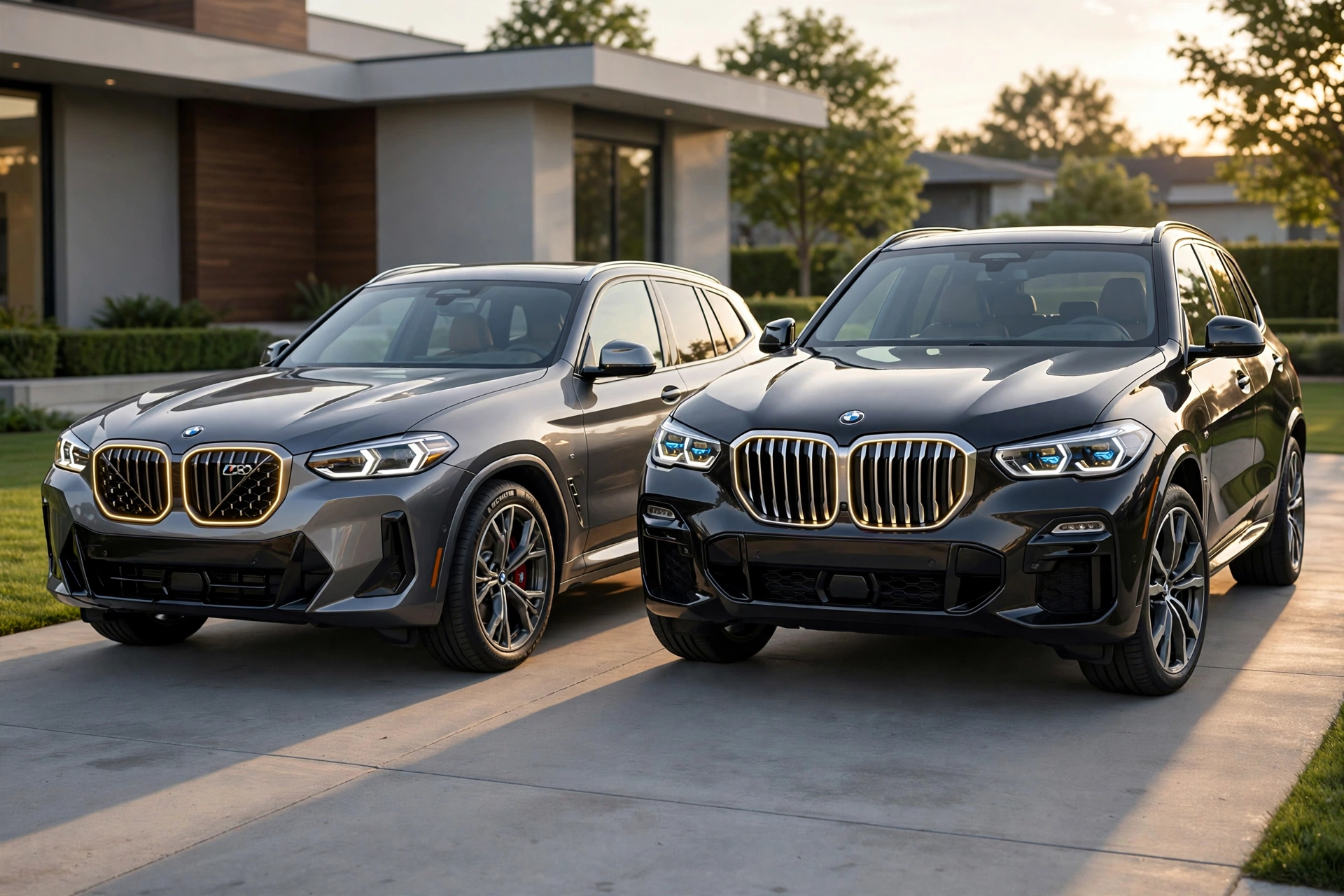
The BMW X3 vs. X5 may be a hard decision to make due to the fact they’re equally luxurious, high-performance, technologically advanced and functional. But they have different types of buyers. The smaller and usually more efficient X3, and the more roomy, better towing, more powerful engine options and more heavy duty luxury experience of the X5. For families and SUV shoppers, knowing these distinctions can help to make the selection of the vehicle that is right for them easier.
BMW’s two most popular luxury SUVs come in 2 sizes, offer differing cargo space, performance, fuel economy, towing and features and different price points. The BMW X5 vs. other luxury SUVs comparison shows that the X5 is more capable, but if you’re unsure of the need for a large SUV, then the X3 could be the better buy.
BMW X3 vs X5: Size and Space

The BMW X3 is a compact luxury SUV, which is easier to handle and park than the bigger X5. It offers practical space for passengers and cargo for families and doesn’t have a very large exterior footprint. With its smaller dimensions the X3 is particularly practical for city driving, school runs, shopping and for all day to day driving, as smaller is easier to manoeuvre in tight parking spaces and narrow roads.
The X5 offers more space for passengers and cargo, and is larger. This extra room will come in handy for a family that often brings multiple passengers and/or bags, sports gear, and other bulky belongings. But the X5’s bulk can prove to be inconvenient in close quarters. Purchasing an extra space may be something buyers will have to think about before they hand over additional cash for a bigger SUV.
Specifics of performance and engine options.Performance and Engine options details.
The X3 results in a significant performance level without a big engine. The 2026 X3 30 xDrive will be equipped with a turbocharged 4-cylinder engine with mild hybrid technology, generating 255 hp and 295 lb-ft of torque. BMW claims a quarter-mile time of 6.0 seconds. For those looking for greater performance, they can go with the X3 M50 xDrive, which has 393 horsepower and can accelerate to 60 mph in approximately 4.4 seconds.
The X5’s performance potential is higher and the range of engines broader. Depending on the configuration, buyers have the option of 6-cylinder, plug-in hybrid and V8 variants. This means the X5 has an edge for those wishing to experience more acceleration, extra tow towing capacity or a more potent driving performance. The improvements do come at a premium however, and can lead to higher fuel and ownership expenses.
Conserving fuel and getting better mileage.
The smaller size and lesser weight of the X3 generally mean that fuel economy will be better. BMW says the 2026 X3 30 xDrive gets between 27 and 33 miles per gallon city and highway, respectively. This is appealing to folks who drive regularly or wish to minimize gas costs. The X3’s smaller dimensions also make it easier to handle in urban environments.
Larger engines and the size of the X5 make more fuel used. But for those who are keen on electrified driving, there’s an alternative to offer: the X5 xDrive50e plug-in hybrid. The X3 makes more sense for families that travel long distances or have a lot of commutes, while the X5’s extra room and ability are better for those occasions when it matters most.
Capable of towing and carrying cargo.
When equipped, the X3 can tow around 4,001 lb for many smaller trailers and recreational purposes. It is also useful for transporting groceries, suitcases, school supplies and other household goods. The X3 can thus offer adequate towing power for people who only tow occasionally, without the need for an SUV.
For heavy loads and towing the X5 is the more appropriate choice. Its larger size, more powerful engines (when needed) and towing capacity make it better for a family that frequently pulls a trailer or has a lot of equipment to transport. If towing is a crucial component of your life, then the extra capability of the X5 may be worth the extra expense.
Comfort and Features
The X3 cabin is a modern and technologically advanced, high-end cabin, equipped with state-of-the-art technology, digital displays, connectivity and a range of luxury options available. It’s a smaller cabin, but it’s still a comfortable family vehicle, and the handling qualities make for an enjoyable experience. For those who prefer the BMW standard with a slightly smaller SUV, it is a good option.
The X5 elevates luxury and comfort to a new level. The upswing includes more passenger space, which enables BMW to offer more premium features and equipment in the larger cabin. It is especially attractive for family long-distance journeys, as it provides more room, making trips more comfortable. For such buyers, who are looking to enjoy luxury and comfort more than compact size, the X5 gives them an edge.
Family value and pricing.Value of the family and pricing.
For those who are looking for a high-end SUV without the high price tag, the X3 is the safer bet. It’s also cheaper to buy and has an impressive fuel efficiency and compact footprint that makes it worth it to families who are primarily using their car for commuting to work, school, shopping and typical weekend activities. Users can also opt for more powerful models if they require more power.
While the X5 is priced higher, the increased cost comes with extra space, capability, engine options and luxury. These benefits can justify the extra expense for families that travel on a regular basis with a few passengers, have extra loads or tow heavier trailers. But those who do not use these features often may consider the X3 to be a better value.
BMW X3 vs X5: Which One is Better?
If fuel economy, handling, cost and on-road usability are top of priority, then the BMW X3 will be the better choice for the buyer. It has sufficient accommodation for quite a number of family members and also is easier to drive in congested areas. Also, with its performance options, buyers aren’t forced to compromise on the driving experience just because they opt for the smaller size of the SUV.
The BMW X5 would be more appropriate for those looking for space, greater towing capacity, more engine options and extra plush. It is particularly beneficial for those with larger families as well as drivers who need to carry lots of heavy loads or trailers regularly. In the end, the X3 machine would be a more cost effective and efficient machine, whereas the X5 would be more of a space, capability and premium comfort machine.
Final Verdict

Both the BMW X3 and BMW X5 are great luxury SUVs, but for different priorities. Featuring a solid performance, efficiency, technology and usability package, the X3 has a more affordable price than its competitors. If you’re willing to spend more, the X5 provides more space, towing capacity, power and luxury.
The X3 can offer the power, performance and comfort of a much larger vehicle for most small and medium-sized families without the hefty price tag. The X5 is better suited for families that frequently carry heavy loads or tow trailers, or require extra passenger space, however. The best option, of course, is the BMW that’s a reflection of your lifestyle—not just the bigger or more powerful SUV.