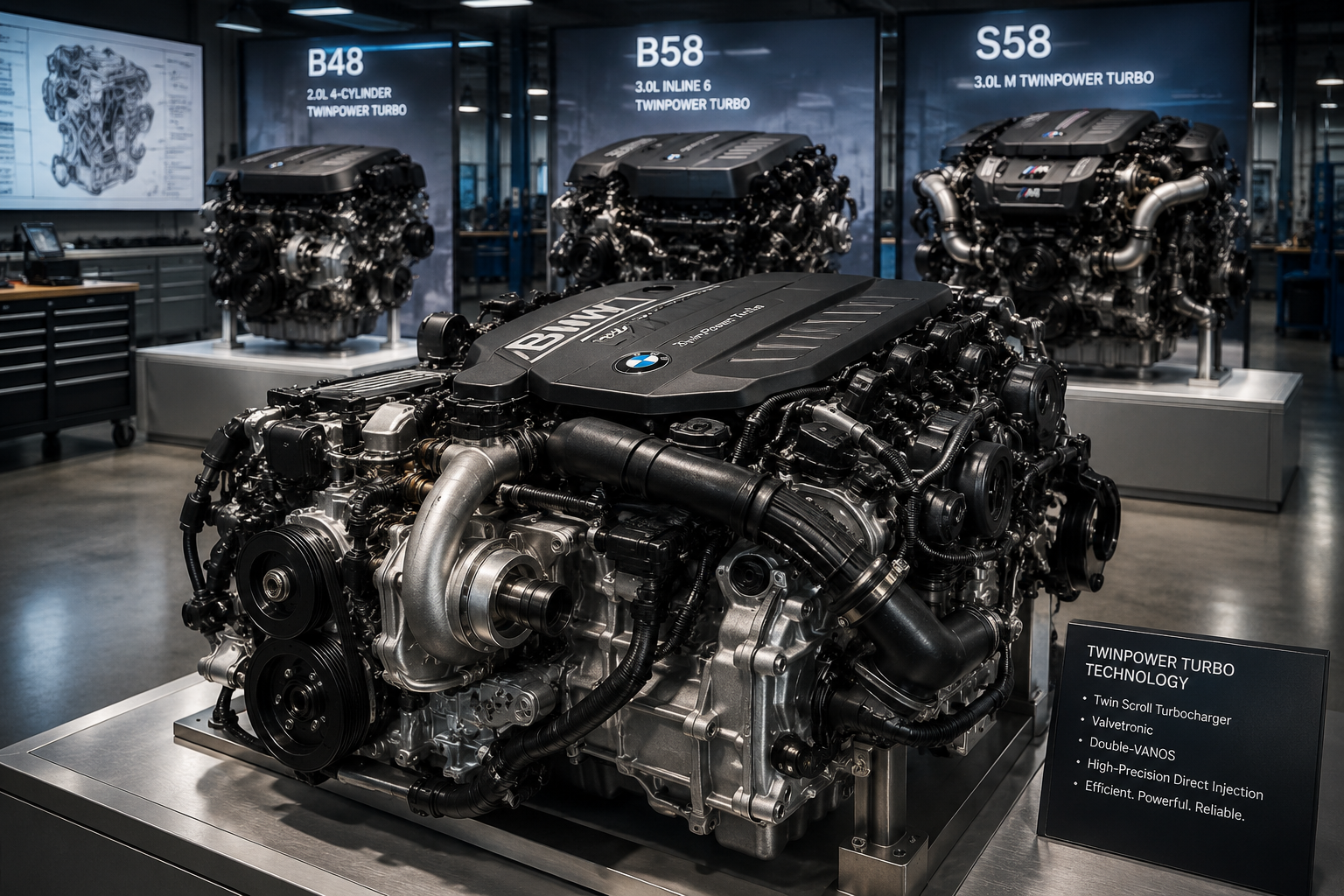
BMW TwinPower Turbo Engines has established itself as a company that manufactures engines that are not only smooth but are also advanced and are highly enjoyable. With increasingly tough emissions standards and vehicle owners seeking greater fuel efficiency, the company began developing the TwinPower Turbo engine family, which offered more power from smaller, more efficient engines. BMW eschewed simply turbocharging the engine in favor of employing a multitude of technologies to make the most of efficiency, throttle response and long-term reliability.
The B48, B58 and S58 engines are two of BMW’s most successful powerplants in recent years. They are used on a variety of sedans, SUVs, coupes and high performance M models. For more information on BMW’s TwinPower Turbo engine, check out this article. We will discuss the technology behind such engines, their fuel consumption, their performance and their durability and help you find out which of these engines is more powerful, economical and dependable.
What Is BMW TwinPower Turbo Technology?
TwinPower Turbo is not just BMW’s turbocharger, it is the complete package for engine technology. It features a twin scroll turbocharger or multiple turbochargers in combination with intelligent valve timing and fuel delivery systems to deliver optimum performance, lower fuel consumption and emissions figures, depending on the engine.
It’s a technology with turbocharging, Valvetronic variable valve lift, Double-VANOS variable camshaft timing and high-pressure direct fuel injection. These systems combine to enhance combustion, boost torque through the rev range and ensure smooth and quick acceleration. This translates to an engine that punches well above its weight for normal driving but keeps cruising efficiently for extended trips.
Valvetronic
Instead of a traditional throttle body, Valvetronic is a change that affects how much the intake valves open. The engine’s efficiency in normal driving conditions is enhanced by controlling the airflow through the valves themselves, thereby minimising the amount of pumping losses.
This system also enhances throttle response since the flow adjustments occur almost instantaneously. Whether through city traffic or on the highway, drivers will enjoy smoother acceleration, fuel economy, reduced emissions, and a more refined driving experience.
Double-VANOS
Double-VANOS automatically adjusts the intake and exhaust camshaft timing. It can adjust the valve timing to the engine load and speed to achieve high torque at low engine speeds and high engine speed.
In addition to boosting performance, Double-VANOS also helps to reduce emissions and engine noise. It enables the engine to respond rapidly to varying driving conditions while ensuring good acceleration with acceptable fuel economy.
Direct Fuel Injection
BMW’s direct fuel injection system injects fuel at a very high pressure directly into the combustion chamber. This results in a more accurate air-fuel ratio which enables the engine to burn fuel more efficiently, with more power production.
The enhanced combustion process also reduces fuel consumption and emissions and improves cold starts and throttle response. Direct injection is an important element in the efficiency of all BMW TwinPower Turbo engines, with the use of turbocharging and BMW’s valve control technologies.
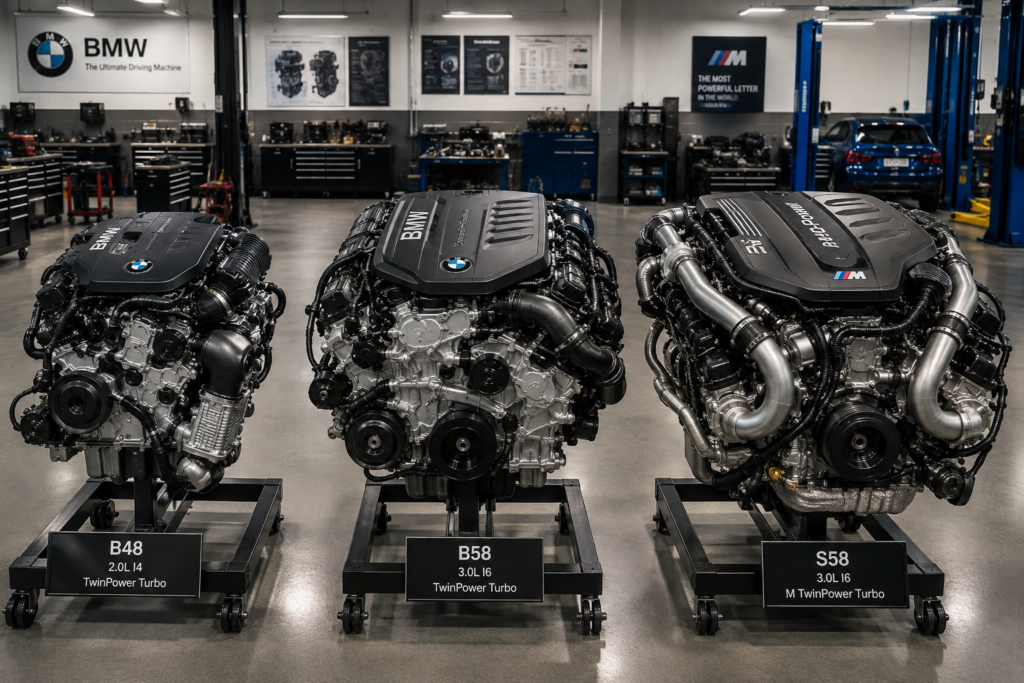
BMW B48 Engine
The B48 is a 2-liter, turbocharged, 4-cylinder engine which replaced the previous N20 in many of BMW’s engines. It is available on vehicles like the 3 Series, 5 Series, X1, X3, X4, Z4 and some models of the MINI. BMW engineered it to deliver great performance, efficiency and reliability in day-to-day use.
The B48 is capable of making about 181 to 300 horsepower, depending on the model. It has a good low end torque that results in brisk acceleration for a relatively small engine. Owners enjoy its low maintenance features, strong long term durability and good fuel economy in comparison with larger engines. The B48 can provide many years of reliable service with proper oil service and maintenance.
BMW B58 Engine
The B58 is BMW’s turbocharged 3.0-liter in-line six and is considered one of the best powerplants the company has had since its creation. It is used in models like M340i, 540i, X3 M40i, X5 xDrive40i and the Toyota Supra. It has been popular among car aficionados for its smooth operation and high performance.
The B58 is available in factory form with a range of power between 335 and 382 hp and delivers very good acceleration along with good gas mileage. Its closed-deck engine block, better cooling system and solid engine internals help to ensure exceptional reliability. It is one of BMW’s most reliable turbocharged engines, in the opinion of many BMW owners and auto industry professionals.
BMW S58 Engine
BMW M’s high-performance version of the B58, the S58 is its evolution for the BMW’s flagship performance models. It includes more robust internal components, twin turbochargers, improved cooling systems and other engineering enhancements to help cope with high performance driving.
The S58 is found in BMW’s M series of vehicles, ranging from the BMW M3 to the BMW X3 M, X4 M and more. It provides outstanding acceleration and is track ready, but surprisingly dependable when properly cared for. It also has a higher maintenance cost and fuel usage, due to its higher performance.
Comparing the B48, B58, and S58
There is a different kind of rider for each engine. The B48 is designed to be both economical and efficient with high reliability. Perfect for commuters and families seeking reduced ownership expenses and retaining the BMW driving experience.
The B58 delivers the ideal combination of performance, refinement and durability for many enthusiasts. The S58 is designed to appeal to those who like to push the envelope on power and track performance and are willing to pay the price for the increased maintenance.
Performance
Responsive acceleration, sufficient for every day driving. It delivers copious low-end torque for easy city driving and merging on the highway with high fuel economy.
The B58’s inline-six configuration provides significantly improved acceleration and power as well. S58 is the top tier with plenty of power and great tuning options available, for those who want lots of fun!
Fuel Economy
The B48 has one of its best selling points to be its fuel efficiency. Thanks to its compact size and smart design, it promises great fuel economy without compromising on low-throttle driving performance.
The B58 is two cylinders more than its base model, but still has impressive fuel economy. The S58 uses more fuel than the other models due to the extra power, particularly when ridden hard and fast.
Reliability
Today’s BMW engines are much more dependable than some of the older BMW engines. The B48 is known for its reliability and usability, whereas the B58 is often commended for its durability and strength.
The S58 is also designed to be durable, but it needs to be taken care of more since it is a high-performance model. To get the greatest service life from all three engines, follow the service schedules and use quality fluids.
Tips for Maintaining Long Engine Life
The most crucial that can help ensure that any TwinPower Turbo engine runs efficiently is a regular maintenance routine. The routine maintenance of oil changes, checking the coolant, replacing the spark plug, and running on high-quality fuel will help the unit last longer and operate efficiently.
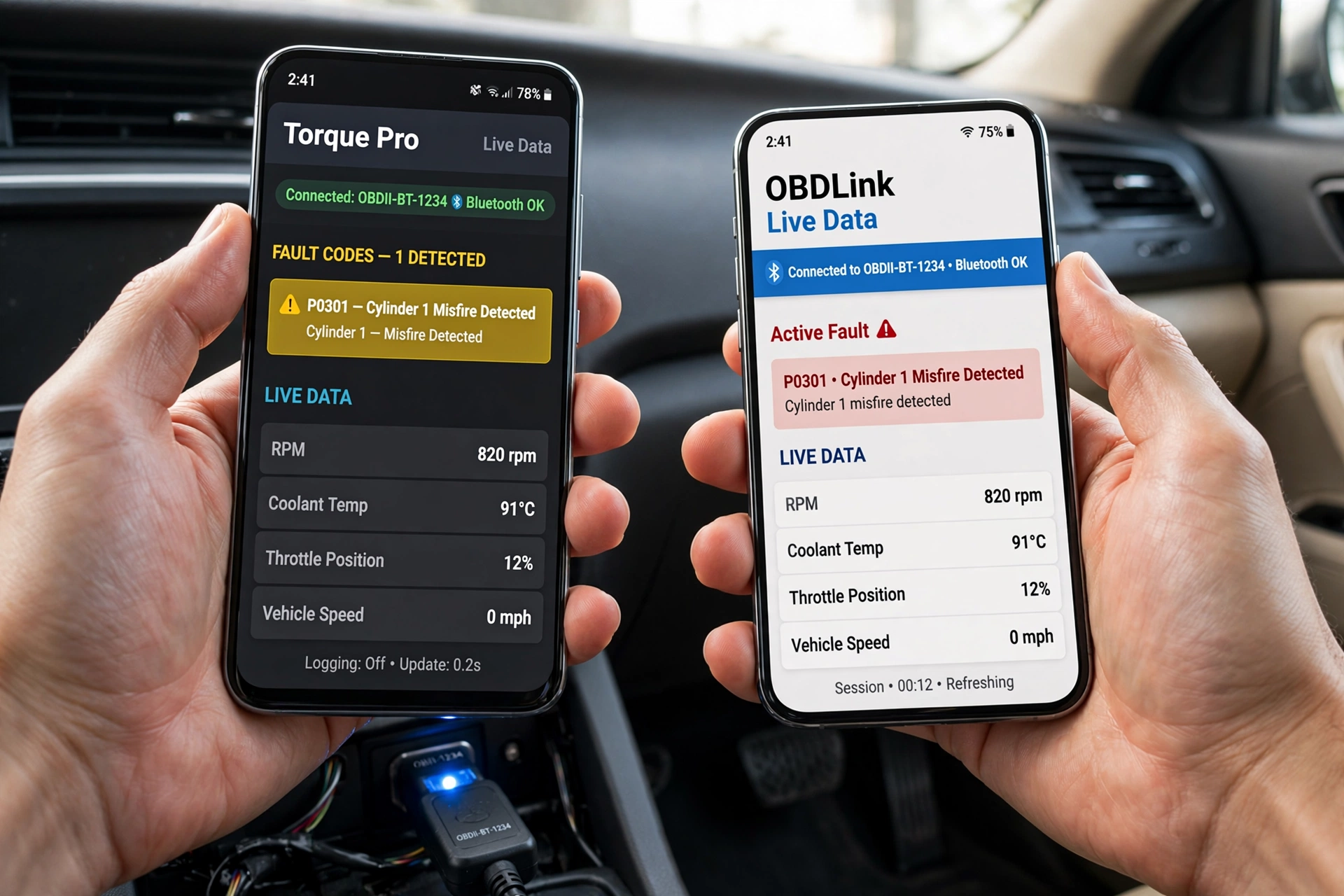
Owners should also watch for warning lights, odd sounds from the engine or coolant leaks before there’s a serious problem. Preventive maintenance etc. helps to preserve engine life as well as the resale value and avoids costly repairs.
Which Is the Most Suitable Engine?
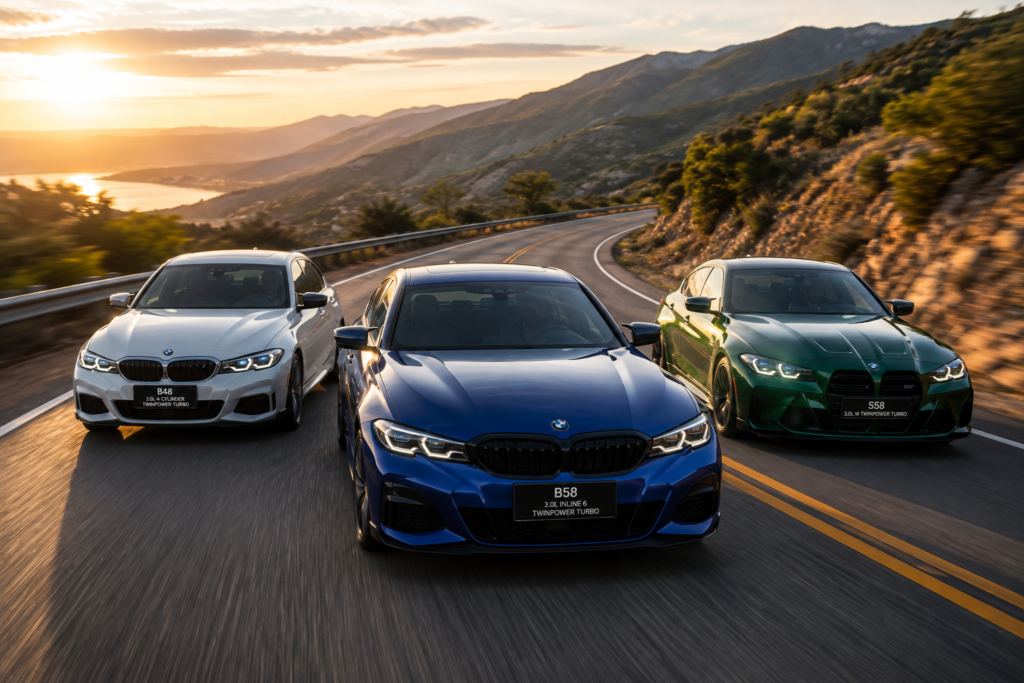
The B48 is a great option for those looking for fuel efficiency and reduced running expenses. It offers reliable performance and competitive upkeep costs and adequate power for normal driving.
It really is the B58 that is the superior all round engine as it boasts good efficiency, excellent reliability, smooth running and tremendous power. The higher the S58’s performance, the higher the running costs, so drivers looking to run it to its full potential must be willing to invest in that.
Conclusion
The BMW TwinPower Turbo engine family proves that high tech engineering can help to enhance performance and efficiency. These engines provide powerful acceleration yet are still practical for an every-day commute thanks to technologies like Valvetronic, Double-VANOS, direct fuel injection and intelligent turbocharging.
Regardless of which version you select, efficient B48, balanced B58 or high performance S58, maintenance is key to reliability. However, for the majority of buyers, the B58 is the ideal performance model since it successfully offers a blend of power, fuel economy, refinement and durability in a single superb engine.