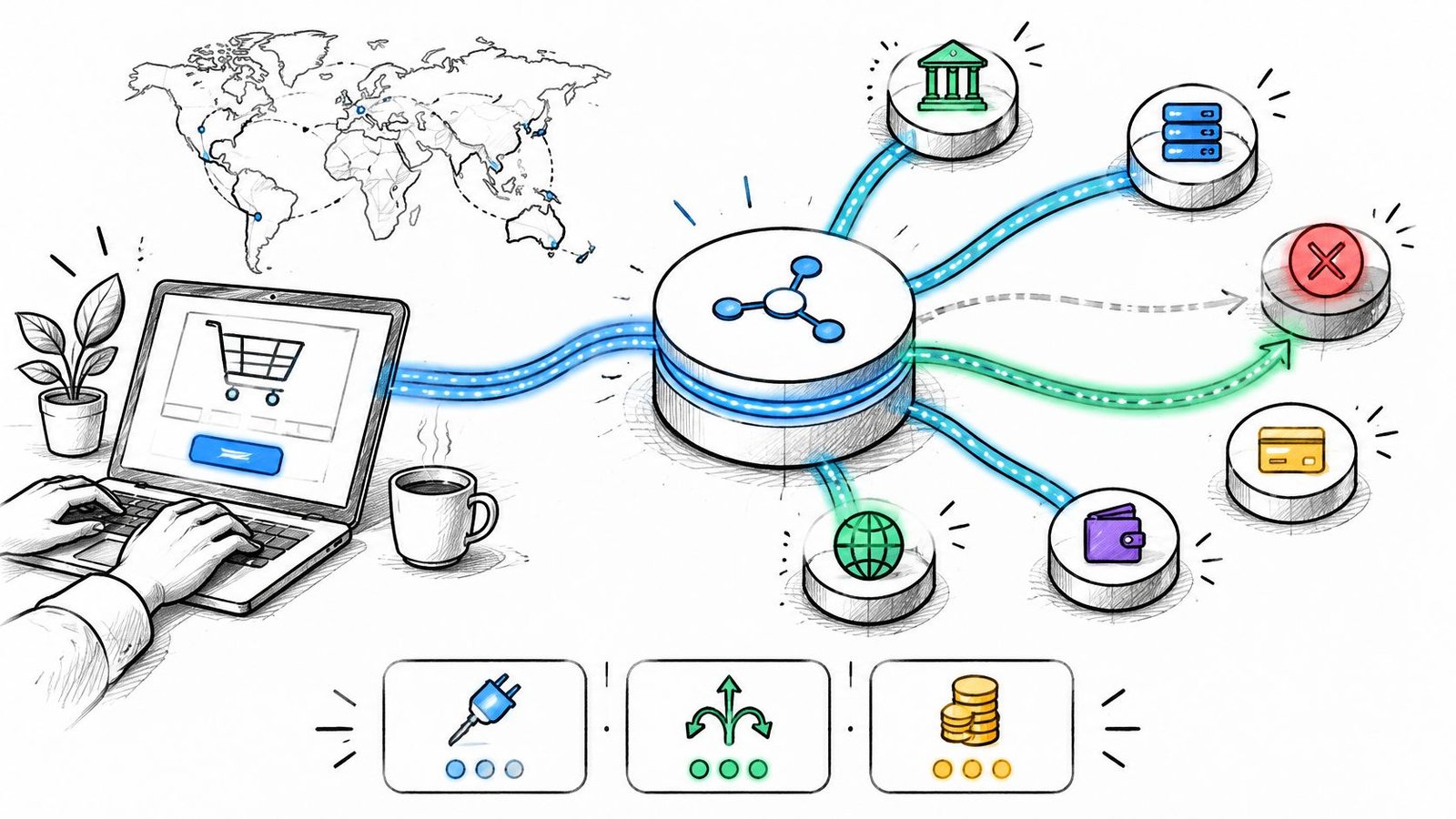
You want a contract on the next central bank decision, and you don't live in the United States. A friend in Ohio already has a brokerage login and wants sports and economic contracts beside their stocks. The same search results show up for both of you. The products behind those names are not the same thing.
Eligibility, the events listed, and the costs that appear before you confirm an order decide which of the best prediction market apps you can use. A familiar brand is a weak shortcut. One name can be a cash exchange, a sports-first mobile product, or a play-money forecasting community. Two sites can share a brand and still require separate accounts, separate support, and separate rules.
Federal oversight is older than the phone apps. The U.S. Commodity Futures Trading Commission identifies the Iowa Presidential Stock Market, now the Iowa Electronic Markets, as the first modern prediction market, launched in 1988 by the University of Iowa. Modern apps sit on that regulated-versus-other split.
I group the options three ways. U.S.-regulated event-contract platforms list Yes/No contracts with published resolution rules. Brokerage-integrated products add those contracts inside an account you may already hold, usually after a derivatives approval. Forecasting and play-money communities are for practice, public scores, or questions the big exchanges never list.
You can lose the full amount committed to an event contract. A correct outcome still loses money if you paid too much or exited into a wide spread. Pick by where you live and what you want to trade, then read the fee line on the order ticket.
Table of Contents
- 1. CoinStats
- 2. Kalshi
- 3. Polymarket
- 4. Robinhood
- 5. Interactive Brokers ForecastTrader
- 6. PredictIt
- 7. FanDuel Predicts
- 8. DraftKings Predictions
- 9. Coinbase Predictions
- 10. Manifold
- 11. Metaculus
- How the leading prediction market apps differ on focus, fees, access, and best use
- Match the App to Your Eligibility and Goals
1. CoinStats
If you already track wallets and exchanges, another trading login is the easy part. The harder job is seeing whether a question has enough activity that a small order won't shove the price around. CoinStats is an all-in-one cryptocurrency portfolio tracker. You connect wallets and exchange accounts, then monitor, buy, swap, and stake in one place. That same view is a sensible stop before you fund a venue from roundups of best prediction market apps.
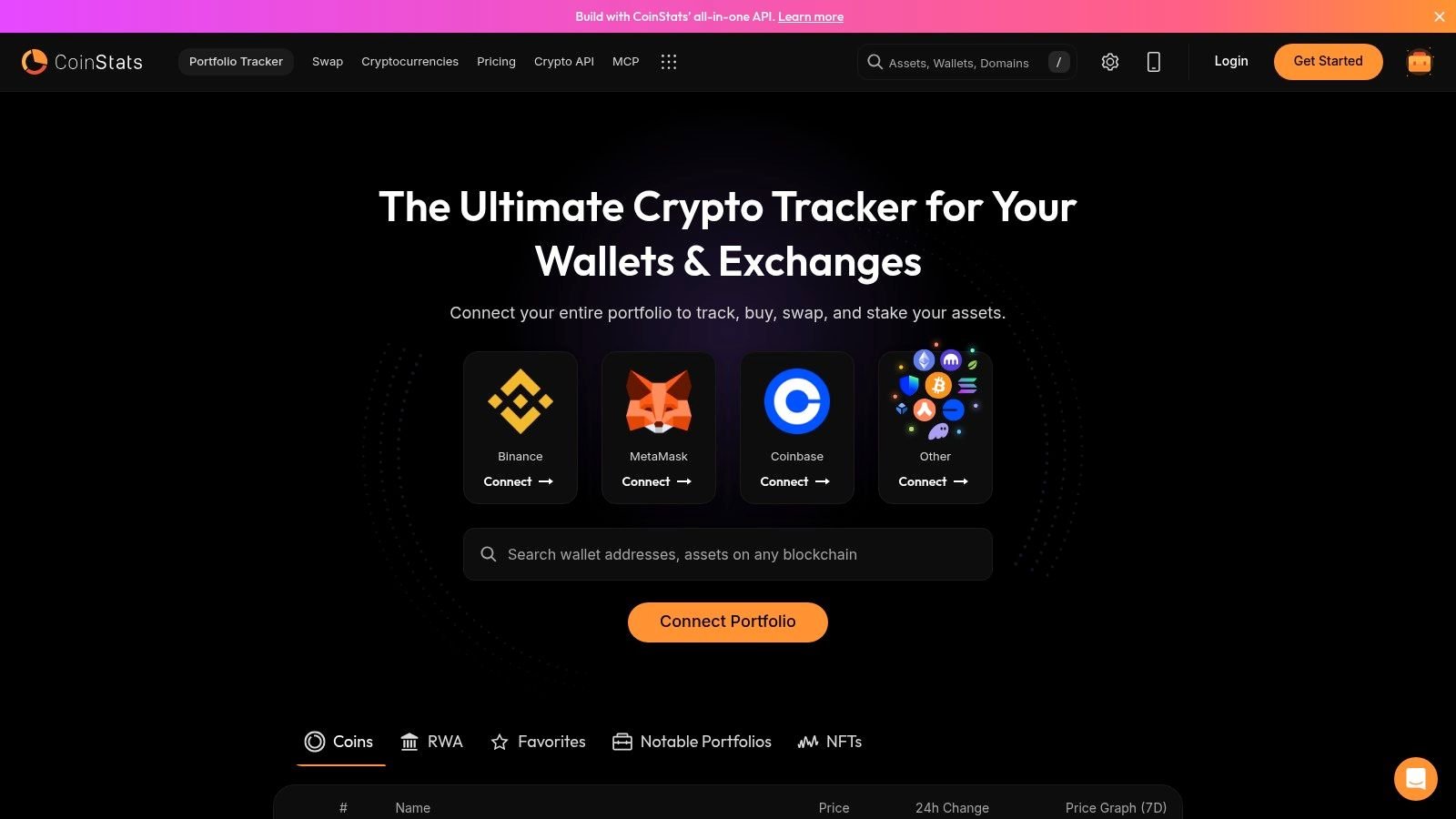
The tracker side is wide. It pulls balances, transactions, and performance from connected wallets, exchanges, and DeFi positions across multiple chains. You get P&L analytics, holdings breakdowns, and customizable price alerts, plus NFT tracking, notable portfolios, live prices, dominance charts, and a 24h market report. The premium tier raises portfolio and transaction limits, adds deeper profit and loss views, and includes AI-powered crypto price predictions. Swaps, staking, profit and impermanent-loss calculators, and MacOS and browser widgets handle day-to-day work. Developers can build on an open API, EVM, Bitcoin xPub, and Solana wallet APIs.
When research beats another deposit
An independent 2025 ecosystem analysis, the Dune prediction markets report, recorded more than $13 billion in monthly notional volume and over 43 million monthly transactions by November 2025, with more than 600,000 monthly users excluding Kalshi. Those totals still don't tell you if your contract has two-sided quotes near the midpoint. Notional volume can count the same face value over and over, so it isn't cash on deposit or revenue.
I use CoinStats when the job is portfolio context and market research, not when you need a regulated U.S. event-contract account. It won't replace exchange rules, identity checks, or a withdrawal policy. It does keep balances and prices in one place while you decide whether a separate app is even open to you.
2. Kalshi
Kalshi is a dedicated U.S. event-contract exchange. You buy or sell Yes/No contracts on politics, economics, finance, sports, culture, climate, science, and technology. The price is a rough market-implied probability. The contract rules say how the outcome gets decided, which matters more than the chart once a dispute shows up.
You can generally sell before resolution if someone will take the other side. Thin markets don't offer that exit. State and category limits apply, and a wrong contract can cost the full amount you put in. The published fee schedule changes by market and order, so I check it on the ticket rather than trusting a screenshot from last month. Browse markets on Kalshi.
Scale doesn't price your contract
Kalshi data compiled by Sacra, set beside on-chain figures in a Dune query, shows monthly volume rising from $226 million in December 2024 to $6.6 billion in December 2025, with active traders growing fivefold in 2025, from roughly 240,000 to 1.2 million. That is platform scale. Your economic print or niche sports contract can still have a wide spread.
- Read the resolution source: The rules name what settles the contract, not a social post about the event.
- Compare maker and taker treatment: Fees aren't one flat number across every market.
- Skip the platform total: Depth on the question you want is the number that changes your fill.
A dedicated marketplace is easier to browse than a brokerage menu buried under options. It isn't automatically the cheapest place to hold a short-dated sports contract.
3. Polymarket
Don't treat Polymarket.com and Polymarket US as one login. They are separate products, with separate accounts and separate support, and the international site is not the U.S. trading product. The international markets cover politics, sports, crypto, economics, culture, weather, and more. Prices move as people trade, and the platform publishes category-specific fee information.
The browser experience is the international product. Location decides whether you can open it. U.S. readers have a different product aimed at the U.S. market, and you can't move a position from one to the other as if they shared a wallet.

The Congressional Research Service describes Kalshi as a CFTC-regulated exchange and Polymarket's largest exchange as offshore, saying it blocks U.S. users. That brief also reports that approximately 87% of Kalshi's $39.7 billion in trading over the prior year was sports-related as of February 2026, while sports represented 38% of Polymarket's $36.2 billion. Breadth and sports share are different stories on each venue. Dispute paths and consumer protections don't travel with the logo.
Practical rule: If the eligibility page says the products are separate, don't fund the wrong one and expect support to merge the accounts.
Some categories and trades carry fees. Liquidity depends on the topic. International users who want global questions may like the range on Polymarket. Access is still a location test, not a download-count test.
4. Robinhood
You already check stocks in Robinhood. Event contracts now sit in that same app, covering sports, politics, weather, commodities, entertainment, and economic events. Convenience is the offer. You aren't getting a private order book that the dedicated exchanges don't have.
Access needs approval for a Robinhood Derivatives account. Eligibility and listed markets can change by state. Contracts are supported through multiple partner exchanges, so a rule change at a venue can show up inside an app you think of as a broker. Details are on Robinhood's prediction markets page.

The fee formula is published, which helps you estimate a round trip before you tap confirm. Costs can include Robinhood commissions and exchange charges. I add both before I compare the contract with the same question on a standalone exchange. A familiar screen doesn't waive state or category limits.
This fits current customers who want event contracts next to other positions and who will wait for derivatives approval. It fits poorly if you don't want another account permission, or if the partner market you care about isn't offered in your state. Start with the eligibility check, not the sports tile.
5. Interactive Brokers ForecastTrader
ForecastTrader puts event contracts inside Interactive Brokers' trading environment. IBKR says one interface reaches contracts from ForecastEx, Kalshi, and CME Group, across government, elections, economic indicators, technology, financial markets, and the environment. If you already route orders through IBKR, that single login is the point.
The screen is a brokerage terminal, not a sports app. Casual users often bounce off account permissions, market-data settings, and venue labels. Published commission and exchange-fee information is there, and commissions may not include every exchange charge. Fees differ by venue, so a Kalshi contract and a CME contract in the same window can cost different amounts to get in and out.
I look here when I want to compare venues without opening three funding paths, and when I already meet IBKR's trading permissions. I don't send a first-time forecaster here to learn what a 62-cent Yes contract means. Product notes live on Interactive Brokers event contracts.

Confirm the contract's venue before you assume IBKR's house rules settle the outcome. The interface aggregates access. It doesn't erase the underlying exchange's resolution text.
6. PredictIt
Share prices on PredictIt run from one cent to 99 cents and broadly track what traders think an event's chance is. The catalog is politics. You get multiple-outcome markets and straight Yes/No questions, plus market rules and trading guidance. You may sell before a market closes or hold through settlement, subject to that market's rules.
That narrow focus is useful if elections and political process questions are the only contracts you want. It is a poor fit if you came for sports, technology, or a broad economic board. Political availability and rule text are specific to this platform, so a market that looks obvious can still settle on a named source you didn't read.
Its September 2026 fee update says ACH deposits and withdrawals are free. It charges a 10% fee on trading profits. That profit fee is easy to ignore while you stare at a 40-cent share, and it changes the price you need in order to come out ahead. See current terms on PredictIt.
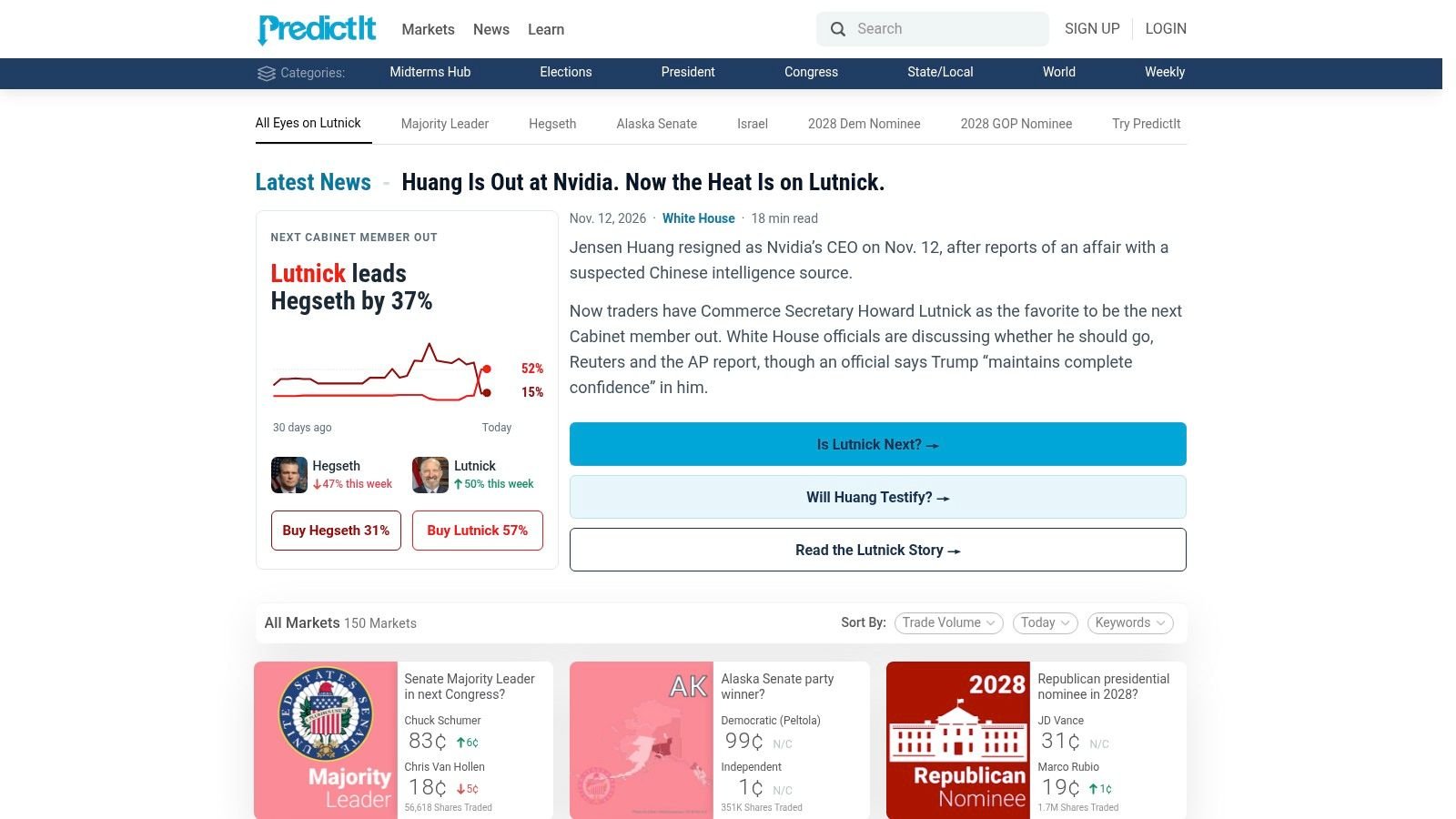
A cent-priced share looks like a probability. It isn't a promise that your profit survives the fee on a winning trade.
I keep PredictIt on a shortlist only for readers whose questions are political and who will do the fee math before they size a position.
7. FanDuel Predicts
FanDuel Predicts is a separate prediction-market product developed with CME Group, not a tab that reuses sportsbook bet slips. Contracts cover sports plus culture, financial topics, and crypto. You pick an outcome and an amount, and early selling may be available. FanDuel says availability varies by state and that contracts are listed by CME Group derivatives exchanges.
Launch information from FanDuel put contract prices from $0.01 to $0.99. That range is the whole market's implied chance, same idea as a political share, with a sports-app shell around it. Consumer-protection tools are part of what FanDuel cites. They don't cap your loss at something smaller than the amount you commit.
The brand is familiar if you already use FanDuel on a phone. The rules and account features differ from traditional sportsbook wagering, so a state where the sportsbook works may still block this product, or the reverse. I treat the two as different wallets with different dispute paths. Read the live state list on FanDuel Predicts before you move money.

Sports-first design helps if that is the inventory you want. It is less helpful if you need a neutral board of economic releases and don't want a sportsbook habit shaping the interface.
8. DraftKings Predictions
An existing DraftKings customer may see prediction contracts inside the same app rather than opening a separate account. DraftKings Predictions leans toward sports questions, and the contracts you can view or trade depend on where you are. Check the app's current terms before placing an order because location access and listed markets can change.
That setup lowers signup friction. It also puts an event contract inside an interface shaped by sportsbook and casino products, which matters if you want politics or macro questions to lead the layout. Readers already clearing DraftKings' location checks get the shortest path; readers who want a forecasting-first board may find the surrounding product mix distracting.
Fees, market rules, and funding all need a live check. A prediction contract follows its own terms, so do not assume it behaves like a sportsbook ticket or that another DraftKings balance can fund it. A market available earlier can also disappear by the time you return. Product details and availability are on DraftKings Predictions.
I would treat this as a convenience pick for current customers. Confirm the location gate first, the fee at order entry second, and the exact contract rules last.
9. Coinbase Predictions
Eligible customers can trade event contracts inside Coinbase, funded with settled USD or USDC, and manage positions in the same account they already use for crypto. Coinbase Financial Markets is the access point. Kalshi operates the prediction markets and determines resolutions under each contract's rules. You may sell early when the market allows it.
That split matters. The interface is Coinbase. The exchange, the rulebook, and the settlement decision are Kalshi's. Help material walks through contract rules and payouts, which is worth reading once before the first order. Fees appear at order confirmation, so review them on that trade rather than assuming yesterday's quote still holds.
Availability is for U.S. residents only, with state and market restrictions. If you aren't in that group, this door is closed no matter how complete your Coinbase profile looks. International readers should not treat a U.S. friend's screenshot as a funding guide.
I see this as a funding convenience for people who already keep USD or USDC at Coinbase and who accept that they are reaching Kalshi-operated markets, not a second exchange with its own resolution staff. Start at Coinbase, confirm eligibility, and only then compare a contract's rules with the same question elsewhere.
10. Manifold
Manifold is where I go when the question isn't listed anywhere that takes cash. You forecast on community markets or write your own. Topics run through technology, news, sports, and personal questions. Comments sit next to the price, which helps when the title is ambiguous.
The currency is Mana. It is play money, and you can't convert it to cash. New users receive free Mana. That removes the deposit decision and also removes any claim that a hot price is backed by money someone will miss.
Quality swings. A user-written question can have a crisp resolution rule or a vague one that friends will argue about. Participation and liquidity depend on who cares that week. A niche market can look decisive because three people traded it.
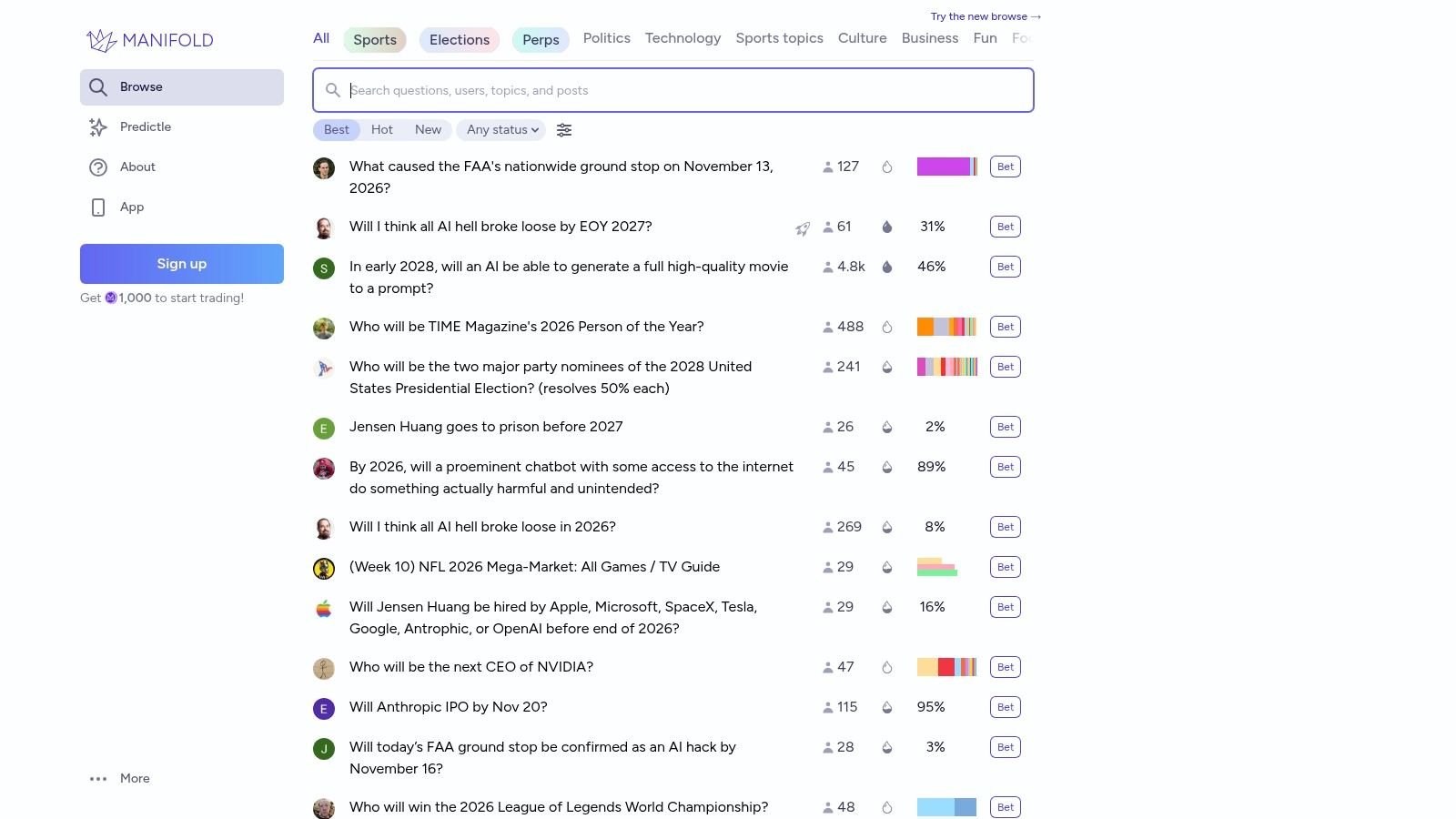
Play-money prices are a rehearsal, not a bankroll signal you should copy into a cash exchange.
Use Manifold to practice updates as news lands, and to float questions major venues ignore. Don't use a Mana profit as evidence you would have made money after spreads and fees.
11. Metaculus
Metaculus isn't a cash event-contract exchange. You submit forecasts on science, technology, AI, health, business, and geopolitics. The site aggregates those forecasts, scores you, and runs competitions. Some tournaments pay prizes. Free participation is the default unless a contest says otherwise.
The point is a track record. Public scores show whether your probabilities were sharp over time, which a single lucky contract never will. Questions can be technical, and resolution and scoring rules need a careful read. A prize exists only for that competition. It isn't a yield on idle forecasts.
A large trading study of 1.72 million accounts and $13.76 billion in trading volume found that activity was driven by a relatively small group of skilled traders. Crowd size on a cash app isn't the same thing as a diverse set of informed views. A scored forecasting record is one way to test your own judgments before you pay a spread.
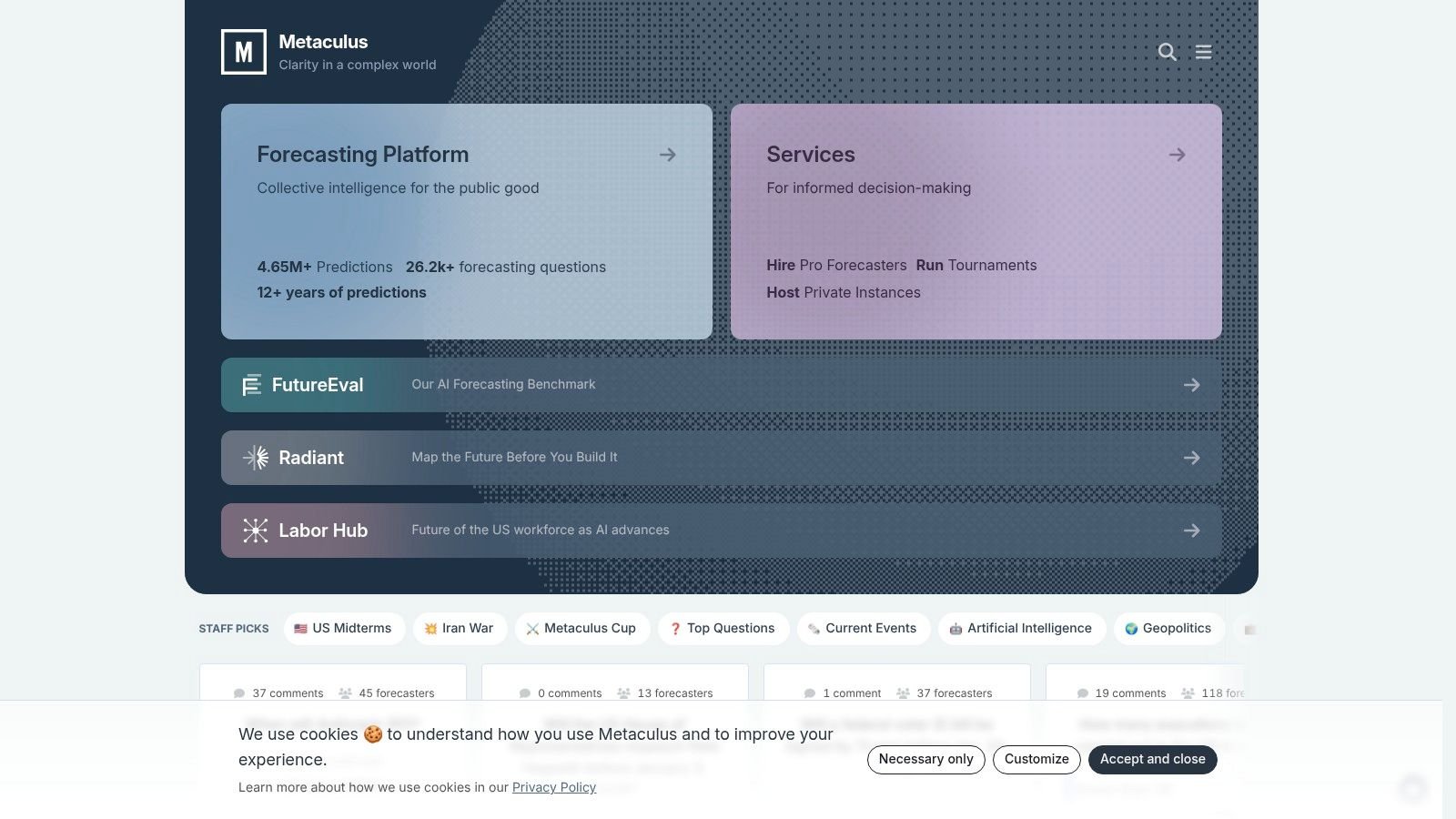
I recommend Metaculus if you want to improve probability estimates and you don't need a cash payout. I don't recommend it as a substitute broker. There is no conventional contract to sell at 3 p.m. because the price moved.
How the leading prediction market apps differ on focus, fees, access, and best use
| Item | Main Market Focus | Fee Disclosure | Access Limits | Best For |
|---|---|---|---|---|
| CoinStats | Crypto portfolio tracking, analytics, swaps, and staking | Premium pricing not specified; 7-day free trial | Supports 300+ wallets and exchanges; premium tracks up to 100 portfolios | Managing and analyzing crypto holdings, not trading event contracts |
| Kalshi | U.S. event contracts across politics, economics, sports, and more | Published fees vary by market and order | State and market restrictions; liquidity varies | Exploring a broad range of event markets on a dedicated platform |
| Polymarket | International markets across politics, sports, crypto, and other topics | Category-specific fees apply | Access depends on location; U.S. and international products are separate | Following global events and market sentiment |
| Robinhood | Event contracts across sports, politics, weather, and more | Published fee formula; commissions and exchange charges may apply | Approved derivatives account required; state and category restrictions | Robinhood customers seeking event contracts in their brokerage app |
| Interactive Brokers ForecastTrader | Contracts from ForecastEx, Kalshi, and CME Group | Published commissions and exchange fees vary by venue | Account eligibility and trading permissions apply | IBKR users comparing event contracts across venues |
| PredictIt | Political outcomes | 10% fee on trading profits; ACH deposits and withdrawals are free | Focused on political markets; platform rules apply | Users primarily interested in political questions |
| FanDuel Predicts | Sports, culture, financial, and crypto event contracts | Fee details not specified | Availability varies by state and market | FanDuel users seeking sports-focused event markets and other topics |
| DraftKings Predictions | Sports-oriented event contracts | Check current fees and contract terms in the app | Availability and rules vary by state | Existing DraftKings customers interested in sports markets |
| Coinbase Predictions | Event contracts operated by Kalshi | Fees shown during order confirmation | U.S. residents only; state and market restrictions apply | Eligible Coinbase customers who want to fund trades with USD or USDC |
| Manifold | Community-created questions across varied topics | Play-money Mana; no cash conversion | Participation and liquidity vary by question | Practicing forecasts and exploring niche questions without cash trading |
| Metaculus | Forecasting on science, technology, health, business, and geopolitics | Free participation unless a contest states otherwise | Some prizes are limited to specific tournaments | Building a forecasting record without conventional cash trading |
Match the App to Your Eligibility and Goals
No single name on this list is the best prediction market app for every reader. The usable one is the one you can open legally, fund in a currency you already hold, and exit without a surprise fee.
Three questions sort the field faster than a popularity ranking.
Can you legally access the product where you live? A U.S. resident and a reader abroad can see the same brand and hit different walls. Regulated event-contract access, brokerage permissions, and sports-brand products all move with state and country rules. If the eligibility page fails, the interface doesn't matter.
Do you already have a brokerage, crypto, or sportsbook account that removes a signup? Robinhood, Interactive Brokers, Coinbase, FanDuel, and DraftKings are convenience plays for people who are already inside those systems. Kalshi and the Polymarket products are dedicated venues, and they are not interchangeable with each other. PredictIt stays in the political lane, with a profit fee you should price in.
Do you want real money, or a practice forecast? Manifold's Mana and Metaculus scores don't pay you the way a settled contract might. They also don't take the stake a bad entry would.
A 2026 landscape scan reported that 79% of prediction-market users lost money during the previous year. Makers generally pay lower fees than takers, and a busy market can still be a bad fill for a small order. Forecasting the outcome correctly doesn't pay you if the entry price was too high or you sold early into a wide spread.
Shortlist two or three apps that match your answers. Open each official fee schedule and contract rule, ignore download charts, and start with a small amount you can afford to lose, or stay on a practice site until the resolution text is boringly clear. That is the whole selection method I trust.
If you want the eligibility and fee questions set next to other fintech and blockchain explainers, browse our Fintech and Blockchain coverage at Dutable and compare the account rules on the two or three official sites you shortlisted before you move any money.