Benefits of Artificial Superintelligence could include developing new cures, improving education, combating climate change, advancing engineering, and creating better systems for producing and distributing basic resources. Artificial superintelligence (ASI) is a type of intelligence that may outperform humans in many fields of study. If we successfully develop and use it responsibly, it could help address major global challenges and improve society. Although ASI does not currently exist, exploring its potential benefits can help society prepare for future technological changes.
Many of the world’s toughest issues present issues which are connected and which require in depth research, complex math, and input from many different fields. We may see a very advanced superintelligent system which helps researchers put these issues out there, which in turn puts forth various solutions and also which puts into the picture issues that present themselves which more traditional methods do not. But also with that said the results are not a given. What we see from the system’s performance, its dependability, safety and what it is trying to achieve and also how governments, businesses and communities decide to use it will play a large role.
What Is Artificial Superintelligence?
Artificial superintelligence is a term used for a putative AI system that will outperform us in almost all areas of intellect which includes reasoning, learning, scientific breakthroughs, and problem solving. As opposed to present day AI tools that do very well at what they are designed for, a superintelligent machine would in theory be able to come up with solutions to uncharted issues and make connections between fields of study. It may for instance take a biological, chemical and engineering approach to put forth a new medical solution or to develop better energy technologies. Also it is important to note that superintelligence is still a theory and we do not have a set time frame for when or if we will achieve it.
ASI’s value is in what it may bring to bear on how we as a species grapple with complex issues and grow in our responses to them. We see in the talk around super intelligent AI’s applications scientific growth, innovation, and very advanced problem solving. Such a system may use many more variables, put forth best ideas, and make better use of the info at hand. These improvements in turn may see play across many sectors. Also we must note that greater intelligence in itself is not a sure thing for positive results. Responsible development, proper oversight, and human input will still be key to which way advanced systems go and whether they benefit society or not.
1. Benefits of Artificial Superintelligence for Research and Health Care
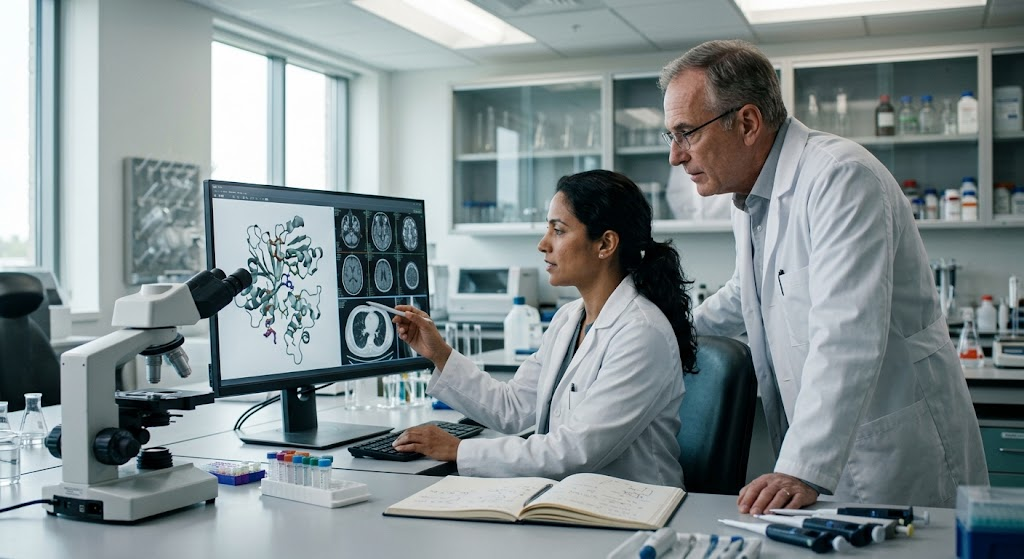
Scientific research is a very promising field for the development of super intelligent systems. Researchers put in many years to look at complex issues, to analyze results of experiments, and to put forth competing theories. A super intelligent network may help scientists to review large data sets, see what has been overlooked in the past, and to do experiments which will in turn bring in faster results. In physics it may play a role in us looking into basic issues with matter and energy. In chemistry it may help in the study of complex chemical interactions and in biology we could see how it plays a role in terms of genetic and cell processes. Also by drawing out the connections between different fields of research, these systems may speed up the discovery process and also put us into new fields of study.
Healthcare also has room for growth in terms of research and analysis. We see that which goes into developing a new drug. Scientists look at bio processes, they research possible compounds, they check safety and run clinical trials. A very advanced system may play a role in that by identifying which are the best drug candidates and also in looking at why we see different results in treatment between patients. Also it may support medical professionals in looking at relevant info and in seeing patterns related to certain conditions. In public health we may also see super intelligent systems which can predict disease outbreaks and also which medical resources to put where. At the same time medical decisions will still be that of qualified professionals, based on clinical evidence, which also takes into account privacy issues and which are closely watched over. Superintelligence may improve health care but at the end any health care decision or treatment will require to be verified before it is accepted.
The benefits of artificial superintelligence in healthcare could include faster medical research, improved analysis of complex biological data, and the discovery of promising treatment candidates. However, these possibilities must be evaluated carefully, and medical decisions must remain grounded in clinical evidence, patient privacy, and qualified professional oversight. To understand how current technology is already being explored in this field, see the use of AI in healthcare. Although future systems may become more capable, their recommendations must be independently validated before they are used to guide patient care.
2. Transforming the Education System and Improving Access.
Superintelligence will play a role in making education more personal by which I mean it will tailor learning materials to the individual student’s needs. Students vary in what they are interested in, what they are good at, and how fast they learn at the same time, which is also true that teachers have limited time to give in detail to each of them. An advanced educational assistant may identify what a student is having trouble with, put forth different ways to explain it, and put out there for them practice which is at their level. For example a math student may get step by step breakdowns and more practice, another may do better with visual examples or real world applications. This type of help may in turn help students to grasp difficult subjects and to build up their confidence. Teachers will still be very much a part of the picture as they are the element which brings in encouragement, human interaction, class management, and an understanding of the student’s individual situation.
One of the potential benefits of artificial superintelligence is the possibility of adapting lessons, explanations, and practice activities to individual learning needs. Such technology could help teachers identify areas where students need additional support while making educational resources more accessible to different learners. For a related discussion of existing educational technology, explore how AI supports education, including personalized learning and smart-classroom applications. Future systems should complement teachers rather than replace their guidance, while protecting student privacy, providing reliable information, and supporting fair access to educational opportunities.
Advanced AI also plays a role in expanding what education is available to remote areas and which has issues of teacher scarcity. We see in language translation, accessible learning materials, tutoring support, and help for teachers in the development of lessons some of its uses. Also we have in the case of people with disabilities which from better speech recognition, text to speech services, and materials that present info in easy to process ways. But that which is put forth by AI is not without issue. We see a need for stable internet access, affordable devices, accurate info and that we as a society put in place proper protections for student data. Also that which is put out by AI may at times be incorrect which is why we must get in the habit of fact checking what is presented and to think critically. In the end the best use of AI in education will be that which supports our human teachers and which puts into the hands of many what they otherwise would not have access to instead of replacing the personal connections which make education a truly valuable experience.
3. Tackling Climate Change and also Improving Agriculture.
Climate change is a complex issue which plays out in the interactions between the atmosphere, oceans, land, ecosystems, and human actions. We are only now beginning to understand these relationships which require large data sets and very advanced computer models. Superintelligent systems may assist scientists in the study of climate trends, comparison of models, and in what different environmental scenarios may play out for communities. Better projections may in turn support decisions related to flood protection, water resources, infrastructure, and disaster preparedness. Also we may see superintelligent systems used to research various combinations of renewable energy, energy storage, conservation, and carbon removal. By putting forth the best strategies and analyzing their results this superintelligence may play a role in environmental planning. At the same time it is important to note that climate prediction will always have an element of uncertainty and that tech based solutions will have to be put to the test against real world data and environmental reports.
Agric culture may see the same improvements in data analysis and decision making. Farmers put into account weather reports, soil health, pest and disease issues, and water supply as they plan out the year’s work. A superintelligent system may put all of that info together to present them with plant schedules which work best, what methods of irrigation to use, and which crops to grow. Also it may assist researchers in developing crops that resist drought, heat, or certain diseases. Also we see large scale systems which may play a role in reducing food waste by better storage solutions, demand prediction, and the organization of food transport. Also these may support food security and more smart use of resources. But for this to play out farmers will need access to this tech that is affordable, reliable local advice, and training. Also recommendations should take into account local knowledge and farming conditions which may not be the same in every community.
4. Improving Engineering, Energy, and Transportation.
Engineering projects are known for their complex calculations, high safety standards, and extensive testing. In the fields of bridge design, aircraft component manufacture, building construction, or industrial machine production engineers must balance performance, cost, reliability, and environmental impact. Superintelligent systems may assist them in evaluating a great many design options, predicting material behavior in varying conditions, and in the identification of weak points before break ground. This in turn may reduce waste of materials, improve efficiency, and support the development of more durable products. Also it may play a role in the discovery of materials which have use in medical devices, electronics and industrial applications. But at present it is to be noted that while superintelligent designs may look very promising on paper still they will require physical testing, independent assessment, and the input of professional engineering judgment which can only come from real world experience.
Energy and at the same time transport systems may benefit from what advanced technology has to offer. Superintelligent machines may play a role in better battery performance, in the design of improved renewable energy systems, and in the coordination of electricity supply with variable demand. In terms of transport we see it used in the analysis of traffic patterns, in the improvement of public transport timetables, and in the identification of what causes unneeded delays. Also we may see the use of advanced monitoring which in turn will allow authorities to identify issues with roads, bridges, rail infrastructure before they become serious. These changes may make cities run more efficiently and may in turn reduce resource use. But as we implement systems that affect physical infrastructure we must put in place extensive safety measures, robust cyber security, and reliable emergency plans. Also it will be of great importance that humans retain ultimate responsibility for any decisions which may impact public safety.
5. Supporting Enterprises, Governments and Economic Growth.
Businesses that often use info from reports, databases, customer records, and operational systems to make decisions. Superintelligent machines may assist companies in better understanding that info, which in turn may improve planning and the identification of what is amiss. We see in health care, product dev, customer care, logistics, and demand forecasting which are all fields that may benefit. Also small companies which may have trouble with admin tasks, customer input, and financial plan may benefit if the tools are of an affordable and reliable nature. In the public sector we see that large institutions may use this advanced analysis to improve resource allocation and do services better. If indeed these do go to waste and we see growth that is economic then it is very well may that we will also see that which is equitable distribution of that growth depends on business doings, public policy and access to tech resources.
Governments may put to use superintelligent systems which they will in turn use to look at very complex policy issues in the areas of housing, transport, education, health care, and employment. A high level application of this technology may be to play out different policy scenarios, determine what the results of those policies may be, and also to see how certain groups may be left out or affected disproportionally from said policies. Also it may put out info in a way that is easier for the public to understand thus which in turn will support more informed public debate. At the same time it should be brought to light that we also have large social issues at hand like what is fair, what upholds human dignity, what is the right degree of freedom, and what is the right amount of accountability. These are not issues that can be fully resolved with an algorithm. AI should play a role in the work of the policymaker but not enough to take over what is a very human task. Also we must put in place measures to prevent misuse of the tech, to protect personal data, and to see that power over tech does not become a monopoly of a few. Also we should see that economic growth is for the betterment of all communities and not a cause for ever growing inequality.
6. Realizing the Value in Responsible Development.
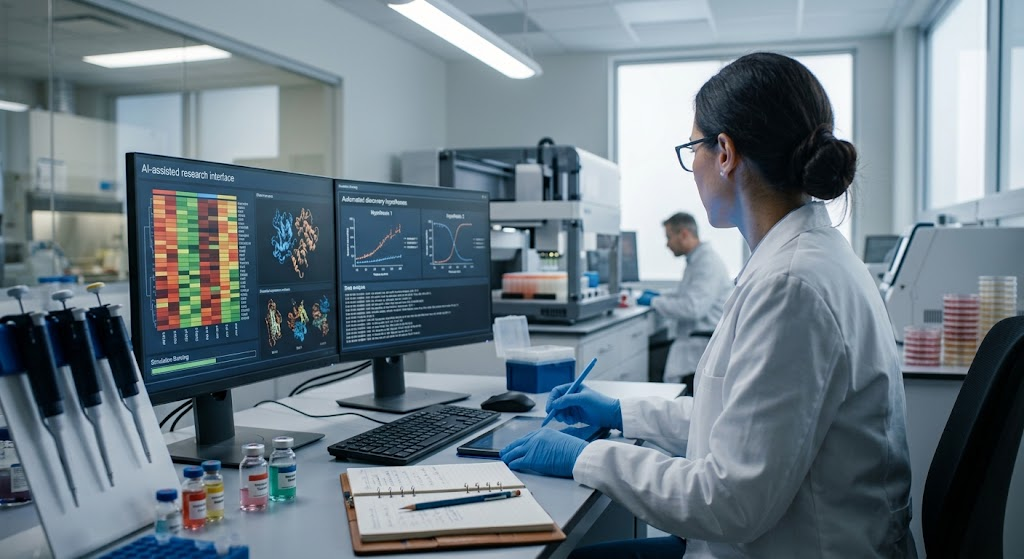
The outcomes of superintelligence will depend on if it is developed and put to use safely. We may have very capable systems which still present harm if what they are set to do goes against what we want, what they put forth is not what we want, or we don’t have the ability to control what they do. As developers go about this they must put forth into play testing, security, independent evaluation, and very clear lines of responsibility. In health care, transport, and public services which are very large scale applications very robust protection will be required. Also experts should be able to put the break on a recommendation, look into what went wrong in an unexpected outcome, and step in when needed. Also because superintelligence is still a theory we must look at what is yet to be determined regarding what it may do and how we may go about controlling it. Technical performance by itself will not be enough to say a system is safe or fit for wide scale use.
Equity in access is key. We see that developing and operating advanced systems may require large investment in computing infrastructure, great amounts of energy, and special expertise. Also we may note that without careful policy design the wealthy will tend to get the most out of these technologies at the expense of the poor. Governments and international bodies can play a role in this via education, in investment in infrastructure, in public interest research, and also in the right kind of international cooperation. Also workers will need to be supported as they take up new roles in changing industries. Also each community should be at the table in the discussion around how we use advanced systems in our schools, at work, and in public services. While superintelligence may open up new chances we must also note that it’s not to say that it will do away with poverty or inequality. In each society it will be in how we as a social group decide to use these technologies and what we put into them that will determine fair results.
Conclusion
Artificial superintelligence may play a role in us solving some of the most intractable issues we face as a society. In science and research, progress may happen more quickly, medical research may see what had not previously been seen, and education could put forward models of personalization that also increase access. Also it may enhance climate modeling, increase agricultural production, push us into new energy solutions out of what are now traditional methods, improve at pure engineering, and see transport efficiency jump. That also may cause businesses and governments to do better in their decision making processes and with resource allocation. While those are very real reasons to begin to take the issue of superintelligence very seriously there is also the fact that they are also very much up in the air. Its development, what those systems will actually do, and how they will be used are very much yet to be determined.
These benefits will only see the light of day with responsible development, effective oversight, and a base of reliable evidence and we also look at issues of fair access. Scientists will put to the test what they discover, health care professionals will do what they can to protect patients, and policy makers will have to take into account the rights which in turn will include the interests of affected communities. Also to be looked at will be the environment play in all of this, economic issues, and the issue of technology may be used in an unequal way. Thus superintelligence should be judged not only by what it does for us but how it is used. What it brings to the table in terms of best solutions for humanity’s problems while at the same time preserving human judgment, accountability, and that which we as a society put forward for a shared responsibility in the future.