Introduction
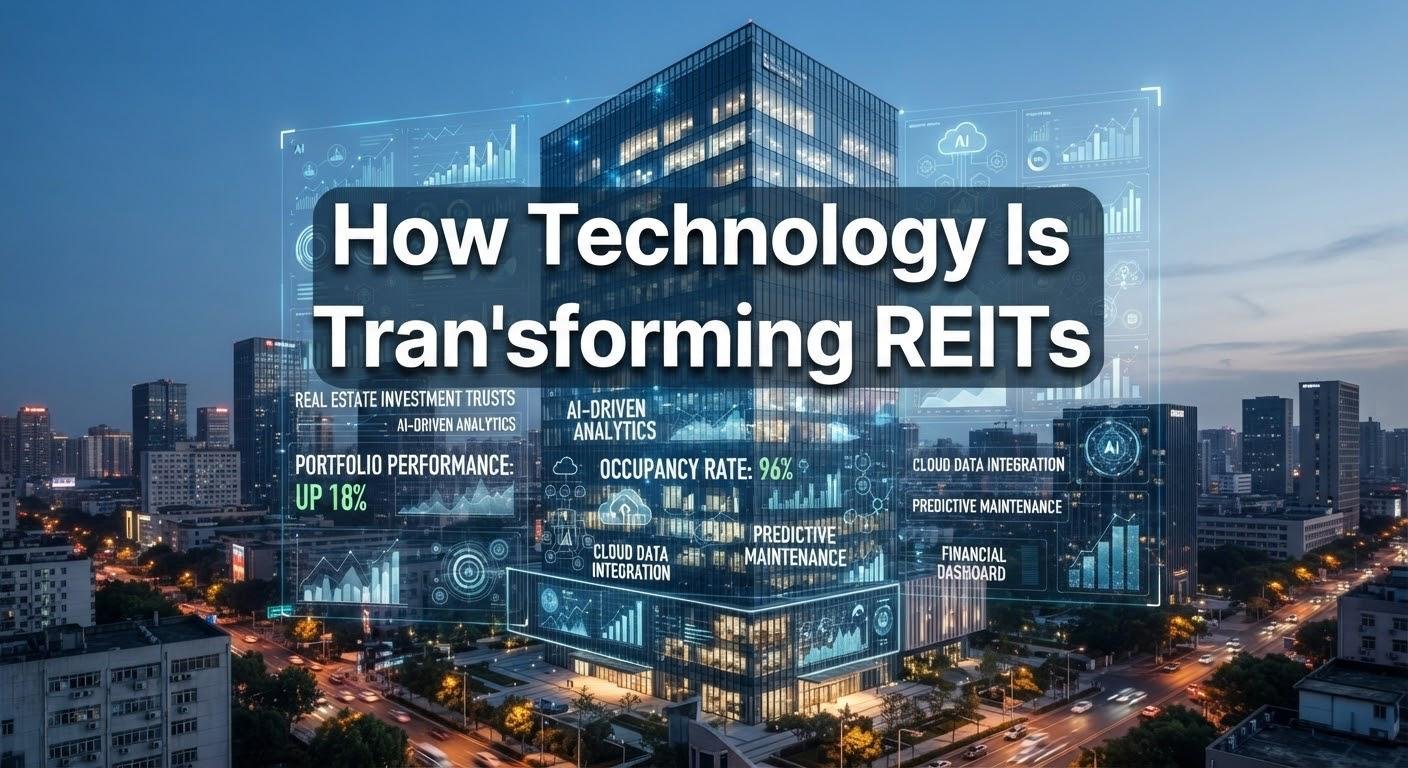
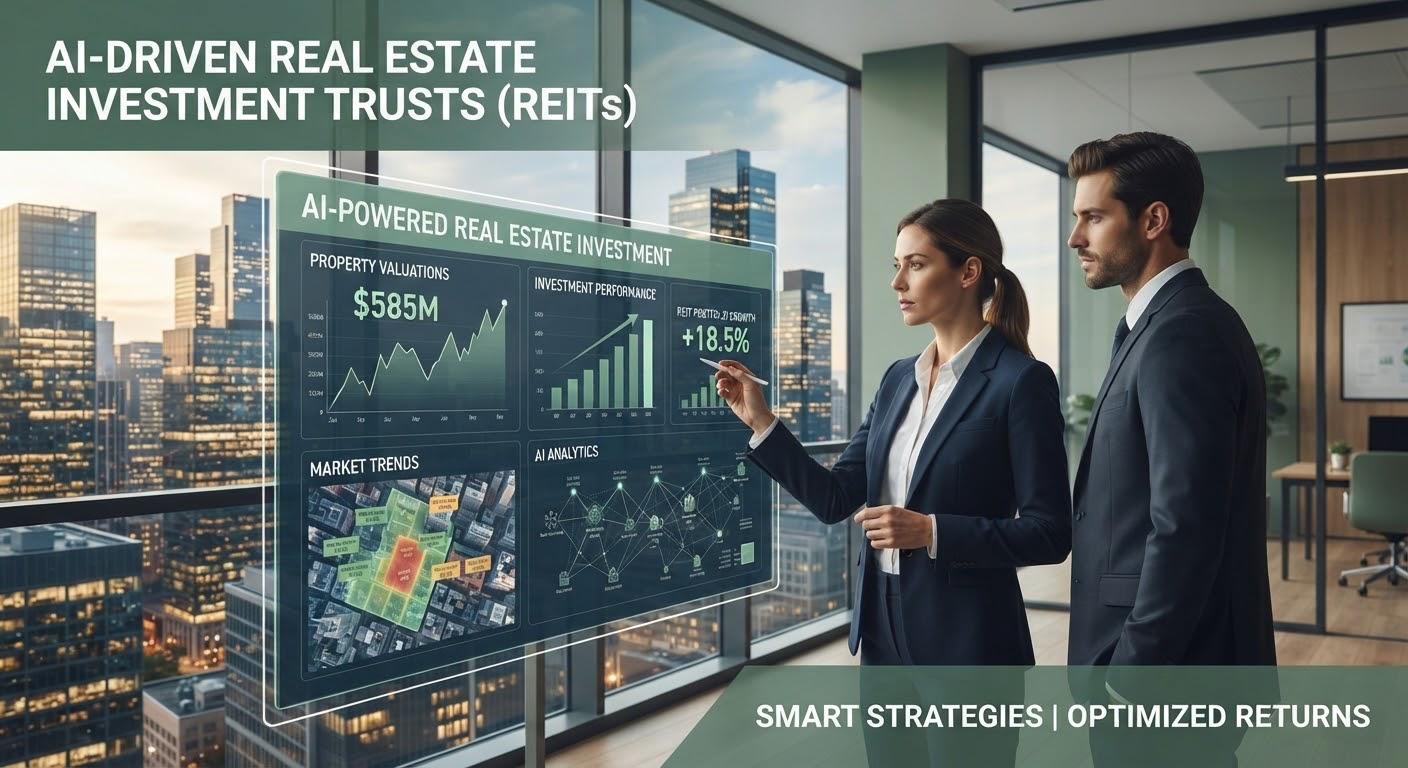
Today the world of real estate is technologically driven, so AI is increasingly becoming a crucial instrument for Real Estate Investment Trusts (REITs). This means that REITs must process a tremendous amount of data on the value of the properties they own, the rent that’s collected, who the renters are, costs involved in running the property, the financing, the market conditions and how the REIT’s investments are going. REIT managers now have a new tool to help them digest this data along with identify patterns, automate mundane tasks and make real estate investment decisions. AI in real estate investment management, AI can help REITs quickly analyze data and uncover patterns and relationships that might not be apparent to humans, complementing or replacing the use of historical reports and manual analysis.
There are numerous aspects of AI that are applicable to REITs, however, a significant portion of this can be tied to the complexity and magnitude of property investment. In a large REIT, hundreds of properties can be scattered across multiple cities and asset types, and each individual asset is tasked with collecting data about the leases, maintenance systems, financial statements, market reports, and building equipment and tenant interactions. All these information sources can be utilized by AI to organize and analyze. AI should not be seen as a substitute for investment experts, however, and should not be considered a means to generate greater returns. It is dependent on the quality of the data available, the reliability of its models, the judgment of decision makers and conditions of the real estate market.
How AI works with Real Estate Data.
One of the biggest benefits of AI in REITs is its capability to analyze massive amounts of data. Standard real estate analysis may include the use of spreadsheets, property reports, market data, financials, lease contracts, and other papers. This information can be reviewed by hand and can be time consuming, especially if an organization has a large and geographically scattered portfolio. The ability to handle structured and unstructured data on a much larger scale means that REIT professionals can consider more variables, such as when assessing properties and markets.
Machine learning systems are also able to detect relationships in historical information, and apply those relationships to foresee or categorize. For instance, a rental price analysis using an AI model might analyze factors such as local employment growth, population increase, property features, and historical transactions to determine what contributes to shifts in property demand. Natural language processing can be used to process and analyze written data like leases, property reports, tenant messages, and market commentary. It doesn’t mean that AI can have a 100% grasp of the real estate market. Rather, it offers analytical powers which could be used alongside human knowledge and make huge quantities of data easier to understand.
AI and Property Valuation
One of the areas in which AI can offer REITs a lot of analytical assistance is in the property valuation. When valuing commercial and residential real estate, some of the most important factors to consider are the rental income, occupancy, property location, comparable properties, operating expenses, interest rates, market conditions and expected cash flows. AI can analyze all these factors at once and draw patterns from the data from past trades and property performance.
Using machine learning models, property details can be compared with a vast database of properties and adjustments made for relevant characteristics, which can help with automated valuation. Some of the considerations for a model may include transportation access, surrounding economic activity, age, occupancy, building size, location, and rental rates. Furthermore, AI can assist in pinpointing properties where the current market value seems to be out of alignment with other market signals. This can provide investment teams with another analytical reference in evaluating acquisition and/or disposal opportunities. But, market value from an AI-generated valuation should not solely be taken as the correct market value. Historical data may lack certain features that are intrinsic to real estate assets, such as location, area, and price. Value may be affected by local regulations, non-standard lease terms, physical factors, development plans, and shifts in neighborhood needs. Human experts are still crucial in deciphering AI-generated content and in assessing the validity of the underlying assumptions in a valuation.

The use of AI in Investment Analysis and Decision Making for Acquisitions
REITs make periodic reviews of acquisition opportunities to ensure that real estate can provide adequate income and meets the investment goals. AI can help streamline this process by analyzing a vast number of investment opportunities based on specific parameters. An investment team will not need to search through all available properties to find those that match requirements for location, expected income, occupancy, price, property type, or growth, with AI-supported systems.
Artificial intelligence also has the ability to integrate property data with other economics and financial indicators. For instance, the growth in rent, vacancy rates, interest rates, population, employment, construction activity, and transaction history could be analyzed in a model used to make an investment decision. These factors can be used in conjunction to allow AI to investigate various scenarios before investing. This technology might therefore be able to serve as a decision support tool, instead of an autonomous investment manager. Investment professionals still need to do property research, check data, do due diligence, know the legal requirements, and determine if an opportunity is in line with the REIT’s strategy. While AI can help narrow down the field and enhance analytical efficiency, it can also help reduce uncertainty in property investing, but it cannot remove it.
AI in Tenant Management
Many REIT properties rely on the performance of their tenants, since rents are dependent on the quality of tenants. With the right information, AI can help with tenant management, by studying payment history, lease details, maintenance requests, communications, and occupancy trends. These observations can enable property managers to grasp tenants’ needs and pinpoint problems that could escalate into bigger ones. AI customer service systems can also answer common tenant queries and requests. A virtual assistant can for instance supply details regarding structure facilities, upkeep processes, payment procedures, or service requests. This can help relieve the property management team of administrative tasks and help staff deal with more complex tenant needs.
Predictive analytics can also be used to determine whether there are any behavioral shifts in tenants. A system could review the factors involved with lease renewal, vacancies, or late payments and notify managers of any need to provide more attention. However, managing personal and financial data is essential when implementing tenant-related AI applications. When implementing these systems, REITs have to take into account the potential impact of automated decisions, privacy, security and fairness.
Predictive Maintenance and Building Operations
AI can also be used to manage the maintenance of real estate properties. The conventional maintenance approach is either based on a predetermined schedule or reactively when equipment breaks down. Predictive maintenance is different because it relies on the data from the building systems and equipment to forecast times for maintenance.
Information regarding equipment operating conditions such as temperature, energy usage, equipment performance, vibration, etc. can be gathered by sensors and connected building systems. Such information can be fed into an AI model, which can detect patterns that could indicate equipment issues. For instance, an abnormal operating routine of an air conditioner may generate an alarm signal before the air conditioner fails. For the REITs, this can help cut down on any unforeseen repair expenses, maintain minimal disruptions, and prolong the durability of costly gear. It can also enhance the efficiency of a building by detecting any unusual energy use or patterns in the building’s operations. But it is important to note that predictive maintenance doesn’t replace the need for physical inspections and trained technicians. While AI predictions can be valuable tools, they should complement rather than supplant the skills and experience of maintenance workers in assessing the condition of a building.
Forecasting Market Trends with AI
A number of factors impact the real estate market, such as employment, population growth, consumer habits, construction activity, interest rates, inflation, and local economic activity. These factors are linked in complicated and intricate ways and therefore predicting the condition of the property market can be difficult. AI can enable REITs to analyze past and present information and make better-informed predictions about market scenarios.
Relationships between economic indicators and property outcomes like rent growth, vacancy rates, property transactions or property prices can be identified using machine learning models. Another benefit of AI is its ability to analyze data across various markets, allowing REIT managers to compare different markets and spot trends. For instance, if a population, employment and/or business activity is growing, that may be an indicator that a specific market should be explored further.
But it’s still a forecast, and the outlook is unclear. Unexpected events like economic events, regulatory changes, geopolitical changes and investor sentiment can make historical relationships less reliable. The predictions made by AI models are based on the information that is available, so if the future conditions are very different from the past, it could have an impact on the predictions. Thus, REITs should rely on AI forecasting and not take the predictions as an absolute.
Implementing AI to Tackle Risks
The risks in the property portfolios of REITs are of special interest because they can come from market-related, financial, operational and environmental risks, as well as risks related to tenants. By analyzing vast amounts of data and drawing attention to any unusual patterns, AI can help identify potential risks.
For example, if an AI system is used to monitor occupancy, rental collection, property costs, debt costs or market prices changes. A sudden drop in one indicator or more could result in further examination. AI can also enable REITs to perform scenario analysis, which involves making predictions on how portfolios would perform under various economic scenarios, such as a rise in interest rates, a drop in rents, a rise in vacancy, and a decline in property demand. So the advantage of AI is that it constantly assesses information instead of making periodic assessments. However, risk models are only as accurate as the information and assumptions they’re based on. The model could provide an incomplete assessment if there are important risks that are not included in the data. Therefore, it’s crucial to have human intervention when interpreting risk indicators derived from AI.
Artificial Intelligence and Portfolio Optimization
The decision of whether and how to allocate capital to properties, sectors, and geographic markets is a key challenge facing REIT managers. Portfolio optimization is a process of finding a balance between income, growth, diversification, liquidity and risk. AI can help by analyzing various asset mixes and assessing what the potential shifts in the characteristics of the portfolio might be based on various assumptions. A model, for instance, could calculate the possible impacts of exposure to the industrial properties if there were a reduction in exposure to another sector. It may take the following: historical performance, occupancy, rent growth, geographic diversification, financing costs and predicted market conditions. AI can also detect concentrations where they are not apparent from considering individual properties in isolation.
This can assist investment teams to analyze more situations within a shorter period of time. But, the conclusions of a given optimization are highly contingent on the assumptions made. An historical-based model may not true to the future conditions. Therefore, the portfolio managers need to use the qualitative analysis along with their investment goals, regulations, and understanding of individual properties.
The Difficulties of Applying AI to REITs
While there are several challenges that come with the use of AI for REITs, the benefits can still be felt. One of the most critical data quality aspects is. AI systems are reliant on the correct and pertinent information, along with ample data. If property records are not consistent, market data is outdated, there is a lack of tenant information or financial data has errors, AI-generated results can be less reliable.
Other challenges are transparency. Some of the more sophisticated AI models are able to generate suggestions without making the rationale easy to understand for the user. This can be a challenge when investment professionals are required to provide an explanation as to why the investment at hand was deemed attractive or why a risk was identified. Security and privacy are also of concern. REITS can handle confidential financial, tenant, employee and property data. Incorporating big data and artificial intelligence may result in extra security needs. Organizations have, therefore, to implement suitable access control, control of data, monitoring and security protocols.
In addition, there is the potential for undue dependence on technology. Patterns can be identified by AI, but they do not imply a forecast of future events. When the decision maker assumes that the AI’s recommendation is right, he/she may miss out on crucial information that the AI system cannot pick up.
The Future of AI in REITs
As REITs gather more data and are more likely to use increasingly connected property technologies, the role of artificial intelligence in REITs will continue to grow. AI could be even better embedded in property management platforms, investment research systems, building management, tenant services, financial forecasting and even in portfolio monitoring. The most valuable use cases will probably be those where AI powers up the ability to gather and process information with the experience of real estate professionals. AI does not take the place of human decision-makers, but automates repetitive analytical tasks and allows professionals to concentrate on strategy, due diligence, negotiation, and relationship management. Similarly, the technology can help to continuously track portfolios and not just periodically. With increasing adoption, there is a need for the REITs to define data quality measures, model validation, privacy and cyber security, and human oversight. These safeguards will be crucial as decision-making about investment can lead to a lot of financial implications.
Conclusion
AI is transforming the way REITs evaluate real estate, maintain properties, engage with tenants, evaluate risk, predict markets and optimize portfolios. This provides REITs with the power to analyze vast amounts of property and financial data, which can help them uncover patterns and relationships that might not be apparent from a manual analysis. AI can enhance the speed and depth of decision support from the initial automated valuation to the acquisition screening process and even to predictive maintenance and portfolio analysis. Meanwhile, AI is not an assurance of investment returns. Economy, interest rates, regulations, local weather, tenant actions, and anything else that comes out of the woodwork is still a part of the equation in real estate markets. AI algorithms can also deliver inaccurate results if their input is incorrect or their hypotheses are incorrect. Therefore, the best strategy is to use AI alongside human expertise, investment principles, good risk management, and due diligence. With continued adoption of digital technologies, AI is poised to grow increasingly vital for grasping intricate property markets and informed decision-making in REIT investing.
Get more well researched information about Artificial intelligence in REITs here.