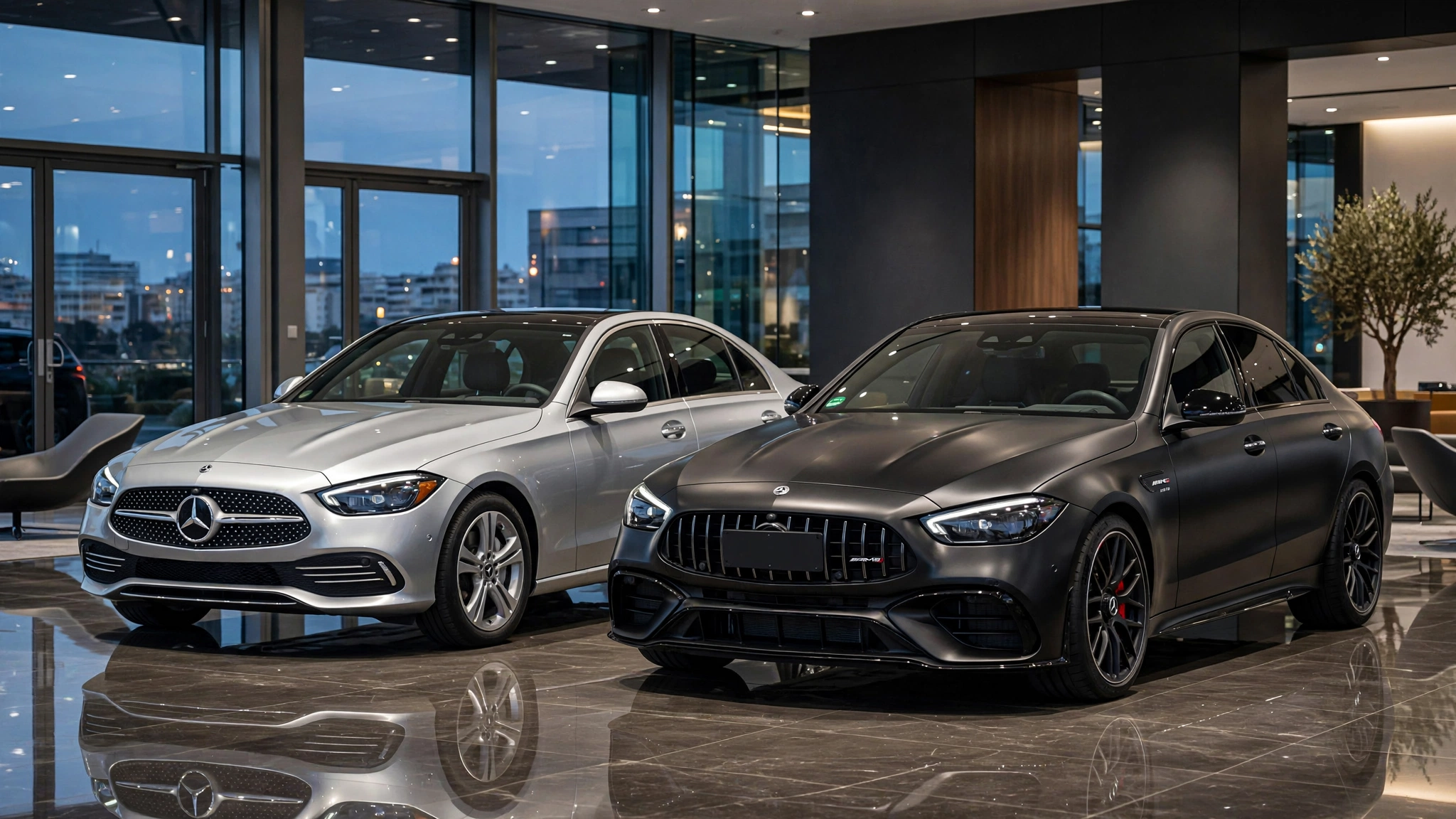
AMG vs regular Mercedes is important to understand because Mercedes-Benz is known around the world for luxurious cars that are comfortable, technologically advanced and stylish. In addition to its regular models, Mercedes-AMG makes high-performance options available to drivers seeking more speed, agility, and a thrilling driving experience. There are two that have the iconic three pointed star, but are built for different things. The regular Mercedes-Benz has a more leisurely character, with focus on everyday comfort and usability, whereas the AMG has a more sporty character, with focus on power and precision.
Before deciding on Mercedes-Benz models, you should know what you’re getting for your money. There are definitely performance and styling improvements to be had on an AMG machine, but they are also a bit more expensive to purchase, more expensive to insure, more expensive to fuel and more expensive to maintain. This guide details the major differences between AMG and regular Mercedes, to see if it is worth investing in.
Difference between an AMG and a Regular Mercedes-Benz Model
To many consumers, AMG means more horsepower on a standard Mercedes-Benz, but there’s more to it. Major systems like the engine, suspension, steering, brakes, transmission and exhaust are redesigned by Mercedes-AMG engineers. The improvements make the car more powerful, agile and sporty. Even the driving modes are tweaked to make the car feel more aggressive and on the road.
Comfort, efficiency and refinement are the key priorities in the design of regular Mercedes-Benz models. They are easier on the ride, they are easier on the power, and they focus on luxury, not performance, in their cabs. They are still fun to drive, and they offer outstanding ride quality, which makes them perfect for driving to work every day, for family use and for long journeys – and they retain a ‘premium’ feel that is expected of the Mercedes-Benz brand.
The performance of the engine is the biggest difference.

The biggest difference between AMG and regular Mercedes is in regards to power. Usually, it uses a standard 4-cylinder or 6-cylinder engine, which is turbocharged and designed to deliver both quality performance and fuel efficiency. They offer smooth acceleration, adequate performance for commuting, and are not overly expensive to run. On most city streets and highway rides, they will be more than adequate for most drivers.
Engineers have optimized or handcrafted these engines for AMG models to provide a much greater level of power and torque. The engines in many AMG cars are put together in the “One Man, One Engine” manner, meaning that one person does the entire process of putting the engine together. Any ride is more thrilling, with faster throttle response, deeper exhaust notes and more power. These cars cater to enthusiasts who value performance in addition to luxury.
AMG Performance Technology
AMG cars are also equipped with improved cooling systems, sport transmissions, state-of-the-art turbocharging and special driving software. The enhancements enable the engine to perform at its optimum during high-performance driving, while remaining reliable. Transmission acceleration is faster and the different driving modes can make the car significantly more powerful on the press of a button.
These engineering improvements add a definite character to the AMG cars. But to perform at this level, the components have to be more specialized; of course, this means servicing and repair costs will rise over time.
Suspension and Braking Systems
Standard Mercedes-Benz variants are designed to give a comfortable ride with suspension systems that help to absorb road noise. These cars are easy to handle in traffic, yet steady on the highway with light steering. Many models have adaptive suspension, which lets the driver adjust to either comfort or sport positions while retaining a high level of ride quality.
AMG models get upgraded suspension systems, stiffer springs, stronger chassis parts and sporty steering. The improvements minimise body roll in corners and improve handling over speed. The use of larger brake discs and multi-piston calipers further enhances stopping power, ensuring drivers can be confident in their driving while maintaining superb safety.
Cool exterior and interior styling
The most obvious way to tell the difference between an AMG and a normal Mercedes-Benz is by looking at it. The extra-big alloy wheels, front and rear aggressive bumpers, quad exhaust tips, extra-large air intakes and distinctive body styling all give the AMG models an extra big personality. These design features are also used to enhance cooling and aerodynamics, not just for show.
In the cockpit, AMG cars keep the performance vibe going with sport seats, flat-bottom steering wheels, AMG-only digital instruments, high-quality fabrics, carbon fiber or aluminum detailing and badging. While standard Mercedes-Benz interiors are luxurious and well-equipped, AMG cabins offer a more driver-oriented environment, complementing the improved performance of the vehicles.
Economic costs including price and owner costs.
Price is one of the major considerations that play into a buyer’s mind. The high performance found in AMG versions raises the price of the standard versions, as does the use of upgraded engines, suspension systems, breaking systems, high quality interiors and advanced engineering. The cost of the model varies from several thousand dollars to over $30,000.
There are also costs involved in owning the car other than the initial purchase price. The overall investment includes financing, taxes, registration costs and optional performance packages. If buyers are looking to keep the vehicle for several years, they should take into account overall cost of ownership, in addition to the initial price.
Insurance and Maintenance
The insurance cost for AMG variants is usually high as the insurance companies believe that they’re higher performance cars with higher repair expenses. Although factors like age, driving record, and location continue to impact premiums, owners of AMG cars can anticipate that their coverage will be more costly than that of similar standard Mercedes-Benz models.
The higher the number of AMGs, the higher the maintenance costs. Performance tyres wear out quicker, parts for braking are more costly, and new parts are usually more costly than the standard parts in the vehicle. AMG cars have a high specification and to ensure optimal performance the only way to achieve this is to service and replace parts at the right intervals and to use the correct manufacturer approved parts and components, which can make owning an AMG noticeably more costly.
Fuel Economy & Everyday Practicality
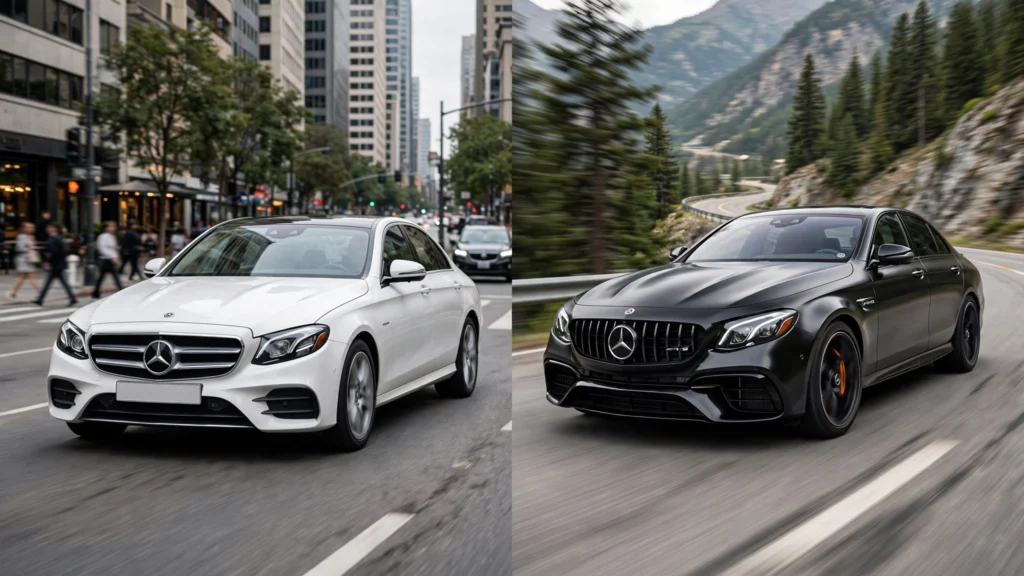
In other areas the regular Mercedes-Benz models have an edge: fuel economy. They have engines that fit for both performance and efficiency, meaning that drivers can have luxury without having to visit the petrol station often. This can be significant when it comes to saving money for anyone who commutes and travels long distances.
The natural disadvantage of AMG is that they are not as efficient as their non-AMG counterparts, as they are more focused on performance. AMG engines are more fuel efficient than standard versions of Mercedes-Benz engines, with today’s AMG engines employing mild hybrid systems and better engine management to help lower fuel usage, but even so, they burn more fuel than standard versions. Purchasers should think about the frequency of use, and look at the extra costs of operation and whether these are affordable for them.
Who is the AMG for?
For those who truly appreciate the driving experience and are looking for a car that offers exhilarating acceleration, agile handling, and a unique sound, an AMG model is a great option. Regularly driving on the serpentines or, more simply, appreciating high performance engineering will reward drivers every time they sit in the driver’s seat of an AMG.
But it’s not all sunshine, as buyers should also be ready to deal with the more expensive ownership. AMG is also all about higher insurance, fuel, maintenance and replacement costs. These extra expenses are all part of the mix for enthusiasts and often their value is justified by the excitement and performance they receive in the vehicle.
So, who should opt for a regular Mercedes-Benz?
The standard Mercedes-Benz is perfect for those looking for luxury, state-of-the-art technology, reliability and comfort. Despite all these models’ premium quality, they offer smooth performance, a classy interior and lower operating costs, and still don’t compromise on quality that has made Mercedes-Benz one of the top luxury brands in the world.
Many Mercedes-Benz drivers feel that a standard version of their car is just as good as one with AMG modifications, without the high costs and complexity that come with them. It offers the most comfort, utility and value, and is ideal for both families and professionals who commute or require an increased amount of comfort.
Conclusion
In the end, it’s up to your preferences when deciding between an AMG and a standard Mercedes-Benz. For anyone hoping for a standard Mercedes-Benz to provide luxury, comfort and lower costs, it’s a great value and a superb luxury car.
However, if you prefer an exhilarating ride, great handling, hand-made construction and fun driving, an AMG may be a worthwhile investment. It comes at a higher price point when it comes to buying and keeping up, but it offers a fun car experience that is unforgettable. Knowing yourself, your financial needs, and your plans for the long-term will help you determine which Mercedes-Benz will better suit your needs.