
Introduction
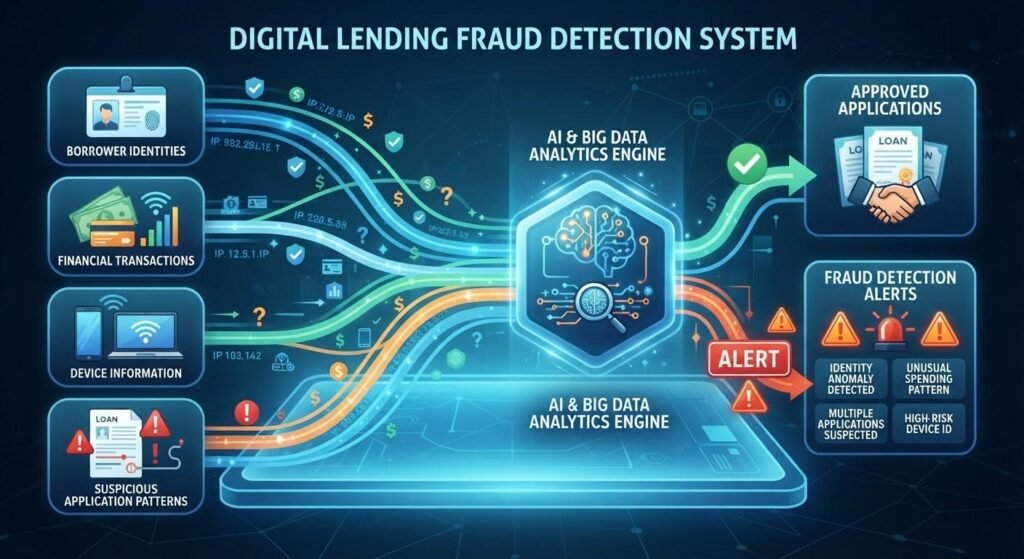
Digital lending has changed the way individuals and businesses apply for loans. They can easily apply for loans, be assessed for a loan and get approved using mobile applications, online banking and fintech. With more people taking out loans online there are now increased threats of fraud. Individuals may try to steal personal information or fake their details. This may be done by stealing personal details, tampering with identifying documents or creating fake financial information. This can cause lenders to lose large amounts of money. Financial institutions are using big data in digital lending fraud detection to help analyze personal borrower information, detect suspicious activity and identify fraudulent activity. Combining technologies including machine learning, behavioral analytics, transaction monitoring and data analysis can help increase the security of the lending process.
1. Improve Identity Verification
One of the key areas big data can help detect fraud in digital lending is during the identity verification process. Fraudsters often steal personal details or create fake identities using tampered identification documents. Big data can help financial institutions compare borrower information with various data sources including identity services, banking information, credit reference and previous applications. This can highlight any discrepancies within the information provided including name, address, phone number, date of birth and other personal details. If discrepancies are found between the identification details provided and what is already known, further checks can be carried out. Large amounts of identity information can be analyzed to help detect any suspicious activity and identify fraudulent applications.
2. Detect Synthetic Identities
Synthetic identity fraud is when criminals create fake identities using real personal details mixed with fake information. This can be difficult to detect as some of the information will be real. Big data can help detect these fake identities by looking at the links between the information provided. Machine learning can help detect any abnormalities in the personal details including fake email addresses, mismatched residential history and financial information that don’t match what the borrower claims. Patterns can also be detected by looking at repeated patterns within unrelated applications. Comparing this information with previous lending data can help identify any potential fake identities and stop them getting credit, helping to reduce losses caused by those who have no intent to repay.
3. Highlight Suspicious Transactions
Analyzing financial transactions can help detect fraudulent activity. Big data can help detect unusual activity including large deposits, abrupt withdrawals, repeated transfers and abnormal payment patterns. A fraudster may deposit money into an account temporarily to give the appearance of having a steady income. Advanced analysis can help detect if the transactions are abnormal by looking at how frequent, how much and where the transactions are coming from. If any suspicious patterns are found, lenders can ask for further evidence. This helps financial institutions identify if the financial information is reliable.
4. Identify Repeated Applications
Repeated applications can be a red flag indicating organized lending fraud. Big data can help identify any suspicious activity by comparing application information with internal data sources and external information. The information can help identify any links between applications by looking at phone numbers, email addresses, identification, bank accounts, device information and the time of application. If multiple applications have been made from the same device using different identities this could indicate an attempt to fraudulently obtain multiple loans. However, multiple applications shouldn’t be automatically identified as fraudulent as genuine customers may be comparing lenders or have had delays.
5. Device Fingerprinting
Device fingerprinting can help digital lenders identify devices by looking at a series of technical details including operating systems, browsers, device settings and other information. Big data can help by analyzing this information along with application history and account activity. This can help identify if multiple loan applications have been made from the same device. Device intelligence can also help identify any abnormalities. For example, if a long standing customer suddenly logs in using a device that has been previously used to make fraudulent applications. This can help identify any suspicious activity by using other security indicators. However, care needs to be taken when using device fingerprinting as multiple users may be sharing a computer, mobile networks can change and devices may be upgraded.
6. Behavioral Analytics
Behavioral analytics can help detect any unusual activity by looking at how individuals interact with digital lending services. Instead of looking at the information provided, the system looks for patterns in activity such as typing speed, mouse movement, touch screen interactions, login frequency and how long it takes to fill in application forms. Big data can help identify any unusual activity by comparing the activity to known patterns. If an application was filled in very quickly with automated activity this may need further investigation. Behavioral analytics can also help identify account takeovers by looking for any sudden changes in activity. Whilst everyone will behave differently, multiple indicators can help detect any potential fraudulent activity.
7. Machine Learning
Machine learning can help detect fraud by analyzing large amounts of data. Anomaly detection can help identify any unusual activity by looking at application frequency, transaction amounts, income, repayment, location and account activity. This can help identify any unusual patterns. It can help detect any suspicious links that may be difficult to identify using traditional security systems. For example, if a borrower has provided consistent personal details but has unusual transaction activity or financial information from previous fraudulent applications. Risk scoring can also be added to applications to help prioritize which applications need investigating. As the models are given reliable new data and regularly reviewed they can help identify new fraud tactics.
8. Real Time Fraud Detection
Real time fraud detection can help identify any suspicious activity whilst applications are being made. Traditional fraud detection may not be able to spot fraudulent activity quickly enough as it may rely on regular checks. Big data can help analyze application information, account activity, login activity and identity verification in real time. If any potentially fraudulent activity is detected automated systems can raise alerts, put applications on hold or ask for further verification. For example, if there has been a sudden change to the account ownership information and a suspicious loan request then the security team can be immediately informed. This helps reduce the time between identifying any suspicious activity and taking action to help prevent any financial losses.
9. Biometric Verification
Biometric verification can help add an extra layer of security by verifying identities using unique personal or behavioral information. Common verification methods include facial recognition, fingerprint recognition, voice recognition and liveness detection. Liveness detection helps to ensure the biometrics are from a real person rather than a photo. Big data can help improve biometric verification by looking at verification results with identification documents, account information and previous verification information. Facial recognition can be used with document verification to identify discrepancies between the details provided and those seen. This can help make impersonation harder. However, care needs to be taken to ensure sensitive information is protected. Some error may occur due to technical issues, lack of accessibility and attempts to tamper.
10. Improve Cyber Security
Digital lending services hold valuable information such as personal identification, financial information, account details and transaction history. This makes them a target for cyber criminals wanting to steal customer information. Big data can help improve cyber security by analyzing network activity, login attempts, system activity and access. Advanced monitoring can help detect any repeated failed login attempts, unusual account activity, suspicious data transfers and compromised accounts. Machine learning can help identify any new attack patterns. Combined with encryption, multi factor authentication, access restrictions and regular security checks big data can help protect sensitive information.
11. Ensure Data Accuracy
Accurate, consistent and high quality information is needed to ensure fraud can be detected. If there isn’t enough, out of date, duplicate or tampered borrower information then even the best analytics may not provide accurate results. Big data can help financial institutions look at information from various sources to identify any discrepancies. For example, there may be discrepancies between the employment information provided and income details available. Bank statements may also show discrepancies between the transactions. Data validation can help identify any missing information, duplicate information, abnormalities and discrepancies between linked databases. Implementing stronger data governance and regularly updating information can help improve fraud detection and reduce any incorrect judgments.
12. Reduce False Positives
Whilst big data can help detect fraud, financial institutions should ensure genuine borrowers aren’t rejected due to unusual financial activity. False positives can occur when genuine applications are identified as fraudulent. Machine learning can help reduce this by looking at multiple risk factors. For example, an applicant may have unusual income but this could be due to them being a genuine freelancer or small business owner. Shared devices and frequent transactions may also be due to normal financial activity. Lenders should combine automated risk assessment with manual investigations, clear verification processes and regular model reviews. They should also ensure their systems are not putting certain customer types at a disadvantage. This can help improve fraud prevention.
Conclusion
Big data is becoming an essential part of fraud prevention in digital lending. Financial institutions can analyze large amounts of borrower information, detect suspicious patterns and respond to any threats more effectively. Identity verification, synthetic identity detection, transaction monitoring, device fingerprinting, behavioral analytics, machine learning and real time fraud detection can help increase the ability to detect fraudulent applications. Biometric verification, cyber security and accurate data can also help increase the security of digital lending. However, financial institutions should ensure their data is accurate, models are regularly reviewed, customer privacy is protected and false positives are reduced. Intelligent data analysis, responsible lending practices and human intervention can help digital lenders create secure, reliable and accessible online loan applications.
Get more well researched information about Big Data Fraud Detection here.