Introduction
As digital banking has rapidly evolved, customers now have new ways to access financial services, make payments, approve transactions and manage their accounts through mobile banking applications and online financial platforms. While these have made banking more convenient, they have also introduced new threats which may affect customer security. Cybercriminals are becoming more prevalent in using techniques such as phishing, identity theft and account takeovers. While traditional security features such as passwords and PINs are still important, financial institutions are using biometric authentication to make digital banking more secure. This works by using physical and behavioral traits such as fingerprints, facial features and voice recognition to verify customers. This personalizes the process and helps banks secure customer accounts more effectively.
Biometric Authentication
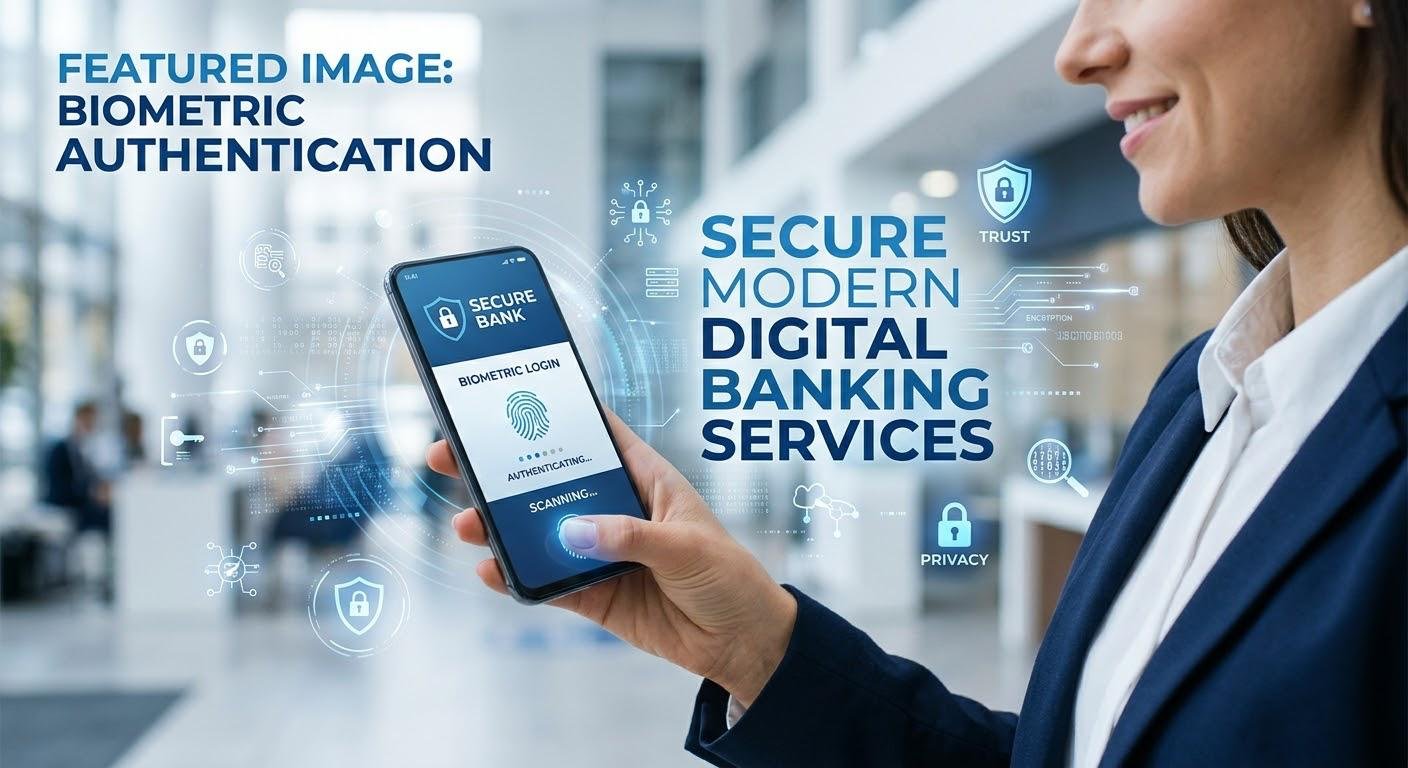
Biometric authentication is a security technique that uses unique biological and behavioral characteristics to identify or verify individuals. Rather than using information that users remember or items they have, biometric authentication will use individual characteristics. In modern banking, biometric authentication is often used within mobile applications, internet banking, payment systems and digital identity verification. When registering customers, the bank will capture their fingerprint, facial features or voice. The system will then convert this into a digital representation known as biometric templates. When verifying customers, the system will compare the new information to existing templates. If there is a match within an acceptable level of accuracy, the system will confirm the customer and allow them to access the desired service.
Types of Biometric Technology
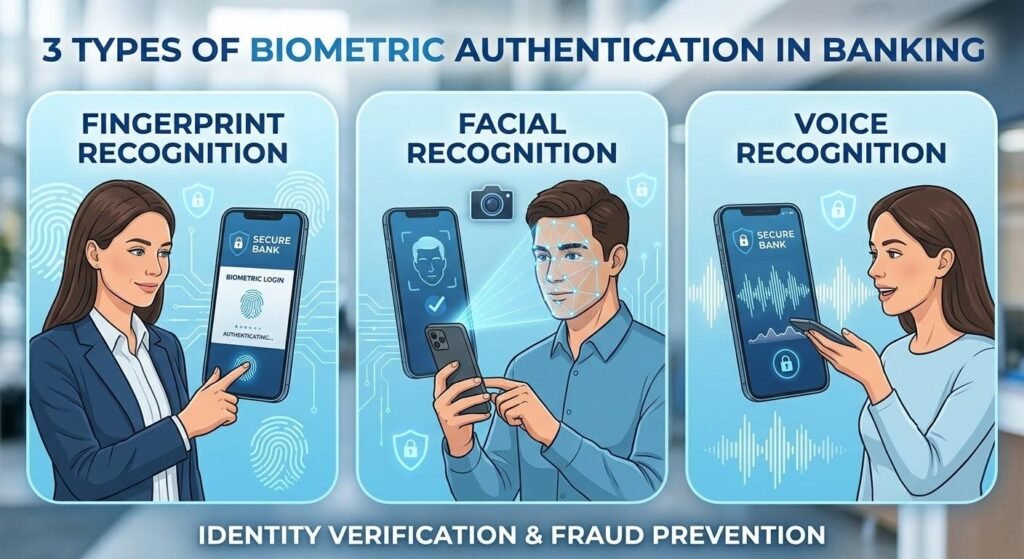
1. Fingerprint Recognition
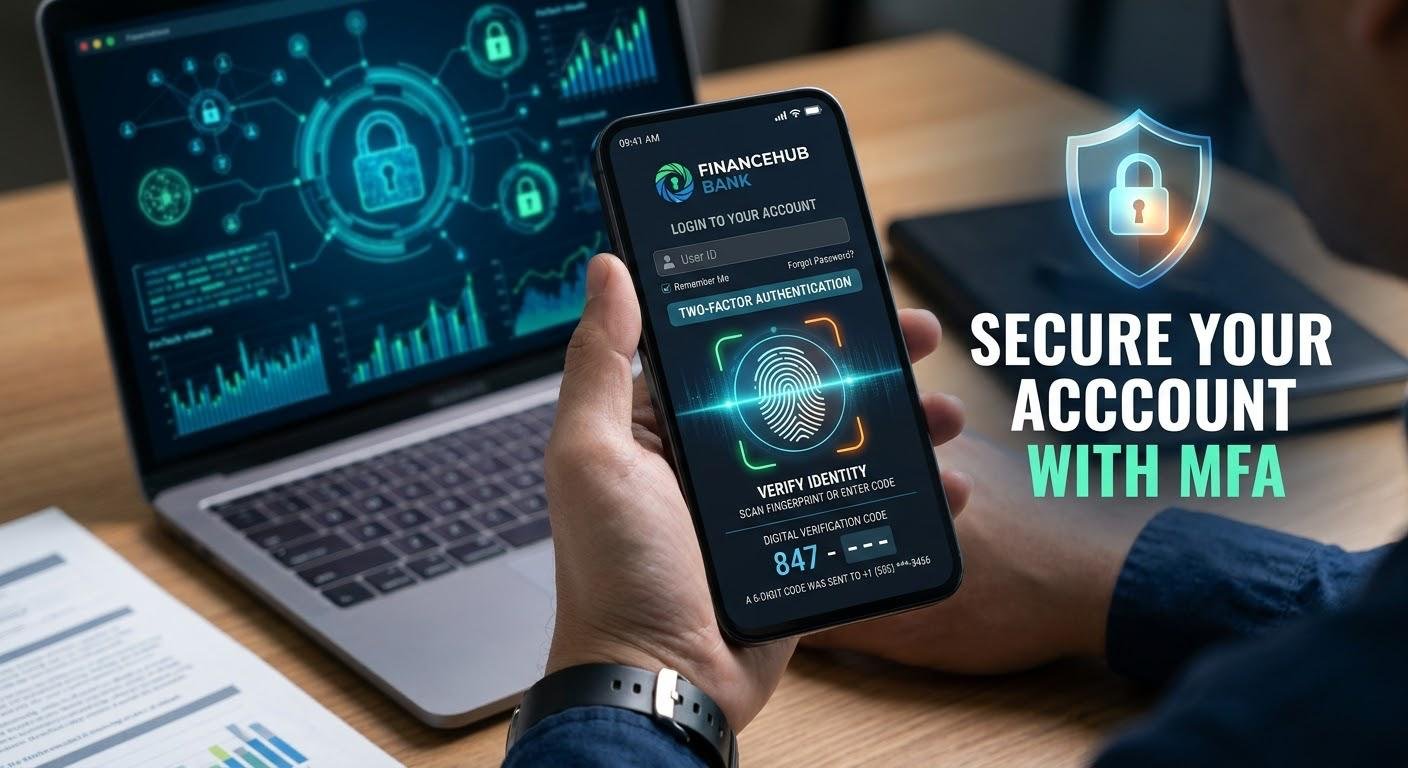
Fingerprint recognition is one of the most popular biometric authentication features used in digital banking. This works by looking at unique features of fingerprints to match them with an individual. Customers can use fingerprint scanners within their smartphone to access their banking application, authorize some transactions and verify themselves. This can be beneficial to financial institutions as it provides a simple verification process. However, criminals may attempt to counterfeit fingerprints. So banks and device manufacturers need to ensure they have a reliable fingerprint recognition system and secure hardware, anti-spoofing and additional security features.
2. Facial Recognition
Facial recognition uses unique characteristics of a customer’s face such as eye spacing, structure and nose shape. Facial recognition uses cameras and artificial intelligence to analyze facial features and compare them to previously registered details. This can be very useful for customers to access their mobile application, set up remotely and verify their identity. For instance, if they are setting up an account remotely they may be asked to take a photo or complete facial recognition to ensure the individual is the same as the information provided. This removes the need for customers to visit physical branches. However, this can be vulnerable to photos, videos, deepfakes and other methods of impersonation if appropriate security measures aren’t in place.
3. Voice Recognition
Voice recognition uses unique characteristics of a customer’s voice to verify them. This looks at the frequency, pronunciation, rhythm and speech patterns to create a voice profile. When verifying, the system will compare the new voice recording to previously registered voice details. Some banks use voice recognition within their telephone banking system. This can make banking more convenient for customers who struggle with using fingerprint scanners or facial recognition. However, criminals can use recordings, fake voices and artificial intelligence voices to impersonate real customers. So banks need to have advanced voice verification systems, anti-spoofing and alternative verification methods.
How Biometric Authentication Works
Biometric authentication typically involves 3 stages; registration, biometric processing and verification. During registration, the bank or approved device will capture biometric details and turn them into a digital template. Depending on the system, this can be securely saved onto the customer’s device or within a secure banking system. When trying to access a banking application or authorize a transaction, the system will capture new biometric details and process them using specialized algorithms. The new biometric data will then be compared to the previous template. If it is verified successfully, the system will allow the customer to complete whatever they require depending on their permissions and the bank’s security requirements. Some modern systems use cryptography. This means that once the biometric details have been verified, a private cryptographic key will be unlocked on the device. This can add extra security as the actual biometric details won’t be sent to the bank.
Biometric Authentication vs. Passwords/PINs
Biometric authentication uses physical/behavioral characteristics to verify customers whereas passwords/PINs use information that customers know. Passwords can be secure if they are long, unique and difficult to guess. However, customers may re-use passwords across multiple platforms or choose easy to remember passwords. This can be exploited by criminals through phishing, brute force, credential stuffing and data breaches. PINs can also be seen, guessed or obtained through social engineering. Biometric authentication can help reduce some of these issues as customers don’t need to remember complex passwords or enter sensitive passwords. However, it shouldn’t be assumed that biometric authentication is more secure than all passwords. This is because biometric details cannot be easily changed like passwords. If a criminal obtains someone’s fingerprint or facial details it can cause long term privacy and security issues. So banks should have policies in place to ensure biometric authentication is used alongside device security, transaction monitoring and appropriate additional verification methods.
Liveness Detection
A major issue with biometric authentication is that criminals may try to trick the system using fake biometric details. For example, they may show a photo of their face, play a video or use artificial intelligence to mimic someone’s voice. Liveness detection can help to ensure that the biometric details provided actually belong to a live individual. Facial recognition systems may look at natural movement of the face, eye movement, depth and other factors. Fingerprint systems can also use sensors to identify unique features of a finger. Voice systems may look at speech patterns and signs of audio tampering. If you want to understand how this protects customers, you could look into liveness detection. This explains how technology can help identify real people. However, this will only increase security if it is implemented correctly, regularly tested and can identify more advanced spoofing techniques.
Biometric Privacy and Security
While biometric authentication can offer increased security, it can also pose some big privacy issues. Fingerprints, facial details and voice patterns are private information that is directly linked to an individual. If biometric databases aren’t well protected, criminals may try to steal this information to impersonate individuals. Banks should have policies in place to ensure biometric details are collected, processed, stored, shared and deleted appropriately. One way of doing this is to store biometric templates securely. Banks should also ensure biometric details are encrypted, have limited access, use secure communication and regularly test the security. Where possible, biometric verification should be completed on the customer’s device so the raw data doesn’t need to be sent to the central banking system. FIDO authentication standards can be used to ensure biometric details stay on the user’s device whilst the banking service receives a cryptographic result. https://fidoalliance.org/specifications/ This can help reduce the privacy issues.
Benefits of Biometric Authentication
Biometric authentication can provide many benefits. One of the main benefits is that it can help to secure customer accounts. This is because biometric details are typically harder to replicate than standard passwords/PINs. It can also make banking more convenient as customers can quickly verify themselves without having to remember multiple logins. This can encourage customers to use digital banking. Another benefit is that it can help reduce the risk of some identity fraud. Biometric systems such as facial recognition can be used to improve identity verification when opening an account remotely. Biometric authentication can also help speed up the authorization process. This can be done by reducing the amount of manual verification required. If combined with artificial intelligence, behavioral analysis and transaction monitoring it can help provide a full security system to identify any unusual activity.
Potential Vulnerabilities
Despite the benefits, there are some issues with using biometric authentication. One major issue is spoofing. Attackers may try to trick the verification system using fake fingerprints, photos, masks, recordings and edited videos. As artificial intelligence has improved, some impersonation techniques have become more advanced. Another issue is false acceptances and false rejections. False acceptances occur when an unauthorized individual is incorrectly recognized as a real customer. False rejections occur when the system doesn’t recognize the real account holder. This can be due to low quality sensors, environmental factors, changes in appearance and issues with the biometric system. There can also be issues with privacy, costs to implement and compatibility with devices. Some customers may struggle to use some biometric systems due to disabilities, certain physical issues or devices without suitable sensors. Banks should ensure systems are inclusive, regularly tested; alternative verification methods are available and have good fraud prevention.
Best Practice
To ensure biometric authentication is as effective as possible, banks should implement a full security strategy. They should ensure they use reliable biometric systems that have been tested independently and are resistant to spoofing. They should also ensure they combine biometric verification with other security measures. This can include device authentication, encryption, transaction restrictions and risk based multi-factor authentication. The National Institute of Standards and Technology (NIST) highlight the importance of treating biometric details as sensitive personal information. They recommend having appropriate security such as presentation attack detection and alternative non-biometric verification. Banks should ensure biometric details are stored securely, have limited access and don’t keep unnecessary information. Customers should be informed how their biometric details will be used. They should also ensure they regularly test their authentication systems, have updated security software, investigate any unusual activity and inform customers of phishing/social engineering. This can ensure a good balance between security and convenience.
Conclusion
Biometric authentication has become an important feature within modern banking. It provides financial institutions with additional ways to verify customers and keep their digital financial services secure. Using fingerprint scanners, facial recognition and voice recognition can make banking more convenient and reduce the risk of password theft, weak PINs and identity fraud. However, biometric systems aren’t completely secure. Spoofing, artificial intelligence impersonation, privacy issues and inaccurate verification can all cause issues. To overcome these issues, liveness detection, encrypted biometric data, secure device verification and multi-factor authentication should be implemented. Banks should also ensure they have clear privacy policies in place and alternative verification methods for customers that can’t use biometric systems. Overall, how responsible the bank is with implementing biometric authentication will decide how effective it is. Combining reliable biometric systems with strong cyber security can help provide a secure digital banking environment, keep customer information secure and give confidence in the future of online financial services.
Get more well researched information about Biometric Authentication here.