Table of Contents
1. Understanding the Herpes Simplex Virus Type 1
2. The Mechanism of Aciclovir as an Antiviral Agent
3. Topical Aciclovir Creams: Advantages and Limitations
4. Oral Aciclovir Tablets: A Systemic Approach to Healing
5. Comparative Efficacy: What the Clinical Data Suggests
6. Choosing the Right Treatment for Different Stages of Outbreaks
7. Safety Profiles and Potential Side Effects
8. Practical Considerations for Modern Patients
9. Expert Recommendations for Long Term Management
Understanding the Herpes Simplex Virus Type 1
Cold sores, medically known as herpes labialis, are caused by the herpes simplex virus type 1, or HSV 1. This virus is remarkably common, with a significant percentage of the global adult population carrying it. Once the virus enters the body, usually through contact with infected saliva or skin, it travels along the nerve pathways to the trigeminal ganglion. There, it remains in a dormant or latent state. When triggered by factors such as stress, fatigue, sunlight exposure, or a weakened immune system, the virus reactivates and travels back down the nerve to the surface of the skin, resulting in the characteristic tingling, itching, and eventual blistering.
The lifecycle of a cold sore outbreak is predictable but frustrating. It typically begins with a prodromal phase where the patient feels a burning or itching sensation before any visible signs appear. This is followed by the formation of small, fluid filled blisters that eventually burst and crust over. The goal of any medical intervention is to interrupt this replication process as early as possible to minimize the duration of the visible lesion and reduce the intensity of the pain.
The Mechanism of Aciclovir as an Antiviral Agent
Aciclovir is a synthetic purine nucleoside analogue with inhibitory activity against the herpes simplex virus. Its primary function is to block the synthesis of viral DNA. When Aciclovir enters an infected cell, it is converted into its active form, aciclovir triphosphate, by a viral enzyme called thymidine kinase. Because this conversion happens predominantly in infected cells, the drug is highly selective and has low toxicity to healthy human cells.
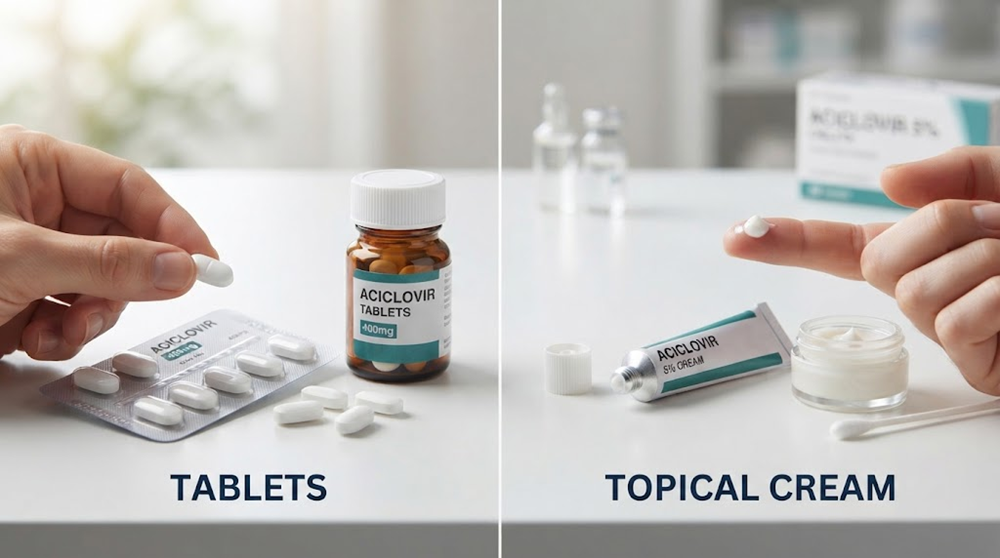
Once activated, the drug acts as a competitive inhibitor of the viral DNA polymerase. It essentially mimics a building block of DNA, tricking the virus into incorporating it into the growing DNA chain. However, because Aciclovir lacks the necessary chemical structure to allow further attachment of other DNA components, the chain is terminated. This stops the virus from replicating further, allowing the body’s immune system to clear the existing viral load more efficiently. Understanding this mechanism is vital when choosing between Aciclovir Tablets vs. Topical Creams which cold sore treatment is best for your specific needs.
Topical Aciclovir Creams: Advantages and Limitations
Topical creams containing five percent aciclovir have been a staple of over the counter pharmacy shelves for decades. These treatments are designed to be applied directly to the site of the tingling or the blister. The primary advantage of a cream is its localized delivery. By applying the medication directly to the affected area, the concentration of the antiviral agent is highest exactly where the viral replication is occurring on the skin surface.
Benefits of Topical Application
1. Low systemic absorption means there is a negligible risk of internal side effects or drug interactions.
2. The cream base often provides a soothing effect, helping to keep the skin hydrated and preventing the crust from cracking and bleeding.
3. It is easily accessible and does not always require a prescription, depending on the jurisdiction.
Drawbacks of Topical Application
1. The cream must be applied frequently, usually every four hours, five times a day, which can be difficult for patients to maintain.
2. It is only effective if the virus is near the surface of the skin; it cannot reach the virus residing deeper in the nerve endings.
3. If applied too late, such as after the blister has already crusted over, the efficacy drops significantly.
For many patients, obtaining a reliable supply of these treatments through services like Post My Meds ensures they are prepared the moment that first tingle occurs.
Oral Aciclovir Tablets: A Systemic Approach to Healing
Oral tablets represent a more robust intervention compared to topical alternatives. When taken orally, the medication is absorbed into the bloodstream and distributed throughout the body, including the nerve tissues where the virus resides. This systemic approach is often preferred for individuals who suffer from frequent or particularly severe outbreaks.
Advantages of Oral Tablets
1. They offer a more convenient dosing schedule, often requiring fewer applications or doses per day compared to creams.
2. The systemic nature of the drug allows it to work from the inside out, potentially stopping the virus before it even reaches the skin surface.
3. Clinical evidence suggests that oral antivirals are more effective at reducing the overall duration of pain and viral shedding.
Limitations of Oral Tablets
1. Because the drug enters the systemic circulation, there is a slightly higher risk of side effects such as nausea or headaches.
2. They typically require a consultation with a healthcare provider or a pharmacist to ensure they are appropriate for the patient.
Comparative Efficacy: What the Clinical Data Suggests
When evaluating the effectiveness of these two formats, clinical studies generally favor the oral route for significant symptom reduction. Research has shown that while topical creams can reduce the duration of an outbreak by approximately half a day to one full day, oral tablets can sometimes prevent the lesion from appearing entirely if taken early enough during the prodromal phase.
One study comparing various antiviral treatments found that oral aciclovir significantly reduced the time to crusting and the time to total healing when compared to a placebo, whereas the results for topical creams were more modest. Furthermore, for patients who are immunocompromised, oral tablets are considered the standard of care because the topical route simply cannot provide the necessary concentration of medication to combat a more aggressive viral replication. By using a reputable provider like Post My Meds, patients can access these potent oral treatments after a professional assessment of their symptoms.
Choosing the Right Treatment for Different Stages of Outbreaks
The timing of treatment is perhaps the most critical factor in determining success. The window of opportunity for antiviral intervention is narrow, usually within the first 24 to 48 hours of the initial symptoms.
The Prodromal Phase
During this stage, when the skin feels itchy or tight but no blister is visible, both treatments can be effective. However, oral tablets have a higher chance of aborting the lesion before it breaks the skin.
The Blister Phase
Once the blisters have appeared, the virus is replicating rapidly at the surface. Topical creams can help reduce the spread of the virus to surrounding skin, but oral tablets are necessary to limit the severity of the inflammatory response.
The Scabbing Phase
At this point, viral replication has largely ceased, and the body is in repair mode. Antivirals, whether topical or oral, provide little benefit once a hard crust has formed. In this stage, simple moisturising balms may be more useful than active antiviral medications.
Safety Profiles and Potential Side Effects
Aciclovir is generally well tolerated in both forms, but the side effect profiles differ. Topical aciclovir may cause localized reactions such as stinging, redness, or dry, flaky skin at the application site. These are usually mild and disappear once the treatment is stopped.
Oral aciclovir, because it is processed by the kidneys, requires more caution. Common side effects include:
1. Nausea or vomiting.
2. Diarrhea or abdominal pain.
3. Headaches or dizziness.
4. Photosensitivity, which is an increased sensitivity to sunlight.
Patients with pre existing kidney conditions must consult a doctor before using oral tablets, as the dosage may need to be adjusted. It is also essential to maintain high levels of hydration while taking oral antivirals to support kidney function. Accessing medication through Post My Meds allows patients to review safety information and ensure the treatment aligns with their health profile.
Practical Considerations for Modern Patients
For the busy individual, the choice often comes down to lifestyle and convenience. Applying a cream five times a day is not only difficult to remember but can also be aesthetically unappealing, as many creams leave a white residue on the lip. This can lead to non compliance, where the patient skips doses, thereby reducing the effectiveness of the treatment.
In contrast, oral tablets are discreet and easy to incorporate into a daily routine. For those who travel frequently or work in professional environments, the simplicity of a tablet is a significant advantage. Furthermore, having a backup supply of medication from Post My Meds means that treatment can begin the second symptoms appear, regardless of where the patient is located.
Expert Recommendations for Long Term Management
For individuals who experience more than six outbreaks per year, a strategy known as suppressive therapy may be recommended. This involves taking a lower dose of oral aciclovir daily to keep the virus in a permanent state of dormancy. Studies have shown that suppressive therapy can reduce the frequency of outbreaks by up to eighty percent.
Topical creams are not suitable for suppressive therapy and are strictly for episodic treatment. Therefore, if your cold sores are a recurring monthly problem, the oral route is undoubtedly the superior choice. Beyond medication, experts recommend maintaining a healthy immune system through proper sleep, a balanced diet, and effective stress management techniques.
Ultimately, the decision between tablets and creams depends on the frequency of your outbreaks and how early you can start treatment. While creams offer a localized, low risk option for occasional sores, oral tablets provide a powerful, systemic solution that offers greater efficacy and convenience. By consulting with experts at Post My Meds, you can determine which clinical approach will best help you regain control over your skin health and confidence.