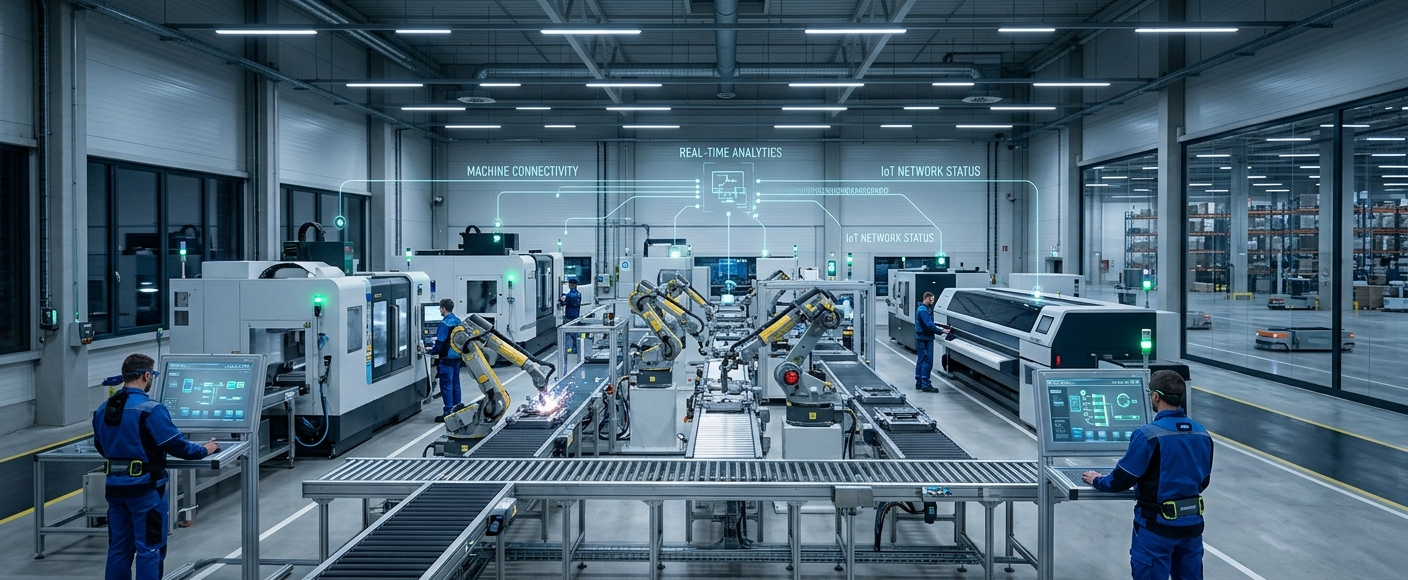
The manufacturing sector is in the middle of a very large scale change as we see a shift away from what has been traditional production methods to in to connected, intelligent and very automated systems. At the heart of this transformation is Industrial Internet of Things (IIoT) which is a specialized form of IoT technology designed to connect machines, sensors, software platforms and industrial processes. In contrast to past manufacturing settings in which machines worked in isolation and maintenance was largely reactive, IIoT enables the collection and analysis of real time data, prediction of equipment failure, increase in productivity and improvement in operation.
As industries adopt into Industry 4.0, smart factories which are powered by connected tech are becoming a requirement for companies which wish to see greater efficiency, reduced costs, improved safety, and better competitiveness in a global market which is very much in flux. It is very important for companies to understand how IoT is transforming manufacturing as they develop their digital transformation strategies and prepare for the future of industrial operations.
What Is Industrial IoT (IIoT)?
Industrial Internet of Things (IIoT) is that which sees the connection of devices, use of advanced sensors, cloud computing, artificial intelligence and data analytics in to improve industrial processes. As opposed to consumer IoT which puts out smart home systems, wearable tech, and personal assistants to the public, IIoT is tailored for the industrial setting which requires of it that it be reliable, accurate, secure and perform at high levels.
In the factory setting IIoT devices report in on machine, production line, and supply chain info which in turn allows companies to have real time monitoring of their operations and to base decisions off of that data.
Connectivity as the Foundation of IIoT
In the base of IIoT is connectivity. Today’s manufacturing machinery is able to talk to other machines, software applications, and human operators via industrial networks. We have put in sensors which report important info out of production equipment which includes temperature, vibration, pressure, energy use, and performance which in turn is sent to central platforms for analysis which in turn we use to see trends, identify what isn’t working well, and put forth solutions.
By turning physical industrial assets into intelligent systems IIoT brings more transparency and response to the manufacturing setting.
IIoT and Industry 4.0
The rise of IIoT is tied in with that of Industry 4.0 which is the fourth industrial revolution. The first industrial revolution saw in large scale mechanical production, the second marked the age of mass production and electricity, and the third that of computers and automation.
In Industry 4.0 we see the combination of digital technologies and physical industrial processes that produce the smart factory which in turn see machines, employees, and systems work more as a team. IIoT is the key technology which makes this new manufacturing model possible.
How IoT Is Transforming Manufacturing Operations
In manufacturing we are seeing the adoption of IoT which is in turn changing what companies do in terms of design, production, monitoring, and delivery of products. In the past traditional factories turned to scheduled maintenance, manual inspections, and history for their operational decisions.
Also these methods resulted in equipment failure out of the blue, production delays, and also unnecessary spending. IIoT what we are seeing is it gives manufacturers real time access into their systems’ performance which in turn they are able to transform that info into action steps.
Real-Time Monitoring and Better Decision Making
Through the use of smart sensors and connected systems manufacturers are able to monitor production processes from any location and see issues before they impact productivity.
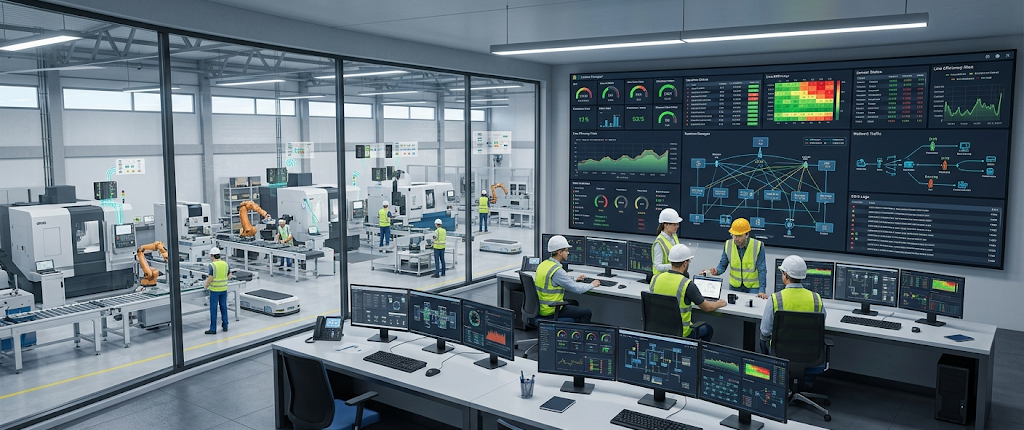
Factory managers can report on machine performance, study production speed, find out about process blockages, and change processes out based on fact not assumption. This greater visibility into what is going on allows companies to better decide and also to quickly react to changing market forces.
Improving Industrial Collaboration
IoT tech also reports that in terms of collaboration between different parts of a manufacturing org we see great results from it. Production teams, maintenance engineers, supply chain managers and executives can access the same info via digital platforms which in turn breaks down info silos and allows for better team work.
For instance when we have a machine that needs maintenance the maintenance team gets an auto alert and at the same time production managers will change plans to reduce disruption.
Predictive Maintenance: Reduction of Downtime via Smart Monitoring
In the field of manufacturing the preeminent use of IIoT is in predictive maintenance. In which we see that in past manufacturing we saw that companies either ran to a set schedule for maintenance or they would wait until the equipment failed. Although preventive maintenance does help to reduce some risk it also can cause issues of too much service or failure at unexpected times.
Predictive maintenance which uses IoT sensors, machine learning algorithms, and analytics to track equipment health and predict when actual maintenance is to take place.
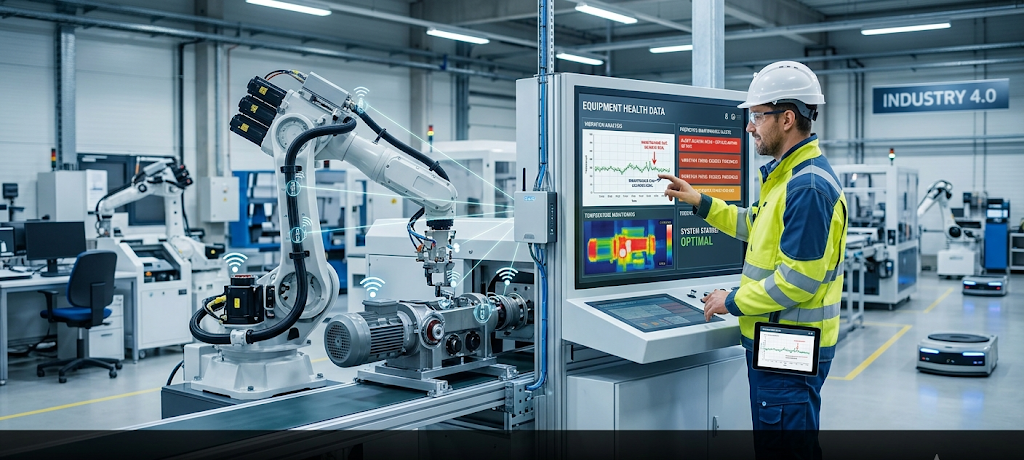
Smart Sensors and Equipment Health Monitoring
Connected sensors which are installed in industrial machines report in real time on machine performance which includes vibration levels, temperature changes, pressure fluctuations, and energy use.
We use advanced analytics to identify atypical performance which may be a sign of upcoming equipment issues. Instead of finding out about a problem after a machine has broken down we are able to get early notice and we schedule repairs to prevent serious failures.
Benefits of Predictive Maintenance
Predictive maintenance has large scale benefits. We see that it reduces unexpected breaks in production, improves asset reliability and at the same time extends the life of industrial equipment.
Also maintenance teams are able to do better targeted machine check ups which in turn means they are not tied up in fruitless inspections. In industries that see millions in loss from down time predictive maintenance gives a great competitive edge.
Automation and Smart Manufacturing Processes
Automation has been a key element in manufacturing up to present time but IIoT is transforming industrial automation into something which is out of the ordinary. What we had with traditional auto systems was they ran as per programs’ instructions, but in smart manufacturing we see analysis of data, adaptation to change in conditions, and improvement in self performance.
By the connection of machines, software platforms, and AI systems IIoT is bringing about factories which are more flexible, efficient and responsive.
Connected Automation Systems
Smart factories that use connected automation systems which have greater accuracy in managing production processes. We see that machines which are able to talk to each other to coordinate actions, to change production settings and to minimize errors.
For instance a connected production line which is able to detect changes in product quality which in turn causes machine settings to be adjusted for constant output. This in effect reduces waste and improves total manufacturing efficiency.
Human and Machine Collaboration
Automation in the wake of IIoT also puts forward solutions to labor shortages and growing production requirements. We see that which which the technologies’ role is to allow machines to take up in the performance of repetitive and complex tasks thus at the same time we note that which which this is done in a way that improves productivity for companies and at the same time allows employees to put their energy in to value adding activities like innovation, problem solving, and systems management.
Also it is not a question of smart manufacturing techs to replace human workers but of them to augment human abilities by way of better info and tools.
Robotics and the Age of Smart Industry
Robotics has in fact become the poster child for what is transpiring in Industry 4.0 terms of manufacturing transformation. We see today’s industrial robots which used to work in isolation and perform the same tasks over and over without a peep out of them well those days are over.
Today we have IIoT integrated robots which have turned into intelligent systems that not only share info but also adapt to environmental changes and which work in collaboration with human staff.
Intelligent Connected Robots
Connected robots are improving in terms of precision, speed, and consistency which is improved by their use in a wide range of industries from auto production to electronics, food, and pharma.
Also they serve as a platform for the Internet of Things which allows for sharing of performance information with managers that in turn use this data to track productivity and to present opportunity for growth.
Collaborative Robots in Smart Factories
Collaborative robots which we also term as cobots are a key element of smart manufacturing. We see that unlike the large safety separated industrial robots of the past, cobots are designed to work right with human workers. They take on tasks which require precision, strength or repeatability which in turn allows the human staff to handle more complex issues.
IIoT in this case is what enables the robots to talk to the rest of the factory systems which in turn produces more flexible and integrated production settings.
Real Time Supply Chain Tracking and Better Logistics
Manufacturing success is a result of not just high production efficiency, but also from effective supply chain management. We see that companies which have at hand precise info on raw materials, inventory levels, transport processes, and also customer demand do better.
IIoT plays a role in that by connecting assets within the full production and distribution network.
IoT-Based Tracking Solutions
IoT based tracking solutions which use sensors, GPS, RFID tags, and cloud platforms to report in real time on the movement of goods. We see manufacturers using these to track shipments, to monitor storage conditions and to identify issues which may grow into bigger problems before they do.
This degree of visibility enables businesses to improve inventory management, reduce waste, and to make more prompt decisions.
Improving Supply Chain Resilience
Real time supply chain tracking is of great value in which product quality is a function of environmental factors. For instance in the case of manufacturers of delicate products which may include pharmaceuticals or electronics they can monitor variables like temperature and humidity as well as storage conditions during transit. When environment parameters go out of the set range automatic alerts go out to management which in turn can implement corrective measures.
Through improved supply chain transparency IIoT allows companies to put in place more resilient operations. We see that which in turn enables businesses to react better to supplier issues, customer demand changes, and market fluctuation. In a world which is becoming more globalized the ability to track and improve supply chains is a great strategic asset to manufacturers.
The Data Analytics and AI in IIoT
Data is at the base of Industrial IoT. We see in each connected asset like a machine, sensor, or device a great source of info that we may look at to increase industrial performance.
But also it is not true that we just collect the data. What we also need are advanced analytics and AI tools to put that raw info into useful perspective.
Artificial Intelligence and Machine Learning Applications
AI driven IIoT platforms which put forward trends that may not present itself in manual analysis. They also improve production schedules, predict maintenance needs, better energy efficiency, and which in turn improve product quality.
As machine learning algorithms grow out of the analysis of larger sets of operational data they in turn enable factories to constantly improve their processes.
Data-Driven Business Decisions
Data analysis also plays a role in improved executive level decision making. Business leaders, which is to say C-level executives and managers, can use real time dashboards to see production performance, operational costs, and resource use.
They no longer have to rely on out of date reports or estimates which may be inaccurate instead they use present info. This in turn makes the company more flexible and able to respond to issues as they come up.
Challenges of Implementing Industrial IoT
Although IIoT has large scale benefits, we also see that which is put into play is not without its issues. In the area of cyber security we see a great issue. As we see in the trend of greater connection in factories, we see an increase in the target that they are to cyber threats. Manufacturers must put in place strong security measures which include network protection, access controls, encryption and also regular system audit.
Another issue is that of integrating new IIoT technologies into present manufacturing systems which in many cases still use older machinery which at the time of purchase did not include digital connectivity features. Companies may have to do some infrastructure upgrades or to add in more technology in order to get their old machines to work with current platforms.
The issue of implementation cost is also a factor which we see play out in many cases of smaller manufacturers. We see that they invest in sensors, upgrade equipment, and develop digital systems which all require capital. At the same time many companies present the IIoT as a long term play which in the end pays off in the form of improved efficiency, reduced down time, and better resource management.
Smart Factories’ Future and Industry 4.0
The growth of what is to come in manufacturing will see the introduction of connected tech, AI, automation and advanced robotics. As IIoT solutions grow in affordability and access, we will see more companies adopt smart factory models to better compete. In the coming years we also see the manufacturing environment to become very autonomous with machines that are able to make decisions, optimize processes, and communicate fluidly.
Emerging techs like digital twins, edge computing, and advanced AI will also grow IIoT’s what it can do. Digital twins which are virtual representations of physical systems that companies develop which in turn allow them to improve products and see results of said improvements before implementing in the real world. Edge computing which brings data processing closer to the device which in turn improves response time for very important industrial apps.
In the business world adoption of IIoT is a go from tech upgrade to a strategic requirement. Which companies that implement connected tech into their systems see great operational improvement, better customer care, and they also seek to build stronger competitive positions in the global market.
Conclusion
Industrial IoT is changing manufacturing which is seeing the introduction of smarter, more connected, and more efficient production systems. Via predictive maintenance, automation, robotics and real time supply chain tracking IIoT allows companies to see cost reduction, increased productivity, and better decision making in real time. As we see the growth of Industry 4.0 smart factories will play a very large role for companies looking at sustainable growth and innovation.
Manufacturers which adopt IIoT solutions will see themselves in a better position to react to change in the market, improve operational resilience, and bring to market higher quality products. Though we see issues like cyber security, complex integration, and high implementation cost with IIoT’s adoption, the benefits of connected manufacturing systems put IIoT forward as a strong force of industrial transformation. The future of manufacturing is what we are seeing to be not just automated but intelligent and in that which we are seeing Industrial IoT is at the core of this new age.