In-game currency is the virtual money that keeps many modern games moving. Instead of paying real money every time they want an outfit, character upgrade, battle pass, or other digital item, players can use a currency created specifically for the game. Some currencies are earned through regular play, while others are mainly sold through the game’s store.
What Is In-Game Currency?
In-game currency is a digital resource used to purchase or unlock content within a video game. It can take the form of coins, gems, points, tokens, crystals, or other game-specific units.
The important distinction is that these currencies belong to the game’s own economy. A player might spend real money to purchase 1,000 V-Bucks or Robux, but those units are still intended for use within their respective gaming ecosystems rather than as general-purpose money.
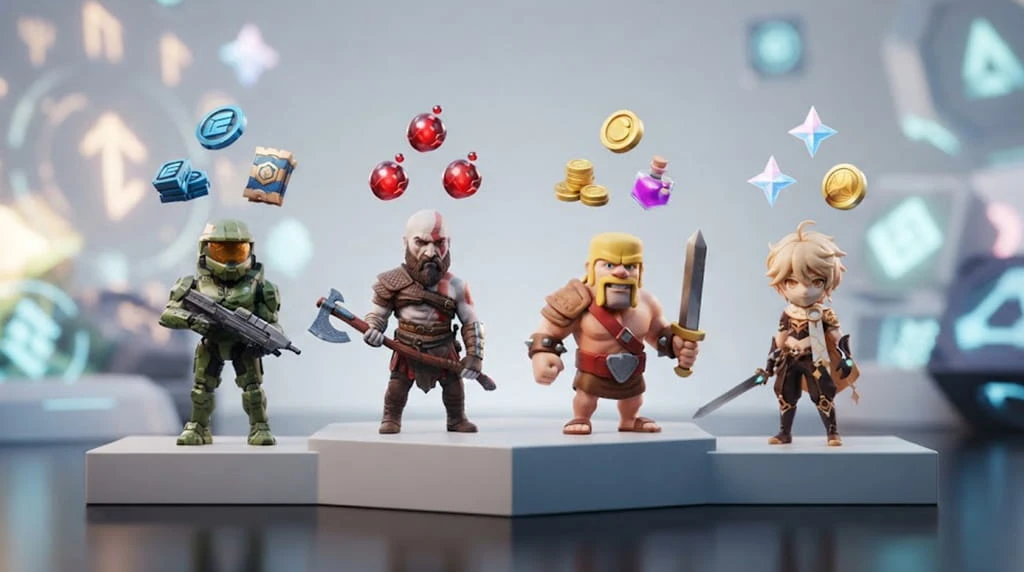
Games also give their currencies memorable names. Fortnite uses V-Bucks, Roblox uses Robux, and Apex Legends uses Apex Coins. Mobile games follow the same pattern: PUBG Mobile uses UC, Free Fire uses Diamonds, Call of Duty: Mobile uses COD Points, and Genshin Impact uses Genesis Crystals.
Soft, Hard, and Specialized Currencies
Game developers generally design different currencies around different parts of the player experience.
Soft Currency
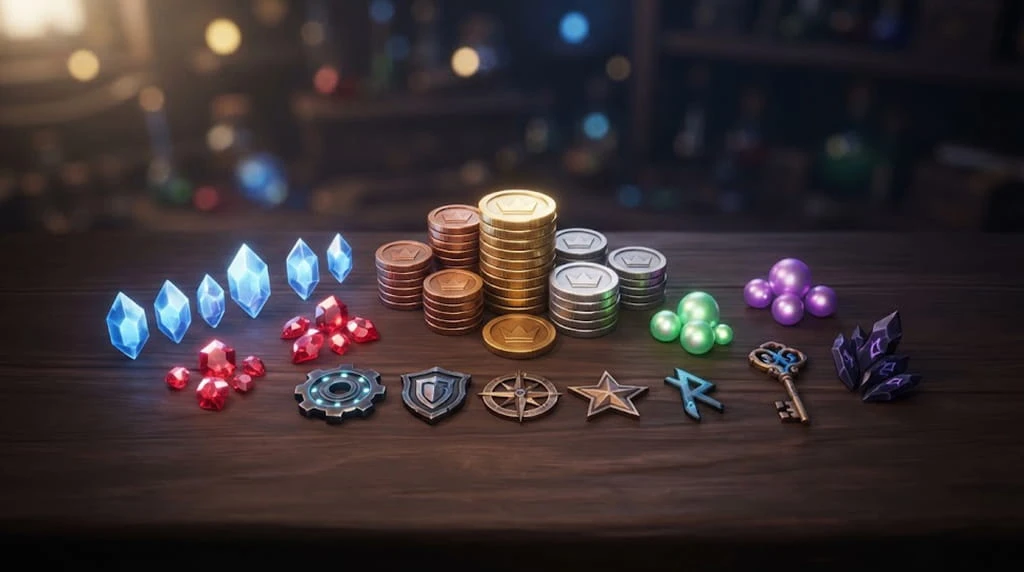
Soft currency is usually the resource players can obtain through normal gameplay. It may come from completing missions, winning matches, finishing quests, opening rewards, or simply progressing through the game.
Because it is relatively easy to obtain, soft currency is commonly used for everyday expenses such as basic equipment, character upgrades, repairs, or common resources.
Hard Currency
Hard currency is generally more closely connected to monetization. Players can often purchase it with money, although some games also give small amounts through events, achievements, or other rewards.
This type of currency is frequently used for premium cosmetics, battle passes, special characters, limited bundles, or other content that the developer wants to separate from ordinary progression.
Specialized Currency
Some currencies exist for one particular feature rather than the entire game. Event tokens may only work during a seasonal event, guild currencies can be connected to group activities, and crafting materials may be restricted to equipment or item creation.
How Do Players Get In-Game Currency?
There are several ways to obtain game currency, and the available methods depend on the title.
Free-to-play mobile games often combine these rewards with limited-time events to keep players returning.
Premium currency works differently. Players can usually purchase a selected amount through the game’s official store, app store, console marketplace, or another authorized payment channel.
For players who regularly purchase mobile game currency or digital credits, services such as Top up Cheap can also be relevant as a dedicated top-up destination.
What Can You Buy With In-Game Currency?
The answer depends heavily on the game’s design. Currency can unlock practical gameplay features, purely cosmetic content, or a mixture of both.
Common purchases include:
- Character skins and outfits
- Weapons and equipment
- Emotes and animations
- Battle passes
- Playable characters
- Pets and companions
- Character upgrades
- Boosters and temporary benefits
- Crafting resources
- Event-exclusive items
Mobile games often make cosmetics a major part of their currency systems. For example, Free Fire Diamonds can be used for various premium items and event-related content. In
Is In-Game Currency Real Money?
In-game currency is generally not the same thing as real-world money. It is a digital resource created for use within a particular game or platform.
The confusion usually comes from the way premium currencies are purchased. A player may spend $10 to receive a certain number of virtual units, but those units do not automatically become $10 that can be withdrawn later.
The distinction is therefore between the money used to purchase the currency and the currency received inside the game. They are connected by a transaction, but they are not interchangeable in most conventional game systems.
Can You Convert Game Currency Into Real Money?
For most mainstream games, the answer is no. Premium currencies are normally designed to remain inside the game’s ecosystem and are not intended to be cashed out.
There are exceptions in broader virtual economies. Certain games and platforms have supported trading systems in which virtual assets or currencies can be exchanged through official or secondary markets. These systems are different from the closed currency models used by most mobile games.
Why Do Games Use Multiple Currencies?
Multiple currencies allow developers to separate different parts of an economy.
Imagine a mobile RPG with one currency used for everyday upgrades, another for premium cosmetics, and a third earned during seasonal events. Each resource gives the developer a different way to control progression and rewards.
In-Game Currency and the Virtual Economy
In-game currency is only one part of a virtual economy. A game’s broader economy can also include items, resources, trading systems, scarcity, player demand, and the ways developers control how quickly resources enter or leave the system.
For example, if players earn too much of a particular currency while there are very few things worth spending it on, that currency can lose some of its practical value within the game’s economy. Developers can respond by introducing new items, increasing costs, adding spending opportunities, or adjusting how the currency is earned.
This is why a well-designed game economy is more than a shop with a list of prices. The way players earn, save, spend, and sometimes trade resources can influence how progression feels over hundreds of hours.
Final Thoughts
In-game currencies give games their own internal method of exchange. Some are earned through play, some are purchased, and others exist only for a particular event or feature. Mobile games make especially heavy use of these systems, with currencies such as UC, Diamonds, COD Points, Genesis Crystals, and Tokens becoming familiar parts of the games themselves.
Understanding the type of currency is useful before spending it. A soft currency may be easy to replace, while a premium balance may come from real-world spending and have restrictions on how it can be used.